• KGS/USD = 0.01144 0%
  • KZT/USD = 0.00204 0%
  • TJS/USD = 0.10435 0%
  • UZS/USD = 0.00008 0%
  • TMT/USD = 0.28571 0%
  • KGS/USD = 0.01144 0%
  • KZT/USD = 0.00204 0%
  • TJS/USD = 0.10435 0%
  • UZS/USD = 0.00008 0%
  • TMT/USD = 0.28571 0%
  • KGS/USD = 0.01144 0%
  • KZT/USD = 0.00204 0%
  • TJS/USD = 0.10435 0%
  • UZS/USD = 0.00008 0%
  • TMT/USD = 0.28571 0%
  • KGS/USD = 0.01144 0%
  • KZT/USD = 0.00204 0%
  • TJS/USD = 0.10435 0%
  • UZS/USD = 0.00008 0%
  • TMT/USD = 0.28571 0%
  • KGS/USD = 0.01144 0%
  • KZT/USD = 0.00204 0%
  • TJS/USD = 0.10435 0%
  • UZS/USD = 0.00008 0%
  • TMT/USD = 0.28571 0%
  • KGS/USD = 0.01144 0%
  • KZT/USD = 0.00204 0%
  • TJS/USD = 0.10435 0%
  • UZS/USD = 0.00008 0%
  • TMT/USD = 0.28571 0%
  • KGS/USD = 0.01144 0%
  • KZT/USD = 0.00204 0%
  • TJS/USD = 0.10435 0%
  • UZS/USD = 0.00008 0%
  • TMT/USD = 0.28571 0%
  • KGS/USD = 0.01144 0%
  • KZT/USD = 0.00204 0%
  • TJS/USD = 0.10435 0%
  • UZS/USD = 0.00008 0%
  • TMT/USD = 0.28571 0%

Viewing results 1 - 6 of 27

Caspian Pipeline Consortium Workers Among Injured in Ukrainian Attack in Russia

Ukrainian drones struck Russia’s Black Sea port of Novorossiysk on Wednesday, killing at least two people and injuring others, including two employees of the Caspian Pipeline Consortium, according to Russian officials and the consortium.  “The attack targeted the central part of the city, near the Novorossiysk hotel,” said Veniamin Kondratyev, governor of the Krasnodar Krai region in Russia. “Preliminary information reports two dead and three injured. Five residential buildings, including apartment buildings, as well as the hotel building, were damaged.” Tass, the Russian state news agency, later reported that eight people were injured. The Caspian Pipeline Consortium, which is critical to the export of oil from Kazakhstan, said its office was damaged in what it described as a “massive” attack.   “Two company employees sustained injuries of varying severity and were transported to a medical facility. The administrative office's work is temporarily suspended, and the staff has been evacuated,” said the consortium, also known as CPC.     The drone strike also seriously injured people in the building who are not employees of the international crude oil transportation project, according to the CPC.  Russia, Kazakhstan and major international oil and gas companies participate in the CPC project, which primarily delivers crude oil from western Kazakhstan as well as Russian producers to a marine terminal at Novorossiysk. There, it is loaded onto tankers for delivery to international markets.  Ukraine has increasingly targeted Russia’s energy infrastructure with long-range drone attacks, raising concerns about the vulnerability of Kazakhstan’s oil industry to the long-running war.

Tashkent Medical University Accused of Forcing Students to Study in Russian City Reportedly Under Drone Attacks

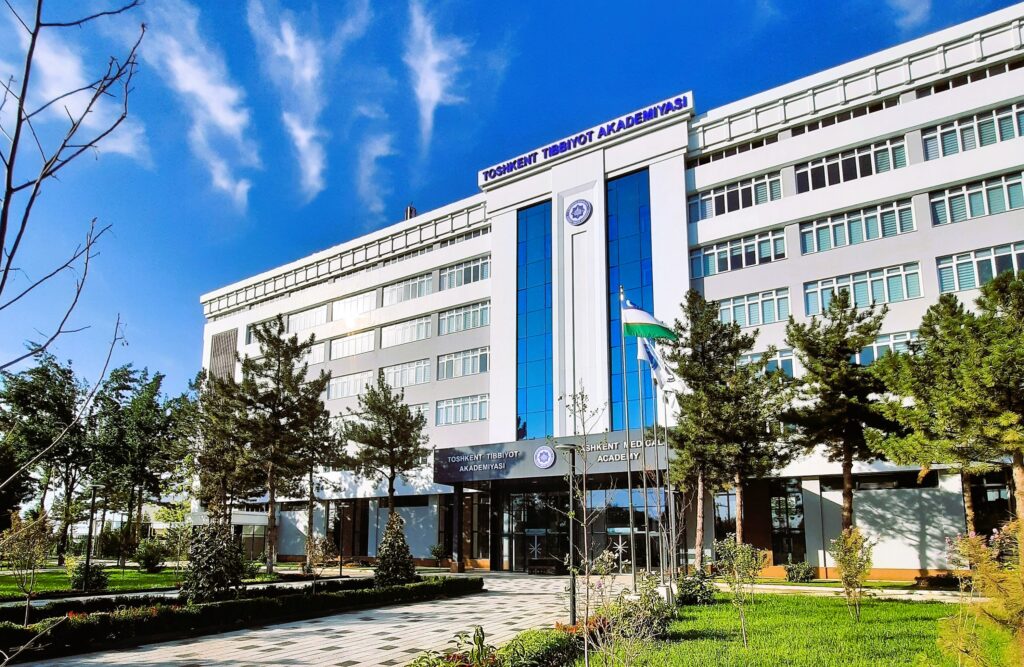
Tashkent State Medical University (TSMU) has rejected social media allegations that its students are being forced to study in Nizhny Novgorod, Russia, a city some reports claim is “under Ukrainian drone attacks.” The university called the reports “baseless and false,” stressing that the students are enrolled in a joint degree program requiring them to complete the final two years at a partner institution abroad. Videos shared by local media this week showed students opposing the move, citing recent drone strikes in the region that reportedly killed one person and injured several others. They claimed a previous rector had promised to transfer the program to Kazakhstan, but the current rector, Shukhrat Boymuradov, reversed that decision. Students alleged they were given an ultimatum: go to Russia or take academic leave and request to finish their fifth year in Uzbekistan. TSMU said all the students in question had signed contracts under a joint education program with Privolzhsky Research Medical University (PRMU) in Nizhny Novgorod, as stipulated by Uzbekistan’s Cabinet of Ministers Resolution No. 421 of July 6, 2021. The agreement requires participants to complete their fourth and fifth years at PRMU. According to the university, PRMU runs 12 joint programs with five Uzbek universities and currently hosts more than 400 Uzbek students. To ensure suitable conditions, TSMU and PRMU agreed on dedicated dormitories, a special dean’s office to help with administrative matters, and re-enrollment opportunities for students previously expelled from PRMU. The administration dismissed claims that Nizhny Novgorod is under martial law, noting that the city hosts active academic partnerships and that no state of war has been declared there. On August 11, Boymuradov met with students and parents to discuss the program, living arrangements, and support services. TSMU reported that most students expressed readiness to continue studies at PRMU, while a minority sought to remain in Tashkent, allegedly relying on “deliberately false information.” The university warned that spreading misinformation intended to mislead the public and damage its reputation could result in legal action under Uzbek law.

Astana’s Delicate Role in Ukraine Peace Efforts

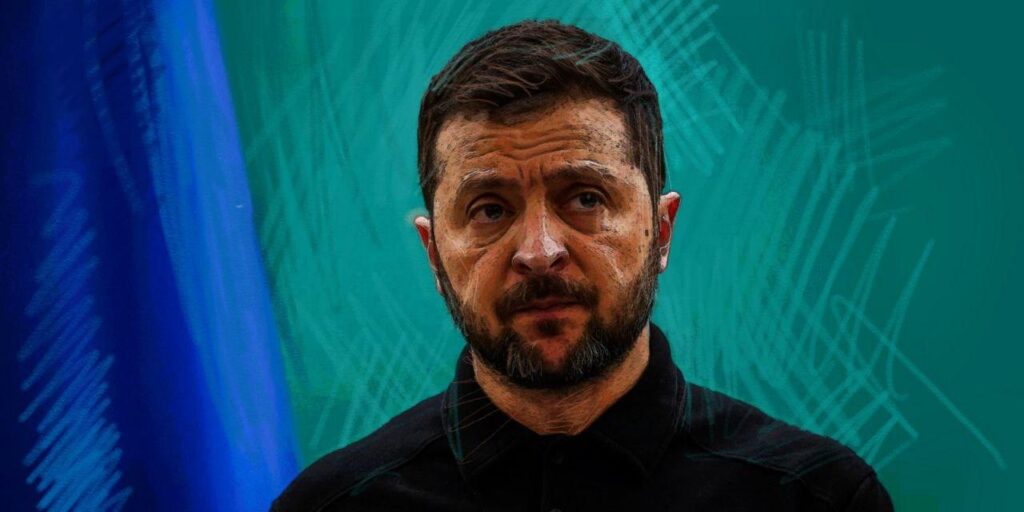
Despite its close economic, historical, and cultural ties with Russia, Kazakhstan has maintained constructive relations with Ukraine since Russia’s full-scale invasion in 2022. That diplomatic balance was on display again on August 10, when President Volodymyr Zelenskyy called President Kassym-Jomart Tokayev to discuss prospects for a peace agreement. According to official sources, Ukraine initiated the call, and Tokayev reaffirmed Kazakhstan’s “unconditional interest in establishing a lasting peace in Ukraine based on the principles of international law.” Astana supports a “joint search for a peaceful solution on a fair basis” and consistently advocates compliance with the UN Charter, the inviolability of borders, and the territorial integrity of sovereign states. Kazakh political analyst Marat Shibutov has suggested that Zelenskyy is seeking support ahead of a potential shift in the confrontation with Russia. “On the eve of the meeting between Donald Trump and Vladimir Putin in Alaska, Zelenskyy is calling the leaders of other countries. He is seeking not only to secure better conditions for Ukraine, but also to understand what his personal political future holds. Yesterday, he spoke with Macron, Meloni, Tusk, Stubb, von der Leyen, Sánchez, and Starmer. Today, he spoke with Swedish Prime Minister Kristersson, Ilham Aliyev, and President Tokayev,” Shibutov wrote. According to Shibutov, Zelenskyy emphasized European support for Ukraine’s participation in negotiations. However, Tokayev, an experienced diplomat, may have cautioned that the outcome of the U.S.-Russia talks is unpredictable. “They depend on domestic politics,” Shibutov noted. “In the U.S., Trump’s electorate wants an end to the war and military aid to Ukraine halted, while many in Russia want Ukraine’s complete defeat and elimination as a state. In such conditions, Ukraine will have to make concessions. Territorial integrity is good, but not at the cost of the state’s very existence.” The official statement from Tokayev’s office cited the old proverb: “A bad peace is better than a good war.” Support During the War On March 6, 2022, shortly after Russia’s full-scale invasion, an anti-war rally was held in Almaty. Participants carried Ukrainian flags, blue-and-yellow balloons, and anti-war posters. That same month, Kazakhstan sent humanitarian aid worth more than $2 million, including 25 types of medical supplies weighing 82 tons. Volunteers also collected food, hygiene products, medicines, and animal feed worth 150 million tenge. Kazakh entrepreneurs delivered aid and generators to Ukrainian hospitals. In the summer of 2023, a Kazakh company helped repair a medical facility in Mykolaiv damaged by Russian shelling. The installation of “yurts of indestructibility” in war-affected Ukrainian cities also gained wide recognition. In Kyiv alone, more than 100,000 people visited such a yurt to charge phones, warm up, and enjoy free Kazakh national dishes. Only According to the UN Charter Kazakhstan’s deep economic ties with Russia include oil and gas transit, gasoline supplies, and imports of food and medicine. The two countries share the world’s second-longest land border, spanning 4,750 miles. Cooperation on transboundary rivers is also critical. In contrast, Kazakhstan’s links with Ukraine are modest, consisting largely of historical ties and family connections. Pre-war trade...

Ending the War: Tokayev and Zelenskyy Talk Ahead of Trump-Putin Meeting in Alaska

“A bad peace is better than a good war.” That was the advice from Kazakh President Kassym-Jomart Tokayev to Ukrainian President Volodymyr Zelenskyy in a phone call on Sunday in which the two leaders discussed prospects for a resolution to the war between Russia and Ukraine.  Whether Zelenskyy agreed with Tokayev’s comment is open to question. In a readout of the conversation from the Ukrainian presidency, he used other adjectives to describe the kind of peace that Ukraine wants –“reliable” and “real.”  The talk happened ahead of a meeting in Alaska on Friday between U.S. President Donald Trump and Russian President Vladimir Putin that Ukraine fears could leave it left out of deliberations and provide momentum for an end to the conflict on Russia’s terms.  Tokayev told Zelenskyy that Kazakhstan has advocated for a solution that adheres to the United Nations Charter and respects “the inviolability of the borders of sovereign states, and the territorial integrity of sovereign states.” While that statement implies criticism of the current state of affairs, in which Russia occupies an estimated 20 percent of Ukrainian territory, Tokayev also appeared to suggest that Ukraine should be prepared to make difficult compromises over territory because its independence as a nation was on the line.    “In his view, given the current highly complex situation, it is essential to approach the resolution of the conflict with balance and reason, ensuring the preservation and protection of Ukraine’s statehood,” Kazakhstan’s presidential office said. “He stressed that all parties should be guided by the wisdom that ´a bad peace is better than a good war.´” Tokayev stirred some debate last year when he said that Russia was too strong to be defeated on the battlefield. Critics interpreted the remark as defeatism in the face of Russian aggression, while others thought it was a blunt assessment of the war. Kazakhstan and other Central Asian countries have tried to be neutral in the conflict, not endorsing the Russian invasion but maintaining traditional ties with Moscow. The Ukrainian presidency said Zelenskyy, in remarks to Tokayev, “noted that attempts to partition any independent state are extremely dangerous for every nation. History has repeatedly shown that if such injustice is allowed against one state, it does not end there.” While Zelenskyy has ruled out territorial concessions to Russia, a poll conducted by the Kyiv International Institute of Sociology in May and June explored the nuance of the topic in a population that is both defiant and weary after years of war. The results show that “the only option where there is at least room for discussion is de facto recognition of Russian control without de jure recognition,” according to the institute.   Zelenskyy invited Tokayev to visit Ukraine, according to the Ukrainian presidency. The Kazakh statement didn’t mention the invitation. 

At Least 66 Uzbeks Confirmed Dead Fighting for Russia in Ukraine

A BBC-led investigation has confirmed that dozens of Uzbek citizens have died while fighting for Russia in Ukraine. Journalists from the BBC Russian Service and independent outlet Mediazona have verified 118,139 Russian military deaths in the conflict. Among them were 523 foreign nationals from 28 countries, with Tajiks (72 deaths) and Uzbeks (66 deaths) making up the largest foreign contingents. Investigators caution that the true number of casualties is likely higher. Alexander Bastrykin, head of Russia’s Investigative Committee, has publicly acknowledged that many recently naturalized Central Asians have been conscripted into the Russian military. Speaking at a public forum, Bastrykin stated that authorities had “caught” around 80,000 new Russian citizens, mostly from Uzbekistan, Tajikistan, and Kyrgyzstan, who had attempted to avoid military service. According to him, they were registered for service, and 20,000 were subsequently sent to Ukraine. These remarks have raised fresh concerns that Russia is using Central Asian migrants to bolster its military ranks. Official Neutrality and Subtle Retaliation Central Asian governments have declared neutrality in the Ukraine conflict and have largely abided by Western sanctions. Both Kazakhstan and Uzbekistan have sent humanitarian aid to Ukraine, contributing approximately $2.25 million and $1 million respectively. Kazakhstan has also made it clear that it does not recognize the self-proclaimed Donetsk and Luhansk “people’s republics.” Some analysts believe this neutral stance has triggered retaliatory actions from Moscow. Notably, a Russian court ordered the temporary suspension of operations at the Caspian Pipeline Consortium (CPC), a key route for Kazakh oil exports to the Black Sea. The 30-day halt severely affected Kazakhstan’s economy, as CPC shipments account for roughly 20% of the country's GDP.

“I Dreamed of Writing Without Borders”: An Interview With a Kazakh Journalist in Russia

Elmira, a journalist from Astana, moved to St. Petersburg six years ago to study journalism. Since then, she has transformed from a reserved first-year student into a working reporter, navigating culture shock, social media censorship, and the outbreak of the war in Ukraine. In this candid interview, Elmira discusses Russian bureaucracy, casual racism, and finding her voice in the Russian media landscape. She also offers reflections for others considering a similar path. TCA: Why did you choose to study in St. Petersburg rather than stay in Kazakhstan or go elsewhere? Elmira: I applied before the war in Ukraine began. At that time, Russia seemed like a land of opportunity, where you could earn a decent living even without connections, which is rare in Kazakhstan. Plus, Russia offers state-funded spots for foreign students, as long as you pass the entrance exams. Kazakh journalism programs felt underdeveloped to me; they lacked tradition, experienced faculty, and institutional history. In contrast, Russian journalism schools had all of that. Also, I wanted to write in Russian. My family always spoke Russian at home, and Kazakh was harder for me, an experience common among northern Kazakhs. Studying elsewhere was financially out of reach, and among CIS countries, Russia was the most appealing. TCA: Why journalism? And did your expectations match reality? Elmira: I’ve loved writing since childhood, school news, travel stories, anything. I imagined journalism as limitless creativity. In reality, it has even more constraints than other fields: editorial policies, laws, and censorship. Still, I wasn’t disappointed. Restrictions force you to innovate, and a strong story can always be told within the right format. TCA: What were your first impressions of university life? Did you feel like part of an international community or an outsider? Elmira: The university itself was a pleasant surprise. Many professors were open-minded and genuinely interested in students’ ideas. That made me feel I belonged. But the student environment was tougher. Although classmates claimed, “We’re not racist,” jokes about Tajiks, Uzbeks, and Caucasians were common, and occasionally about Kazakhs too, disguised as “harmless humor.” These moments were alienating. You’re sitting in the same lectures, working on the same projects, but still feel like a stranger. TCA: Was the Kazakh diaspora in St. Petersburg helpful during your adjustment? Elmira: Definitely. The community is very supportive. Besides the consulate, groups like Atameken and Dostar host cultural events. I couldn’t volunteer, but I never missed Nauryz or Independence Day. Just being able to speak with fellow Kazakhs helped me feel at home. TCA: What domestic or cultural challenges surprised you the most? Elmira: Dorm life was tough. Once, I overheard roommates say, “How can you live with a Chinese woman? She must smell bad.” These moments were rare but memorable. Still, there were warm experiences. In the dorm, I befriended students from Kyrgyzstan, Armenia, and Tajikistan. We cooked together, shared stories, and supported each other. That helped me to feel part of a community. I was also heartened that many Russian students were genuinely curious...