• KGS/USD = 0.01144 0%
  • KZT/USD = 0.00217 0%
  • TJS/USD = 0.10656 0%
  • UZS/USD = 0.00008 0%
  • TMT/USD = 0.28530 0%
  • KGS/USD = 0.01144 0%
  • KZT/USD = 0.00217 0%
  • TJS/USD = 0.10656 0%
  • UZS/USD = 0.00008 0%
  • TMT/USD = 0.28530 0%
  • KGS/USD = 0.01144 0%
  • KZT/USD = 0.00217 0%
  • TJS/USD = 0.10656 0%
  • UZS/USD = 0.00008 0%
  • TMT/USD = 0.28530 0%
  • KGS/USD = 0.01144 0%
  • KZT/USD = 0.00217 0%
  • TJS/USD = 0.10656 0%
  • UZS/USD = 0.00008 0%
  • TMT/USD = 0.28530 0%
  • KGS/USD = 0.01144 0%
  • KZT/USD = 0.00217 0%
  • TJS/USD = 0.10656 0%
  • UZS/USD = 0.00008 0%
  • TMT/USD = 0.28530 0%
  • KGS/USD = 0.01144 0%
  • KZT/USD = 0.00217 0%
  • TJS/USD = 0.10656 0%
  • UZS/USD = 0.00008 0%
  • TMT/USD = 0.28530 0%
  • KGS/USD = 0.01144 0%
  • KZT/USD = 0.00217 0%
  • TJS/USD = 0.10656 0%
  • UZS/USD = 0.00008 0%
  • TMT/USD = 0.28530 0%
  • KGS/USD = 0.01144 0%
  • KZT/USD = 0.00217 0%
  • TJS/USD = 0.10656 0%
  • UZS/USD = 0.00008 0%
  • TMT/USD = 0.28530 0%

Viewing results 1 - 6 of 11

Rubio Meeting Highlights Kazakhstan’s Growing U.S. Agenda

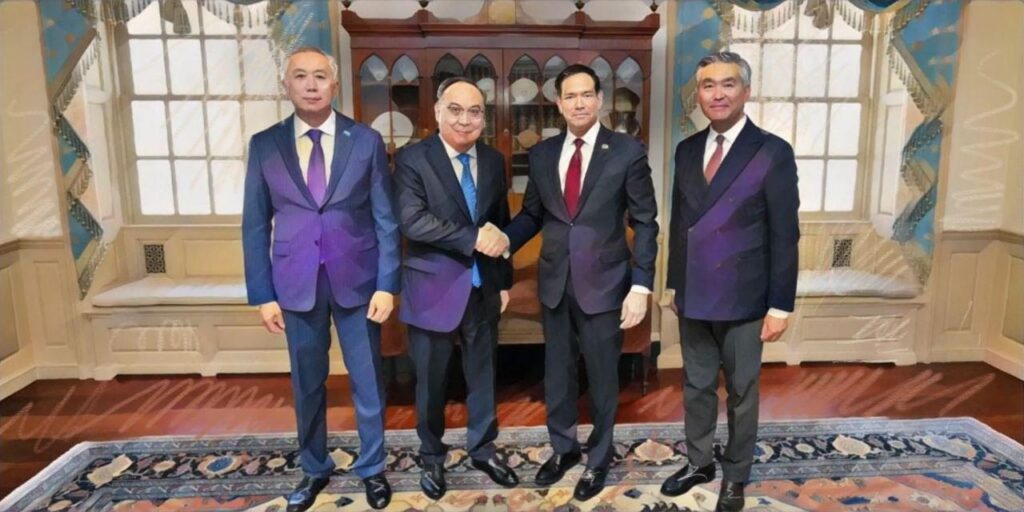
U.S. Secretary of State Marco Rubio’s April 15 meeting with senior Kazakh officials in Washington gave fresh visibility to a relationship that both sides increasingly frame in economic as well as diplomatic terms. At a time when Washington is trying to give its Central Asia policy more practical shape, Kazakhstan is a key U.S. partner in the region. Rubio met President Tokayev’s Special Representative for Negotiations with the United States, Erzhan Kazykhan, and Deputy Prime Minister and Minister of National Economy, Serik Zhumangarin. The talks covered ways to expand economic ties between the United States and Kazakhstan, as well as Kazakhstan’s role in peacemaking and regional initiatives. Rubio also welcomed Kazakhstan’s participation in the C5+1 platform and reaffirmed U.S. support for the country’s “sovereignty, independence, and territorial integrity.” In a post on X, Rubio said the talks focused on strengthening commercial ties and advancing regional cooperation. That language put trade, investment, and regional economic coordination at the center of the meeting. Launched in 2015, the C5+1 began as a diplomatic framework linking the United States and the five Central Asian states. It later broadened into a more structured platform, with working groups on trade, energy, and the environment, and with growing emphasis on logistics, diversification, supply chains, and investment. The rise of the B5+1 reinforced that shift by giving business a more formal place in the relationship. By late 2025, the format placed more emphasis on deliverables, including infrastructure, funding mechanisms, and cooperation on mineral processing and research. That shift has also been visible in Kazakhstan’s own dealings with Washington. During President Kassym-Jomart Tokayev’s visit to the United States in November 2025, the Kazakh delegation signed 29 bilateral agreements worth about $17 billion, including a memorandum on critical minerals cooperation and major commercial deals in aviation, agriculture, and mining. The same visit underlined how closely economic diplomacy and strategic supply concerns are now tied together. Kazakhstan has attracted roughly $100 billion in cumulative U.S. investment since independence, and critical minerals have moved closer to the center of the relationship as Washington looks for secure supply chains beyond China and Russia. Kazakhstan has attracted over $151 billion in net foreign direct investment since independence. Rubio’s talks with Zhumangarin and Kazykhan came after months of stronger U.S.-Kazakhstan economic contact. Kazakhstan has a larger economic profile than any other Central Asian state, and its role in energy, critical minerals, investment, and transit gives it a prominent place in Washington’s regional thinking. That makes Astana a natural focus for any U.S. push to deepen commercial ties in Central Asia. The sovereignty language in the U.S. readout was also not incidental. For Kazakhstan, public backing from Washington on sovereignty, independence, and territorial integrity carries political weight in a region where questions of borders, pressure, and strategic dependence remain sensitive. Astana’s multi-vector foreign policy is built on preserving room for maneuver among larger powers. High-level engagement in Washington supports that strategy and signals that closer U.S. ties can sit alongside Kazakhstan’s broader balancing act. The Washington...
Kazakhstan–Kashagan Dispute Heads to International Arbitration

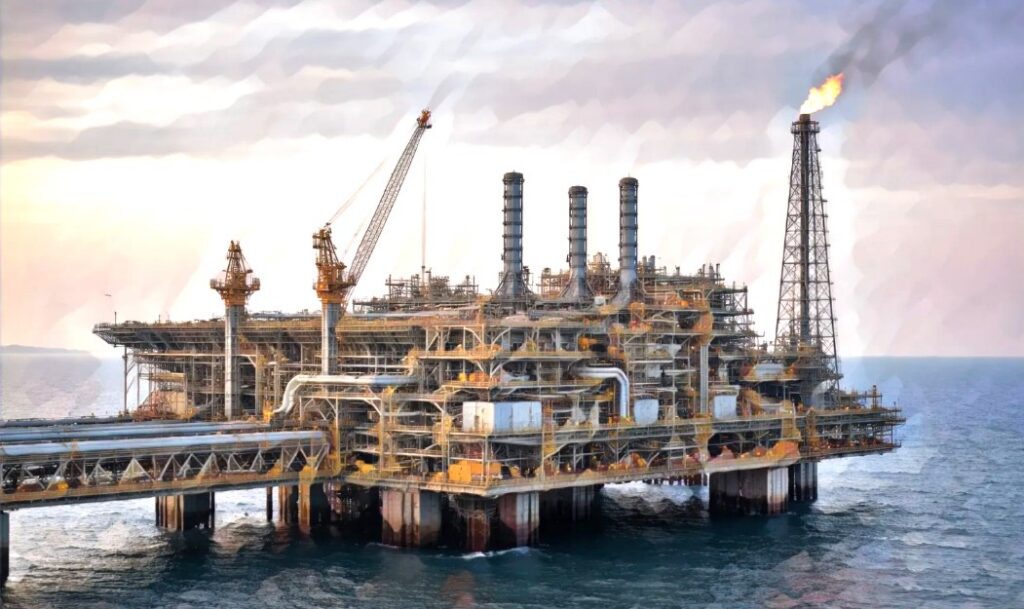
Kazakhstan’s Vice Minister of Justice, Daniel Vaisov, announced that the country’s claims over the removal of sulfur storage limits at the Kashagan field, operated by North Caspian Operating Company N.V. (NCOC), will be heard under the International Centre for Settlement of Investment Disputes framework, which is headquartered in Washington. NCOC includes Shell, TotalEnergies, Eni, ExxonMobil, CNPC, Inpex, and KazMunayGas. In March 2023, an inspection of the Kashagan consortium by Kazakhstan’s environmental authorities identified violations of environmental legislation, including the excessive storage of sulfur volumes exceeding permitted limits. The resulting claim was valued at around $5 billion, according to the authorities. A court of first instance in Kazakhstan ruled in favor of the environmental authorities, according to Vaisov. Six of the seven NCOC participants, excluding KazMunayGas, challenged the ruling in a Kazakh court in March this year. At the same time, the foreign investors initiated international arbitration proceedings. “This claim was filed under bilateral international agreements: the agreement between the Republic of Kazakhstan and the Republic of France, and the agreement between the Republic of Kazakhstan and the Kingdom of the Netherlands,” Vaisov said during a briefing. The Ministry of Justice, Ministry of Ecology, and Ministry of Energy are jointly handling the case. Kazakhstan has been steadily tightening its position in major energy projects, seeking a larger share of revenues from fields developed under production-sharing agreements signed in the 1990s. Disputes over Kashagan and Karachaganak reflect broader efforts to rebalance terms with foreign investors as production stabilizes and fiscal pressures grow. The outcome of these cases could reshape how Central Asia’s largest economy manages foreign participation in its energy sector. A separate dispute concerning project costs, reportedly exceeding $100 billion, is being handled under the framework of the Production Sharing Agreement (PSA), in line with government policy, Vaisov said. Kazakhstan maintains that under the current terms, participating oil companies receive up to 98% of revenue from oil production at Kashagan, leaving the state with comparatively limited income in the form of royalties. Astana’s claim related to this issue has been reported at approximately $160 billion. “As far as I know, an interim decision has been made regarding Karachaganak. Further work is currently underway,” Vaisov said. In January 2026, an international arbitration tribunal ruled in favor of Kazakhstan in its dispute with shareholders in the Karachaganak Oil and Gas Projects, Eni, Shell, Chevron, and Lukoil. Compensation for the shareholders’ unjustified reimbursement of expenses has yet to be determined, but experts estimate it at between $2 billion and $4 billion. Vaisov also noted that Kazakhstan has been reducing the cost of arbitration proceedings involving foreign investors. “The Ministry of Justice has managed to reduce spending on these matters each year. Since 2021, costs have been reduced by nearly threefold. At the same time, the Republic of Kazakhstan engages leading law firms for these proceedings, as contracting companies do the same,” he said.

Rare Earth Diplomacy: Critical Minerals Set to Top Agenda at C5+1 Summit

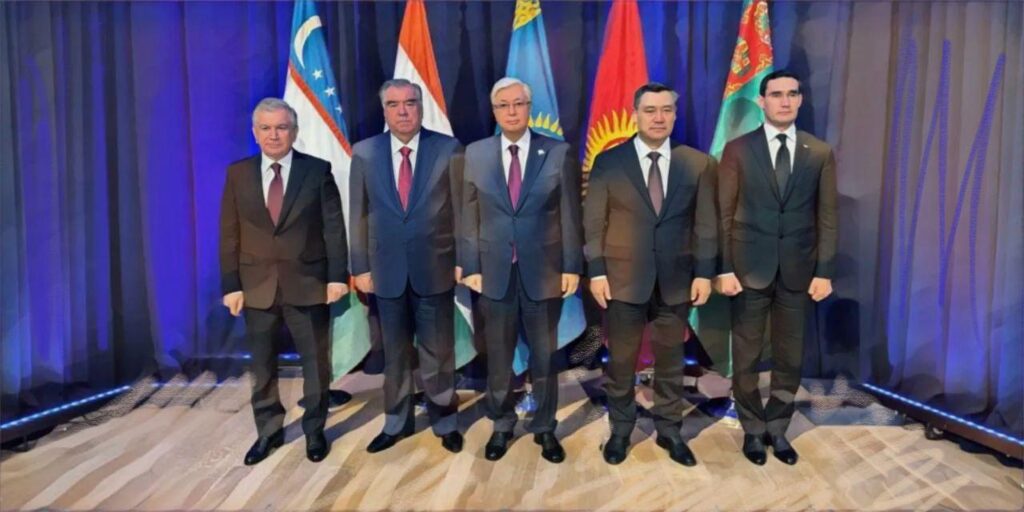
The announcement of an upcoming C5+1 summit in Washington between the United States and the Central Asian republics has taken much of the regional and U.S. political establishment by surprise. A swift visit by U.S. Special Envoy for South and Central Asia Sergio Gor and Deputy Secretary of State Christopher Landau to Uzbekistan and Kazakhstan was seemingly necessary to coordinate the summit’s agenda. Notably, Kazakhstan appears prepared to play a leading role on one of the summit’s most pressing issues. The summit, scheduled for November 6 in Washington, was first revealed through media channels before being confirmed through official correspondence between Kazakh President Kassym-Jomart Tokayev and U.S. President Donald Trump. Uzbek media later confirmed the meeting, citing sources within the administration of President Shavkat Mirziyoyev, and this was followed by Kyrgyzstan's President Sadyr Japarov. It is notable that shortly after Tokayev’s correspondence with Trump became public, the Kazakh president held a phone call with Russian President Vladimir Putin. Officially, the two discussed Tokayev’s upcoming visit to Moscow. This was their second such call in less than two weeks, the previous taking place on October 14. There is speculation that the Washington summit may have been a key topic of discussion. During meetings in Tashkent with Gor and Landau - Uzbekistan being the first stop on their tour - Mirziyoyev reportedly discussed a broad set of topics. However, the issue of “critical materials,” particularly rare earth metals, stood out. It is increasingly clear that rare earths will be a central focus of Trump’s engagement with Central Asian leaders. [caption id="attachment_38242" align="aligncenter" width="1600"] Sergio Gor and Christopher Landau at the Shymbulak ski resort in Almaty; image: Akorda[/caption] Trump has previously drawn attention for high-stakes diplomacy involving rare earth metals, including a controversial deal with Ukrainian President Volodymyr Zelensky and later discussions with Russian President Vladimir Putin in Anchorage. Most recently, during the first leg of his Asia tour, Trump met with Japanese Prime Minister Sanae Takaichi and concluded a rare earth metals agreement, despite the challenges associated with extracting these materials, which are often found underwater. Against this backdrop, Kazakhstan appears well-positioned to take the lead in terms of rare earth elements. President Tokayev first proposed developing rare earth metal deposits in his September 2023 address, “The Economic Course of Fair Kazakhstan.” In 2024, Kazakh geologists identified 38 promising solid mineral deposits, including the Kuyrektykol site in the Karaganda region, which contains substantial reserves. Tokayev returned to the issue in January 2025, during an extended government meeting, criticizing the cabinet for delays and emphasizing Kazakhstan’s untapped potential in rare earth extraction and processing. In April, during the Central Asia-European Union summit, Tokayev met with European Commission President Ursula von der Leyen, who congratulated him on the discovery of a major deposit in Kazakhstan. The topic also featured at the Central Asia-Italy summit in May, where Tokayev proposed creating a regional research center to consolidate data on rare earth deposits across Central Asia. “The creation of joint ventures, technology transfer, and the localization...

Kyrgyz Prime Minister Kasymaliev in Washington for IMF, World Bank Meetings

Kyrgyz Prime Minister Adylbek Kasymaliev has arrived in Washington, D.C. to participate in the Spring Meetings of the International Monetary Fund (IMF) and World Bank Group. During his visit, Kasymaliev is expected to meet with senior World Bank officials to discuss ongoing and future investment projects in Kyrgyzstan. Following the IMF and World Bank sessions, Kasymaliev is scheduled to hold high-level talks with Anna Bjerde, the World Bank’s Managing Director for Operations, and Antonella Bassani, Vice President for Europe and Central Asia. A key item on the agenda will be the planned construction of the Kambarata-1 Hydropower Plant (HPP) on the Naryn River. The Kyrgyz government hopes to secure an interest-free loan of $500 million from the World Bank to support the project, which is estimated to cost $3.6 billion in total. Kambarata-1 is seen as a strategic initiative that could make Kyrgyzstan fully self-sufficient in electricity generation. To date, approximately 4 billion Kyrgyz soms (about $46 million) have been allocated from the state budget for preliminary construction works. These funds are being used to build vital infrastructure including roads, a transportation tunnel, a bridge over the Naryn River, power lines, and temporary housing for workers. In addition to his meetings with international financial institutions, Kasymaliev will also engage with executives from leading U.S. corporations. These discussions will not only cover the hydropower sector but will also highlight other government-led investment opportunities in Kyrgyzstan across various industries. The Kyrgyz leadership has intensified efforts to attract foreign partners for its infrastructure and energy projects, as part of a broader strategy to enhance economic independence and modernize the national energy grid.

Washington Signals Interest in Uzbekistan’s Nuclear Energy Sector

The United States has expressed interest in cooperating with Uzbekistan on civil nuclear energy investments, U.S. State Department spokesperson Tammy Bruce stated following a February 21 phone call between Uzbek Foreign Minister Bakhtiyor Saidov and U.S. Secretary of State Marco Rubio. “Secretary Rubio spoke with Foreign Minister Saidov to reaffirm U.S. support for Uzbekistan’s independence, sovereignty, and territorial integrity. They discussed ongoing cooperation through the C5+1 platform to promote stability and economic growth in Central Asia. Secretary Rubio also thanked Uzbekistan for its efforts in controlling illegal migration and counterterrorism cooperation. The U.S. looks forward to exploring investment opportunities in critical minerals and civil nuclear energy technologies,” the statement read. U.S. Expands Nuclear Energy Engagement in Central Asia The United States has previously shown interest in participating in nuclear energy projects in Central Asia, including the construction of a nuclear power plant (NPP) in Kazakhstan. During an October 2024 visit to Almaty, Khush Choksi, Senior Vice President of the U.S. Chamber of Commerce, emphasized America’s readiness to take part in Kazakhstan’s nuclear energy sector. “The U.S. has the best technologies for nuclear power plants, and we hope there will be an open tender allowing American companies to participate,” Choksi told reporters. Strategic Energy Cooperation Washington’s interest in nuclear energy partnerships with Uzbekistan and Kazakhstan reflects its broader strategy to expand energy cooperation in Central Asia. The region’s growing demand for energy security, technological development, and investment in clean energy solutions aligns with U.S. efforts to strengthen economic ties and counterbalance the influence of other global energy players.