
• KGS/USD = 0.01143 0%
  • KZT/USD = 0.00200 0%
  • TJS/USD = 0.10593 -0.19%
  • UZS/USD = 0.00008 0%
  • TMT/USD = 0.28575 0%
  • KGS/USD = 0.01143 0%
  • KZT/USD = 0.00200 0%
  • TJS/USD = 0.10593 -0.19%
  • UZS/USD = 0.00008 0%
  • TMT/USD = 0.28575 0%
  • KGS/USD = 0.01143 0%
  • KZT/USD = 0.00200 0%
  • TJS/USD = 0.10593 -0.19%
  • UZS/USD = 0.00008 0%
  • TMT/USD = 0.28575 0%
  • KGS/USD = 0.01143 0%
  • KZT/USD = 0.00200 0%
  • TJS/USD = 0.10593 -0.19%
  • UZS/USD = 0.00008 0%
  • TMT/USD = 0.28575 0%
  • KGS/USD = 0.01143 0%
  • KZT/USD = 0.00200 0%
  • TJS/USD = 0.10593 -0.19%
  • UZS/USD = 0.00008 0%
  • TMT/USD = 0.28575 0%
  • KGS/USD = 0.01143 0%
  • KZT/USD = 0.00200 0%
  • TJS/USD = 0.10593 -0.19%
  • UZS/USD = 0.00008 0%
  • TMT/USD = 0.28575 0%
  • KGS/USD = 0.01143 0%
  • KZT/USD = 0.00200 0%
  • TJS/USD = 0.10593 -0.19%
  • UZS/USD = 0.00008 0%
  • TMT/USD = 0.28575 0%
  • KGS/USD = 0.01143 0%
  • KZT/USD = 0.00200 0%
  • TJS/USD = 0.10593 -0.19%
  • UZS/USD = 0.00008 0%
  • TMT/USD = 0.28575 0%
22 February 2026

Viewing results 1 - 6 of 9

Bishkek Officially Inaugurates Central Asia’s First Waste-to-Energy Plant

Bishkek marked a major environmental milestone on December 27 with the official inauguration of Central Asia’s first waste-to-energy plant. President Sadyr Japarov attended the ceremony, underscoring the project’s strategic and environmental importance. The facility received its first pilot batch of municipal solid waste on November 14 and has since become the region’s first operational plant generating electricity through waste incineration. Located at Bishkek’s primary landfill, the plant was constructed by China’s Hunan Junxin Environmental Protection Co. Ltd., which invested $95 million in the project. Initially, the facility will process 1,000 tons of waste per day, with future expansion plans to increase capacity to 3,000 tons. The plant is equipped with advanced technology and complies with international environmental standards. It also includes a processing line to convert slag and ash from incineration into construction materials. Speaking at the ceremony, Japarov said the plant would significantly improve the capital’s environmental conditions and contribute to electricity generation. He noted that the facility was built in just 1.5 years and operates under a 35-year concession agreement, after which it will be fully transferred to the state. Designed to process up to 365,000 tons of waste annually, the plant features a 30 MW turbo-generator power unit that will save approximately 80,000 tons of coal and reduce carbon dioxide emissions by about 100,000 tons per year. Japarov also met with residents living near the landfill. Many shared that they had long suffered from health issues due to constant smoke from burning garbage and waste blown by the wind. They expressed hope that the new plant would dramatically improve local living conditions. Opened in 1974, Bishkek’s municipal landfill has accumulated around 20 million tons of waste. In recent years, the city has struggled to manage growing volumes of solid waste, receiving up to 1,500 tons per day which has severely impacted the urban environment. The Bishkek plant is the first of three waste-to-energy projects by Hunan Junxin in Kyrgyzstan. In June 2025, the company began constructing a similar facility in Osh, the country’s second-largest city. On October 25, it launched another plant in Karakol, the administrative center of Issyk-Kul region. Hunan Junxin is also expanding regionally. In August, Kazakhstan’s Ministry of Ecology and Natural Resources announced that the company would build Kazakhstan’s first waste-to-energy plant in Almaty.

Green Power Pivot: Bishkek Debuts Waste-to-Energy Plant

On November 14, Bishkek’s newly constructed waste-to-energy plant received its first pilot batch of municipal solid waste, marking a major milestone in Kyrgyzstan’s efforts to modernize waste management and expand sustainable energy infrastructure. According to the Bishkek municipality, 17 garbage trucks delivered 126 tons of solid waste to the facility. Once the accumulated volume reaches 1,000 tons, the incineration process will begin, generating electricity from waste. The pilot delivery was attended by Minister of Natural Resources, Ecology, and Technical Supervision Meder Mashiev and Bishkek Mayor Aibek Junushaliev, underscoring the project's national significance as Kyrgyzstan’s first major waste recycling initiative. Located at Bishkek’s primary landfill site, the plant was constructed by China’s Hunan Junxin Environmental Protection Co. Ltd. In its initial phase, the facility is expected to process 1,000 tons of waste daily, with plans to scale capacity up to 3,000 tons per day. Total investment in the project stands at $95 million. The official inauguration is scheduled for December 26, 2025. The project represents a critical step in addressing the capital’s growing waste management challenges while advancing Kyrgyzstan’s clean energy goals. Solid waste disposal has become increasingly urgent, particularly in Bishkek, the country's largest city. According to the 24.kg news agency, Kyrgyzstan collected 1.792 million tons of solid waste nationwide in 2023, up from 1.177 million tons in 2019, equating to approximately 279 kilograms per capita annually. Bishkek’s sanitary landfill alone receives about 200 tons of waste per day from the city and its surrounding areas, according to landfill director Nurlan Jumaliev. In June, Hunan Junxin also began constructing a similar waste-to-energy facility in Osh, Kyrgyzstan’s second-largest city. That plant will produce both electricity and heat from incinerated waste. The company is expanding its presence in Central Asia. In August, Kazakhstan’s Ministry of Ecology and Natural Resources announced that Hunan Junxin will build the country’s first waste-to-energy plant in Almaty.
Chinese Firm to Build Kazakhstan’s First Waste-to-Energy Plant in Almaty

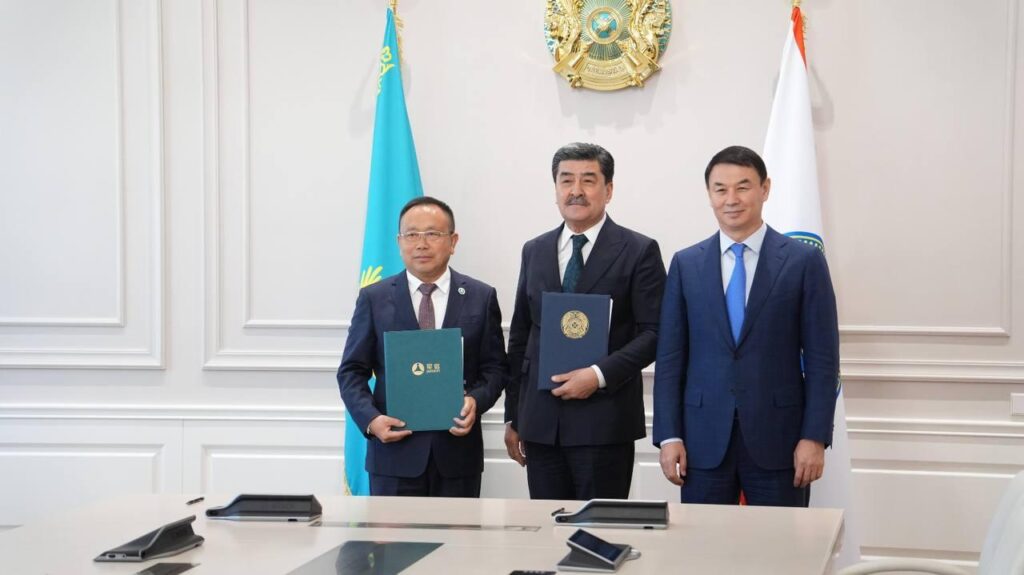
Kazakhstan has taken a major step toward modernizing its waste management infrastructure with the signing of a landmark investment agreement with China’s Hunan Junxin Environmental Protection Co. Ltd. On August 29, the Ministry of Ecology and Natural Resources announced that the company will build the country’s first waste-to-energy plant in Almaty. The facility will be capable of incinerating at least 1,600 tons of solid municipal waste per day, generating 60 megawatts of electricity. The total investment in the project is estimated at 145 billion tenge (approximately $269 million). The plant will utilize advanced waste-to-energy technology that complies with European Union emission standards. It will also be equipped with an automated system for continuous environmental monitoring. The project is expected to create around 700 jobs during construction and at least 120 permanent positions upon completion. Hunan Junxin Environmental Protection has previously announced plans to invest up to $600 million in three waste-to-energy facilities across Kazakhstan. Regional Expansion and Experience The company is already active in neighboring Kyrgyzstan. In June, it began construction of a $95 million solid waste incineration facility in Osh, Kyrgyzstan’s second-largest city. That facility will generate both electricity and heat from municipal waste. In Bishkek, Hunan Junxin is constructing a solid waste recycling facility at the city’s main landfill. The plant is initially expected to process 1,000 tons of waste per day, with capacity slated to increase to 3,000 tons by the time of its projected completion in December 2025. In China, the company reported recycling 3.2 million tons of municipal waste in 2024, generating over 1.47 billion kWh of electricity.

Chinese Firm to Invest $600 Million in Waste-to-Energy Plants in Kazakhstan

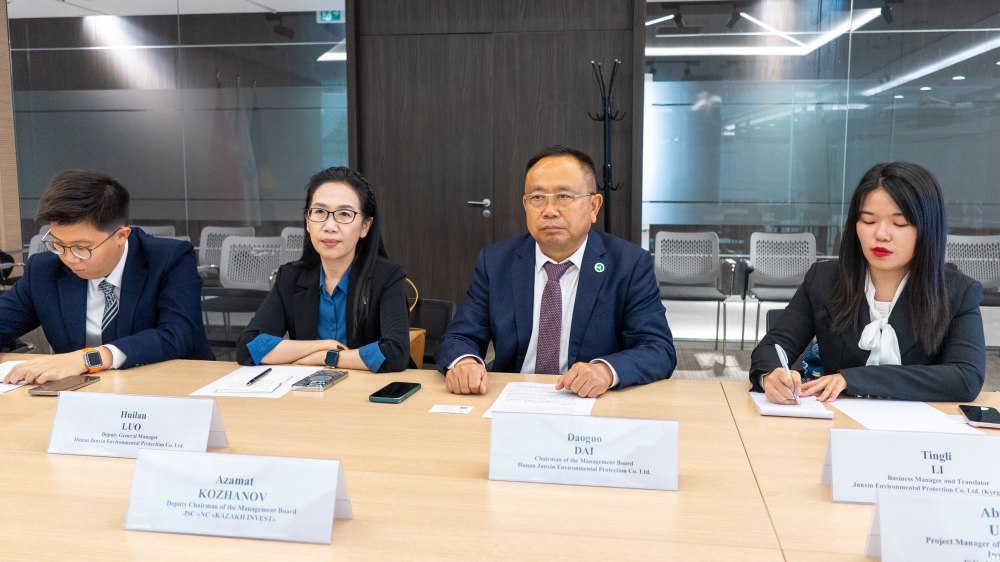
China’s Hunan Junxin Environmental Protection Co. Ltd. plans to invest $600 million in constructing three waste-to-energy plants in Kazakhstan. The project was the focus of a meeting on July 3 between Azamat Kozhanov, Deputy Chairman of the Board at Kazakh Invest, and Dai Daoguo, Chairman of Hunan Junxin’s Board of Directors. According to Dai, the initiative will go beyond waste incineration to establish an integrated technological ecosystem. Plans include green data centers powered by the energy produced, training facilities, and smart waste management systems. “Our goal is not just to build plants, but to implement an innovative approach to waste handling,” Dai said. “We aim to bring technologies to Kazakhstan that integrate recycling, energy generation, and digitalization. I’m confident this will be a major contribution to the region’s sustainable development and environmental safety.” Kozhanov highlighted the importance of large-scale, environmentally focused projects that promote technology localization and sustainable energy. “We see strong potential for joint implementation of green projects that meet international standards. Junxin’s experience, including successful initiatives in China and Kyrgyzstan, can contribute significantly to the development of green infrastructure in our cities,” he said. Hunan Junxin is already active in Kyrgyzstan, where it is implementing similar projects in Bishkek and Osh. As previously reported by The Times of Central Asia, on June 10, the company began construction of a $95 million solid waste incineration facility in Osh, Kyrgyzstan’s second-largest city. The plant will convert municipal waste into electricity and heat. In Bishkek, the company is building a solid waste recycling facility at the city’s sanitary landfill. Initially, the facility will process 1,000 tons of waste per day, with plans to expand capacity to 3,000 tons. Completion is scheduled for December 2025.

Chinese Firm Begins Construction of Waste-to-Energy Plant in Osh

On June 10, construction officially began on a new solid waste incineration facility in Osh, Kyrgyzstan’s second-largest city. The plant, part of a larger initiative to convert municipal waste into electricity and heat, marks a major step toward improving urban waste management and expanding sustainable energy generation. According to the Osh city administration, the plant’s initial phase will include a waste-processing facility capable of handling up to 850 tons of waste per day. It will generate 30 megawatts of electricity per hour, contributing significantly to the local energy grid. Future phases of the project include the production of thermal energy to supply heat to residential and commercial buildings in Osh during the winter months. In addition, a 300-megawatt solar power plant is planned as part of the overall initiative. Osh generates approximately 200,000 tons of waste annually, much of which is currently deposited in open landfills. These sites contribute to environmental pollution and pose health risks. The new facility will use environmentally friendly technologies to process and neutralize waste, offering a more sustainable solution. The project’s total investment is estimated at $95 million. As previously reported by The Times of Central Asia, Hunan Junxin Huanbao is also developing a similar waste-to-energy project in Bishkek. The company is constructing a solid waste recycling facility at the capital’s sanitary landfill. Initially, the Bishkek plant will process 1,000 tons of waste per day, with plans to increase capacity to 3,000 tons. Completion is scheduled for December 2025. Solid waste management remains a critical issue in Kyrgyzstan, particularly in urban centers like Bishkek and Osh. The development of modern waste-processing plants represents a key advancement in addressing these challenges while also contributing to the country’s renewable energy goals.
