


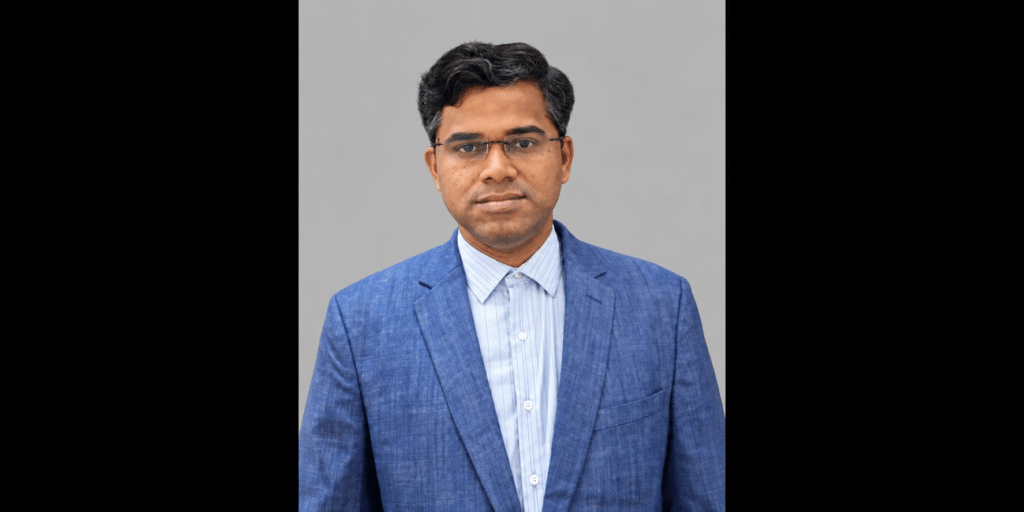
“Water Insecurity Is Not Experienced Equally”: Why Scarcity Is Also a Social Problem
A water crisis begins long before a river runs dry. Across Central and South Asia, retreating glaciers and the overuse of groundwater are putting supplies under growing pressure. Environmental sociologist Devendraraj Madhanagopal argues that the more revealing question is often who gets the water that remains. An assistant professor at XIM University’s School of Sustainability, Madhanagopal has studied climate adaptation among fishing communities on India’s southern coast. In an interview with The Times of Central Asia, he draws on that research to discuss why water scarcity can deepen social inequalities in the Aral Sea region. Giving local people more responsibility for managing water without the resources or authority to act, he warns, can make matters worse. TCA: Glacier retreat and changes in snow cover are increasingly affecting water security in both Central and South Asia. However, these processes are often discussed mainly from environmental or hydrological perspectives. In your view, which social consequences are currently underestimated? How could changing water availability affect local communities, agriculture, employment, and migration? Dr. Madhanagopal: Before discussing the availability of water at the country, regional, or continental level, we also need to focus on the social and cultural dimensions of water and on how available water is distributed among different social groups. Communities have historically developed customary institutions, informal rules, practices and local leadership structures to share and distribute water resources. Many of these arrangements have gradually weakened over recent decades in Asia with the rise of resource-intensive development. At the same time, governments in India and Central Asia, including Kazakhstan, have increasingly recognized that water security requires the effective management of complex and interconnected systems. Institutions have been established, and governments increasingly seek support from think tanks, research organizations, and NGOs to address the socio-political and governance dimensions of water management. Nevertheless, significant knowledge and governance gaps remain. Glacier retreat and changes in snow cover are receiving increasing attention from scientists and policymakers. However, discussions about water governance still tend to focus on macro-level transboundary disputes, glacier retreat, and technocentric adaptation, including efficiency improvements and infrastructure. Much less attention is given to social inequalities, power, politics, and conflicts over access to water. This matters because water insecurity is not experienced equally. We need to ask who gets access to water, who bears the burden of scarcity, and how marginalized groups experience water insecurity. Lessons from previous water conflicts and governance failures have not always been adequately incorporated into planning and monitoring in India and many Central Asian countries. We also often view Central Asia primarily through geopolitical frameworks rather than environmental ones. Policy discussions should pay greater attention to interconnected river basins and the diverse environmental conditions across the region. Research and policymaking should examine how climate change and water insecurity affect agriculture, employment, and migration at both local and regional levels. Policymakers should also recognize that water insecurity can intensify local conflicts over shared resources and exacerbate existing inequalities, including gender inequality. These challenges ultimately require localized as well as regional responses. [caption...
