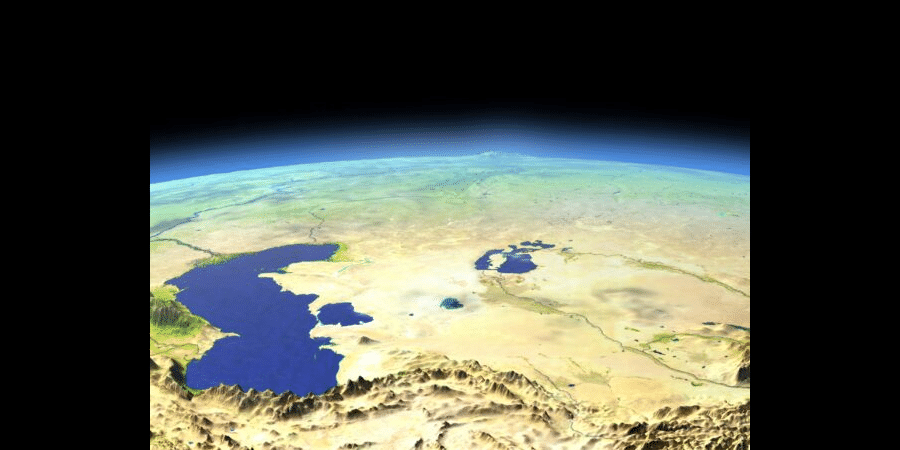

A water crisis begins long before a river runs dry. Across Central and South Asia, retreating glaciers and the overuse of groundwater are putting supplies under growing pressure. Environmental sociologist Devendraraj Madhanagopal argues that the more revealing question is often who gets the water that remains.
An assistant professor at XIM University’s School of Sustainability, Madhanagopal has studied climate adaptation among fishing communities on India’s southern coast. In an interview with The Times of Central Asia, he draws on that research to discuss why water scarcity can deepen social inequalities in the Aral Sea region. Giving local people more responsibility for managing water without the resources or authority to act, he warns, can make matters worse.
TCA: Glacier retreat and changes in snow cover are increasingly affecting water security in both Central and South Asia. However, these processes are often discussed mainly from environmental or hydrological perspectives. In your view, which social consequences are currently underestimated? How could changing water availability affect local communities, agriculture, employment, and migration?
Dr. Madhanagopal: Before discussing the availability of water at the country, regional, or continental level, we also need to focus on the social and cultural dimensions of water and on how available water is distributed among different social groups. Communities have historically developed customary institutions, informal rules, practices and local leadership structures to share and distribute water resources. Many of these arrangements have gradually weakened over recent decades in Asia with the rise of resource-intensive development.
At the same time, governments in India and Central Asia, including Kazakhstan, have increasingly recognized that water security requires the effective management of complex and interconnected systems. Institutions have been established, and governments increasingly seek support from think tanks, research organizations, and NGOs to address the socio-political and governance dimensions of water management. Nevertheless, significant knowledge and governance gaps remain.
Glacier retreat and changes in snow cover are receiving increasing attention from scientists and policymakers. However, discussions about water governance still tend to focus on macro-level transboundary disputes, glacier retreat, and technocentric adaptation, including efficiency improvements and infrastructure. Much less attention is given to social inequalities, power, politics, and conflicts over access to water.
This matters because water insecurity is not experienced equally. We need to ask who gets access to water, who bears the burden of scarcity, and how marginalized groups experience water insecurity. Lessons from previous water conflicts and governance failures have not always been adequately incorporated into planning and monitoring in India and many Central Asian countries.
We also often view Central Asia primarily through geopolitical frameworks rather than environmental ones. Policy discussions should pay greater attention to interconnected river basins and the diverse environmental conditions across the region. Research and policymaking should examine how climate change and water insecurity affect agriculture, employment, and migration at both local and regional levels. Policymakers should also recognize that water insecurity can intensify local conflicts over shared resources and exacerbate existing inequalities, including gender inequality. These challenges ultimately require localized as well as regional responses.
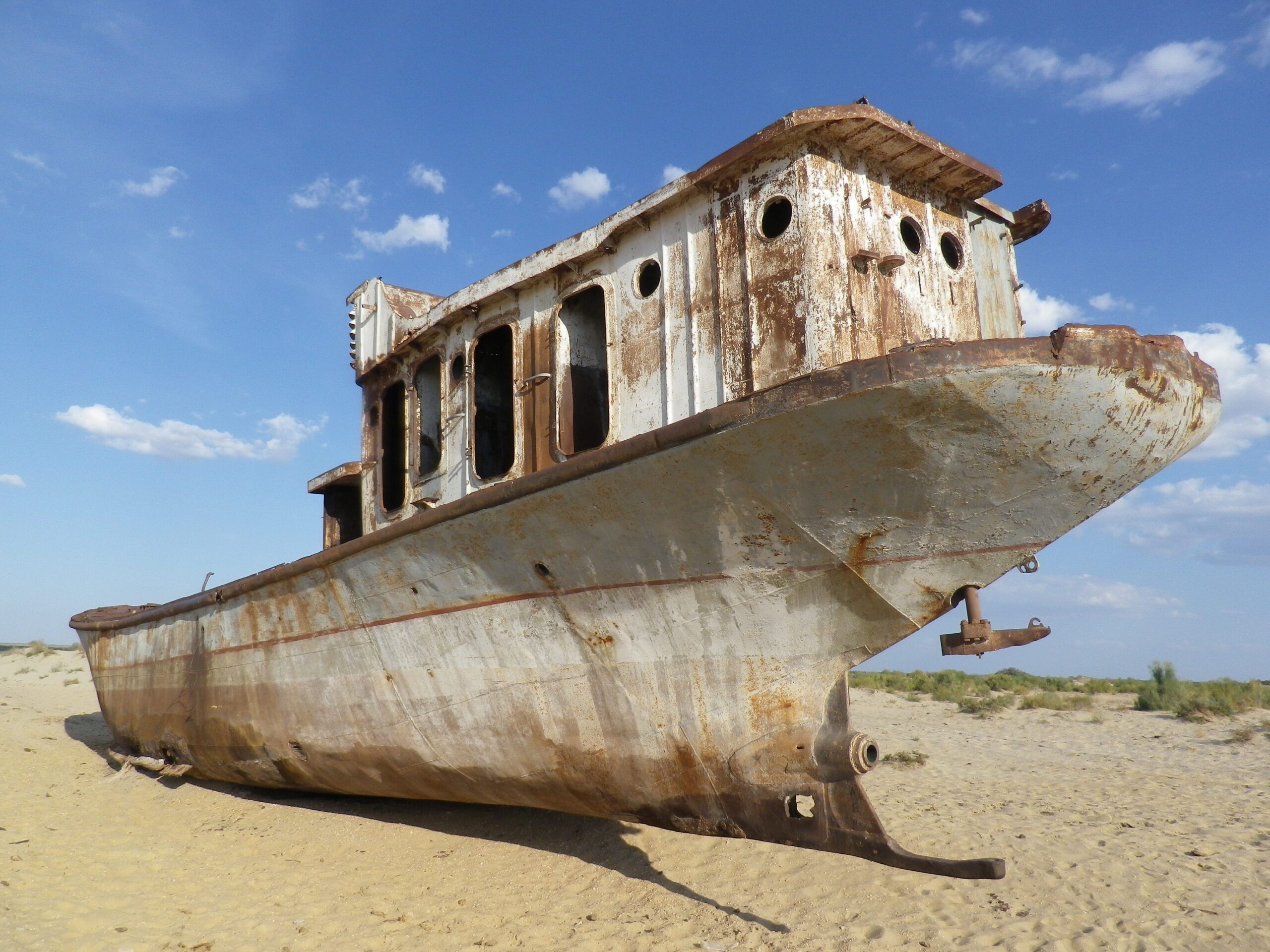
Former Aral Sea. Image: TCA
TCA: The Aral Sea crisis has demonstrated how problems in water management can develop into a major environmental and socio-economic crisis. What lessons from India and South Asia could be useful for strengthening the resilience of local communities in the Aral Sea region? Conversely, are there elements of Central Asia’s experience that could be relevant to South Asia?
Dr. Madhanagopal: Policy and academic discussions often concentrate on water availability and scarcity. We also need to understand how water insecurity is shaped by interactions among local institutions, state-community relations, climate extremes, environmental pressures and existing social inequalities.
In my own research in Tamil Nadu, a coastal state in southern India, I found that water-related crises are not merely hydrological problems. They are also connected to generations of social inequality, vulnerability and institutional inefficiency. Seawater is physically abundant, but access to freshwater is increasingly under pressure from seawater intrusion, groundwater degradation, heavy rainfall and other environmental stresses. Water governance is also highly centralized, while community knowledge is not sufficiently incorporated into decision-making. Similar challenges can be found elsewhere in India.
From this perspective, resilience programs in the Aral Sea region should ask whose knowledge enters water governance and policymaking, who is most vulnerable during a water crisis, whether state-community relations are effective, and which existing socio-economic inequalities may weaken people’s resilience.
India and Central Asia have different ecological conditions, institutional histories and governance systems, so comparisons require caution. Nevertheless, there are important commonalities. In both regions, decisions intended to protect agriculture or irrigation in one part of a river basin can have long-term environmental and livelihood consequences far beyond the place where those decisions were made.
The common lesson is the need for long-term basin-level planning, regional cooperation within and between countries, environmental monitoring, negotiated water governance and meaningful involvement of local institutions. Water governance becomes more resilient when communities, scientists, policymakers, local institutions and state authorities share knowledge and responsibilities and act collectively.
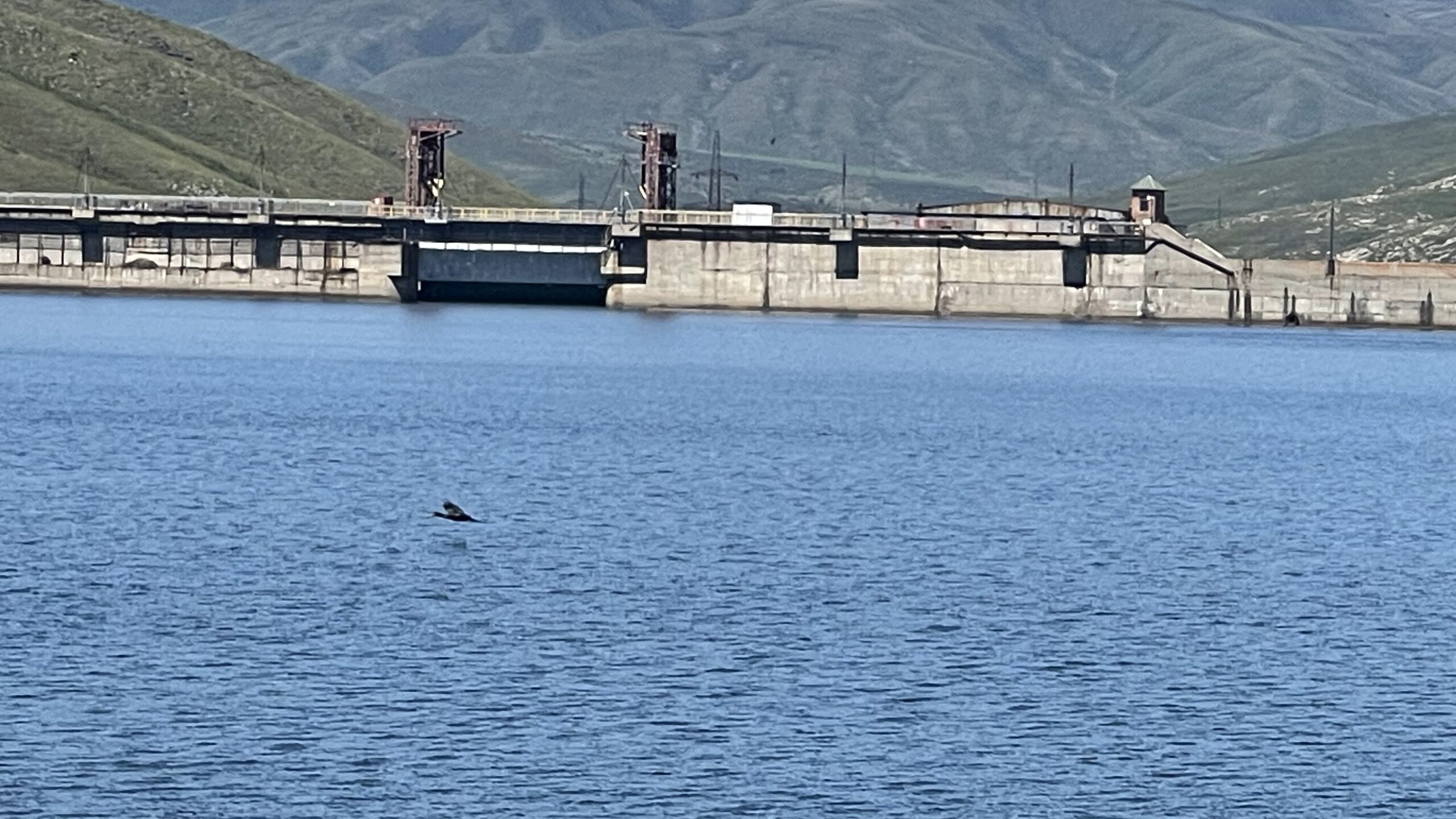
Bukhtarma Reservoir, East Kazakhstan @TCA
TCA: Central and South Asia face many similar climate and water-related challenges, yet cooperation between the two regions in this field remains relatively limited. Which practical areas of cooperation do you consider most promising – joint research, knowledge and data sharing, community adaptation programs, professional training, or expert dialogue? What role could India and Kazakhstan play in developing such cooperation?
Dr. Madhanagopal: I see four closely interconnected areas that deserve greater attention:
First, we need more joint research on the climate-water-livelihoods-governance nexus. Research cooperation between India and Central Asia is growing, but cooperation between India and Kazakhstan remains relatively limited, particularly in social and community-oriented research. We need to examine how drought, salinization, and groundwater depletion affect different livelihoods and social groups, and study water security from the perspective of communities rather than relying exclusively on hydrological indicators and technocentric approaches.
Second, data and knowledge sharing should be expanded. Collaborative research and expert dialogue already exist, but systematic South-Central Asian cooperation on comparable data concerning groundwater and water insecurity remains underdeveloped. Alongside scientific data, we should develop community-generated knowledge connecting hydrology with society, governance and livelihoods.
South Asia already has examples of participatory water management and citizen-science initiatives, some of which are being incorporated into digital knowledge systems. Central and South Asian countries could develop comparative approaches through which local case studies and community-generated knowledge about managing water scarcity are documented and, where appropriate, made available through regional or international repositories. Such knowledge could be useful to scientists, policymakers and practitioners.
Third, we should develop comparative community adaptation projects. Both regions already have local adaptation initiatives, but comparative India-Central Asia studies remain limited. One possibility would be a small pilot project comparing a particularly vulnerable coastal community in South India with a water-stressed region in Kazakhstan.
The objective would not be to replicate one country’s solution in another. Instead, such a project could examine how communities organize themselves in response to environmental pressures, why local institutions succeed or fail, and how governments interact with communities. It could identify institutional bottlenecks, unsuccessful interventions, and socio-political factors affecting water distribution. This would help policymakers understand what can be transferred between contexts and what remains locally specific.
Fourth, Central and South Asia should expand professional exchanges and expert dialogue and make them more interdisciplinary. These networks should go beyond hydrologists, climate scientists, and policymakers to include geographers, sociologists, anthropologists, and local-government actors. Water security cannot be addressed through science and technology alone.
India and Kazakhstan have considerable potential for cooperation in these areas. India has accumulated experience in coastal vulnerability, disaster management, local governance during water crises and community-based adaptation. Kazakhstan, meanwhile, has important experience related to the Aral Sea crisis, transboundary water challenges, irrigation under environmental pressure, and groundwater depletion. Cooperation should therefore move beyond simply exchanging data and experts toward jointly producing knowledge and practical solutions.
TCA: Can top-down encouragement of community participation in water governance itself become a problem?
Dr. Madhanagopal: Yes. Community participation in water governance and climate adaptation should not be treated as an automatic solution, and we need to be cautious about promoting it without considering the resources and capacities available to communities.
Many place-based and resource-dependent communities lack the resources and coordinated long-term plans needed to confront recurrent water crises. At the same time, many problems of water scarcity result from decades of ineffective planning and water mismanagement. Rural communities, including marginal farmers and herders, are often themselves among the victims of water insecurity.
Therefore, in the name of community empowerment and decentralized water governance, governments should be careful not to impose additional responsibilities for water management and conservation on communities without giving them the means to fulfill those responsibilities. Top-down rules imposed in the name of community participation may simply fail.
Local institutions evolve gradually, and immediate results cannot be expected. Rural and resource-dependent communities need institutional support, scientific information, resources and, importantly, time to develop effective systems of localized water governance. Community participation must therefore be accompanied by authority, resources and recognition rather than merely additional responsibilities.
The Aral Sea crisis demonstrates how decades of environmental degradation, water diversion, livelihood pressures and institutional shortcomings can gradually develop into interconnected ecological, health and livelihood crises. We often experience water crises through highly visible events such as floods, cyclones and droughts. But water crises can also develop slowly, through accumulating pressures whose cumulative effects eventually become profound and systemic.
South Asia, in turn, has extensive experience with sudden-onset events such as floods, landslides and extreme rainfall. Greater cooperation could therefore allow Central Asia to learn from South Asian approaches to preparing for and responding to sudden water and climate disasters, while South Asia can learn from the Aral Sea experience about the dangers of allowing gradual ecological degradation to develop into a systemic crisis.
Ultimately, effective water governance needs to be capable of responding to both sudden shocks and slow-moving environmental crises. This requires institutions operating from the national to the local level that can recognize different forms of vulnerability, act before pressures become irreversible, and strengthen long-term resilience.