• KGS/USD = 0.01143 0%
  • KZT/USD = 0.00206 0%
  • TJS/USD = 0.10811 -0.18%
  • UZS/USD = 0.00008 0%
  • TMT/USD = 0.28571 0%
  • KGS/USD = 0.01143 0%
  • KZT/USD = 0.00206 0%
  • TJS/USD = 0.10811 -0.18%
  • UZS/USD = 0.00008 0%
  • TMT/USD = 0.28571 0%
  • KGS/USD = 0.01143 0%
  • KZT/USD = 0.00206 0%
  • TJS/USD = 0.10811 -0.18%
  • UZS/USD = 0.00008 0%
  • TMT/USD = 0.28571 0%
  • KGS/USD = 0.01143 0%
  • KZT/USD = 0.00206 0%
  • TJS/USD = 0.10811 -0.18%
  • UZS/USD = 0.00008 0%
  • TMT/USD = 0.28571 0%
  • KGS/USD = 0.01143 0%
  • KZT/USD = 0.00206 0%
  • TJS/USD = 0.10811 -0.18%
  • UZS/USD = 0.00008 0%
  • TMT/USD = 0.28571 0%
  • KGS/USD = 0.01143 0%
  • KZT/USD = 0.00206 0%
  • TJS/USD = 0.10811 -0.18%
  • UZS/USD = 0.00008 0%
  • TMT/USD = 0.28571 0%
  • KGS/USD = 0.01143 0%
  • KZT/USD = 0.00206 0%
  • TJS/USD = 0.10811 -0.18%
  • UZS/USD = 0.00008 0%
  • TMT/USD = 0.28571 0%
  • KGS/USD = 0.01143 0%
  • KZT/USD = 0.00206 0%
  • TJS/USD = 0.10811 -0.18%
  • UZS/USD = 0.00008 0%
  • TMT/USD = 0.28571 0%

Viewing results 1 - 6 of 62

Kazakhstan Prepares for Flood Season by Releasing Water from Reservoirs

Kazakhstan's Ministry of Water Resources and Irrigation (MWRI) has begun releasing water from key reservoirs across the country to prepare for the influx of meltwater expected during the spring thaw. This proactive measure follows the devastating floods of spring 2024, the worst in 80 years, which affected multiple regions and displaced over 120,000 people. By pre-emptively releasing water from reservoirs, Kazakhstan hopes to mitigate the impact of the spring flood season. This preparation underscores the importance of coordinated water management to protect communities, agriculture, and infrastructure from the devastating effects of extreme weather events. In early January, the MWRI held a meeting to discuss water management strategies for the upcoming flood season. Authorities have initiated controlled releases in reservoirs located in the west, east, north, and center of the country - regions hit hardest by last year’s flooding. These releases are designed to reduce water levels in preparation for spring meltwater. Astana Reservoir: Between December 20, 2024, and January 3, 2025, 5.06 million cubic meters of water were released, lowering the reservoir to 83% of its total capacity. By April 1, its volume will be further reduced to 73% (300 million cubic meters). Aktobe Reservoir: Currently holding 51 million cubic meters, this will be lowered to 47.32 million cubic meters by April. Bitik Reservoir (West Kazakhstan): Discharging at 8.3 cubic meters per second, its volume has been reduced to 34.45 million cubic meters. Bukhtarma Reservoir (East Kazakhstan): Now at 79% capacity, this will be reduced by another 8% by spring. Yntymak Reservoir (Karaganda Region): Of its current 69 million cubic meters, only 39 million cubic meters will remain to accommodate floodwaters. Kengir Reservoir (Ulytau Region): Reduced to 86% of capacity, it will be lowered by an additional 11%. Upper Tobolsk Reservoir (Kostanay Region): Holding 585.4 million cubic meters, its volume will be reduced to 61% (499.37 million cubic meters) by April. MWRI head Nurzhan Nurzhigitov emphasized the importance of strategic water management throughout the year. “In spring, it is critical not only to collect floodwaters in reservoirs but also to distribute them to lake systems, natural pastures, and meadows,” he said. Nurzhigitov urged regional authorities to plan for efficient water allocation, noting that during the previous irrigation period, farms received approximately 11 billion cubic meters of water. Efforts to restore and preserve both large and small reservoirs were also highlighted. Last spring’s historic floods inundated regions in northern, western, eastern, and central Kazakhstan for nearly two months. Over 120,000 people were evacuated, with rescue efforts involving multiple government agencies, including the Ministries of Emergency Situations, Defense, and Internal Affairs, as well as local authorities and volunteers. Despite extensive state aid, many citizens raised concerns about the allocation of resources, as previously reported by The Times of Central Asia.

Kazakhstan Receives Abundant Water in 2024

Kazakhstan’s Ministry of Water Resources and Irrigation has reported record water accumulation in the country’s reservoirs and lakes in 2024​. This year, Kazakhstan’s reservoirs collected over 75 billion cubic meters of water, including more than 12 billion cubic meters of floodwater from unprecedented spring floods in the western and northern regions. These floods were triggered by rapid snowmelt, leading to significant increases in water availability. According to the Ministry, efficient floodwater distribution helped replenish reservoirs and direct excess water to rivers and lakes that have faced drying trends in recent years. Notable allocations include: Lake Balkhash: Received 15.4 billion cubic meters of water in 2024, a 4-billion-cubic-meter increase from 2023. Of this, 3.3 billion cubic meters came from floodwater. Located 175 miles northwest of Almaty, Balkhash is the largest lake in Kazakhstan and the fifteenth-largest in the world. Caspian Sea: Gained 17 billion cubic meters of water, addressing concerns over its declining water level. The Times of Central Asia previously reported concerns that the Caspian could lose up to 18 meters of water by the end of the century​. Kapchagay Reservoir: For the first time in a decade, this reservoir in the Almaty region filled to 100% of its capacity, collecting over 18 billion cubic meters of water. The reservoir regulates the flow of the Ili River, which originates in China and flows into Lake Balkhash. North Aral Sea: Received approximately 2.5 billion cubic meters of water, 400 million cubic meters more than in 2023. This portion of the former Aral Sea is fed by the Syr Darya River and separated from the South Aral Sea in the late 1980s due to water diversion for agriculture. Kamysh-Samar Lakes: Located in the West Kazakhstan region, these lakes were replenished with 80 million cubic meters of floodwater. Minister of Water Resources and Irrigation Nurzhan Nurzhigitov emphasized the Ministry’s efforts to preserve and restore large and small water bodies across Kazakhstan. During the 2024 irrigation season, approximately 11 billion cubic meters of water were supplied to the country’s farms to support agricultural activities. The record water accumulation and successful flood management efforts underscore Kazakhstan’s commitment to sustainable water resource management.

Kazakhstan’s Southern Region Receives Full Irrigation Water Supply from Kyrgyzstan

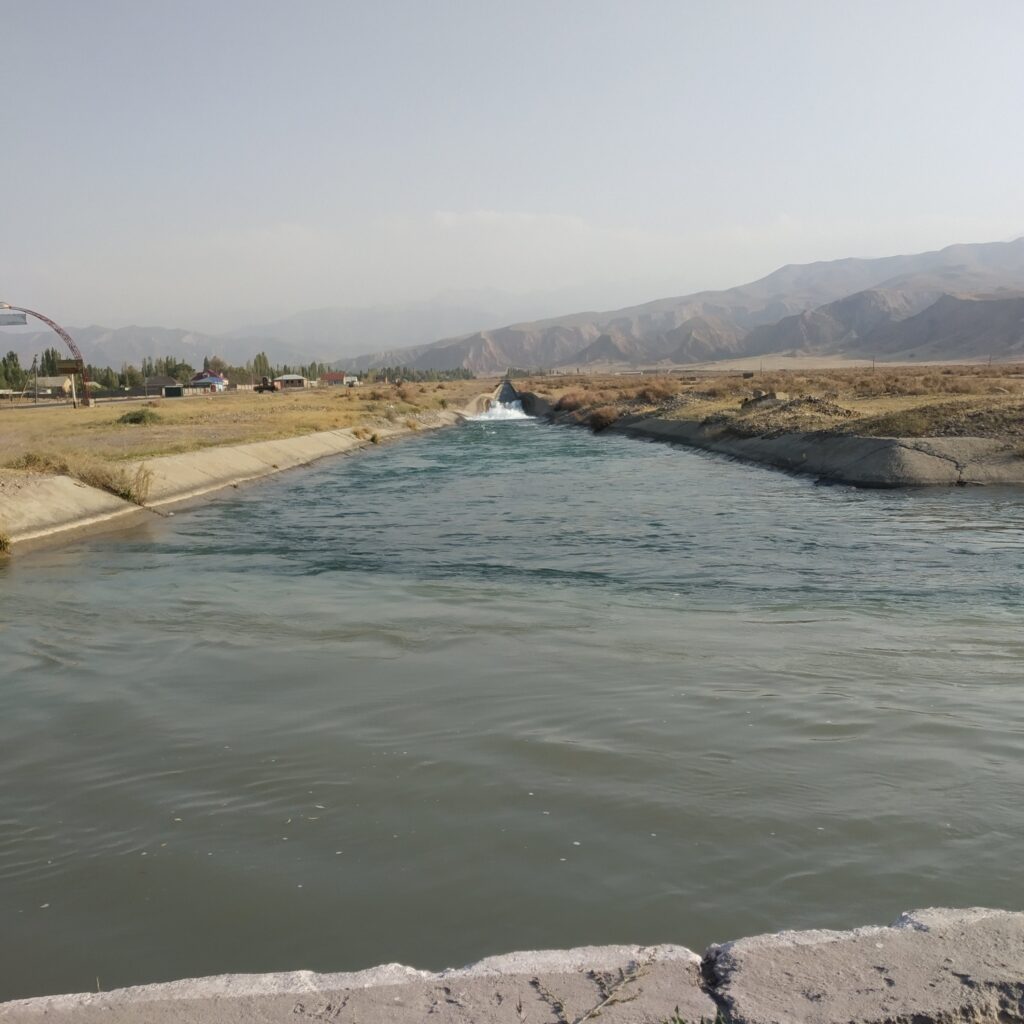
This year, five districts in Kazakhstan’s southern Zhambyl region—Kordai, Merke, Baizak, Zhambyl, and Talas—were fully supplied with irrigation water from the transboundary Shu and Talas rivers, which flow from neighboring Kyrgyzstan. The announcement was made by Kazakhstan’s Ministry of Water Resources and Irrigation. In April, Kazakhstan and Kyrgyzstan agreed on a joint water intake schedule for the 2024 irrigation season. As part of this agreement, Kazakhstan received 418 million cubic meters of water from the Talas River, exceeding the planned 380 million cubic meters and surpassing last year’s allocation by 94.2 million cubic meters. Additionally, along the Shu River (called Chu in Kyrgyzstan), Kazakhstan was allocated 165.3 million cubic meters, 29.7 million cubic meters more than in 2023. “Farmers in the Zhambyl region were fully provided with irrigation water according to their needs,” stated Kairat Amanov, director of the Zhambyl branch of Kazvodkhoz. In total, 533.3 million cubic meters of water were delivered, irrigating 90,100 hectares of farmland. Kazvodkhoz, a division of Kazakhstan’s Ministry of Water Resources and Irrigation, is responsible for managing the nation’s irrigation infrastructure, including canals and reservoirs. Kazakhstan’s agriculture, especially in its arid southern regions, relies heavily on irrigation water from Kyrgyzstan. At the same time, Kyrgyzstan faces its water management challenges. The water level of Lake Issyk-Kul, Kyrgyzstan’s largest lake, has been declining, partly due to the diversion of feeder rivers for local irrigation and to meet downstream agricultural needs in Kazakhstan. Although the Shu River does not directly feed Lake Issyk-Kul, it originates in the Issyk-Kul region and could have been utilized to irrigate nearby farmland. Instead, it plays a critical role in supporting Kazakhstan’s Zhambyl region. This allocation highlights Kyrgyzstan’s significant role in Central Asia’s water policies and its ongoing efforts to maintain cooperative relations with neighboring countries on key water and energy issues.

Vietnamese Companies to Modernize Bishkek’s Wastewater Treatment Facilities

On December 18, the Bishkek City Administration signed a public-private partnership agreement with a consortium of Vietnamese companies - SFC Investment Development for Environment and Phu Dien Investment Construction and Trading. The agreement outlines plans for the reconstruction and modernization of the city’s wastewater treatment facilities. The project aims to comprehensively upgrade Bishkek’s municipal wastewater treatment infrastructure using cutting-edge technologies. Key initiatives include: Equipping the municipal water supply company’s laboratory with advanced water quality analysis tools. Replacing outdated water chlorination systems with ultraviolet disinfection technology. Automating control processes for wastewater treatment. The modernization is designed to ensure that treated wastewater meets both national and European environmental standards. It also aims to reduce environmental impact through the introduction of odor treatment systems. Deputy Chairman of the Cabinet of Ministers and Minister of Water Resources, Agriculture, and Processing Industry, Bakyt Torobayev, highlighted the urgency of such projects during the National Water Forum on November 29. Torobayev noted that only 39.5% of Kyrgyzstan’s 2,014 cities and villages currently have access to clean drinking water. Addressing the country’s water infrastructure needs will require an estimated $2 billion. The modernization of Bishkek’s wastewater treatment facilities represents a significant step forward in improving water management and ensuring sustainable development in Kyrgyzstan’s capital.

France to Help Kazakhstan Preserve Lake Balkhash

Kazakhstan’s Ministry of Water Resources and Irrigation, the French Development Agency (AFD), and the French Geological Survey (BRGM, Bureau de Recherches Géologiques et Minières) have signed a cooperation agreement to preserve Lake Balkhash. The agreement was formalized on December 4 at the One Water Summit in Saudi Arabia, attended by Kazakhstan President Kassym-Jomart Tokayev and French President Emmanuel Macron. Located 175 miles northwest of Almaty, Kazakhstan’s largest city, Lake Balkhash is the world’s fifteenth-largest lake. Under the agreement, the French side will allocate a grant of 1.35 million €uros to Kazakhstan’s Ministry of Water Resources and Irrigation to develop sustainable water management for the lake. The project includes a comprehensive study of the Lake Balkhash basin to create a long-term preservation plan through 2040. Minister of Water Resources and Irrigation, Nurzhan Nurzhigitov explained, "The trilateral agreement with AFD and BRGM is aimed at studying and sustainably managing water in the Lake Balkhash basin. The document provides for measuring and analyzing the state of water, modeling climate and anthropogenic influences, and forecasting the water balance until 2040. One of the goals of the project is to optimize the operating mode of the Kapchagay Reservoir to stabilize the level of Lake Balkhash. Based on the results of the study, measures will be taken to clean the rivers [feeding Balkhash], prevent soil degradation and water pollution, develop fisheries and ecotourism, and create a regulatory framework for the protection of the lake." At the summit, Kazakhstan’s Special Representative for International Environmental Cooperation, Zulfiya Suleimenova, announced that Kazakhmys Corporation, one of the country’s leading private companies, will contribute $5 million to preserve the ecosystem of Lake Balkhash and adjacent wetlands. In November, The Times of Central Asia reported that 13.5 billion cubic meters of water had been sent to Lake Balkhash via the Ili River from the Kapchagay Reservoir in 2024, raising the lake’s average water level to 341.6 meters above sea level. The Ili River, which originates in China, provides about 70% of Lake Balkhash’s water. Earlier in May, reports indicated that Balkhash’s water level had risen by 23 centimeters since the start of the year, largely due to increased rainfall and snow-melt floods during spring. Additionally, Kazakhstan and China have begun negotiations on the joint management of trans-boundary rivers, including the Ili. As previously reported by The Times of Central Asia, a key focus for Kazakhstan in these talks is to maintain optimal water levels in Lake Balkhash.

Kazakhstan and World Bank Partner on Water Conservation at One Water Summit

A memorandum of understanding has been signed to enhance water resource management and environmental conditions, including in the North Aral Sea and its surrounding basin, between Kazakhstan’s Ministry of Water Resources and Irrigation and the World Bank. As climate change continues to significantly impact water resources in Central Asia, exacerbating water scarcity and management challenges, this agreement underscores a shared commitment to ensuring sustainable and equitable water resource management for future generations. The memorandum was formalized following a meeting between Kazakhstan’s President Kassym-Jomart Tokayev and World Bank Group President Ajay Banga during the One Water Summit in Riyadh, Saudi Arabia, on December 3. Co-organized by French President Emmanuel Macron, Tokayev, and World Bank Group President Banga, in partnership with Saudi Arabia’s Crown Prince and Prime Minister Mohammed bin Salman, the summit sought to accelerate progress toward Sustainable Development Goal 6 (clean water and sanitation) and discuss innovative solutions ahead of the 2026 UN Water Conference. During the summit, Tokayev stressed the importance of bolstering reservoir capacity, preserving glaciers, and adopting advanced irrigation systems to secure stable water access. Tokayev proposed creating a global partnership to unite research centers focused on glacier preservation. “Glaciers are integral to the global water cycle, sustaining rivers and lakes that supply water to nearly two billion people worldwide. Collaborative research and unified policies are essential to mitigate glacier loss and support water management strategies in vulnerable regions,” he said. He warned that water scarcity poses risks to food security, energy production, and industrial growth, adding that investments in water-efficient agriculture and renewable energy can enhance economic resilience while alleviating environmental pressures. “Water knows no borders; it binds communities and ecosystems,” Tokayev remarked. As Chair of the International Fund for Saving the Aral Sea, he emphasized Kazakhstan’s commitment to fostering regional cooperation and joint action. “It is vital for countries at the forefront of combating climate change to strengthen dialogue, build international partnerships, and pool resources to implement water projects. Kazakhstan is proud to join the One Water Vision coalition, uniting stakeholders to address the global water crisis and promote integrated water resource management. As part of these efforts, with United Nations support, Kazakhstan will host a Regional Climate Conference in 2026,” Tokayev concluded.