• KGS/USD = 0.01144 0%
  • KZT/USD = 0.00206 0%
  • TJS/USD = 0.10771 0%
  • UZS/USD = 0.00008 0%
  • TMT/USD = 0.28571 0%
  • KGS/USD = 0.01144 0%
  • KZT/USD = 0.00206 0%
  • TJS/USD = 0.10771 0%
  • UZS/USD = 0.00008 0%
  • TMT/USD = 0.28571 0%
  • KGS/USD = 0.01144 0%
  • KZT/USD = 0.00206 0%
  • TJS/USD = 0.10771 0%
  • UZS/USD = 0.00008 0%
  • TMT/USD = 0.28571 0%
  • KGS/USD = 0.01144 0%
  • KZT/USD = 0.00206 0%
  • TJS/USD = 0.10771 0%
  • UZS/USD = 0.00008 0%
  • TMT/USD = 0.28571 0%
  • KGS/USD = 0.01144 0%
  • KZT/USD = 0.00206 0%
  • TJS/USD = 0.10771 0%
  • UZS/USD = 0.00008 0%
  • TMT/USD = 0.28571 0%
  • KGS/USD = 0.01144 0%
  • KZT/USD = 0.00206 0%
  • TJS/USD = 0.10771 0%
  • UZS/USD = 0.00008 0%
  • TMT/USD = 0.28571 0%
  • KGS/USD = 0.01144 0%
  • KZT/USD = 0.00206 0%
  • TJS/USD = 0.10771 0%
  • UZS/USD = 0.00008 0%
  • TMT/USD = 0.28571 0%
  • KGS/USD = 0.01144 0%
  • KZT/USD = 0.00206 0%
  • TJS/USD = 0.10771 0%
  • UZS/USD = 0.00008 0%
  • TMT/USD = 0.28571 0%

Viewing results 1 - 6 of 38

France to Help Kazakhstan Preserve Lake Balkhash

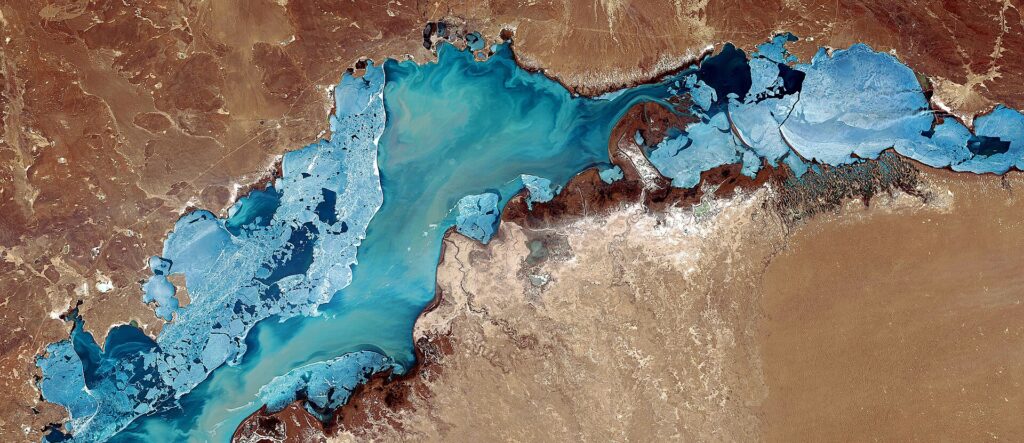
Kazakhstan’s Ministry of Water Resources and Irrigation, the French Development Agency (AFD), and the French Geological Survey (BRGM, Bureau de Recherches Géologiques et Minières) have signed a cooperation agreement to preserve Lake Balkhash. The agreement was formalized on December 4 at the One Water Summit in Saudi Arabia, attended by Kazakhstan President Kassym-Jomart Tokayev and French President Emmanuel Macron. Located 175 miles northwest of Almaty, Kazakhstan’s largest city, Lake Balkhash is the world’s fifteenth-largest lake. Under the agreement, the French side will allocate a grant of 1.35 million €uros to Kazakhstan’s Ministry of Water Resources and Irrigation to develop sustainable water management for the lake. The project includes a comprehensive study of the Lake Balkhash basin to create a long-term preservation plan through 2040. Minister of Water Resources and Irrigation, Nurzhan Nurzhigitov explained, "The trilateral agreement with AFD and BRGM is aimed at studying and sustainably managing water in the Lake Balkhash basin. The document provides for measuring and analyzing the state of water, modeling climate and anthropogenic influences, and forecasting the water balance until 2040. One of the goals of the project is to optimize the operating mode of the Kapchagay Reservoir to stabilize the level of Lake Balkhash. Based on the results of the study, measures will be taken to clean the rivers [feeding Balkhash], prevent soil degradation and water pollution, develop fisheries and ecotourism, and create a regulatory framework for the protection of the lake." At the summit, Kazakhstan’s Special Representative for International Environmental Cooperation, Zulfiya Suleimenova, announced that Kazakhmys Corporation, one of the country’s leading private companies, will contribute $5 million to preserve the ecosystem of Lake Balkhash and adjacent wetlands. In November, The Times of Central Asia reported that 13.5 billion cubic meters of water had been sent to Lake Balkhash via the Ili River from the Kapchagay Reservoir in 2024, raising the lake’s average water level to 341.6 meters above sea level. The Ili River, which originates in China, provides about 70% of Lake Balkhash’s water. Earlier in May, reports indicated that Balkhash’s water level had risen by 23 centimeters since the start of the year, largely due to increased rainfall and snow-melt floods during spring. Additionally, Kazakhstan and China have begun negotiations on the joint management of trans-boundary rivers, including the Ili. As previously reported by The Times of Central Asia, a key focus for Kazakhstan in these talks is to maintain optimal water levels in Lake Balkhash.

Kazakhstan and World Bank Partner on Water Conservation at One Water Summit

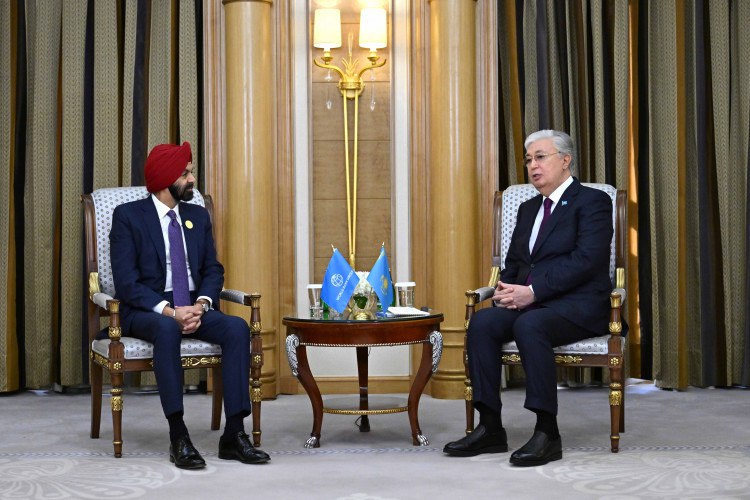
A memorandum of understanding has been signed to enhance water resource management and environmental conditions, including in the North Aral Sea and its surrounding basin, between Kazakhstan’s Ministry of Water Resources and Irrigation and the World Bank. As climate change continues to significantly impact water resources in Central Asia, exacerbating water scarcity and management challenges, this agreement underscores a shared commitment to ensuring sustainable and equitable water resource management for future generations. The memorandum was formalized following a meeting between Kazakhstan’s President Kassym-Jomart Tokayev and World Bank Group President Ajay Banga during the One Water Summit in Riyadh, Saudi Arabia, on December 3. Co-organized by French President Emmanuel Macron, Tokayev, and World Bank Group President Banga, in partnership with Saudi Arabia’s Crown Prince and Prime Minister Mohammed bin Salman, the summit sought to accelerate progress toward Sustainable Development Goal 6 (clean water and sanitation) and discuss innovative solutions ahead of the 2026 UN Water Conference. During the summit, Tokayev stressed the importance of bolstering reservoir capacity, preserving glaciers, and adopting advanced irrigation systems to secure stable water access. Tokayev proposed creating a global partnership to unite research centers focused on glacier preservation. “Glaciers are integral to the global water cycle, sustaining rivers and lakes that supply water to nearly two billion people worldwide. Collaborative research and unified policies are essential to mitigate glacier loss and support water management strategies in vulnerable regions,” he said. He warned that water scarcity poses risks to food security, energy production, and industrial growth, adding that investments in water-efficient agriculture and renewable energy can enhance economic resilience while alleviating environmental pressures. “Water knows no borders; it binds communities and ecosystems,” Tokayev remarked. As Chair of the International Fund for Saving the Aral Sea, he emphasized Kazakhstan’s commitment to fostering regional cooperation and joint action. “It is vital for countries at the forefront of combating climate change to strengthen dialogue, build international partnerships, and pool resources to implement water projects. Kazakhstan is proud to join the One Water Vision coalition, uniting stakeholders to address the global water crisis and promote integrated water resource management. As part of these efforts, with United Nations support, Kazakhstan will host a Regional Climate Conference in 2026,” Tokayev concluded.

Kazakhstan Secures Agreement for 11 Billion Cubic Meters of Water from Neighboring Countries by April 2025

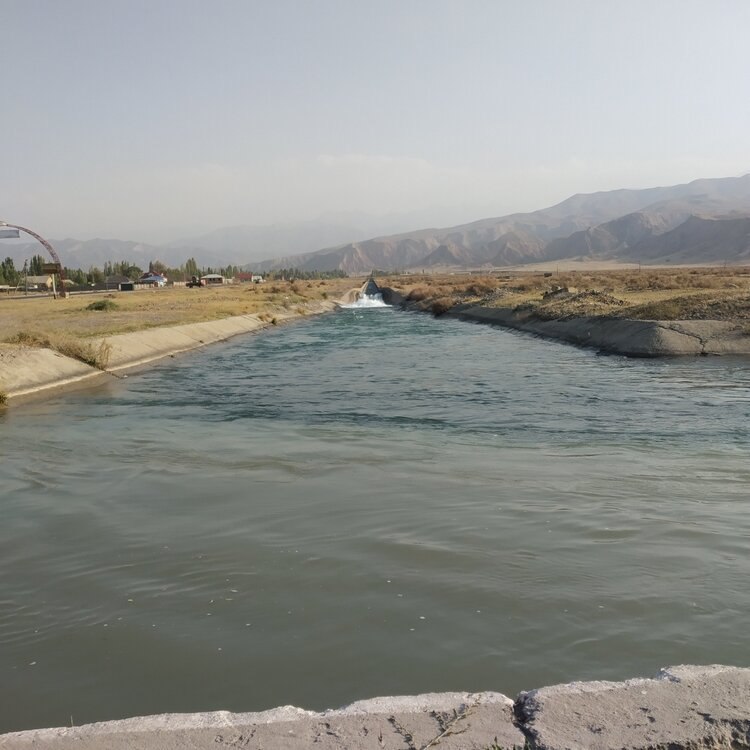
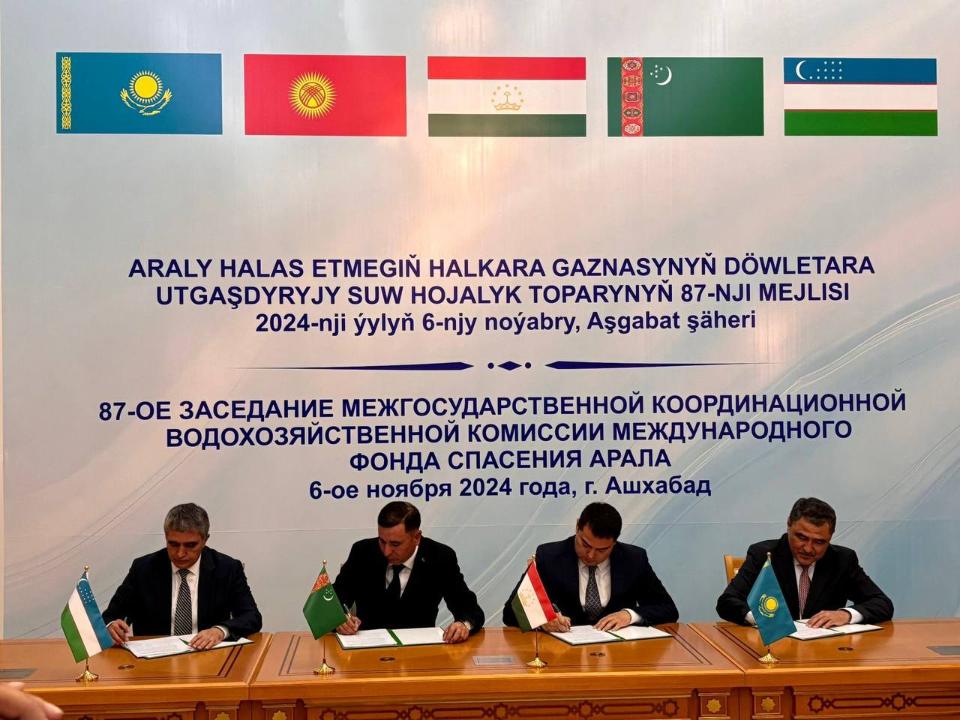
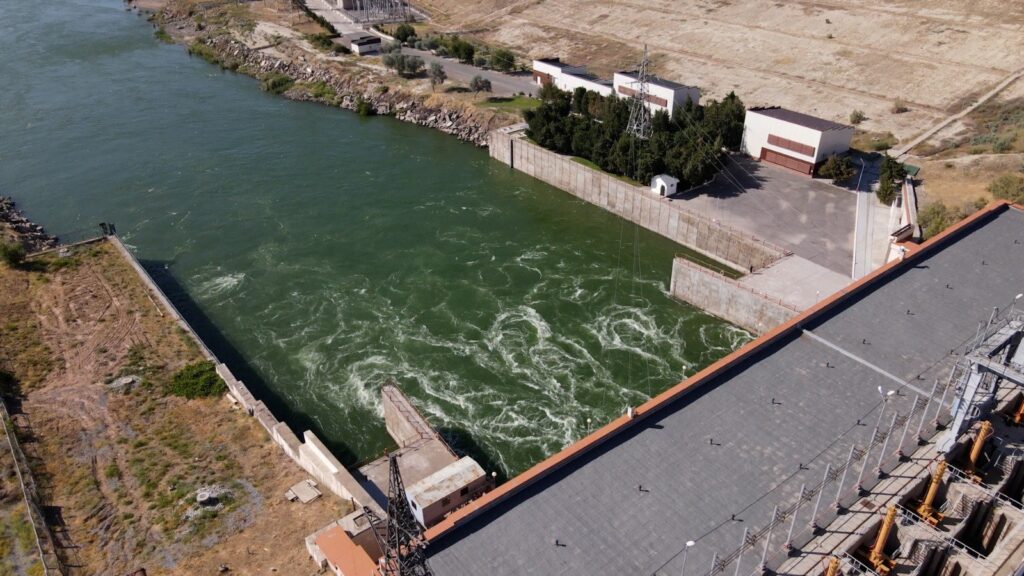
Kazakhstan will receive approximately 11 billion cubic meters of irrigation water from the Syr Darya River by April 2025, following an agreement made by Nurzhan Nurzhigitov, Kazakhstan’s Minister of Water Resources and Irrigation, with representatives from neighboring Central Asian countries. The accord was reached at the 87th meeting of the Interstate Coordination Water Management Commission held last week in Ashgabat, Turkmenistan, and attended by water ministry leaders from Tajikistan, Turkmenistan, and Uzbekistan, with Kyrgyzstan as an observer. This substantial water supply is expected to fill the Shardara reservoir in southern Kazakhstan by April 1, 2025, providing enough water for the region's 2025 irrigation season. Given Kazakhstan’s reliance on irrigation for agriculture, particularly in the arid south, the flow from upstream countries like Tajikistan, Kyrgyzstan, and Uzbekistan is vital. Nurzhigitov noted, "This year, thanks to negotiations and joint actions, we ensured the effective water distribution in the Syrdarya River basin. Agreements on water and energy cooperation with Kyrgyzstan were implemented, and measures were taken to coordinate the operating mode of the Bakhri-Tojik reservoir [in Tajikistan] during this year’s irrigation season.”

Kazakhstan and China Begin Negotiations on Joint Use of Transboundary Rivers

On November 1, Kazakhstan’s Minister of Water Resources and Irrigation Nurzhan Nurzhigitov met with Zhang Xiao, the Chinese Ambassador to Kazakhstan, to discuss bilateral water cooperation and the joint use and distribution of water from transboundary rivers. Three large rivers in Kazakhstan — the Ertis, the Ile, and the Emel — originate in China. The two countries established a special working group of experts to negotiate the provision of water to the Ile-Balkhash basin and develop fisheries and tourism in the region. The Ministry of Water Resources and Irrigation of Kazakhstan intends to sign a memorandum of cooperation with the Ministry of Water Resources of China shortly. The Kazakh minister and Chinese ambassador discussed joint modernization and automation of Kazakhstan's water infrastructure, production and use of water-saving technologies, and advanced training of Kazakhstani water specialists in China. Late in August, The Times of Central Asia reported that the Kapchagay reservoir outside Almaty was full for the first time in ten years. The reservoir collects water from the Ile (or Ili) River, which originates in China and is meant to regulate the river's flow on its way to Kazakhstan’s largest lake, Balkhash.

Water Supply Plan to the Aral Sea is Almost 100% Complete

This year, the Aral Sea received 977 million cubic meters of water, which allowed it to fulfill the water supply plan by almost 100% during the irrigation period. This is the first time in the last five years it has got close to 100%. Deputy Head of Aral-Syrdarya Basin Inspection Zeinollah Kaztoganov noted that this year, the volume of water flowing into the Northern Aral increased to 60-70 cubic meters per second, ten times more than in previous years when the figure was 7-10 cubic meters per second. Now, the total volume of water in the Northern Aral is about 22 billion cubic meters. Additionally, more than 45 million cubic meters of water were directed to Akshatau, Sorgak, and Kamystybas lakes, which positively impacted fishing and tourism: water salinity decreased, and fish populations increased. If the catches of local fishermen earlier were only 400 tons a year, this year they reached over 7,500 tons. Kuntugan Turganbayev, a 76-year-old fisherman from the village of Karateren who has been fishing all his life, said that with the inflow of water into the Aral Sea, there is a prospect for the development of fisheries. He noted that this year, there are more fish than last year, and if the current water level in the Aral Sea is maintained, the fishery will continue to grow. Meanwhile, Uzbekistan's Ministry of Water Resources and Irrigation and the World Bank are developing the second phase of a program to conserve the Northern Aral Sea. This program is aimed at improving water supply, construction, and modernization of water infrastructure. The main objective is to support sustainable water use, which includes the development of agriculture, tourism, and fisheries in the region. The project also provides for the establishment of an automated water management system, which will help control water flows effectively and ensure stable water levels in the Northern Aral Sea.

Reservoirs in Kazakhstan Make Room for Next-Year Meltwater

In preparation for potential floods next spring, Kazakhstan’s Ministry of Water Resources and Irrigation is gradually releasing water from reservoirs in the country's northern, western, central, and eastern regions to ensure they can receive snowmelt water in case of flooding. In Kostanay Region, the Karatomar reservoir releases 50 cubic meters of water per second. In Aktobe Region, the Kargalinsky reservoir discharges 15 cubic meters of water per second, and 107 million cubic meters of water were released from the Aktobe reservoir from August 23 to October 1. In western Kazakhstan, three cubic meters of water per second are released from the Kirov reservoir, 13 cubic meters per second from the Bitik reservoir, six cubic meters from the Dunguluk reservoir, and five cubic meters from the Pyatimar reservoir. At the same time, reservoirs in dry southern regions of Kazakhstan keep accumulating water for next year’s growing season. Deputy Minister of Water Resources and Irrigation Nurlan Aldamzharov commented that the country's reservoirs accumulated 75 billion cubic meters of water this past spring, 15 billion cubic meters more than last year. More than 12 billion cubic meters of that water was flood water. In the spring of 2024, Kazakhstan's western and northern regions suffered from unprecedented floods caused by the rapid snowmelt. The floods destroyed thousands of homes and forced almost 100,000 people to evacuate from flood zones.