• KZT/USD = 0.00220
  • TJS/USD = 0.10850
  • UZS/USD = 0.00008
  • TMT/USD = 0.29760
  • KZT/USD = 0.00220
  • TJS/USD = 0.10850
  • UZS/USD = 0.00008
  • TMT/USD = 0.29760
  • KZT/USD = 0.00220
  • TJS/USD = 0.10850
  • UZS/USD = 0.00008
  • TMT/USD = 0.29760
  • KZT/USD = 0.00220
  • TJS/USD = 0.10850
  • UZS/USD = 0.00008
  • TMT/USD = 0.29760
  • KZT/USD = 0.00220
  • TJS/USD = 0.10850
  • UZS/USD = 0.00008
  • TMT/USD = 0.29760
  • KZT/USD = 0.00220
  • TJS/USD = 0.10850
  • UZS/USD = 0.00008
  • TMT/USD = 0.29760
  • KZT/USD = 0.00220
  • TJS/USD = 0.10850
  • UZS/USD = 0.00008
  • TMT/USD = 0.29760
  • KZT/USD = 0.00220
  • TJS/USD = 0.10850
  • UZS/USD = 0.00008
  • TMT/USD = 0.29760
29 October 2026

Viewing results 1 - 6 of 161

Kazakhstan and World Bank Partner on Water Conservation at One Water Summit

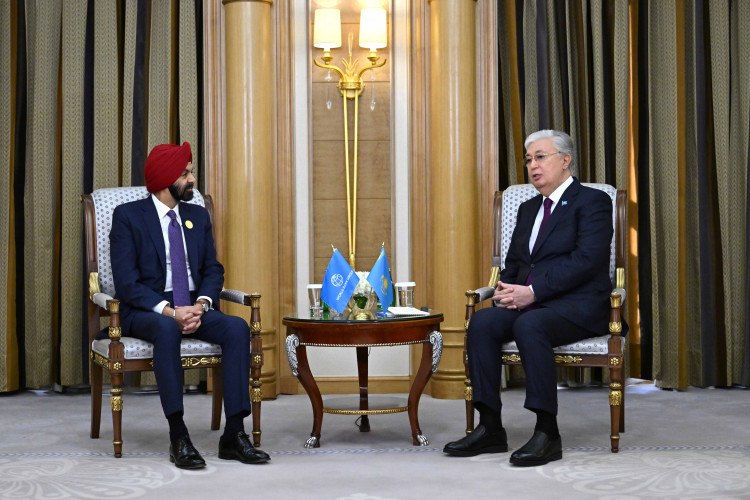
A memorandum of understanding has been signed to enhance water resource management and environmental conditions, including in the North Aral Sea and its surrounding basin, between Kazakhstan’s Ministry of Water Resources and Irrigation and the World Bank. As climate change continues to significantly impact water resources in Central Asia, exacerbating water scarcity and management challenges, this agreement underscores a shared commitment to ensuring sustainable and equitable water resource management for future generations. The memorandum was formalized following a meeting between Kazakhstan’s President Kassym-Jomart Tokayev and World Bank Group President Ajay Banga during the One Water Summit in Riyadh, Saudi Arabia, on December 3. Co-organized by French President Emmanuel Macron, Tokayev, and World Bank Group President Banga, in partnership with Saudi Arabia’s Crown Prince and Prime Minister Mohammed bin Salman, the summit sought to accelerate progress toward Sustainable Development Goal 6 (clean water and sanitation) and discuss innovative solutions ahead of the 2026 UN Water Conference. During the summit, Tokayev stressed the importance of bolstering reservoir capacity, preserving glaciers, and adopting advanced irrigation systems to secure stable water access. Tokayev proposed creating a global partnership to unite research centers focused on glacier preservation. “Glaciers are integral to the global water cycle, sustaining rivers and lakes that supply water to nearly two billion people worldwide. Collaborative research and unified policies are essential to mitigate glacier loss and support water management strategies in vulnerable regions,” he said. He warned that water scarcity poses risks to food security, energy production, and industrial growth, adding that investments in water-efficient agriculture and renewable energy can enhance economic resilience while alleviating environmental pressures. “Water knows no borders; it binds communities and ecosystems,” Tokayev remarked. As Chair of the International Fund for Saving the Aral Sea, he emphasized Kazakhstan’s commitment to fostering regional cooperation and joint action. “It is vital for countries at the forefront of combating climate change to strengthen dialogue, build international partnerships, and pool resources to implement water projects. Kazakhstan is proud to join the One Water Vision coalition, uniting stakeholders to address the global water crisis and promote integrated water resource management. As part of these efforts, with United Nations support, Kazakhstan will host a Regional Climate Conference in 2026,” Tokayev concluded.
Tajikistan Sending Higher Volumes of Irrigation Water to Kazakhstan

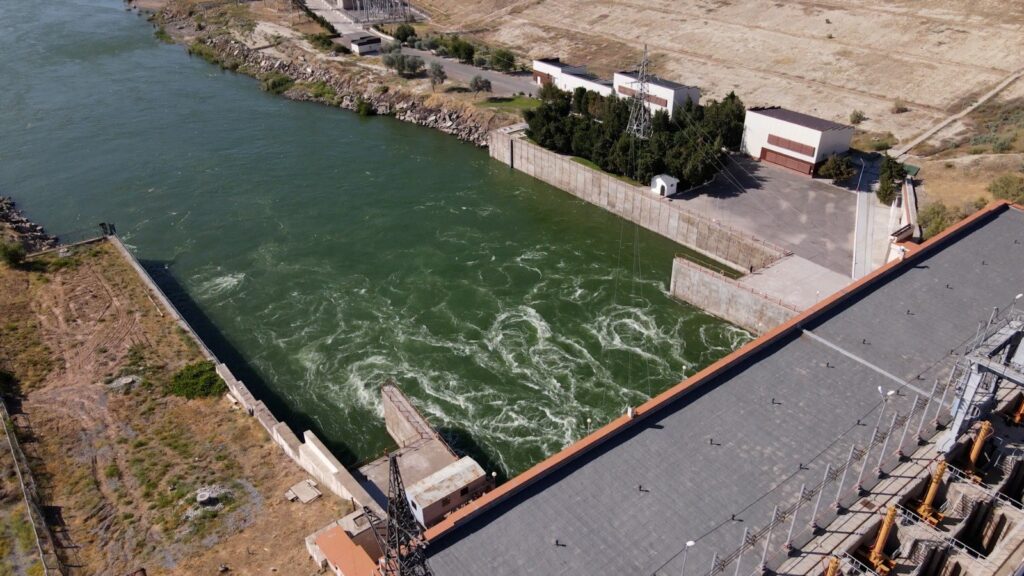
Since June 1, Tajikistan has sent 488.6 million cubic meters of water to Kazakhstan via the transboundary Dostyk canal. This is 40 million cubic meters more than in the entirety of last year, and is already 45 million cubic meters more than the volume planned for this year, the Kazakh Ministry of Water Resources and Irrigation announced on August 27. During his state visit to Tajikistan on August 22, Kazakhstan's President Kassym-Jomart Tokayev emphasized the importance of cooperation with Tajikistan in the water sector and the rational use of resources of transboundary rivers of Central Asia. Kazakhstan’s agriculture, especially in the dry southern regions, depends on irrigation water supplies from upstream Tajikistan, Kyrgyzstan, and Uzbekistan. According to the Ministry of Water Resources, since April 1, Uzbekistan has sent over 4 billion cubic meters of water to Kazakhstan via the Syr Darya River. Kyrgyzstan has committed to supply Kazakhstan with 180 million cubic meters of water via the transboundary Shu River, and 380 million cubic meters via the Talas River.

Kazakhstan’s Kapchagay Reservoir Fills Up For First Time In A Decade

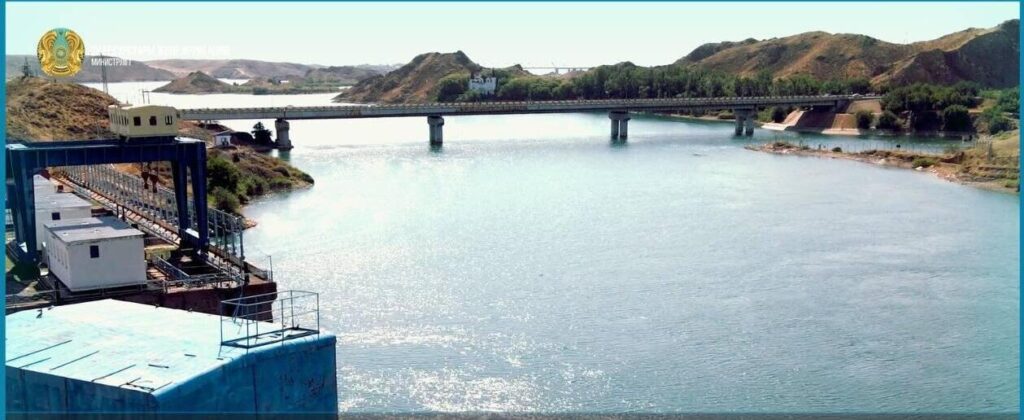
Kazakhstan’s Ministry of Water Resources and Irrigation announced on August 26 that the Kapchagay reservoir outside Almaty was completely full for the first time in ten years. Created in 1970 as an artificial lake, 100km long and up to 25km wide in places, the reservoir can hold more than 18 billion cubic meters of water. The reservoir collects water from the Ili River, which originates in China. This spring, the ministry said up to 900 cubic meters of water per second flowed into the reservoir, attributing the increased inflow to the melting of the Tien Shan mountain glaciers and higher than usual rainfall. The reservoir was initially meant to regulate the flow of the Ili River on its way to Kazakhstan’s largest lake, Balkhash. Today, it is used for irrigation, fish farming, and recreation. Located a one-hour drive from Almaty, its beaches are popular with holidaymakers. According to Medet Kerimzhanov, deputy head of the Balkhash-Alakol basin inspectorate, the last time the Kapchagay reservoir was 100% full was in 2014. Today, 750 cubic meters of water per second are released from the reservoir to irrigate fields. Kerimzhanov added that the irrigation season in the region will continue until the end of September. Earlier this month, the Ministry of Water Resources said it was drafting an intergovernmental agreement between Kazakhstan and China on distributing water from transboundary rivers — the Ertis, the Ili, and the Emel. To date, the parties have reached a consensus on several provisions of the future agreement, the ministry said.

Tajikistan and Uzbekistan Discuss Using Lake Sarez For Drinking Water

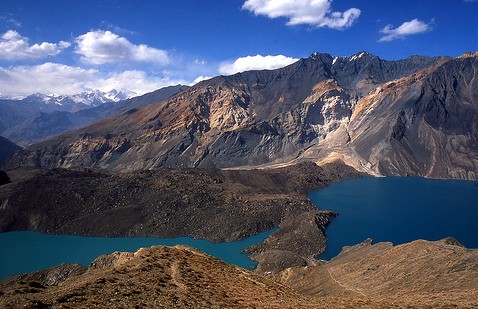
On August 3, a Tajik-Uzbek working group on the shared use of water from Central Asia's transboundary rivers met in Dushanbe. Participants discussed the potential for using the water from Lake Sarez, in the Tajik National Park in the east of the country, to provide Central Asian countries with clean drinking water. Other potential joint projects between Tajikistan and Uzbekistan in the field of water management were also considered. In 2018, the presidents of Tajikistan and Uzbekistan, Emomali Rahmon and Shavkat Mirziyoyev, first discussed using the Sarez freshwater as drinking water, during a visit by Rahmon to Uzbekistan. The nations subsequently commissioned a feasibility study from the Intergovernmental Joint Commission on Trade and Economic Cooperation. Rahmon has repeatedly emphasized that Tajikistan has ample freshwater resources, and has previously used speeches at political forums to suggest using the Sarez mountain lake to provide Central Asian countries with drinking water. The Tajik government has also offered to supply drinking water from Sarez to Iran, Jordan, and the United Arab Emirates. The Times of Central Asia has previously written that Central Asia will face severe water shortages in the coming years. More than 80% of the available water in Central Asia is used for irrigation, 40% of which is lost during delivery in the fields. With the commissioning of the Qosh Tepa canal in Afghanistan, the water shortage will become even more serious from 2028. The chairman of the Eurasian Development Bank, Nikolay Podguzov, has warned that the Qosh Tepa's construction could threaten Central Asia's water balance.

Kyrgyzstan Accelerates Work to Bring Drinking Water to Villages

While only 637 of Kyrgyzstan’s 1906 villages have access to clean drinking water, the government plans to provide piped drinking water to an additional 1071 villages in the near future. The country's minister of water resources and agriculture, Bakyt Torobayev, ordered this work to be accelerated on July 30. Torobayev ordered the expedition of work in this area, emphasizing that providing clean water to the population is one of the ministry's top priorities. “The population must be provided with clean drinking water,” he said. The Ministry of Water Resources is currently implementing a program to provide clean drinking water to 260 towns and villages across the country. In addition, a program for using groundwater from 2024 to 2030 will be implemented, with plans to repair 1,155 wells.

Kazakhstan Refuses to Finance an Artificial Rain Project over the Aral Sea

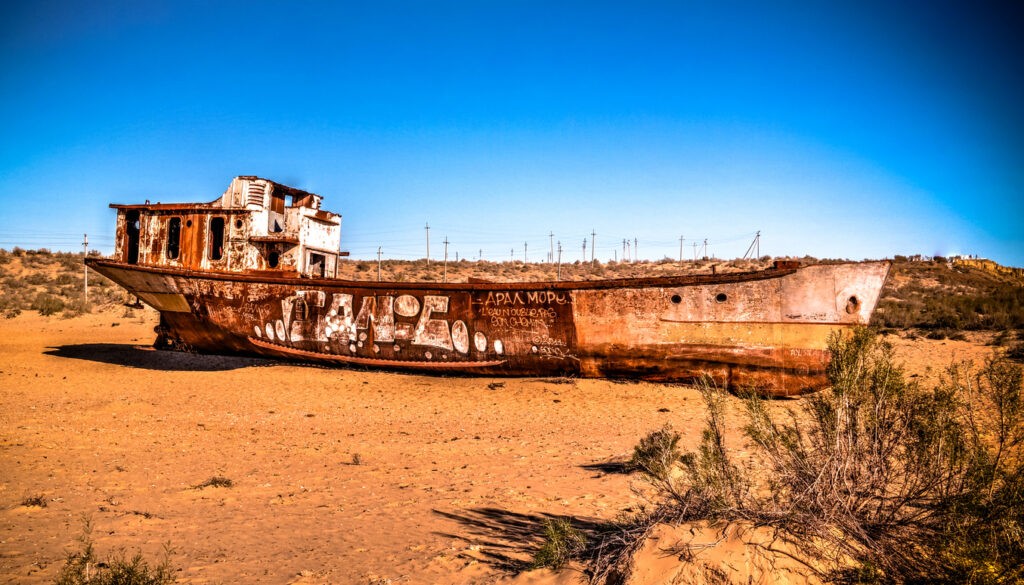
Kazakhstan's Ministry of Agriculture has decided not to support a project by inventor Altay Ainabek aimed at bringing artificial rain over the Aral Sea to revive it. At a recent government briefing, the deputy minister for agriculture, Azat Sultanov, answered journalists' questions about public interest in the project. Sultanov said that the decision not to fund the project is related to environmental and legal issues. Firstly, artificially inducing precipitation could negatively affect the ecosystems and natural resources of the region where the experiment will be conducted, leading to unintended consequences and environmental harm. In addition, according to Sultanov, the legality and legitimacy of using such technologies is questionable. The agriculture ministry does not yet have a scientific conclusion and does not have sufficient experience in this area. These factors make it impossible to finance such projects from the state budget. The deputy minister added: “We have researched the law many times. Specialists from abroad have already come to us with questions. You probably know that in Mangistau and West Kazakhstan regions 2-3 years ago, there were problems with water. Then, it was suggested to cause precipitation to make it rain. However, there are several aspects to this problem. On the one hand, there are environmental issues; it's nature. Even though it rained in one place, it can cause harm in another.” In 2021, artificially inducing rain was tested for the first time in Mangistau. The sprinkler system works using Clear Sky Manager technology. However, a little later, it became known that the installations affected the amount of rainfall. Abnormal rains led to floods and river overflows in the traditionally arid region, so the experiment was halted.