• KGS/USD = 0.01144 0%
  • KZT/USD = 0.00212 0%
  • TJS/USD = 0.10894 0%
  • UZS/USD = 0.00008 0%
  • TMT/USD = 0.28490 0%
  • KGS/USD = 0.01144 0%
  • KZT/USD = 0.00212 0%
  • TJS/USD = 0.10894 0%
  • UZS/USD = 0.00008 0%
  • TMT/USD = 0.28490 0%
  • KGS/USD = 0.01144 0%
  • KZT/USD = 0.00212 0%
  • TJS/USD = 0.10894 0%
  • UZS/USD = 0.00008 0%
  • TMT/USD = 0.28490 0%
  • KGS/USD = 0.01144 0%
  • KZT/USD = 0.00212 0%
  • TJS/USD = 0.10894 0%
  • UZS/USD = 0.00008 0%
  • TMT/USD = 0.28490 0%
  • KGS/USD = 0.01144 0%
  • KZT/USD = 0.00212 0%
  • TJS/USD = 0.10894 0%
  • UZS/USD = 0.00008 0%
  • TMT/USD = 0.28490 0%
  • KGS/USD = 0.01144 0%
  • KZT/USD = 0.00212 0%
  • TJS/USD = 0.10894 0%
  • UZS/USD = 0.00008 0%
  • TMT/USD = 0.28490 0%
  • KGS/USD = 0.01144 0%
  • KZT/USD = 0.00212 0%
  • TJS/USD = 0.10894 0%
  • UZS/USD = 0.00008 0%
  • TMT/USD = 0.28490 0%
  • KGS/USD = 0.01144 0%
  • KZT/USD = 0.00212 0%
  • TJS/USD = 0.10894 0%
  • UZS/USD = 0.00008 0%
  • TMT/USD = 0.28490 0%

Viewing results 1 - 6 of 160

Report Addresses Cross-Border Challenges in Irtysh River Basin

The Eurasian Development Bank (EDB) has released a report titled “The Irtysh River Basin: Transboundary Challenges and Practical Solutions”, analyzing the water resources of the transboundary Irtysh River basin, shared by China, Kazakhstan, and Russia. The report highlights growing water demand in all three countries and proposes practical solutions to address cross-border challenges. Strategic Importance of the Irtysh River The Irtysh River, the world’s longest transboundary tributary, stretches 4,248 km and, together with the Ob River, forms Russia’s longest waterway, the second longest in Asia and the seventh longest globally. Flowing from China through Kazakhstan into Russia, the river is crucial for all three countries, necessitating strategic cooperation in its management. [caption id="attachment_29111" align="aligncenter" width="1950"] The Irtysh River Basin; image: eabr.org[/caption] Key Challenges in Each Country China In China, the upper Irtysh River is essential for the Xinjiang Uygur Autonomous Region (XUAR), where the population has surged from 15.2 million in 1990 to 25.87 million in 2022. Rapid regional development has made water stress a pressing issue. Research forecasts that annual water withdrawals from the Irtysh could more than triple, from the current 1.5 - 2.0 km³ to 7 km³, out of an average natural flow of 8.3 km³. Kazakhstan In Kazakhstan, the Irtysh and its tributaries support 30% of the population and contribute 45% of the country’s total agricultural output. The Irtysh HPP Cascade accounts for 10% of Kazakhstan’s electricity generation and 80% of its hydropower capacity. Increased water withdrawals by China pose significant risks to Kazakhstan’s water security. Russia For Russia, upstream water policies in China and Kazakhstan are major concerns. Excessive Chinese withdrawals could reduce Kazakhstan’s downstream flow, impacting Omsk and the surrounding Omsk Municipal District. Changes in water availability and quality over the next decade present serious socio-economic challenges for the region. Key Recommendations from the Report The EDB report outlines four major recommendations for managing transboundary water challenges: Expanding Bilateral and Trilateral Cooperation The report urges stronger water agreements between Kazakhstan and Russia, as well as between Kazakhstan and China, incorporating international water management principles. Recommended cooperation areas include: Ensuring international navigation on the Irtysh-Ob River system Controlling water pollution Regulating safe water usage Improving efficiency during floods, droughts, and low-water periods This groundwork would help establish a future trilateral water management agreement between the three countries. Strengthening Water Management Infrastructure The report calls for soft infrastructure development, such as: Creating an interstate river flow monitoring system with open data access Developing joint training programs for water management specialists Expanding interdisciplinary water research involving experts from all three nations Coordinating Hydraulic Infrastructure Operations The report stresses the importance of joint management of existing and future hydropower plants, dams, reservoirs, and irrigation canals to ensure stable water supplies without harming other nations' resources. Priority projects include: Shulbinsk HPP (Phase 2) in Kazakhstan Semipalatinsk HPP in Kazakhstan Modernization of the Satpayev Irtysh-Karaganda Canal in Kazakhstan Construction of the Krasnogorsk hydro-system near Omsk, Russia Developing a Multimodal Transport Corridor The report proposes a multimodal transport corridor linking Russia,...


Experts Warn Central Asia Faces Chronic Water Shortage by 2028

Central Asia is heading toward a severe water crisis as climate change, population growth, and outdated infrastructure put increasing pressure on the region’s water resources, experts have warned. At a recent roundtable on climate change and water management, Stanislav Pritchin, head of the Central Asia sector at the Russian Academy of Sciences, highlighted the growing threat. Climate change is a major factor, as rising temperatures accelerate glacier melt - the primary source of freshwater in Central Asia. Meanwhile, rapid population growth is driving up demand. Uzbekistan, the region’s most populous country, has seen its population increase from 22 million in 1991 to an estimated 37.5 million in 2025. Across Central Asia, the total population is approaching 80 million. Another challenge is outdated infrastructure. Pritchin noted that up to 50% of irrigation water is lost due to inefficient and aging systems. Moreover, the region lacks a strong institutional framework for managing water distribution and policy. While some cooperative projects exist - such as the joint construction of the Kambar-Ata hydropower plant - they are insufficient to address the broader crisis. In response to these challenges, on February 19, the Asian Development Bank (ADB) approved a $125 million loan to help Uzbekistan improve water security, reduce losses, and enhance distribution efficiency. The Climate-Smart Water Management Improvement Project aims to introduce advanced monitoring and management systems. Uzbekistan’s national water utility, Uzsuvtaminot, will implement digital technology to track water flow, minimize waste, and improve service delivery. The initiative will also establish a comprehensive inventory of water supply infrastructure and deploy a nationwide bulk flow metering and telemetry system. “Uzbekistan’s water resources are under acute threat from climate change and inefficient usage,” said ADB Country Director for Uzbekistan, Kanokpan Lao-Araya. “ADB’s project introduces smart water management systems to improve water usage, reduce energy consumption, and increase operational efficiency to lower Uzbekistan’s carbon footprint.” This initiative is part of Uzbekistan’s broader efforts to modernize infrastructure and prepare for future water challenges. However, experts caution that without stronger regional cooperation, no single country can fully resolve the crisis.

Differentiated Tariffs Lead to Significant Drop in Water Consumption Across Kazakhstan

Water consumption has significantly decreased in eleven regions of Kazakhstan following the implementation of differentiated tariffs for water supply in 2024. The new tariff system, introduced at the start of last year, applies an increasing coefficient based on the principle of “the more you consume, the more you pay.” The system features four levels of tariffs for individuals: Up to 3 cubic meters per month: Consumers continue to pay the original tariff, which varies by region but averaged 82.66 KZT ($0.16) per cubic meter nationwide when the system was introduced. This group accounts for 49% of the population in the eleven regions. 3 to 5 cubic meters per month: A 20% increase in the tariff applies, covering 20% of the population. 5 to 10 cubic meters per month: The tariff rises by 50%, affecting another 20% of the population. Over 10 cubic meters per month: The tariff doubles, impacting 11% of the population. The introduction of these “social norms of consumption” has led to an average water savings of 1.65 million cubic meters per month in six regions — Akmola, Aktobe, Turkestan, Ulytau oblasts, and the cities of Almaty and Shymkent. According to official data, the average monthly water consumption in these regions dropped from 21.1 million cubic meters to 19.5 million cubic meters after the implementation of the new tariff system. As of December 1, 2024, the “social consumption norms” were extended to the Zhambyl region, with plans to roll out the system in Mangistau, East Kazakhstan, West Kazakhstan, and North Kazakhstan regions in 2025. “Additional funds generated from increased tariffs for high-consumption users will be directed toward the modernization and reconstruction of water supply and wastewater infrastructure,” stated the press service of the anti-monopoly committee. These investments aim to improve service quality and enhance the sustainability of the water supply system. The Ministry of the National Economy estimates the additional revenue from the tariff increases at approximately 13 billion KZT (around $25 million) annually. Previously, The Times of Central Asia reported that nearly 10 million people, or 14% of Central Asia's population, lack reliable access to safe drinking water. The Eurasian Development Bank (EDB) has estimated that addressing this issue will require over $12 billion between 2025 and 2030, or roughly $2 billion per year.

Vietnamese Companies to Modernize Bishkek’s Wastewater Treatment Facilities

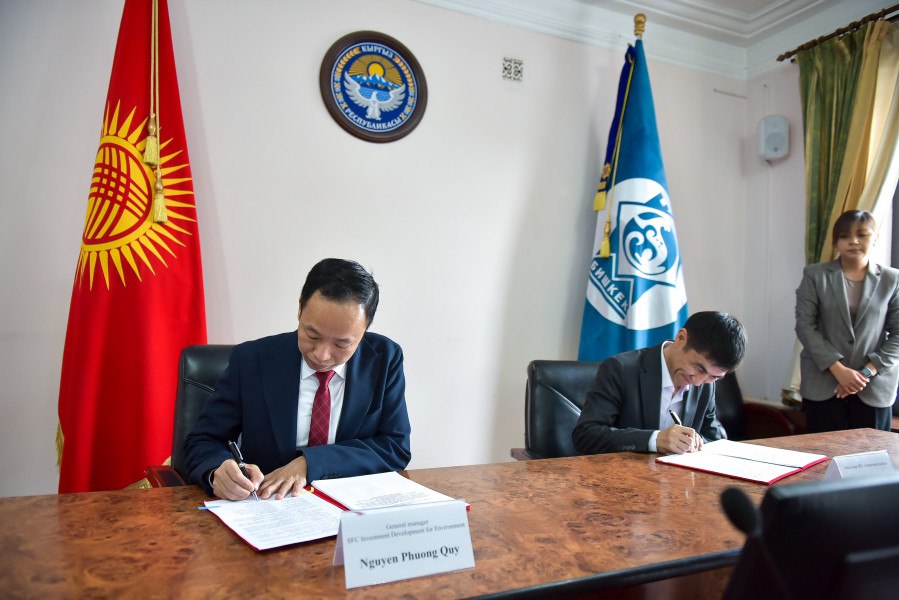
On December 18, the Bishkek City Administration signed a public-private partnership agreement with a consortium of Vietnamese companies - SFC Investment Development for Environment and Phu Dien Investment Construction and Trading. The agreement outlines plans for the reconstruction and modernization of the city’s wastewater treatment facilities. The project aims to comprehensively upgrade Bishkek’s municipal wastewater treatment infrastructure using cutting-edge technologies. Key initiatives include: Equipping the municipal water supply company’s laboratory with advanced water quality analysis tools. Replacing outdated water chlorination systems with ultraviolet disinfection technology. Automating control processes for wastewater treatment. The modernization is designed to ensure that treated wastewater meets both national and European environmental standards. It also aims to reduce environmental impact through the introduction of odor treatment systems. Deputy Chairman of the Cabinet of Ministers and Minister of Water Resources, Agriculture, and Processing Industry, Bakyt Torobayev, highlighted the urgency of such projects during the National Water Forum on November 29. Torobayev noted that only 39.5% of Kyrgyzstan’s 2,014 cities and villages currently have access to clean drinking water. Addressing the country’s water infrastructure needs will require an estimated $2 billion. The modernization of Bishkek’s wastewater treatment facilities represents a significant step forward in improving water management and ensuring sustainable development in Kyrgyzstan’s capital.

Kazakhstan Boosts Subsidies for Farmers Using Water-Saving Technologies

Kazakhstan’s Ministry of Water Resources and Irrigation has announced an increase in state subsidies for farmers employing water-saving technologies, raising support to 85% for irrigation water costs. This move aims to encourage the widespread adoption of modern water-saving methods, which are expected to reduce water consumption and expand agricultural land. Berikbol Mandibayev, Director of the Ministry’s Department for the Development of Water-Saving Technologies, highlighted the initiative’s potential impact. “The increased subsidies will motivate farmers to adopt modern water-saving technologies, saving 20–30% of irrigation water and enabling the expansion of the country’s agricultural land by 1.3 million hectares by 2030,” Mandibayev said. Subsidies for the purchase and installation of water-saving systems were also raised this year, increasing from 50% to 80%. The Ministry has outlined a Roadmap for Water Conservation for 2024-2026, which includes measures to improve water legislation, digitalize the water sector, and implement advanced water metering and conservation technologies. Additionally, master plans for introducing water-saving systems through 2030 have been approved. Kazakhstan’s agricultural land spans 23.3 million hectares, of which 1.9 million hectares are irrigated, primarily in the country’s arid southern regions. However, the adoption of water-saving technologies remains limited. In 2023, only 17% of irrigated land (312,000 hectares) utilized such technologies, with drip irrigation employed on just 84,000 hectares. President Kassym-Jomart Tokayev has criticized the slow pace of progress in adopting water-saving practices, citing annual water losses of up to 40% in some regions. The agricultural sector’s inefficiency prompted calls for urgent reforms earlier this year.

Kazakhstan and World Bank Partner on Water Conservation at One Water Summit

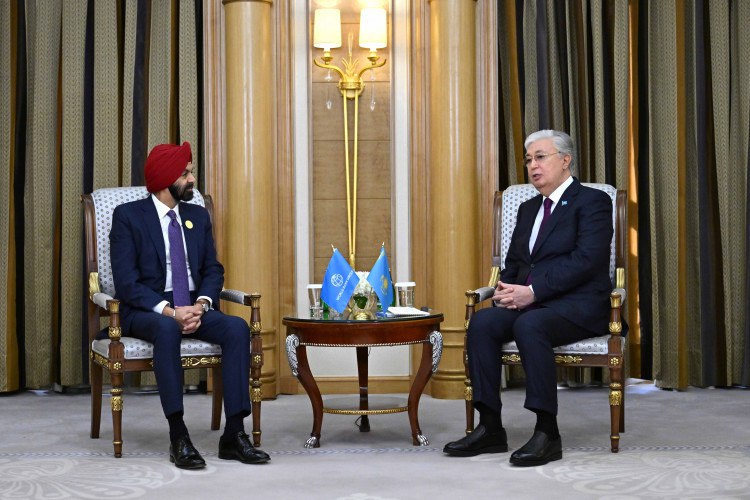
A memorandum of understanding has been signed to enhance water resource management and environmental conditions, including in the North Aral Sea and its surrounding basin, between Kazakhstan’s Ministry of Water Resources and Irrigation and the World Bank. As climate change continues to significantly impact water resources in Central Asia, exacerbating water scarcity and management challenges, this agreement underscores a shared commitment to ensuring sustainable and equitable water resource management for future generations. The memorandum was formalized following a meeting between Kazakhstan’s President Kassym-Jomart Tokayev and World Bank Group President Ajay Banga during the One Water Summit in Riyadh, Saudi Arabia, on December 3. Co-organized by French President Emmanuel Macron, Tokayev, and World Bank Group President Banga, in partnership with Saudi Arabia’s Crown Prince and Prime Minister Mohammed bin Salman, the summit sought to accelerate progress toward Sustainable Development Goal 6 (clean water and sanitation) and discuss innovative solutions ahead of the 2026 UN Water Conference. During the summit, Tokayev stressed the importance of bolstering reservoir capacity, preserving glaciers, and adopting advanced irrigation systems to secure stable water access. Tokayev proposed creating a global partnership to unite research centers focused on glacier preservation. “Glaciers are integral to the global water cycle, sustaining rivers and lakes that supply water to nearly two billion people worldwide. Collaborative research and unified policies are essential to mitigate glacier loss and support water management strategies in vulnerable regions,” he said. He warned that water scarcity poses risks to food security, energy production, and industrial growth, adding that investments in water-efficient agriculture and renewable energy can enhance economic resilience while alleviating environmental pressures. “Water knows no borders; it binds communities and ecosystems,” Tokayev remarked. As Chair of the International Fund for Saving the Aral Sea, he emphasized Kazakhstan’s commitment to fostering regional cooperation and joint action. “It is vital for countries at the forefront of combating climate change to strengthen dialogue, build international partnerships, and pool resources to implement water projects. Kazakhstan is proud to join the One Water Vision coalition, uniting stakeholders to address the global water crisis and promote integrated water resource management. As part of these efforts, with United Nations support, Kazakhstan will host a Regional Climate Conference in 2026,” Tokayev concluded.