
• KGS/USD = 0.01144 0%
  • KZT/USD = 0.00206 0%
  • TJS/USD = 0.10736 -0.19%
  • UZS/USD = 0.00008 0%
  • TMT/USD = 0.28490 -0.28%
  • KGS/USD = 0.01144 0%
  • KZT/USD = 0.00206 0%
  • TJS/USD = 0.10736 -0.19%
  • UZS/USD = 0.00008 0%
  • TMT/USD = 0.28490 -0.28%
  • KGS/USD = 0.01144 0%
  • KZT/USD = 0.00206 0%
  • TJS/USD = 0.10736 -0.19%
  • UZS/USD = 0.00008 0%
  • TMT/USD = 0.28490 -0.28%
  • KGS/USD = 0.01144 0%
  • KZT/USD = 0.00206 0%
  • TJS/USD = 0.10736 -0.19%
  • UZS/USD = 0.00008 0%
  • TMT/USD = 0.28490 -0.28%
  • KGS/USD = 0.01144 0%
  • KZT/USD = 0.00206 0%
  • TJS/USD = 0.10736 -0.19%
  • UZS/USD = 0.00008 0%
  • TMT/USD = 0.28490 -0.28%
  • KGS/USD = 0.01144 0%
  • KZT/USD = 0.00206 0%
  • TJS/USD = 0.10736 -0.19%
  • UZS/USD = 0.00008 0%
  • TMT/USD = 0.28490 -0.28%
  • KGS/USD = 0.01144 0%
  • KZT/USD = 0.00206 0%
  • TJS/USD = 0.10736 -0.19%
  • UZS/USD = 0.00008 0%
  • TMT/USD = 0.28490 -0.28%
  • KGS/USD = 0.01144 0%
  • KZT/USD = 0.00206 0%
  • TJS/USD = 0.10736 -0.19%
  • UZS/USD = 0.00008 0%
  • TMT/USD = 0.28490 -0.28%

Viewing results 1 - 6 of 10

AIIB Backs New Wind Power Project in Uzbekistan with $107 Million Loan

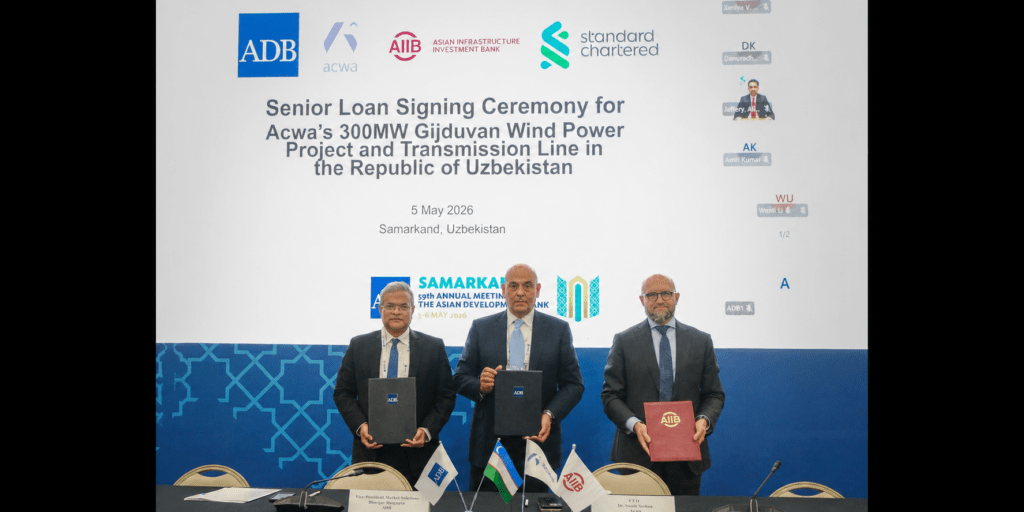
The Asian Infrastructure Investment Bank (AIIB) has signed a $107 million loan agreement with Saudi-based company ACWA Power to support the construction of the Bash 2 wind power plant in Uzbekistan. The project will be located in the Gijduvan district of the Bukhara region and is expected to have a capacity of 300 megawatts. Once completed, the facility will generate around 943 gigawatt-hours of electricity annually, enough to supply more than 336,000 households. It is also projected to reduce carbon dioxide emissions by approximately 475,000 tons per year. The Bash 2 project builds on the earlier Bash 1 wind development and forms part of a broader renewable energy cluster in the region. It aligns with Uzbekistan’s strategy to expand clean energy production and diversify its energy mix, with a national target of increasing the share of renewables to 40% by 2030. “AIIB’s investment in the Bash 2 wind power plant reflects our commitment to supporting Uzbekistan’s transition toward a more sustainable and diversified energy system,” said Konstantin Limitovskiy, Chief Investment Officer at AIIB. He noted that cooperation with private developers such as ACWA Power helps mobilize capital and strengthen energy security while delivering long-term environmental benefits. ACWA Power also emphasized the significance of the project within its growing partnership with Uzbekistan. “Bash 2 represents a meaningful step forward in ACWA’s expanding partnership with Uzbekistan and the delivery of its energy transition ambitions,” said Abdulhameed AlMuhaidib, the company’s Chief Financial Officer. He added that the project demonstrates the effectiveness of public-private partnerships in delivering large-scale clean energy solutions. The investment is supported by a long-term power purchase agreement with the National Electric Grid of Uzbekistan and is co-financed by the Asian Development Bank and Standard Chartered Bank. This financing structure highlights continued investor confidence in Uzbekistan’s renewable energy sector. Since 2019, AIIB and ACWA Power have jointly invested approximately $440 million in Uzbekistan’s energy sector, covering both renewable and conventional power generation projects. The latest agreement comes amid broader efforts by Uzbekistan to strengthen energy cooperation with international partners. As previously reported by The Times of Central Asia, the government has expanded collaboration with Saudi companies, including ACWA Power, through a series of joint projects. During a high-level meeting with Saudi investors, four wind power plants with a combined capacity of 752 megawatts were connected to the national grid, while construction began on additional projects totaling 2.3 gigawatts. At the same time, infrastructure development has continued, including work on a 1,790-kilometer high-voltage transmission line designed to improve electricity distribution across several regions of the country.
China Energy Begins Construction of Major Wind Power Plant in Kazakhstan

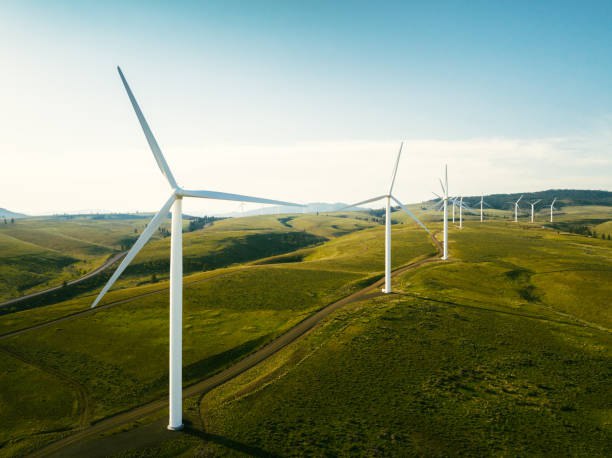
Construction has begun on a 500 MW wind power plant in Kazakhstan, with the project being developed by a Kazakh–Chinese joint venture, Karaganda Wind Power LLP. The investment agreement was signed in April 2026, and construction of the facility in the Osakarov district was officially launched later last month, according to regional authorities. The project involves the development of a 500 MW wind farm, with total investment estimated at $645 million. Annual electricity generation is expected to reach around 1.6 billion kWh of green energy, with some earlier estimates placing the figure higher. Commissioning is scheduled for 2029, and the project is projected to reduce carbon dioxide emissions by approximately 1.3 million tons per year. “Construction of the station is one of the key strategic initiatives, reflecting the development of green energy, which President Kassym-Jomart Tokayev has identified as a priority. This is an important event for the region: new capacity, technologies, and jobs,” said Karaganda region governor Yermaganbet Bulekpayev at the launch ceremony. The project includes the installation of around 60–65 wind turbines near the village of Saryozek, although final technical specifications have not been consistently confirmed. These are expected to be among the largest turbines deployed in Kazakhstan. Around 600 jobs are expected to be created during the construction phase, with permanent positions to follow once the plant becomes operational. “Next-generation wind turbines will be used in this project, and operational processes will be managed using artificial intelligence,” said Kairat Maksutov. The site was selected due to its strong and consistent wind conditions, particularly along the Osakarovka-Saryozek-Telman corridor, where a 150 MW wind project is already in operation. The project forms part of Kazakhstan’s broader push to expand renewable energy capacity, which currently stands at just 7% of its energy mixed. In December last year, China Energy Engineering Group also began construction of a 300 MW solar power plant in the Sauran district of the Turkestan region in southern Kazakhstan. The project, with an investment of about $320 million, is expected to be completed by the end of this year. As previously reported by The Times of Central Asia, China Energy International Group is also active in the Uzbekistan energy market.

Chinese Investor Plans 500 MW Solar and Wind Power Plants in Tajikistan

Chinese company Dayu New Energy Limited plans to develop solar and wind power plants in the Kubodiyon and Jaihun districts of Tajikistan’s Khatlon region. With a combined installed capacity of 500 megawatts, the project would rank among the largest renewable energy initiatives in the region. During negotiations, it was emphasized that Khatlon has been strengthening its economic ties with Chinese firms and offers favorable conditions for the construction of infrastructure and energy facilities. The region is seen as a key zone for attracting foreign direct investment. Dayu New Energy CEO David Liu noted that the company has operated in the renewable energy sector since 2018, specializing in the construction and operation of solar and wind power stations. He added that the firm is currently implementing wind energy projects in Georgia and Kazakhstan, underscoring its practical experience and technological capacity. Following the meeting, the head of the Khatlon region expressed support for the project and confirmed his willingness to facilitate its development. As previously reported by The Times of Central Asia, Tajikistan has significantly accelerated its transition to green energy. The country has already launched its largest solar initiative to date: the construction of two photovoltaic power plants with a combined capacity of 500 MW, an unprecedented move for the republic. In a related development, the Asian Development Bank recently approved a $1 million grant to support technical assistance for floating solar photovoltaic systems in Tajikistan.

Kyrgyzstan Begins Construction of Its First Wind Power Plant

Kyrgyzstan has begun construction of its first-ever wind power plant, marking a significant step toward diversifying the country’s energy mix and addressing chronic electricity shortages. The ferroconcrete foundation was recently laid near the city of Balykchy on the northern shore of Lake Issyk-Kul, according to the Ministry of Water Resources, Agriculture, and Processing Industry. The 100-megawatt (MW) wind farm will be developed in two phases: Phase One: 21 turbines with a combined capacity of 50 MW Phase Two: 20 turbines, each with a capacity of 2.5 MW The first wind turbine, rated at 1 MW, is expected to be commissioned in August 2025. Once fully operational, the facility will generate up to 250 million kilowatt-hours (kWh) of electricity annually, offsetting emissions equivalent to those produced by 35,000 cars. The wind farm will supply power not only to the Issyk-Kul region but will also contribute to electricity exports through the CASA-1000 (Central Asia-South Asia) transmission project. This regional initiative aims to export surplus summer electricity from Kyrgyzstan and Tajikistan to Afghanistan and Pakistan. The government has emphasized that expanding renewable energy sources is essential for resolving the country’s long-standing energy deficit and attracting much-needed investment in the sector. Despite having the potential to produce 142 billion kWh annually, Kyrgyzstan’s current electricity output is only about 14 billion kWh, roughly 10% of its hydropower capacity. In 2024, the country’s total electricity consumption reached 18.3 billion kWh, up 1.1 billion kWh from the previous year. Hydropower plants accounted for the bulk of production, generating 12.77 billion kWh. Coal-fired thermal plants contributed 1.76 billion kWh, while small private hydropower stations produced 156.2 million kWh. Solar installations added just 0.17 million kWh. To bridge the shortfall, Kyrgyzstan imported 3.63 billion kWh of electricity in 2024, an increase of 141.7 million kWh from 2023.
