• KGS/USD = 0.01144 0%
  • KZT/USD = 0.00215 0%
  • TJS/USD = 0.10640 0%
  • UZS/USD = 0.00008 0%
  • TMT/USD = 0.28530 0%
  • KGS/USD = 0.01144 0%
  • KZT/USD = 0.00215 0%
  • TJS/USD = 0.10640 0%
  • UZS/USD = 0.00008 0%
  • TMT/USD = 0.28530 0%
  • KGS/USD = 0.01144 0%
  • KZT/USD = 0.00215 0%
  • TJS/USD = 0.10640 0%
  • UZS/USD = 0.00008 0%
  • TMT/USD = 0.28530 0%
  • KGS/USD = 0.01144 0%
  • KZT/USD = 0.00215 0%
  • TJS/USD = 0.10640 0%
  • UZS/USD = 0.00008 0%
  • TMT/USD = 0.28530 0%
  • KGS/USD = 0.01144 0%
  • KZT/USD = 0.00215 0%
  • TJS/USD = 0.10640 0%
  • UZS/USD = 0.00008 0%
  • TMT/USD = 0.28530 0%
  • KGS/USD = 0.01144 0%
  • KZT/USD = 0.00215 0%
  • TJS/USD = 0.10640 0%
  • UZS/USD = 0.00008 0%
  • TMT/USD = 0.28530 0%
  • KGS/USD = 0.01144 0%
  • KZT/USD = 0.00215 0%
  • TJS/USD = 0.10640 0%
  • UZS/USD = 0.00008 0%
  • TMT/USD = 0.28530 0%
  • KGS/USD = 0.01144 0%
  • KZT/USD = 0.00215 0%
  • TJS/USD = 0.10640 0%
  • UZS/USD = 0.00008 0%
  • TMT/USD = 0.28530 0%

Viewing results 1 - 6 of 26

TotalEnergies Launches Wind Farm Project in Southern Kazakhstan

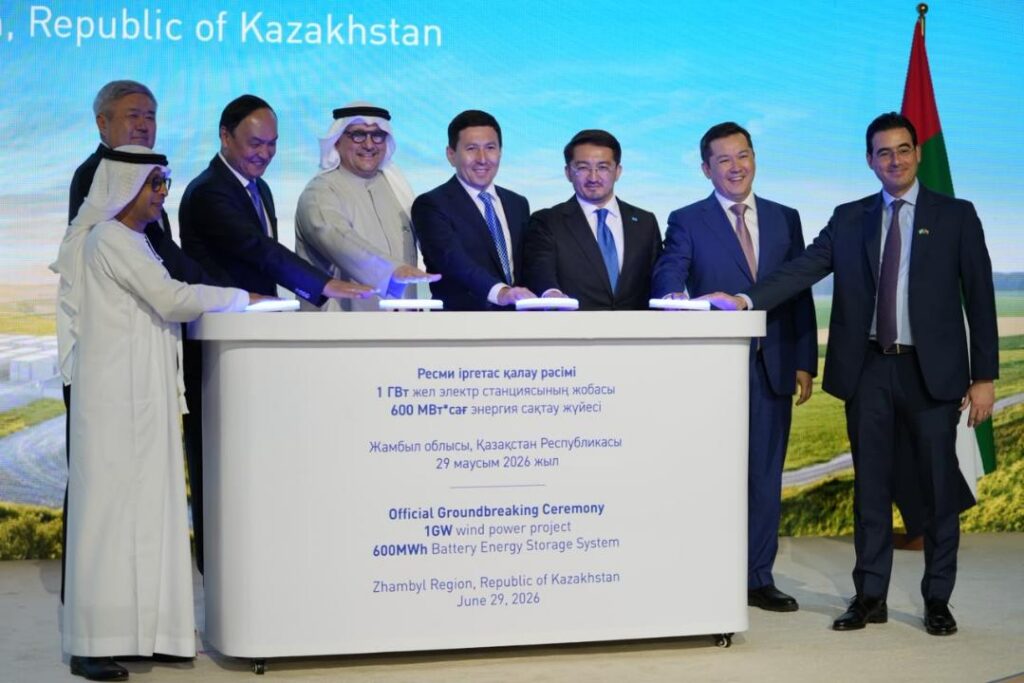
French energy company TotalEnergies has launched construction of the Mirny wind farm, a 1-gigawatt renewable energy project in Kazakhstan’s Moyinkum District in the Zhambyl Region. Once completed, the facility is expected to become one of the largest wind power installations in Central Asia. The project provides for the installation of around 150 wind turbines supplied by Envision and SANY. It will also include a 600-megawatt-hour energy storage system developed by the French battery manufacturer Saft, designed to improve grid stability and optimize power distribution. Total investment in the project is estimated at about $1.1 billion. The wind farm is scheduled to be commissioned in the fourth quarter of 2028. Annual electricity generation is projected to reach up to 4 billion kilowatt-hours, which could reduce carbon dioxide emissions by at least 3.2 million tons per year. Kazakhstan’s authorities view the expansion of renewable energy as a key component of efforts to reduce the country’s carbon footprint. National greenhouse gas emissions stood at 375.4 million tons in 2020, declined to 328.4 million tons in 2021, and rose again to 353 million tons in 2022, according to previously reported data. The energy sector remains the largest source of emissions, accounting for approximately 281.9 million tons of greenhouse gases in 2022. The Ministry of Energy has said the TotalEnergies project will contribute to the development of green energy, strengthen energy security, and support the country’s broader decarbonization goals. Authorities also plan further expansion of renewable capacity. Ten new projects with a combined capacity of 245 megawatts are expected to be launched this year, covering wind, solar, and hydroelectric generation. Together with existing facilities, they are projected to produce around 8.8 billion kilowatt-hours of electricity. In addition to the Mirny wind farm, other major renewable initiatives involving foreign investors are underway. These include a $1.4 billion wind power project backed by the United Arab Emirates’ Masdar, as well as wind and solar developments led by China Power and China Energy in several regions. Competitive auctions remain the main mechanism for expanding renewable energy capacity. Kazakhstan plans to allocate 6.7 gigawatts of new capacity through auctions between 2024 and 2027. In the longer term, the government aims to bring more than 8 gigawatts of renewable energy capacity online by 2035. As previously reported by The Times of Central Asia, officials have also said the country intends to eliminate its electricity deficit and begin exporting power by 2027.

Kyrgyzstan’s Renewable Pivot and the Strategic Weight of China’s Rising Role

China’s energy engagement in Central Asia has undergone a quiet but decisive transformation since 2018. What was once a relationship built almost entirely on pipelines, hydrocarbons, and state-backed fossil fuel projects is now expanding into a much more diversified portfolio in which renewable energy plays an increasingly central role. Kazakhstan and Uzbekistan were the first to attract large-scale Chinese commitments in solar and wind power, yet Kyrgyzstan is quickly emerging as the newest frontier in this shift. Recent agreements demonstrate how Bishkek is rapidly positioning itself within China’s clean energy expansion. In 2022, Kyrgyzstan signed an agreement with Chinese investors to build a 1-gigawatt solar plant in Issyk-Kul. Furthermore, the government concluded another agreement with Shenzhen Energy Group for the construction of two additional power plants, one solar and one wind. The Energy Ministry has also reached an investment deal with States Technology Co. and San Energy Co. for a 250-megawatt solar facility in Batken. These projects indicate that Chinese capital is not only filling Kyrgyzstan’s immediate energy gaps, but is also beginning to reshape the country’s long-term energy structure. This push toward solar and wind arrives at a critical moment. Kyrgyzstan remains overwhelmingly dependent on hydropower, which generates more than 90% of the country’s electricity. Yet this climate-sensitive resource is now far less stable than in the past. Shifts in water levels driven by changing weather patterns have introduced new uncertainties into the country’s ability to meet domestic demand. At the same time, electricity consumption has surged at an unprecedented rate, rising by nearly one billion kilowatt hours in a single year due to newly launched industrial enterprises and rapid residential construction. The combination of climate volatility and soaring consumption has placed the energy system under severe strain. The government has declared a three-year energy emergency and introduced consumption restrictions designed to save approximately 40 kilowatt hours per month. Under these conditions, diversifying away from near-total reliance on hydropower is no longer optional but an urgent strategic necessity. Solar and wind investments offer a viable path forward. Expanding renewable capacity will give Kyrgyzstan a more predictable and resilient energy base, enabling the country to better manage seasonal shortages and climate-driven disruptions. Kyrgyzstan also imports all of its fossil fuels. As renewable capacity expands and the use of electric vehicles increases, the country could gradually reduce its dependence on oil imports from Russia, easing both financial pressures and geopolitical exposure. For this reason, cooperation with China represents more than a set of commercial transactions. It is evolving into a strategic pillar of Kyrgyzstan’s broader effort to strengthen energy security and modernize its power system. Chinese companies bring financing, technology, and implementation speed, all of which are essential for a country facing immediate and long-term energy risks. The benefits may extend beyond the domestic market. With sufficient renewable capacity, Kyrgyzstan could eventually re-enter regional electricity trade as an exporter. Some estimates suggest that cross-border energy sales could generate up to 220 million dollars annually in foreign currency earnings, providing a significant...

Fossil-Fuel Rich UAE Drives Central Asia’s Green Energy Transition

Central Asian nations, especially Kazakhstan and Uzbekistan, are seeking to develop closer ties with the oil-rich United Arab Emirates. What they need from the Gulf state is not fossil fuels, but renewable energy technology and investment in their green energy sectors. Despite being a significant oil-exporter, the UAE has managed in recent years to position itself as a regional leader in solar energy and photovoltaic solar projects. As a result, it now has global aspirations in the renewable energy industry. The Gulf country, through its semi-government-owned company, Masdar, has already invested billions of dollars in the construction of wind farms and solar plants all over the world – from the Bahamas and Barbados to Australia, as well as several African and European nations. Central Asia is no exception. In the region, the green energy giant is particularly active in Uzbekistan and Kazakhstan. It is, therefore, no surprise that, on January 14, two regional leaders, Shavkat Mirziyoyev and Kassym-Jomart Tokayev, were major guests at the Abu Dhabi Sustainability Week, a global platform focused on accelerating sustainability efforts. [caption id="attachment_27597" align="aligncenter" width="1280"] President Tokayev of Kazakhstan speaking at the Abu Dhabi Sustainability Week; image: TCA, Nikola Mikovic[/caption] Their visit to the UAE signals a strong push for a green energy transition at home. For Tashkent and Astana, cooperation with Abu Dhabi in the field of green energy can help them to achieve their ambitious goals and reduce reliance on fossil fuels, despite both being significant producers of natural gas and oil. “Together with our foreign partners, we are currently implementing more than 50 large energy projects worth a total of $26 billion,” Mirziyoyev stressed, pointing out that by 2030, the share of renewable energy sources in the country will reach 54%. [caption id="attachment_27593" align="aligncenter" width="2560"] President of Uzbekistan, Shavkat Mirziyoyev backstage at the Abu Dhabi Sustainability Week; image: TCA, Nikola Mikovic[/caption] In his view, Central Asia should turn into a “center of green economy.” The Director-General of the International Renewable Energy Agency (IRENA), Francesco La Camera, seems to share this stance. “Central Asia can play a stronger and leading role in the global energy transition. I’m confident this new partnership can accelerate the pipeline of renewable energy projects and drive green industrialization,” La Camera said at the 15th session of the IRENA Assembly, held in the UAE capital two days prior to the meetings Mirziyoyev and Tokayev had with the UAE’s leaders. According to the Uzbek President, Tashkent is interested in jointly realizing the potential of Central Asia in solar, wind, and hydro energy, as well as in developing the production of green hydrogen. Fully aware of the Central Asian state’s green energy potential, Masdar is committed to investing $2 billion in Tashkent’s clean energy projects with a total capacity of more than two gigawatts. In the most populated Central Asian nation, the UAE’s semi-state-owned company is already involved in the construction of both solar plants and wind farms. [caption id="attachment_27594" align="aligncenter" width="2560"] Abdulaziz Alobaidli, Masdar’s Chief Operating Officer, at the Abu...

Rosatom to Build 100 MW Wind Farm in Kyrgyzstan

Rosatom Renewable Energy, the wind power division of Russia’s State Atomic Energy Corporation Rosatom, has signed an investment agreement with Kyrgyzstan’s Cabinet of Ministers to construct and operate a 100 MW wind farm in Kok-Moinok village, located in the Issyk-Kul region The agreement was formalized by Taalaibek Ibraev, Kyrgyzstan’s Minister of Energy; Grigory Nazarov, Director General of Rosatom Renewable Energy; and Dmitry Andreyev, Director General of NovaWind Kyrgyzstan, LLC. The project represents Rosatom’s first export initiative in wind power generation. A ceremonial milestone was reached in September 2024 with the laying of a time capsule at the site of the future wind farm. Design and survey work, along with equipment procurement, is slated to begin in 2025. Rosatom's Broader Role in Kyrgyzstan Rosatom has been actively advancing strategic energy projects in Kyrgyzstan. In January 2022, the company and Kyrgyzstan’s Ministry of Energy signed a memorandum of cooperation to construct low-power nuclear power plants based on the RITM-200N reactor. Additionally, Rosatom is contributing to the development of Kyrgyzstan’s hydroelectric capacity, including the construction of the Leilek HPP (5.9 MW), Jerooy HPP (28 MW), and Chandalash HPP (30 MW). These efforts reflect the company’s diversified approach to strengthening the country's energy sector. Kyrgyzstan continues to face electricity shortages, particularly during the harsh winter months. To tackle this issue, the country is investing in a mix of renewable energy projects, including solar and wind farms, as well as large hydroelectric power plants. Rosatom’s 100 MW wind farm in Kok-Moinok is expected to play a significant role in diversifying Kyrgyzstan’s energy sources and enhancing energy security.

Uzbekistan Plans to Increase Share of Green Energy to 40% by 2030

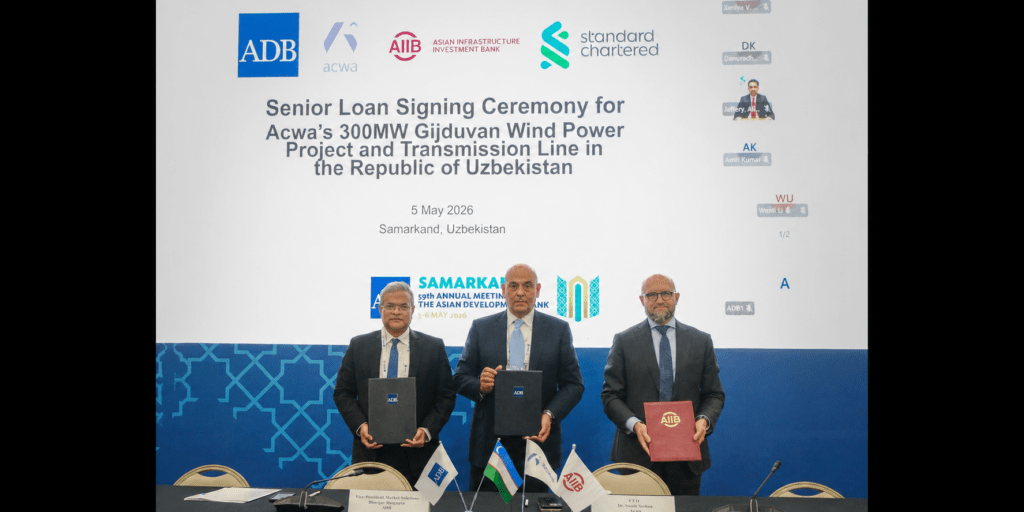
Uzbekistan intends to increase the share of renewable energy sources in the country’s energy consumption structure to 40% by 2030. Energy Minister Zhurabek Mirzamakhmudov announced this at the “Russian Energy Week" forum. According to Mirzamakhmudov, renewable energy, including solar and wind power plants, will become the basis for meeting the growing electricity demand as part of the country's growth strategy. Mirzamakhmudov noted that Uzbekistan's economy is growing by 6% annually, and the population will continue to grow. This causes the demand for electricity to grow by 7-8% per year, and by 2030, this figure may stabilize at 7.5%. Uzbekistan plans to introduce up to 20 gigawatts of solar and wind power plant capacity to meet this demand. It is expected that the share of renewable energy sources in the country's total energy balance will reach 40%. The share of renewable energy is about 10%, but by the end of this year, it should increase to 15%. In the coming years, 2.5 to 3.5 gigawatts of new capacity will be commissioned annually. In addition, considerable attention will be paid to developing thermal and hydroelectric power plants, which are planned to reach 18.5 gigawatts of capacity by 2030. The minister also emphasized the importance of energy storage systems. Uzbekistan plans to install 300 megawatts of storage capacity this year and increase it to 4.2 gigawatts by 2030, mainly using lithium-ion batteries. Along with this, projects to create hydro-battery stations will be implemented. Mirzamakhmudov added that all these projects are financed by foreign direct investment, demonstrating the high interest of international investors in the country's energy sector. The Russian Energy Week 2024 forum is being held in Moscow from September 26 to 28. The event's main theme is “Energy Cooperation in a Multipolar World.” More than 70 speakers from various countries have participated, including from Russia, BRICS countries, and Africa. The forum discussed topics such as sustainable energy development, the role of hydrocarbons in the future, and issues of technological independence. One of the key events was the meeting of BRICS energy ministers. Earlier, The Times of Central Asia wrote about the annual meeting of the Board of Directors of the Asian Infrastructure Investment Bank (AIIB) held in Samarkand on September 25-26, where Uzbek President Shavkat Mirziyoyev proposed a program of green energy development for Central Asia.

Joint Portfolio of Uzbekistan and Saudi Arabia Projects Exceeds $30 Billion

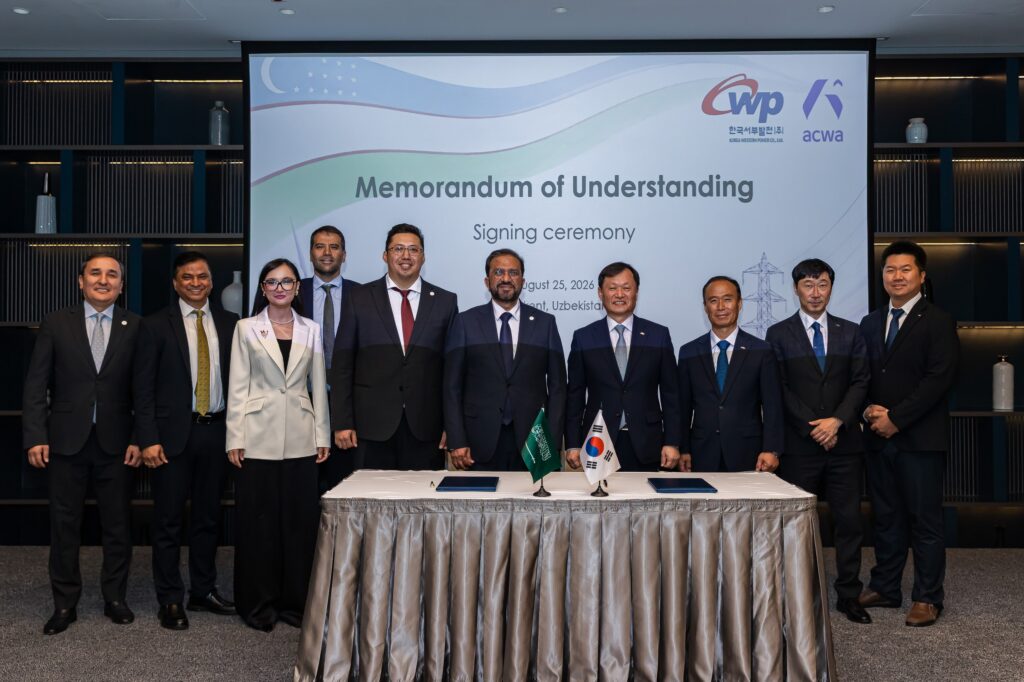
On May 2, Uzbek President Shavkat Mirziyoyev welcomed representatives of several countries to the Tashkent International Investment Forum. In discussion with the Speaker of the Parliament of Singapore, Sia Kian Peng, the two sides focused on cooperation in personnel training, investment, tourism and public safety, and emphasized the importance of joint, effective parliamentary control over their bilateral high-level agreements. During negotiations between Mirziyoyev  and the Chairman of the Cabinet of Ministers of Kyrgyzstan Aqilbek Japarov, the two leaders  concentrated on deepening strategic partnership between Uzbekistan and Kyrgyzstan, expansion of cooperation in various trade sectors such as industrial, energy, transport and logistics, and  marshalling interregional relations and cultural-humanitarian exchange. Special attention was paid to practical issues relating to the Kambarata HPP-1 (hydropower plant) and China-Kyrgyzstan-Uzbekistan railway projects. A delegation led by Prince Abdulaziz bin Salman Al-Saud, Minister of Energy of Saudi Arabia, used the opportunity to discuss the further expansion of practical cooperation, and the implementation of priority investment projects in Uzbekistan. The high level of bilateral trade and investment partnerships already achieved was noted. The portfolio of joint projects currently exceeds $30 billion, with Saudi Arabia's ACWA serving as a keen investor in Uzbek wind power generation. According to data provided by the Uzbek Government, agreements to implement projects worth $18 billion in the fields of green energy, infrastructure, healthcare and pharmaceuticals are set to be signed within the framework of the Tashkent International Investment Forum.