Tselliny HIMOYA Exhibition: Women’s Memory, Protective Amulets, and Colonial Legacies
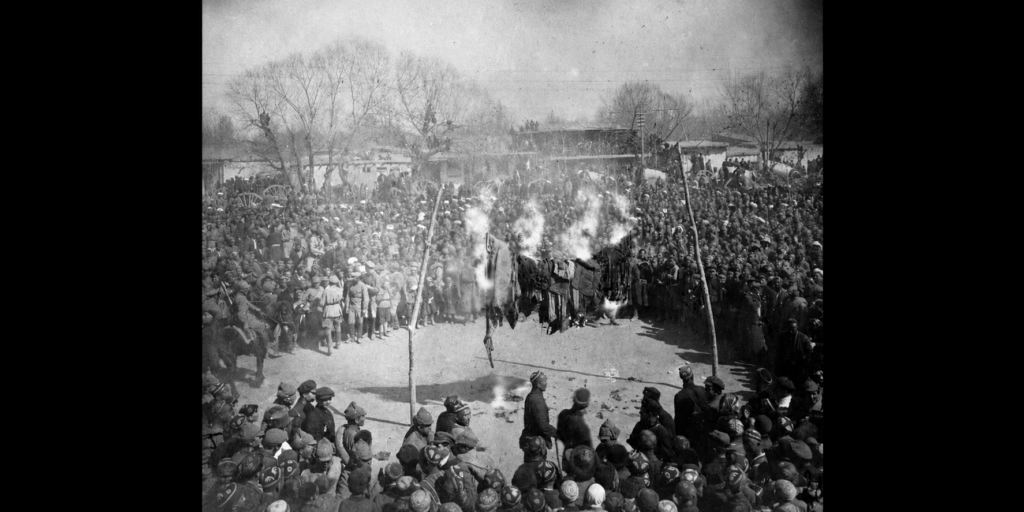
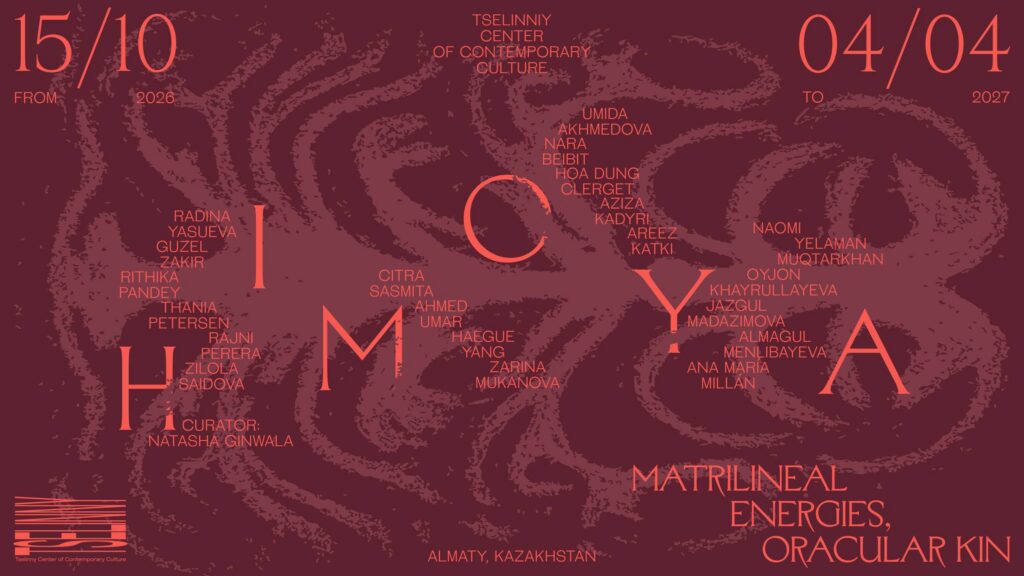
Kazakh protective amulets incorporating family photographs are among the works on display at HIMOYA: Matrilineal Energies, Oracular Kin at the Tselinny Center of Contemporary Culture in Almaty. Elsewhere, a pregnant bird-woman stands at the boundary between life and death. Artists from Central Asia and beyond explore how inherited beliefs and women’s experiences help preserve cultural identity. The exhibition opened on October 15, 2026, and runs through April 4, 2027. It features more than 20 artists and is curated by Natasha Ginwala, who has previously worked on international projects, including the Gwangju and Sharjah biennials. [caption id="attachment_59058" align="aligncenter" width="682"] From Natasha Ginwala’s personal archive.[/caption] The title HIMOYA evokes protection across several linguistic traditions. In the participating artists’ works, that includes preserving ancestral memory. Speaking at the center, Alima Kairat, Tselinny’s artistic director, said the exhibition’s concept had developed over several years. “For Tselinny, HIMOYA is the culmination of a conversation that began in 2021. We gradually explored questions of maternal memory, rituals, protection, inherited ideas about shame, and care. These themes are deeply rooted in life in Kazakhstan and Central Asia, where ancestral knowledge continues to influence the present and helps us imagine the future in new ways,” she said. Female Figures and Ancestral Memory Ginwala’s curatorial concept centers on women’s experiences and knowledge passed down through generations. The artists draw on folk narratives and religious practices, including pre-Islamic steppe beliefs, to reconsider ideas about women’s roles and power. “During conversations with the artists as we prepared the project, different female figures emerged – nurturing and powerful figures, as well as ‘monstrous’ beings from folk tales, steppe mythology, and pre-Islamic cosmologies,” Ginwala said. In Kazakh tradition, genealogy is closely linked to the concept of zheti ata, the knowledge of seven generations of ancestors on the paternal side. The custom also served as the basis for prohibitions on marriage between close relatives. HIMOYA turns to another line of inheritance: the maternal one. The grandmother holds a particularly important place as a guardian of family memory. This theme intersects with the history of colonial and Soviet pressure on local beliefs. The artists explore how traditions once dismissed as backward or superstitious have survived through family practices and acquired new meanings in contemporary art. The Bird-Woman Between Two Worlds One of the exhibition’s central works is Gatekeeper by Rajni Perera, an artist born in Sri Lanka and based in Toronto. Her work draws on South Asian folklore and fantasy to explore migration and motherhood, including questions of reproductive rights. [caption id="attachment_59059" align="aligncenter" width="1024"] “Gatekeeper” by Rajni Perera. Image: Theo Frost.[/caption] The life-size sculpture was first presented at the 2025 Sharjah Biennial in the United Arab Emirates. It depicts a pregnant woman with features of a hornbill and a crow. Its surface is decorated with motifs inspired by azulejos, painted ceramic tiles widely associated with Portugal and shaped by Islamic decorative traditions. “When I was creating this figure, I was thinking about the umbilical cord because she is pregnant. She seems to pull life out...