
• KGS/USD = 0.01144 0%
  • KZT/USD = 0.00198 -0%
  • TJS/USD = 0.10903 0.18%
  • UZS/USD = 0.00008 -0%
  • TMT/USD = 0.28490 -0.28%
  • KGS/USD = 0.01144 0%
  • KZT/USD = 0.00198 -0%
  • TJS/USD = 0.10903 0.18%
  • UZS/USD = 0.00008 -0%
  • TMT/USD = 0.28490 -0.28%
  • KGS/USD = 0.01144 0%
  • KZT/USD = 0.00198 -0%
  • TJS/USD = 0.10903 0.18%
  • UZS/USD = 0.00008 -0%
  • TMT/USD = 0.28490 -0.28%
  • KGS/USD = 0.01144 0%
  • KZT/USD = 0.00198 -0%
  • TJS/USD = 0.10903 0.18%
  • UZS/USD = 0.00008 -0%
  • TMT/USD = 0.28490 -0.28%
  • KGS/USD = 0.01144 0%
  • KZT/USD = 0.00198 -0%
  • TJS/USD = 0.10903 0.18%
  • UZS/USD = 0.00008 -0%
  • TMT/USD = 0.28490 -0.28%
  • KGS/USD = 0.01144 0%
  • KZT/USD = 0.00198 -0%
  • TJS/USD = 0.10903 0.18%
  • UZS/USD = 0.00008 -0%
  • TMT/USD = 0.28490 -0.28%
  • KGS/USD = 0.01144 0%
  • KZT/USD = 0.00198 -0%
  • TJS/USD = 0.10903 0.18%
  • UZS/USD = 0.00008 -0%
  • TMT/USD = 0.28490 -0.28%
  • KGS/USD = 0.01144 0%
  • KZT/USD = 0.00198 -0%
  • TJS/USD = 0.10903 0.18%
  • UZS/USD = 0.00008 -0%
  • TMT/USD = 0.28490 -0.28%
05 December 2025

Viewing results 1 - 6 of 5

More Kazakhs Working in Their Chosen Fields as Job Satisfaction Varies

A growing number of Kazakhstan’s citizens are working in their chosen professions, yet satisfaction with their jobs remains uneven across demographics and regions, according to a recent study by Finprom.kz based on survey data from the National Statistics Bureau (NSB). In a nationwide NSB survey conducted in March among nearly 12,000 respondents aged 15 and older, 50.7 percent reported being completely satisfied with their jobs, up slightly from 49.9 percent a year earlier. Another 29.9 percent said they were partially satisfied. The share of those dissatisfied with their jobs declined sharply from 3 percent to just 0.9 percent. However, 18.5 percent of respondents either found the question difficult to answer or considered it inappropriate, a sharp increase from 1.6 percent the previous year. Rural residents reported higher job satisfaction than their urban counterparts, with 53.9 percent compared to 49.4 percent. Dissatisfaction was also more common in cities (1.2 percent) than in rural areas (0.7 percent). Gender differences also appeared. Men were more likely to report being satisfied with their work (55 percent) than women (48.1 percent). Women were slightly more likely to say they were only partially satisfied or entirely dissatisfied (1 percent versus 0.6 percent among men). Satisfaction levels varied significantly by age. Among respondents under 17, only 30.2 percent were fully satisfied with their profession. Satisfaction peaked in the 29–38 age group at 62.5 percent but fell to 29.5 percent among those over 60. As expected, financial status played a major role. Among high-income individuals, 82.6 percent were content with their professional choice, compared to just 14.8 percent among low-income respondents. In the second quarter of 2025, Kazakhstan had 9.3 million employed people, an increase of 1.2 percent year over year. Of these, 7.1 million worked in their field of study, 1.7 million in unrelated professions, and 531,700 had not received formal professional training. Urban residents were more likely to work in their trained field, with 4.9 million people, or 83.3 percent of the urban workforce, compared to 2.2 million rural workers (63.7 percent). In rural areas, 24.8 percent worked outside their area of study and 11.5 percent lacked professional training. By gender, 3.6 million men and 3.5 million women reported working in their field. A higher percentage of women (77.6 percent) than men (74.8 percent) were employed in jobs matching their qualifications. The leading employment sector remained trade and auto repair, employing 1.6 million people, a 3.3 percent increase over the past year. It was followed by education (1.2 million, +2.5 percent), agriculture (1 million, –5.2 percent), transport and warehousing (676,900, +1 percent), and construction (638,300, –1 percent). The least represented sectors were water supply, real estate, and energy supply.

Solidarity Center: Central Asian Migrant Workers Face Low Pay and Unsafe Workplaces

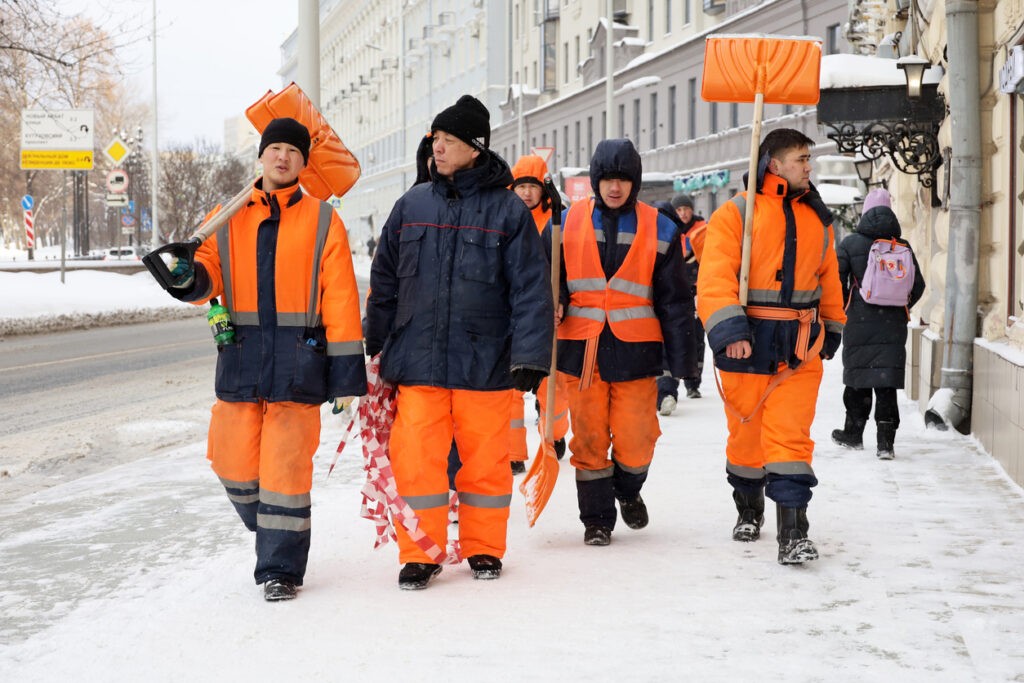
Central Asian migrant workers face new challenges as they look for well-paying jobs, with economic shifts and political instability adding to the uncertainty. More women and young people also choose to migrate, often facing unique risks. Panelists at a recent Solidarity Center webinar highlighted that protecting these workers’ rights is more effective when countries in the region work together on safe migration plans. A Solidarity Center study involving over 1,000 migrant workers from Kazakhstan, Kyrgyzstan, and Uzbekistan found that Kyrgyzstan and Uzbekistan are the primary countries of origin, while Kazakhstan is becoming a growing destination. Most participants (58%) left due to low wages in their home countries, and 31% cited a lack of jobs as their main reason for migrating. Russia, once a top destination for Central Asian workers, has seen a drop in migrant numbers since its economy took a hit following Russia's invasion of Ukraine. A migrant worker from Uzbekistan shared that overtime hours weren’t paid, and medical expenses had to come out of his pocket if he got sick. According to Lola Abdukadyrova, Solidarity Center's regional director in Kyrgyzstan, this story reflects the harsh conditions many migrant workers face—no overtime pay, no sick leave, and frequent discrimination or harassment. Abdukadyrova noted that for nearly 30% of Kyrgyz migrant households, money for food is often a struggle. In Uzbekistan, this rate rises to 45%, as shared by Nodira Karimova, director of the Republican Social Information Center Istiqbolli Avlod. Abdukadyrova added that many migrants earn only enough for basic food, and they face delayed payments, heavier workloads without extra pay, and unsafe working conditions. “Kazakhstan has endorsed the Global Compact for Safe, Orderly and Regular Migration (GCM) and participates in various regional migration dialogues,” said Aleksandr Mukha, director of the Mangistau Regional Branch of the Kazakhstan International Bureau for Human Rights and Rule of Law. In another significant win for migrant worker rights organizations, Kyrgyzstan issued the GCM in August to improve conditions for Kyrgyz citizens who travel abroad to earn their livelihoods. The Times of Central Asia has previously written about how that Russia's ongoing war in Ukraine has increased pressure on Central Asian migrants.

Seasonal workers in Kyrgyzstan look to Europe

The Russian Federation is now the leader in the number of migrants coming from Central Asian countries. However, according to the Kyrgyz Ministry of Labor, Social Security and Migration, the number of Kyrgyz working in Russia has decreased by 30% over the past year. According to the Ministry of Labor, for nine months of 2023, the number of Kyrgyz migrants in the Russian Federation decreased by 180,000 people. The tightening of Russia's migration policy, the weakening of the ruble, and the war in Ukraine are to blame. In addition, according to the National Bank of the Kyrgyz Republic, remittances from Russia to Kyrgyzstan decreased by almost one billion dollars (35%) during the reporting period. Remittances from the Russian Federation account for almost one third of Kyrgyzstan's GDP. Today, many migrants who previously worked in Moscow and other major Russian cities for decades have begun to consider new countries for work. In Bishkek, one can see many advertisements for construction workers in Bulgaria or plantations in the United Kingdom. The increase in the flow of migrants from Central Asia in London is explained by an increase in quotas for seasonal workers, as well as a decrease in the number of workers from Ukraine. Where men between 18 and 60 are banned from leaving the country due to mobilization. Before the war, most seasonal workers in the UK came from that country. In 2023, the number of work quotas for Kyrgyz people increased from 1,500 to 2,000 people, the Kyrgyz Ministry of Labor said. It also said Kyrgyz authorities support migration both westward and eastward. "Previously, our citizens worked legally in only two or three countries around the world. But at the moment the geography for official employment is expanding every year. Fifteen destinations are already available - people have a choice. This includes employment in the Persian Gulf countries, the UK, Germany, Japan and Hungary," Almaz Alybayev, director of the Center for Employment of Citizens Abroad under the Ministry of Labour, Social Development and Migration, told Kyrgyz media. The Kyrgyz government believes that Kyrgyz people will return from the UK and other countries with the capital and experience to start their own businesses, which will contribute to the growth of the state's economy and the welfare of its citizens. The example of Kyrgyz migrants working in South Korea is noteworthy. There, Kyrgyz migrants worked at factories producing doors and plastic windows. As a result, Korean technologies in this area are now actively used in Kyrgyzstan. The same can be said about innovations in agriculture, which are used by farmers in Great Britain. Kyrgyzstan is in many ways an agrarian country, which means that the experience of such migrants will be useful to the country.
