
• KGS/USD = 0.01143 0%
  • KZT/USD = 0.00201 0%
  • TJS/USD = 0.10510 -0.28%
  • UZS/USD = 0.00008 0%
  • TMT/USD = 0.28575 0%
  • KGS/USD = 0.01143 0%
  • KZT/USD = 0.00201 0%
  • TJS/USD = 0.10510 -0.28%
  • UZS/USD = 0.00008 0%
  • TMT/USD = 0.28575 0%
  • KGS/USD = 0.01143 0%
  • KZT/USD = 0.00201 0%
  • TJS/USD = 0.10510 -0.28%
  • UZS/USD = 0.00008 0%
  • TMT/USD = 0.28575 0%
  • KGS/USD = 0.01143 0%
  • KZT/USD = 0.00201 0%
  • TJS/USD = 0.10510 -0.28%
  • UZS/USD = 0.00008 0%
  • TMT/USD = 0.28575 0%
  • KGS/USD = 0.01143 0%
  • KZT/USD = 0.00201 0%
  • TJS/USD = 0.10510 -0.28%
  • UZS/USD = 0.00008 0%
  • TMT/USD = 0.28575 0%
  • KGS/USD = 0.01143 0%
  • KZT/USD = 0.00201 0%
  • TJS/USD = 0.10510 -0.28%
  • UZS/USD = 0.00008 0%
  • TMT/USD = 0.28575 0%
  • KGS/USD = 0.01143 0%
  • KZT/USD = 0.00201 0%
  • TJS/USD = 0.10510 -0.28%
  • UZS/USD = 0.00008 0%
  • TMT/USD = 0.28575 0%
  • KGS/USD = 0.01143 0%
  • KZT/USD = 0.00201 0%
  • TJS/USD = 0.10510 -0.28%
  • UZS/USD = 0.00008 0%
  • TMT/USD = 0.28575 0%
28 February 2026

Viewing results 1 - 6 of 13

Poverty in Central Asia: Who Is Living and Who Is Just Surviving

A new analysis by Ranking.kz reveals that Kazakhstan currently has the most favorable poverty indicators among Central Asian countries, while Tajikistan records the highest levels of deprivation. The findings also reflect significant shifts in global poverty estimates following a revision of the World Bank’s methodology. According to Our World in Data, by 2024, the global number of people living in extreme poverty had risen to 817 million, an increase of 125 million compared to previous figures. However, this jump does not signal worsening global conditions. Instead, it stems from a change in measurement criteria. In June 2024, the World Bank raised the international poverty line from $2.15 to $3 per day in purchasing power parity (PPP), based on 2021 prices. This methodological update expanded the scope of people counted as poor, even as real incomes among the poorest rose by approximately 16%. Sub-Saharan Africa continues to bear the brunt of global poverty. Of the 30 countries with the highest poverty rates, 24 are located on the continent. In Central Asia, Tajikistan ranks as the region’s poorest nation, with 61.3% of its population living on less than $3 per day. In contrast, the poverty rate stands at just 2.74% in Kyrgyzstan, 2.72% in Uzbekistan, and 1.93% in Armenia. Kazakhstan reports the region’s lowest rate of extreme poverty; just 0.04% of the population lives below the international threshold. Data for Turkmenistan is not available. According to Kazakhstan’s National Statistics Bureau, the share of citizens earning less than the cost of the basic food basket declined from 0.2% in 2023 to 0.1% in 2024. For the first time, the gap between urban and rural poverty disappeared; previously, rural areas had higher rates. In absolute terms, 16,500 people lived below the food minimum in the first quarter of 2025. The proportion of the population earning less than the national subsistence minimum also decreased, falling from 5.2% in 2023 to 5% in 2024. The breakdown shows 3.8% in cities and 6.9% in villages. The total number of people below the subsistence minimum dropped to 1 million. As of early 2025, the figure had improved further to 4.5%, with the minimum raised to 52,500 tenge (approximately $98) per capita. In terms of daily consumption, Kazakhstani citizens spent an average of $7 per day in 2024. Based on World Bank data, the international dollar was equivalent to 160.93 tenge, reflecting the amount needed in Kazakhstan to purchase a comparable basket of goods and services to that of $1 in the United States.
Kyrgyzstan Confronts Transport-Driven Air Pollution

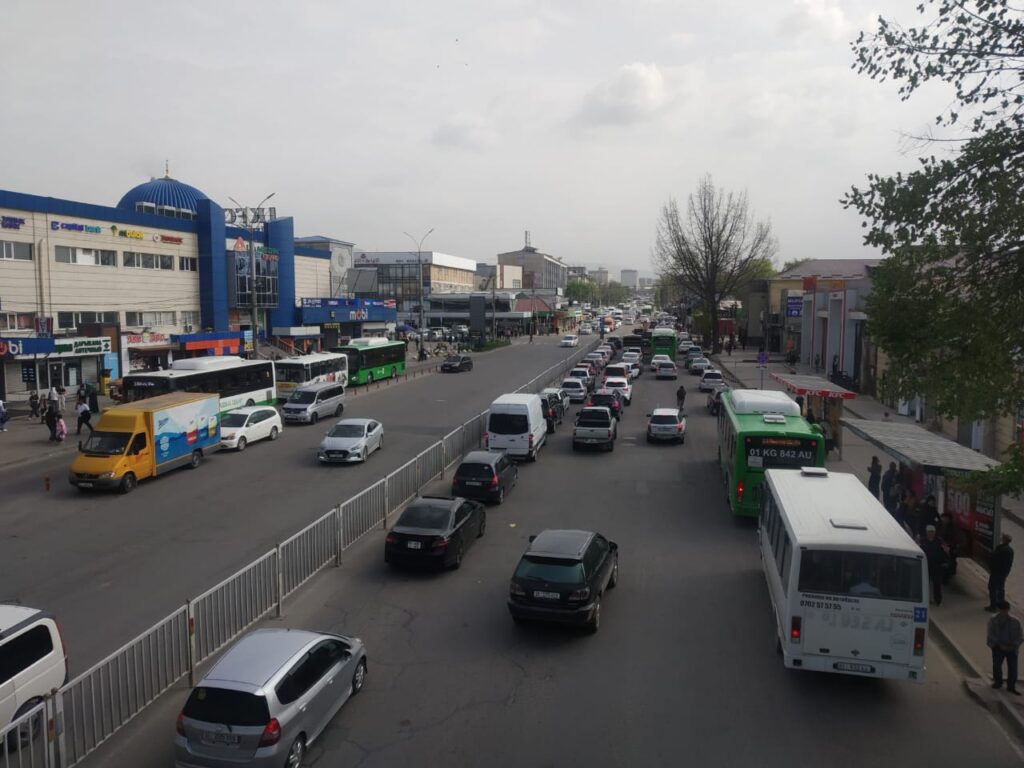
On October 21, Bishkek hosted the National Multi-Stakeholder Dialogue “Tackling Transport Air Pollution in Kyrgyzstan: Towards Clean Air in Cities All Year Round.” The event gathered representatives from government bodies, international organizations, environmental NGOs, academia, and civil society. Participants discussed coordinated actions and practical solutions to reduce air pollution and improve environmental conditions in Kyrgyz cities. Key proposals included transitioning to cleaner fuels, expanding public transport, improving energy efficiency, and implementing stricter emission standards. A systemic approach was emphasized, involving the promotion of electric vehicles, public environmental education, and robust air quality monitoring. Experts warned that transport-related pollution is a leading contributor to chronic diseases and premature death, particularly among vulnerable populations. Kyrgyz Minister of Natural Resources, Ecology and Technical Supervision, Meder Mashiev, highlighted that while previous efforts had focused on pollution during the heating season, new World Bank analysis shows that vehicle emissions significantly impact air quality year-round in Bishkek. According to the Ministry, vehicle emissions account for roughly 30% of air pollution in the capital. In 2024, 1,674,085 vehicles were registered in Kyrgyzstan, with 83% or 1,392,737, over 15 years old. In Bishkek, 426,946 vehicles were registered, including 333,801 older than 15 years, most of which do not meet modern environmental standards. The city administration reported that more than 750,000 vehicles operate on Bishkek’s roads daily, more than double the road network’s intended capacity of 350,000. This, combined with poor fuel quality and widespread reliance on private cars, has led to a systemic environmental challenge. Mashiev outlined several initiatives to address the issue. First, the city is transitioning to environmentally friendly public transport. Over 1,300 eco-friendly buses and 120 electric buses have been delivered to Bishkek. Each new bus replaces approximately four diesel buses, cutting diesel fuel consumption by around 100 tons per day. By the end of 2024, 3,535 electric vehicles were registered in the capital, and 44 charging stations had been installed. Second, modern air quality monitoring systems are being deployed to enable more accurate and responsive pollution tracking. Third, updates to the regulatory framework are being implemented to improve emission controls and compliance mechanisms. “We have already taken concrete steps to improve air quality in Bishkek, the use of low-quality coal has been banned, large-scale greening projects are underway, and an active transition to alternative energy sources is in progress,” said Mashiev. He concluded that similar measures would be introduced in other major cities across Kyrgyzstan, including Osh and Jalal-Abad.

World Bank Warns of Slowing Tajikistan Economy

Tajikistan’s economic growth may slow in the coming years due to mounting foreign policy and regional risks, according to a new report from the World Bank.  Vulnerability to External Shocks The report highlights several external vulnerabilities that could impact Tajikistan’s economy. These include shifts in Russia’s migration policies, heightened global instability, and ongoing armed conflicts.  “Tighter migration policies and restrictions on Tajik workers in Russia threaten to significantly reduce remittance flows, leading to lower economic growth, increased poverty, and worsening fiscal and external balances,” the World Bank stated. Growing global protectionism is also expected to raise Tajikistan’s foreign trade costs. The report notes that recent U.S. tariff increases on imports from several of Dushanbe’s key trading partners have triggered retaliatory measures from countries like China. These developments could drive up import costs and intensify logistical pressures. Additionally, volatility in global commodity prices is expected to impact Tajik exports. While falling oil and raw material prices could reduce export earnings, especially for aluminum, zinc, and ores, high global gold prices in 2025 may provide a partial offset through increased revenues. Impact of Regional Conflicts The World Bank also warns that ongoing conflicts in Ukraine and the Middle East could further disrupt global supply chains, raising energy and logistics costs. These challenges would translate into higher import prices for Tajikistan. Conversely, the report suggests that a potential easing of sanctions and normalization of relations between the U.S. and Russia could destabilize Central Asian economies. However, the implications of such a shift remain uncertain and difficult to forecast. Medium-Term Outlook Despite these headwinds, the World Bank expects Tajikistan’s economy to remain stable, albeit with a decelerating growth trajectory: 8.4% in 2024 7.0% in 2025 4.9% in 2026 4.7% in 2027 The projected slowdown is gradual and not expected to result in a recession. Similar concerns have been echoed by other institutions. The Asian Development Bank and the Eurasian Fund for Stabilization and Development have also forecast a gradual slowdown in Tajikistan’s economic growth over the medium term.

World Bank: Central Asia’s Growth to Slow but Remain Resilient

Central Asia is set to remain one of the world’s fastest-growing regions, although its economic momentum is expected to moderate in the coming years, according to the World Bank’s Spring 2025 Europe & Central Asia Economic Update. The region posted a growth rate of 5.5% in 2024, with projections of 5.0% for 2025 and 4.4% for 2026 as oil output normalizes in Kazakhstan, re-exports fade, and remittance inflows settle. The World Bank also revised its 2024 forecast upward by 0.8 percentage points, citing stronger-than-anticipated domestic demand. The forecasts incorporate data available through April 10, 2025. Country-Level Outlook Uzbekistan is forecast to grow by 6.5% in 2024, followed by 5.9% in both 2025 and 2026. Kyrgyzstan is expected to expand by 9.0% in 2024 and 6.8% in 2025. Tajikistan will grow by 8.4% in 2024 and 6.5% in 2025. Kazakhstan’s growth is projected to be more moderate, at 4.8% in 2024 and 4.5% in 2025. The World Bank attributes much of the region’s expansion to robust domestic demand, including household consumption, investment, and government spending, rather than export performance. Remittances continue to play a vital role in economic stability: they account for nearly 40% of GDP in Tajikistan, over 20% in Kyrgyzstan, and are critical in reducing poverty in Uzbekistan, where poverty rates would nearly double in their absence. Investment and Long-Term Prospects With investment comprising about 26% of GDP, Central Asia boasts one of the highest investment-to-GDP ratios among developing regions. This is largely driven by construction and large-scale infrastructure projects, particularly in the energy and transport sectors. However, the road to high-income status remains long. According to the Bank, based on current trajectories, it would take Kazakhstan and Turkmenistan approximately 40 years, Kyrgyzstan 70 years, and Uzbekistan and Tajikistan over 100 years to reach the high-income threshold of $14,005 in per capita income, a benchmark set for 2023. Risks and Policy Recommendations These forecasts are based on data available through April 10, 2025, and reflect persistent challenges stemming from the COVID-19 pandemic, ongoing cost-of-living pressures, and regional trade disruptions since 2022. To sustain momentum, the World Bank urges policymakers to pursue structural reforms and channel investment into productivity enhancements, technology adoption, and innovation. Without such efforts, growth could fall below potential in the years ahead.

World Bank Report: Central Asia Faces Rising Risks from Extreme Heat

Cities across Central Asia are becoming increasingly vulnerable to extreme heat, posing significant risks to public health, economic productivity, and infrastructure, according to a new report by the World Bank. The study, which covers 70 urban areas in Europe and Central Asia, including Astana, Bishkek, Ashgabat, Tashkent, and several smaller cities in Tajikistan and Turkmenistan, highlights the urgent need for heat adaptation strategies. Rising Mortality and Economic Losses The report finds that heat-related mortality is already a serious concern. In Ashgabat, an estimated 25-28 people per 100,000 die annually due to extreme heat. In Astana, Bishkek, and Tashkent, the toll is slightly lower, at approximately 19-21 deaths per 100,000. Without intervention, annual heat-related deaths in cities like Astana and Tashkent could rise dramatically, reaching between 10,000 and 23,000 by 2090. Economic impacts are also mounting. In 2023, higher temperatures resulted in the loss of over 87,000 full-time jobs across the region. Uzbekistan alone saw more than 22,000 job losses, while nearly 18,000 were reported in Azerbaijan. By 2050, heat-related economic losses could exceed 2% of GDP in some urban centers, such as Ashgabat. Infrastructure Under Strain Rising temperatures are damaging infrastructure across Central Asia. In Kyrgyzstan, extreme heat causes deterioration to nearly 200 kilometers of road annually, driving up repair costs and disrupting transportation. Kazakhstan is facing similar challenges: recent heatwaves have warped asphalt and concrete surfaces in the southern and northeastern regions of the country. Adaptation Measures and Challenges Despite these threats, the report outlines viable solutions. Urban greening, such as planting trees and creating shaded areas, can help cool city streets. Retrofitting buildings to improve thermal insulation without increasing energy use, establishing early warning systems, and creating cooling centers are also recommended. Urban planning strategies should incorporate climate resilience by using heat-tolerant materials and factoring climate risks into infrastructure design. Investment in parks and green spaces, alongside the use of heat vulnerability maps, can guide targeted interventions. However, the report warns that a lack of funding may hinder progress. Without innovative financing mechanisms, many adaptation plans could be stalled despite their potential to mitigate long-term risks. The World Bank concludes that while the impacts of rising temperatures are already being felt across Central Asia, timely action can prevent far more serious consequences. Policymakers are urged to prioritize heat adaptation to safeguard lives, livelihoods, and infrastructure in an increasingly warming world.

More Than a Quarter of Tajikistan’s Population Lives Below the Poverty Line – World Bank Report

Tajikistan continues to make gradual progress in reducing poverty, but over 25% of the population still lives on less than $3.65 a day, according to the World Bank’s newly released Poverty, Prosperity, and Planet Report 2024. Revised Poverty Line and Structural Vulnerabilities The World Bank recently raised the extreme poverty threshold from $2.15 to $3.00 per day, adjusting for updated purchasing power parity. Under the international poverty line of $3.65 per day, approximately one in four Tajik citizens remains in poverty. Globally, around 700 million people, 8.5% of the world’s population, live on less than $2.15 per day. The report highlights that economies reliant on remittances and imports are particularly vulnerable. Tajikistan fits this profile, with a large portion of its population employed in the informal sector, especially agriculture, and limited coverage by social assistance programs. National statistics show a decline in the domestic poverty rate from 26.3% in 2022 to 23.5% in 2023, with forecasts indicating a possible drop to 21.3% this year. Nonetheless, the country's poverty rate remains high by international standards. Rural Poverty and Social Disparities Poverty in Tajikistan disproportionately affects rural areas, where 80% of the poor reside. Around 70% of adults living in poverty lack vocational education. Vulnerable groups include women, large families, single-parent households, and children, many of whom require sustained, targeted social support. In comparison with its neighbors, Kyrgyzstan has the region’s highest poverty rate by national standards at 29.8%, while Uzbekistan reports 11.2% and Kazakhstan 3.7%. Less than 5% of Kazakhstan’s population lives below the international poverty line. Turkmenistan continues to withhold poverty-related data. Climate Change Adds to Economic Pressures The report warns that climate change further exacerbates poverty risks. From 2000 to 2020, temperatures in Central Asia rose by an average of 1.23°C, and regional glaciers shrank by 30%. For Tajikistan, where glaciers are the primary source of freshwater, these developments pose a growing threat to agricultural sustainability and food security. Nonetheless, the report acknowledges progress in adaptation efforts. Tajikistan is implementing precision farming technologies and modernizing water management practices, which have improved crop yields while reducing water usage in arid regions. The World Bank emphasizes that without structural reforms, including quality job creation, expanded support systems, and sustainable income protection, millions in Tajikistan will remain at risk, despite the appearance of macroeconomic stability.
