• KGS/USD = 0.01144 0%
  • KZT/USD = 0.00212 0%
  • TJS/USD = 0.10699 0%
  • UZS/USD = 0.00008 0%
  • TMT/USD = 0.28571 0%
  • KGS/USD = 0.01144 0%
  • KZT/USD = 0.00212 0%
  • TJS/USD = 0.10699 0%
  • UZS/USD = 0.00008 0%
  • TMT/USD = 0.28571 0%
  • KGS/USD = 0.01144 0%
  • KZT/USD = 0.00212 0%
  • TJS/USD = 0.10699 0%
  • UZS/USD = 0.00008 0%
  • TMT/USD = 0.28571 0%
  • KGS/USD = 0.01144 0%
  • KZT/USD = 0.00212 0%
  • TJS/USD = 0.10699 0%
  • UZS/USD = 0.00008 0%
  • TMT/USD = 0.28571 0%
  • KGS/USD = 0.01144 0%
  • KZT/USD = 0.00212 0%
  • TJS/USD = 0.10699 0%
  • UZS/USD = 0.00008 0%
  • TMT/USD = 0.28571 0%
  • KGS/USD = 0.01144 0%
  • KZT/USD = 0.00212 0%
  • TJS/USD = 0.10699 0%
  • UZS/USD = 0.00008 0%
  • TMT/USD = 0.28571 0%
  • KGS/USD = 0.01144 0%
  • KZT/USD = 0.00212 0%
  • TJS/USD = 0.10699 0%
  • UZS/USD = 0.00008 0%
  • TMT/USD = 0.28571 0%
  • KGS/USD = 0.01144 0%
  • KZT/USD = 0.00212 0%
  • TJS/USD = 0.10699 0%
  • UZS/USD = 0.00008 0%
  • TMT/USD = 0.28571 0%

Viewing results 1 - 6 of 109

Central Asian Countries Gather to Share Air Pollution Solutions

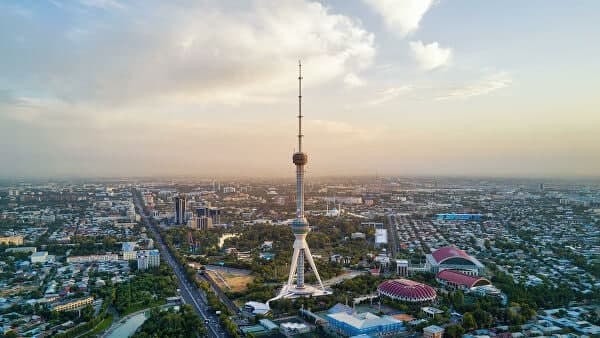
On June 19th a political and regional forum was organized in Tashkent under the slogan “Building a Clean Air Future in Central Asia”. The forum was organized in partnership with the Uzbek Ministry of Ecology, the World Bank, and the United Nations Environment Program (UNEP). Participants included senior officials from the governments of Kazakhstan, Kyrgyzstan, Tajikistan, Turkmenistan, and Uzbekistan. The forum was created to allow the countries of Central Asia to exchange knowledge on how to prevent air pollution. Air quality in both urban and rural areas is affected by transboundary pollution, caused by emissions from burning fossil fuels in industry, the heating sector, and transport. Another source of pollution in cities is sand and dust storms. Most air quality-related illnesses and premature deaths in Central Asia are attributable to delicate particulate matter 2.5 microns or less in diameter (PM2.5). Their concentration in large cities is often several times higher than the permissible air quality parameters recommended by the World Health Organization. This is especially noticeable during winter, when the heating sector uses coal and gas for power. According to the IQAir portal, which monitors global air quality, Central Asian cities are often among the most polluted cities in the world. The participants at “Building a Clean Air Future in Central Asia” studied each other's measures and practices in air quality management. They then defined some priority directions for accelerating regional cooperation on these issues. Valerie Hickey, the World Bank's global director for environment, natural resources and the blue economy, commented: “Air quality management is a complex challenge that requires understanding where the pollution comes from and prioritizing actions in those sectors. This will take better data and stronger regulations harmonized across borders, credible institutions, and clean infrastructure. Working together, the countries can clean the air across Central Asia.” Sylvie Motar, deputy director of the European office of the UNEP, added: “Air pollution knows no borders, so cooperation between Central Asian countries in this area is essential. This dialogue will help increase investments in clean air to protect the health of the people of Central Asia.”

World Bank to Support Kyrgyzstan’s Food Industry

The World Bank's International Development Association will loan Kyrgyzstan $35 million to develop agro-food clusters in the Chui, Jalal-Abad, and Naryn regions. Of that amount, $5 million is a grant, and $30 million is an interest-free loan for 12 years with a six-year grace period. Kyrgyzstan's deputy minister for water resources and agriculture, Kubat Kaseyinov, said the allocated money will be used to develop a dairy cluster in Chui and Jalal-Abad. There are also plans to improve the seed system and breeding farms throughout the country. This includes providing equipment for seed farms, developing infrastructure, improving animal breeding policies and regulations, developing a national meat and dairy farming plan, and supporting selected breeding farms.

Renewable Energy “Key” for Uzbekistan: Interview with IFC Regional Manager

Neil McKain, the IFC regional manager for Uzbekistan and Turkmenistan, says renewable energy sources are helping Uzbekistan reduce natural gas consumption. The country can become a regional leader in renewable energy sources, he told The Times of Central Asia in an interview.   ТСА: To begin, could you give us an overview of the current state of renewable energy in Uzbekistan? Neil McKain: Uzbekistan has significant renewable energy potential — primarily solar and wind — and is well equipped to fulfill its growing energy needs and transition to a clean energy economy. Renewable energy can help diversify the energy mix and reduce the country’s heavy reliance on natural gas. The government is focused on increasing the share of renewables in power production by up to 25 GW, or 40% of the country’s overall electricity consumption, by 2030. These efforts support the country's clean energy transition and address the increasing demand for energy in Uzbekistan’s economy and among its citizens. In this context, the World Bank Group is helping Uzbekistan develop 1,000 MW of solar and 500 MW of wind energy by attracting private sector investments.   ТСА: With these developments, what challenges does Uzbekistan face in transitioning to renewable energy? McKain: Like many countries, Uzbekistan faces many challenges as it transitions. The government has substantial natural gas reserves, and the economy relies heavily on fossil fuels. Transitioning away from these energy sources can be economically and politically challenging. It requires building public support and raising awareness of the many benefits of renewable energy. In addition, building the necessary infrastructure, such as solar farms, wind turbines, and an updated electrical grid, requires significant investment, time, and technical expertise. As renewable energy sources are intermittent, developing efficient energy storage solutions will be vital to ensuring a stable energy supply. Also, securing the required capital can take time, as it often involves enormous upfront costs and long-term investment before seeing returns. Addressing these multifaceted challenges will require coordinated efforts from the government, private sector, and international partners.   ТСА: What is the IFC's involvement in renewable energy projects in Uzbekistan? McKain: The IFC is deeply committed to supporting renewable energy in emerging markets, and Uzbekistan is a key country. We've been involved in several initiatives, including advising on and financing solar power projects. One of our first projects is a solar plant in the Navoi region, which provides electricity to 31,000 homes. This project was established through a public-private partnership (PPP) between the Uzbek government and Masdar, the United Arab Emirates’ flagship renewable energy company. IFC assisted the government as a transaction adviser in designing and tendering the PPP under its Scaling Solar Program. It is now a significant milestone in the country's renewable energy journey. In collaborationwith other lenders, IFC also provided a financing package to support the construction of a 500-megawatt wind farm in the Navoi region, which Masdar is also building. Capable of powering 500,000 homes, it will be the largest facility in Central Asia—and, incidentally, the largest wind farm IFC has ever sponsored. Together with our state and...

World Bank Helps Uzbekistan With Digital Inclusion Project

The World Bank has given Uzbekistan a soft loan of $50 million to grow its digital economy. The loan will help employ about 9,000 young people -- including 4,500 women and 360 persons with disabilities -- in IT-related services. The funds will also be used to create 11 IT service centers, and train 6,200 people in digital skills, communication and foreign languages. The program, which will run until 2029, foresees the creation of a legislative framework in the IT sphere. The IT sector's contribution to Uzbekistan's GDP remains insignificant -- it was just 1.9% in 2022.

Uzbekistan’s Transition to Market Economy to Accelerate

Uzbekistan’s Transition to Market Economy to Accelerate The World Bank’s Board of Executive Directors on December 8th approved a Development Policy Operation to financially support the Government of Uzbekistan in implementing a new generation of economic, social, and climate reforms. The objective of these reforms is to expedite the country’s transition to a market economy, ensuring that economic opportunities are accessible to all citizens and creating a strong foundation for sustained growth. In Uzbekistan, despite significant progress in the transition to a market economy, there is a need to complete this process and to shift urgently towards a greener and more equitable economic model which would help the country achieve its development and environmental goals. The government aims to halve the poverty rate by 2026, and elevate the country to the status of an upper-middle-income economy by 2030. Achieving these objectives requires much faster growth, which is possible through reducing state control over the economy and empowering the private sector to become the primary driver of economic development. “The World Bank’s new operation supports key government priorities, including reducing state dominance in crucial sectors such as agriculture, railway, chemicals, and energy,” said Marco Mantovanelli, World Bank Country Manager for Uzbekistan. “This will allow for greater private sector participation in the given areas. The operation also aims to strengthen social and legal protection for vulnerable groups, and address pressing issues of climate change and environmental protection.” The World Bank will provide financial support to the government through a combination of highly concessional and low-cost loans totaling $800 million. The financing will offer the government a low-cost, long-term repayment option compared to what would be available in international financial markets, resulting in a significantly lower loan repayment cost. This, in turn, will free up more resources for the country’s urgent development priorities. “The Government has a strong commitment to reforms that will transform Uzbekistan into a more open and competitive market economy. The World Bank is supporting the country in achieving this goal by providing the necessary expertise, international experience, and financing,” said Jasur Karshibaev, Deputy Minister of the Economy and Finance of Uzbekistan. The financing from the World Bank operation will support the government’s reforms and actions in a number of critical areas, including: Energy sector: Establishing an independent energy regulator and implementing energy tariff reform to improve the energy sector’s performance, enhance the efficient use of energy resources, attract private investment in modernizing energy infrastructure, and promoting competition and private sector participation in the industry. Railway sector: Undertaking institutional reforms in the railway sector to modernize price setting for passenger and freight transportation and strengthen competition and the institutional environment in the industry. Chemical sector: Establishing a framework for institutional reforms in the chemicals sector and privatizing FerganAzot JSC, a large state-owned chemical plant, to liberalize the sector, attract private investments for its modernization, and enhance competition and efficiency in the industry. Agriculture sector: Abolishing the crop placement system for all crops to promote greater diversity and productivity in crop...