• KZT/USD = 0.00223
  • TJS/USD = 0.10810
  • UZS/USD = 0.00009
  • TMT/USD = 0.29850
  • KZT/USD = 0.00223
  • TJS/USD = 0.10810
  • UZS/USD = 0.00009
  • TMT/USD = 0.29850
  • KZT/USD = 0.00223
  • TJS/USD = 0.10810
  • UZS/USD = 0.00009
  • TMT/USD = 0.29850
  • KZT/USD = 0.00223
  • TJS/USD = 0.10810
  • UZS/USD = 0.00009
  • TMT/USD = 0.29850
  • KZT/USD = 0.00223
  • TJS/USD = 0.10810
  • UZS/USD = 0.00009
  • TMT/USD = 0.29850
  • KZT/USD = 0.00223
  • TJS/USD = 0.10810
  • UZS/USD = 0.00009
  • TMT/USD = 0.29850
  • KZT/USD = 0.00223
  • TJS/USD = 0.10810
  • UZS/USD = 0.00009
  • TMT/USD = 0.29850
  • KZT/USD = 0.00223
  • TJS/USD = 0.10810
  • UZS/USD = 0.00009
  • TMT/USD = 0.29850
15 September 2026

Viewing results 1 - 6 of 74

World Bank Allocates $5 Million to Create Agro-Logistics Center in Tajikistan

The World Bank has launched a project to establish an agro-logistics center in Tajikistan’s Sughd Special Economic Zone. The initiative, which began in 2021, aims to strengthen Tajikistan’s agricultural sector by increasing farm productivity and adding value to agricultural products. The center will serve as a critical element of efforts to enhance agricultural infrastructure and efficiency. The $5 million project, fully funded by the World Bank, is part of a broader six-year program titled “Enhancing the Sustainability of the Agricultural Sector,” running from June 2021 to June 2027. This program, with a total investment of $108 million, supports sustainable agricultural development through integrated activities. Construction of the Sughd Center is set to begin in 2025, with completion and commissioning expected by the end of 2026. The Sughd facility is one of five agro-logistics centers planned across Tajikistan as part of the World Bank’s initiative. These centers aim to reduce product losses and improve efficiency by introducing international standards for post-harvest handling of fruits and vegetables. Services provided will include sorting, packing, storage, and transportation, enabling Tajik producers to access new export markets and strengthen the national economy.

Kazakhstan and World Bank Partner on Water Conservation at One Water Summit

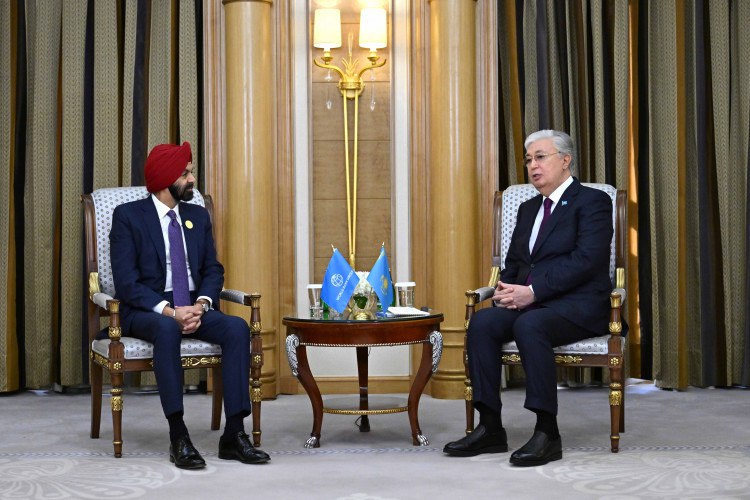
A memorandum of understanding has been signed to enhance water resource management and environmental conditions, including in the North Aral Sea and its surrounding basin, between Kazakhstan’s Ministry of Water Resources and Irrigation and the World Bank. As climate change continues to significantly impact water resources in Central Asia, exacerbating water scarcity and management challenges, this agreement underscores a shared commitment to ensuring sustainable and equitable water resource management for future generations. The memorandum was formalized following a meeting between Kazakhstan’s President Kassym-Jomart Tokayev and World Bank Group President Ajay Banga during the One Water Summit in Riyadh, Saudi Arabia, on December 3. Co-organized by French President Emmanuel Macron, Tokayev, and World Bank Group President Banga, in partnership with Saudi Arabia’s Crown Prince and Prime Minister Mohammed bin Salman, the summit sought to accelerate progress toward Sustainable Development Goal 6 (clean water and sanitation) and discuss innovative solutions ahead of the 2026 UN Water Conference. During the summit, Tokayev stressed the importance of bolstering reservoir capacity, preserving glaciers, and adopting advanced irrigation systems to secure stable water access. Tokayev proposed creating a global partnership to unite research centers focused on glacier preservation. “Glaciers are integral to the global water cycle, sustaining rivers and lakes that supply water to nearly two billion people worldwide. Collaborative research and unified policies are essential to mitigate glacier loss and support water management strategies in vulnerable regions,” he said. He warned that water scarcity poses risks to food security, energy production, and industrial growth, adding that investments in water-efficient agriculture and renewable energy can enhance economic resilience while alleviating environmental pressures. “Water knows no borders; it binds communities and ecosystems,” Tokayev remarked. As Chair of the International Fund for Saving the Aral Sea, he emphasized Kazakhstan’s commitment to fostering regional cooperation and joint action. “It is vital for countries at the forefront of combating climate change to strengthen dialogue, build international partnerships, and pool resources to implement water projects. Kazakhstan is proud to join the One Water Vision coalition, uniting stakeholders to address the global water crisis and promote integrated water resource management. As part of these efforts, with United Nations support, Kazakhstan will host a Regional Climate Conference in 2026,” Tokayev concluded.

World Bank Report Outlines Path to Drive Tajikistan’s Green Transition and Economic Growth

On November 7, the World Bank Group published the Tajikistan Country Climate and Development Report (CCDR), highlighting the transformative potential of climate action for Tajikistan's economy. The report suggests that addressing climate risks can drive economic renewal, create jobs, and enhance resilience against the rising frequency of extreme weather events caused by climate change. Ozan Sevimli, World Bank Group Country Manager for Tajikistan, emphasized the urgency of a strategic shift: “Tajikistan urgently needs an economic reset to tackle its numerous development challenges and the growing impacts of climate change that threaten future progress. The CCDR provides a roadmap for accelerating the transition to a green economy, supporting long-term growth.” A key finding of the report is the importance of mobilizing private-sector financing to supplement Tajikistan's limited public resources. This financing will be crucial in securing the nation’s green transition and ensuring water, food, and energy security. Despite ranking 130th globally in greenhouse gas emissions, Tajikistan is highly vulnerable to climate change impacts, notes Bahodur Sheralizoda, Chair of the Environmental Protection Committee under the Tajik government: “Although our contribution to global emissions is minimal, we are one of the most climate-vulnerable countries in the world. The CCDR advises the government to improve production efficiency, foster innovative technologies, and create green jobs to reduce our susceptibility to climate-related challenges.” The report warns that Tajikistan already faces high risks of floods, earthquakes, and landslides, with potential infrastructure and agricultural losses that could lower GDP by 5-6% by 2050. The strategic Vakhsh River Basin, which produces 90% of the country’s electricity, underscores the dual challenges of climate and development. Annual costs of land degradation are estimated at $325 million, with further increases anticipated. Additionally, air pollution remains a major health risk, accounting for 84 deaths per 100,000 people—Central Asia’s second-highest rate. A green transition could deliver substantial benefits. By 2050, reduced healthcare costs from lower air pollution, fewer road accidents, and improved road conditions could save over $3.5 billion. Investments in renewable energy, including hydro, solar, and geothermal, as well as in energy efficiency, promise new employment opportunities across sectors. The report advises the Tajik government to fast-track low-carbon development to strengthen economic growth, energy security, export potential, and job creation, all while enhancing air quality. Achieving these goals will require significant investments: Tajikistan needs around $17 billion, in addition to the $79 billion required for the government’s reform agenda from 2025 to 2050. Private sector investments, particularly in energy, industry, and agriculture, will be essential. Recognizing that the financial needs for this transformation exceed domestic resources, the report underscores the importance of external support. Tajikistan will need substantial technical and financial assistance from international bodies, climate funds, and development partners to fulfill its climate and development goals.

IDB to Fund $156.3 Million for Cancer Hospitals in Turkmenistan

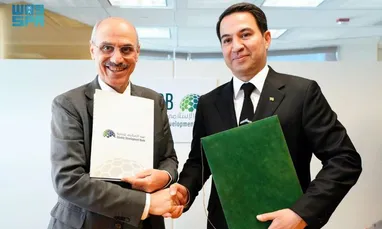
Turkmenportal reported that a Turkmenistan delegation visited Washington DC from October 22 to 26 to participate in the annual meetings of the International Monetary Fund (IMF) and the World Bank, along with related events. During the visit, representatives of Turkmenistan's financial and banking sector engaged in bilateral discussions with foreign partners. According to the Saudi Press Agency, the Islamic Development Bank (IDB) has approved $156.3 million in funding to build three specialized cancer treatment hospitals in Turkmenistan. These modern facilities will be located in Balkanabad, Turkmenabad, and Mari, with a combined capacity to serve over 11,750 patients. The agreement was signed in a meeting between IDB President Muhammad Al Jasser and Rahimberdi Jepbarov, Chairman of the State Bank for Foreign Economic Affairs of Turkmenistan. Meanwhile, on October 24, Swiss pharmaceutical company Roche, in partnership with Nobel Almaty Pharmaceutical Factory, launched the production of innovative drugs in Almaty, Kazakhstan. This initiative is part of an agreement between Roche, Kazakhstan’s SK-Pharmacy, Nobel, and the Kazakh Research Institute of Oncology and Radiology, supported by Kazakh Invest. Under this collaboration, Roche will locally produce three biotechnological drugs to treat HER2-positive breast cancer, a highly aggressive form affecting up to 20% of breast cancer patients in Kazakhstan.

Rogun HPP Faces Criticism for Violating World Bank Standards

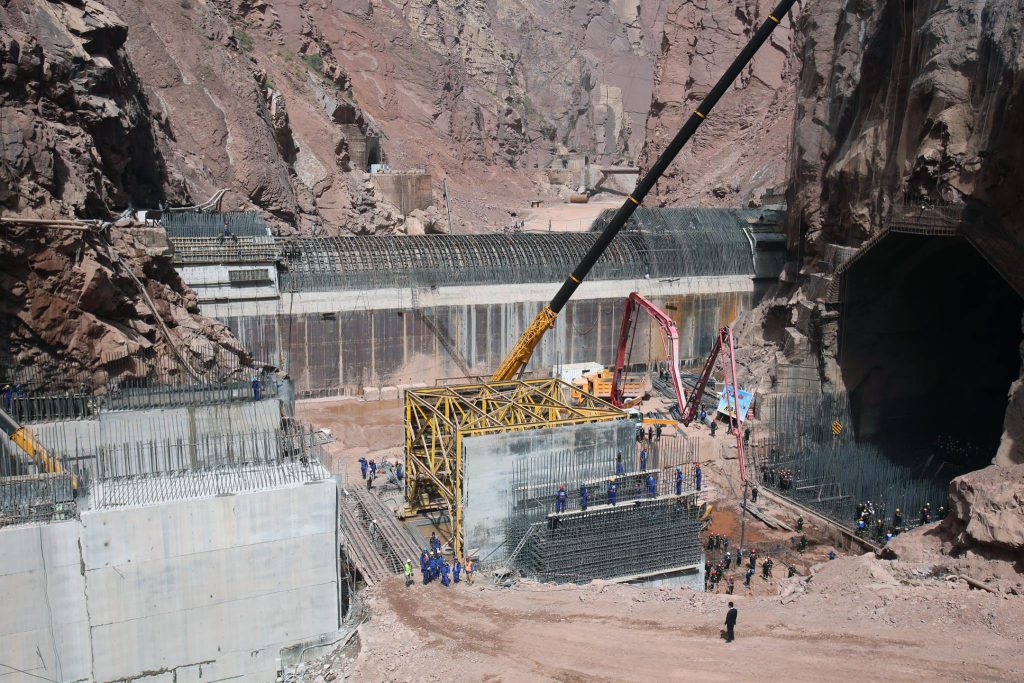
The international environmental coalition Rivers without Boundaries has released a report titled “Rogun Hydroelectric Power Plant Project: Non-Compliance Report with World Bank Requirements.” Outlining how the Rogun HPP in Tajikistan fails to meet the World Bank’s environmental and social standards, the report highlights violations in six key areas: environmental assessment, biodiversity protection, resource efficiency, dam safety, public participation, and forced displacement. It also highlights non-compliance with the bank’s policies on financing investment projects. The report’s authors point out that the situation worsened as a result of the World Bank taking responsibility for developing environmental and social safeguards for the Rogun HPP project on behalf of all financiers, including major banks like the AIIB, ADB, and EIB. In accepting this move, these institutions have effectively treated the World Bank's standards as their own. Therefore, if these standards are violated, the standards of other financial institutions are also breached. “We are convinced that the presented version of the Rogun HPP project does not comply with the social and environmental principles of the World Bank and should not be financed by international development banks in its current form,” said Evgeny Simonov, coordinator of the international environmental coalition 'Rivers Without Borders.' “Due to non-compliance with banking standards and procedures, the project includes many ineffective and risky elements that could lead to serious environmental and social damage during its implementation.” The report was created under the international Rogun Alert initiative, which represents environmental organizations worldwide. Last week, it was sent to all international development banks involved in the Rogun project. On October 23, an open letter signed by 124 public organizations, including Rivers Without Borders, highlighting the risks of financing large dam projects, including Rogun, will be presented to the World Bank management. According to the source, urgent international public consultations on the environmental and social impact of the construction of the Rogun HPP on the basin countries are planned for October 28 of this year.

Decrease Expected in Central Asia’s Economic Growth

According to the World Bank, economic growth in Europe and Central Asia (ECA) is expected to slow to 3.3% this year, down from 3.5% in 2023. This is much lower than the average growth of 4.1% seen between 2000 and 2019, and is not enough for many of the region's middle-income countries to become high-income. Growth in the region has mainly been driven by an increase in people's spending, rising wages, and government policies, while demand from outside the area, especially from the EU, remains weak. Although the average yearly inflation rate had dropped to 3.6% by August 2024, from 4.6% at the end of last year, it is still higher than the 2.7% average seen in 2018-2019. Prices of goods have grown more slowly in most countries, but prices for services remain high because of rising labor costs. Some central banks have lowered interest rates as inflation has slowed, but are cautious. Government spending has not been reduced in most of the region's countries and indeed, has dramatically increased, especially on public wages, pensions, social benefits, and defense. The economies of Central Asia are expected to grow by 4.3% in 2024; slower than the 5.6% growth seen last year. In Kazakhstan, growth is predicted to slow to 3.4%, down from 5.1% in 2023, mainly because the expansion of the Tengiz oil field is taking longer, and the government is spending less. For other Central Asian countries, growth estimates have been raised by an average of nearly one percentage due to increased consumer spending, more government spending, and ongoing support from money sent home by workers in Russia and trade with Russia. However, despite these improvements, the growth per capita GDP (the average income per person) in Central Asia is only expected to be 2.7% this year, making it the slowest in the region, apart fromTurkey. The Central Asian sub region, with growth expected at 5%, will outpace all other sub regions in 2025. This is driven primarily by renewed strong growth in Kazakhstan amid rising oil production. However, growth in the rest of Central Asia is projected to slow as trading and remittance flows from Russia normalize. The lowest median consumer price growth rate was recorded in the South Caucasus, at 1.5% year-on-year in August 2024. In contrast, Central Asia had the highest median consumer price inflation rate, at 6.1%. This rate reflects 10% inflation in Uzbekistan, driven by removing energy subsidies in May 2024.