• KGS/USD = 0.01144 0%
  • KZT/USD = 0.00214 0%
  • TJS/USD = 0.10508 0.48%
  • UZS/USD = 0.00008 0%
  • TMT/USD = 0.28490 -0.28%
  • KGS/USD = 0.01144 0%
  • KZT/USD = 0.00214 0%
  • TJS/USD = 0.10508 0.48%
  • UZS/USD = 0.00008 0%
  • TMT/USD = 0.28490 -0.28%
  • KGS/USD = 0.01144 0%
  • KZT/USD = 0.00214 0%
  • TJS/USD = 0.10508 0.48%
  • UZS/USD = 0.00008 0%
  • TMT/USD = 0.28490 -0.28%
  • KGS/USD = 0.01144 0%
  • KZT/USD = 0.00214 0%
  • TJS/USD = 0.10508 0.48%
  • UZS/USD = 0.00008 0%
  • TMT/USD = 0.28490 -0.28%
  • KGS/USD = 0.01144 0%
  • KZT/USD = 0.00214 0%
  • TJS/USD = 0.10508 0.48%
  • UZS/USD = 0.00008 0%
  • TMT/USD = 0.28490 -0.28%
  • KGS/USD = 0.01144 0%
  • KZT/USD = 0.00214 0%
  • TJS/USD = 0.10508 0.48%
  • UZS/USD = 0.00008 0%
  • TMT/USD = 0.28490 -0.28%
  • KGS/USD = 0.01144 0%
  • KZT/USD = 0.00214 0%
  • TJS/USD = 0.10508 0.48%
  • UZS/USD = 0.00008 0%
  • TMT/USD = 0.28490 -0.28%
  • KGS/USD = 0.01144 0%
  • KZT/USD = 0.00214 0%
  • TJS/USD = 0.10508 0.48%
  • UZS/USD = 0.00008 0%
  • TMT/USD = 0.28490 -0.28%

Viewing results 1105 - 1110 of 3237

Central Asia Attracted $24.8 billion in Investments in 2024

Despite global economic challenges, Central Asia has experienced growth in attracting foreign direct investment (FDI). According to the United Nations Economic and Social Commission for Asia and the Pacific (ESCAP), investment in the region increased by 27%, reaching $24.8 billion in 2024. Kazakhstan and Uzbekistan have become the main centers of attraction for capital, offering investors significant opportunities in the energy sector and green technologies. Uzbekistan attracted $4 billion in foreign investment, reflecting a 49% year-on-year decline. However, the country is actively developing sustainable environmental projects. South Korea’s Western Power plans to build a $152 million biofuel plant in Fergana region. The plant will process cotton stalks to heat greenhouses, which will replace coal and reduce emissions by 120,000 tons of CO2 over 10 years. This project reflects Uzbekistan's policy of reducing dependence on fossil fuels and introducing “green” technologies. Kazakhstan maintained its position as the regional leader in attracting investment, accounting for 63% of Central Asia's total FDI. The country increased its investment inflow by 88%, reaching $15.7 billion. An important role was played by Qatari company UCC Holding, which invested $11 billion in the construction of two gas processing plants, a compressor station, and new main gas pipelines. These projects strengthen Kazakhstan's role as a key energy hub in the region. Kyrgyzstan recorded the highest relative growth in investment, increasing by 310% to $2.1 billion. Turkmenistan and Tajikistan received $339 million and $281 million, respectively. As for outgoing investments, their volume from the region decreased by 58% to $2.3 billion. Russia remains the primary source of outgoing investments, accounting for 90% ($2.1 billion). Georgia invested $105 million, Azerbaijan $76 million, and Kazakhstan $47 million.

Digital Kazakhstan: Pioneering E-Government and AI Innovations Amid New Challenges

Kazakhstan has solidified its position as a global leader in digital transformation, ranking among the top 25 countries in e-government development and achieving significant milestones in IT innovation. After nearly two decades of digitalization efforts, the country is now aiming to surpass the most advanced nations. The concept of e-government in Kazakhstan was first announced in former President Nursultan Nazarbayev’s address on March 19, 2004. That same year, a program for the establishment of e-government was approved, and the eGov.kz web portal was launched in 2006. Initially, the platform primarily provided informational services. The second phase of e-government (2007–2008) introduced interactive services, allowing citizens to request certificates, submit inquiries to government bodies, and track their progress online. A key milestone was the establishment of Citizen Service Centers on January 5, 2007. Before the digital era, obtaining documents was a lengthy and cumbersome process, plagued by long queues and widespread corruption. In 2024, digitalization in Kazakhstan reached new heights. The government reports that 92% of public services are now provided electronically. Innovations such as biometric identification and QR signatures have simplified access, with over eight million QR code signatures registered and more than 18 million identifications conducted through the Digital ID system this year, according to Kanat Tuleushin, the First Vice-Minister of the Ministry of Digital Development, Innovation, and Aerospace Industry (MCRIAP). The modernization of the e-government platform is ongoing, with plans to transition to the third version of eGov. Additionally, IT services from Kazakhstan are now exported to 86 countries, with key markets including Russia, Ireland, Mexico, the United States, and Singapore. A central focus of the government strategy is the development of artificial intelligence (AI). In 2024, a draft law on AI was approved, and a Committee on AI was established to oversee the development of this field in the country. Kazakhstan continues to modernize its e-government platform, with plans to transition to the third version of eGov. The country has also made strides in exporting IT services to 86 countries, including major markets like Russia, Ireland, Mexico, the United States, and Singapore. A key priority for the government is the development of artificial intelligence (AI). In 2024, a draft law on AI was approved, and a dedicated Committee on AI was established to oversee advancements in this area. In the 2024 UN E-Government Development Index (EGDI), Kazakhstan ranked 24th among 193 countries, climbing four spots since the last assessment. The country also secured a place in the global top 10 of the Online Service Index (OSI), which evaluates the accessibility and quality of government-provided online services. South Korea leads the EGDI rankings, while Kazakhstan outpaces many of its regional neighbors, including Armenia (53rd), Russia (56th), Uzbekistan (59th), Kyrgyzstan (89th), and Turkmenistan (172nd). Kazakhstan’s banking sector has also played a pivotal role in driving digital innovation. Major banks now integrate a wide range of public and business services into their apps. For example, Halyk Bank offers over 60 services, Kaspi.kz provides 40, Bank CenterCredit more than 30, and Freedom...

Kazakhstan Reveals Fish Industry Plans

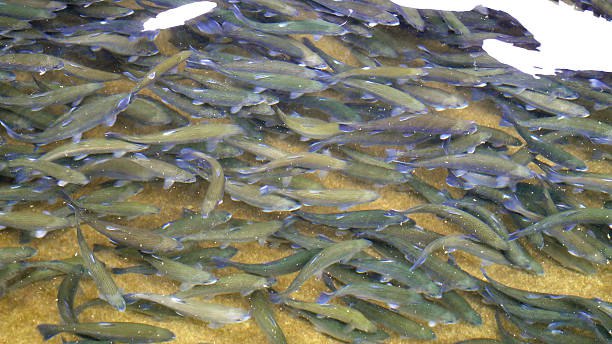
Kazakhstan’s fishing industry and its future development were the focus of a meeting held at the Ministry of Agriculture on December 28. Minister Aidarbek Saparov acknowledged that the sector’s current results fall short of expectations and called for intensified efforts across all areas​. A key announcement from the meeting was the planned modernization of the Atyrau sturgeon plant on Kazakhstan’s Caspian coast. The facility, which was commissioned in 1998, has not undergone major repairs since its establishment. Renovation work is scheduled to begin in the spring of 2025. The meeting also addressed strategies for developing fishing in the Caspian Sea. This includes increasing catch limits for sprat, as commercial sprat fishing has recently resumed in Kazakhstan's section of the sea. However, participants emphasized the need for comprehensive studies on the migration patterns of marine fish species to fully capitalize on the Caspian's fishing potential​. Efforts are underway to introduce preferential lending and leasing for sea fishing vessels. These measures aim to boost the total volume of Caspian fish production to 70,000 tons - a more than 1.5-fold increase - by 2025. Aquaculture, or fish farming, is another key area of focus. The government is providing subsidies for purchasing young fish, fodder, and medicines, as well as reimbursing 25% of investment costs for establishing fish farms and acquiring equipment. Kazakhstan’s parliament has approved the first reading of the “On Aquaculture” bill, which aims to expand state support for fish farming. The legislation includes provisions for allocating reservoirs and ponds to large investors and subsidizing water supply costs. These measures are expected to lead to a 25% increase in the number of fish farms by 2027, rising from 560 in 2024 to 700. Additionally, fish farm production is projected to grow from 20,000 tons to 50,000 tons per year. The initiatives discussed at the meeting reflect Kazakhstan’s commitment to revitalizing its fishing industry through modernization, financial support, and legislative reforms. By combining efforts in both marine and aquaculture sectors, the country aims to achieve sustainable growth while leveraging the vast potential of its fishing resources.

Kazakhstan Plans to Accelerate Construction of First Nuclear Power Plant

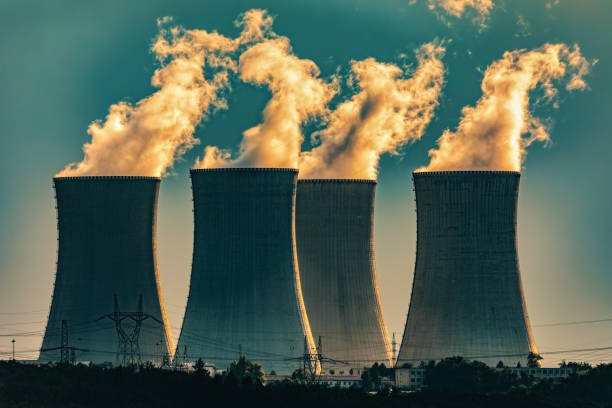
Kazakhstan’s Energy Minister, Almasadam Satkaliyev, has announced that the selection of a contractor for the country’s first nuclear power plant (NPP) will be finalized in the first half of 2025. The government is awaiting proposals from bidders that focus on shortening construction timelines and reducing project costs. This follows President Kassym-Jomart Tokayev's directive to expedite the implementation of the nuclear power plant project. “The commission will do everything possible to advance this process and make a decision on the contractor in the first half of 2025,” Satkaliyev told reporters. The shortlist for the potential builders includes four companies: China’s CNNC, Russia’s Rosatom, South Korea’s KHNP, and France’s EDF. Kazakh authorities have also indicated that a consortium involving multiple countries might be formed to leverage diverse technological solutions. Deputy Prime Minister Roman Sklyar highlighted the benefits of such collaboration, where different countries could contribute specific components, such as nuclear islands, turbines, or distribution systems. Satkaliyev emphasized the need for faster construction solutions, citing a precedent where China’s national nuclear company built a power unit in Pakistan in six years. “In today’s world, there are possibilities for expedited solutions,” he stated. Kazakhstan previously projected a 10-year timeline for constructing the NPP. However, the country is expected to face a 2.4 gigawatt energy deficit by 2035, underscoring the urgency of completing the project. The energy minister noted that the process from construction to the launch of the first unit could take up to 14 years, making accelerated timelines crucial. The Times of Central Asia previously reported on the results of a referendum held on October 6, which showed that 71.12% of voters approved the construction of a nuclear power plant in the Almaty region. The accelerated development of the NPP reflects Kazakhstan’s commitment to addressing its future energy needs while integrating advanced international technologies and solutions.

Kyrgyzstan Invests Over $356 Million in Women’s Entrepreneurship

The development of women’s entrepreneurship in Kyrgyzstan has received significant financial backing, with more than $356 million directed to supporting women-led businesses since the establishment of the OJSC (Guarantee Fund). According to the OJSC, in the first ten months of 2024 alone, 1,088 guarantees were issued to women, accounting for 40% of the total guarantees provided by the Fund during this period. To date, the Fund has issued 4,071 guarantees totaling 3.166 billion soms ($356 million), empowering women across all regions of Kyrgyzstan to launch and expand businesses in various sectors. Women’s entrepreneurship is becoming an increasingly vital component of Kyrgyzstan’s economy. According to the United Nations Development Programme (UNDP), women currently lead 29% of the country’s small and medium-sized enterprises. Bishkek recently hosted Expo 2024 “Women’s Entrepreneurship,” which showcased the accomplishments of women entrepreneurs while highlighting their growing role in driving innovation and economic growth. Furthermore, the Women’s Entrepreneurship 2024 program reported that 48% of all loans issued this year were granted to women, reflecting the expanding support for women-led businesses across the country. This upward trend highlights the growing recognition of women entrepreneurs as key players in Kyrgyzstan’s innovation ecosystem and economic development.

Uzbekistan Set to Join the Eurasian Development Bank in 2025

Uzbekistan is set to complete the procedures for joining the Eurasian Development Bank (EDB) by early 2025. The announcement was made during an expanded meeting of the Supreme Eurasian Economic Council (EAEC). Uzbekistan has held observer status in the Eurasian Economic Union (EAEU) since 2020, and is preparing to deepen its engagement in regional economic projects. The country is already participating in several sectoral programs between the EAEU member states. These programs focus on areas such as the digitalization of trade, cargo transportation, e-commerce development, and combating climate change. The Eurasian Development Bank was founded in 2006 by Russia and Kazakhstan. Its current members are Armenia, Belarus, Kyrgyzstan, and Tajikistan. The EDB's primary mission is to promote economic growth and strengthen integration among its member states by financing major investment projects across various sectors. As of June 30, 2024, the EDB's investment portfolio stood at USD 4.8 billion, comprising 78 projects throughout the member states. The Bank prioritizes projects with integration effects, including cross-country infrastructure development, enhanced trade and economic ties, and the creation of common markets. It also supports "green" financing initiatives to promote sustainable development and environmental safety across the region. Experts view Uzbekistan's plans to join the EDB as a strategic move to bolster its economic cooperation with neighboring countries. Membership in the Bank would provide Tashkent with access to new financial opportunities, facilitating the implementation of joint initiatives and strengthening its role in regional economic integration.