• KGS/USD = 0.01144 0%
  • KZT/USD = 0.00214 0%
  • TJS/USD = 0.10508 0.48%
  • UZS/USD = 0.00008 0%
  • TMT/USD = 0.28571 0%
  • KGS/USD = 0.01144 0%
  • KZT/USD = 0.00214 0%
  • TJS/USD = 0.10508 0.48%
  • UZS/USD = 0.00008 0%
  • TMT/USD = 0.28571 0%
  • KGS/USD = 0.01144 0%
  • KZT/USD = 0.00214 0%
  • TJS/USD = 0.10508 0.48%
  • UZS/USD = 0.00008 0%
  • TMT/USD = 0.28571 0%
  • KGS/USD = 0.01144 0%
  • KZT/USD = 0.00214 0%
  • TJS/USD = 0.10508 0.48%
  • UZS/USD = 0.00008 0%
  • TMT/USD = 0.28571 0%
  • KGS/USD = 0.01144 0%
  • KZT/USD = 0.00214 0%
  • TJS/USD = 0.10508 0.48%
  • UZS/USD = 0.00008 0%
  • TMT/USD = 0.28571 0%
  • KGS/USD = 0.01144 0%
  • KZT/USD = 0.00214 0%
  • TJS/USD = 0.10508 0.48%
  • UZS/USD = 0.00008 0%
  • TMT/USD = 0.28571 0%
  • KGS/USD = 0.01144 0%
  • KZT/USD = 0.00214 0%
  • TJS/USD = 0.10508 0.48%
  • UZS/USD = 0.00008 0%
  • TMT/USD = 0.28571 0%
  • KGS/USD = 0.01144 0%
  • KZT/USD = 0.00214 0%
  • TJS/USD = 0.10508 0.48%
  • UZS/USD = 0.00008 0%
  • TMT/USD = 0.28571 0%

Viewing results 1111 - 1116 of 3235

Kazakhstan Leads Central Asia in Anti-Money Laundering Efforts

The Basel Anti-Money Laundering Index (AML) has been released. It offers a comprehensive assessment of global efforts to combat money laundering. The index evaluates the risk of money laundering and financial crime across countries and regions, using 17 indicators across five domains to identify key factors that can heighten vulnerability. The indicators are updated annually and reviewed by an independent panel of experts to ensure relevance, methodology integrity, and access to current data. The Index does not measure the actual volume of money laundering activity. Instead, it focuses on the risk factors, scoring countries on a scale from 0 to 10 where 10 represents the highest risk and 0 the lowest. The Times of Central Asia examined this year’s ratings, focusing on the performance of Central Asian nations: Kazakhstan achieved a notable ranking of 111th out of 164 countries, with a score of 4.65. Uzbekistan followed, ranking 81st with a score of 5.27, while Kyrgyzstan placed 45th with 5.95 points. Tajikistan ranked 30th, scoring 6.45, and Turkmenistan recorded the region’s worst result, ranking 23rd with 6.71 points. Globally, the best results were observed in San Marino (2.96), Iceland (3.00), and Finland (3.07).
Beijing Meeting Charts Future of China-Kazakhstan-Turkmenistan-Iran Rail Corridor

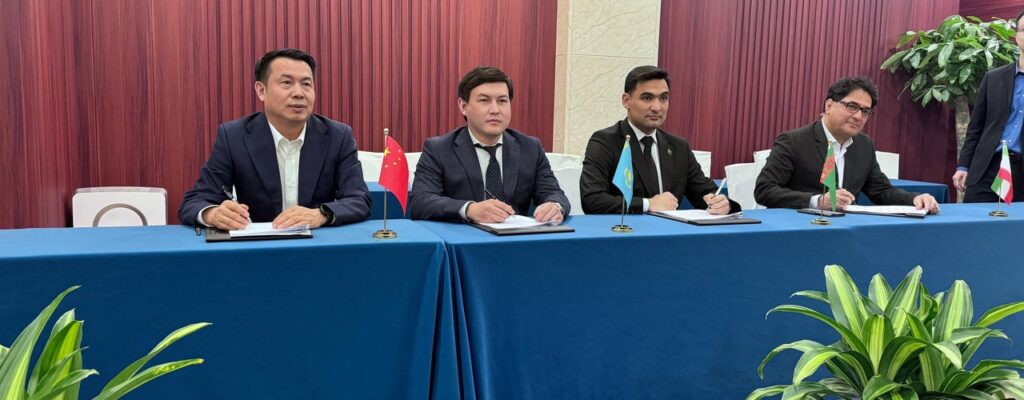
On December 25, experts convened in Beijing to evaluate the performance and future potential of the China-Kazakhstan-Turkmenistan-Iran railway route. The meeting reviewed the route’s operational results for 2024 and explored opportunities for further development. Kazakhstan was represented by KTZ Express, a subsidiary of Kazakhstan Temir Zholy (KTZ), the national railway company. According to KTZ Express, cargo transportation volume along the route increased by 31% during the first 11 months of 2024 compared to the same period in 2023. This growth underscores the rising interest of market participants in the route and highlights Kazakhstan’s critical role as a transit hub in the global supply chain. Key Discussion Points Participants focused on several areas to enhance the route’s efficiency: Increasing cargo delivery speeds to further reduce transit times. Optimizing customs procedures to streamline cross-border operations. Implementing modern digital solutions to simplify logistics processes and improve transparency. Strategic Importance of the Route The China-Kazakhstan-Turkmenistan-Iran railway corridor is a vital link in Eurasian trade, facilitating the rapid movement of goods from China’s eastern coast to the Persian Gulf and Middle Eastern markets. This corridor has already achieved significant milestones, reducing delivery times between China and Iran to just 15 days. With its growing cargo volumes and strategic positioning, the China-Kazakhstan-Turkmenistan-Iran railway route is poised to become an even more significant player in Eurasian trade. Continued efforts to optimize its operations and infrastructure will further solidify its role in connecting key global markets.

Work in the EAEU App Expands to Uzbekistan to Support Migrant Workers

The “Work in the EAEU” mobile app, developed by the Eurasian Development Bank’s (EDB) Fund for Digital Initiatives, has officially launched services for migrant workers in Uzbekistan, the EDB has announced. With this launch, the app now operates in Uzbekistan, a country that is neither a member of the Eurasian Economic Union (EAEU) - which includes Armenia, Belarus, Kazakhstan, Kyrgyzstan, and Russia - nor an EDB member state. The expansion highlights the app’s broader regional ambitions. Initially launched in June 2022, the “Work in the EAEU” app was designed to support the free movement of labor within EAEU member states. The service has since expanded to include Tajikistan in September 2024, and now Uzbekistan. Services for Migrant Workers The app provides a wide range of services tailored for individuals seeking employment in Uzbekistan. Key features include: Job search tools and the ability to apply for vacancies. Assistance in applying to government authorities for personal identification numbers or registration cards. Access to tax services, information on work permits, and visa requirements, including types of visas and IT visas. Support in finding accommodation and purchasing air or railway tickets. Comprehensive legal and regulatory information on employment in Uzbekistan. The app is intended to simplify employment processes for migrant workers and enhance their access to essential services through a single platform. Migration Trends in the Region For decades, hundreds of thousands of citizens from former Soviet republics have migrated within the region in search of better job opportunities. Central Asian countries, including Uzbekistan, have historically supplied significant numbers of labor migrants to Russia. However, recent geopolitical shifts have altered migration patterns. Following Russia’s invasion of Ukraine and the partial mobilization in September 2022, thousands of Russian citizens fled their country, with many relocating to Central Asia. This reverse migration underscores the increasing importance of tools like the “Work in the EAEU” app, which facilitates mobility and employment across borders. The launch of the “Work in the EAEU” app in Uzbekistan represents a step forward in easing cross-border employment processes in the region. As migration patterns continue to evolve, such digital initiatives will play a crucial role in supporting both labor migrants and host countries.

Kazakhstan Expects Record Car Sales

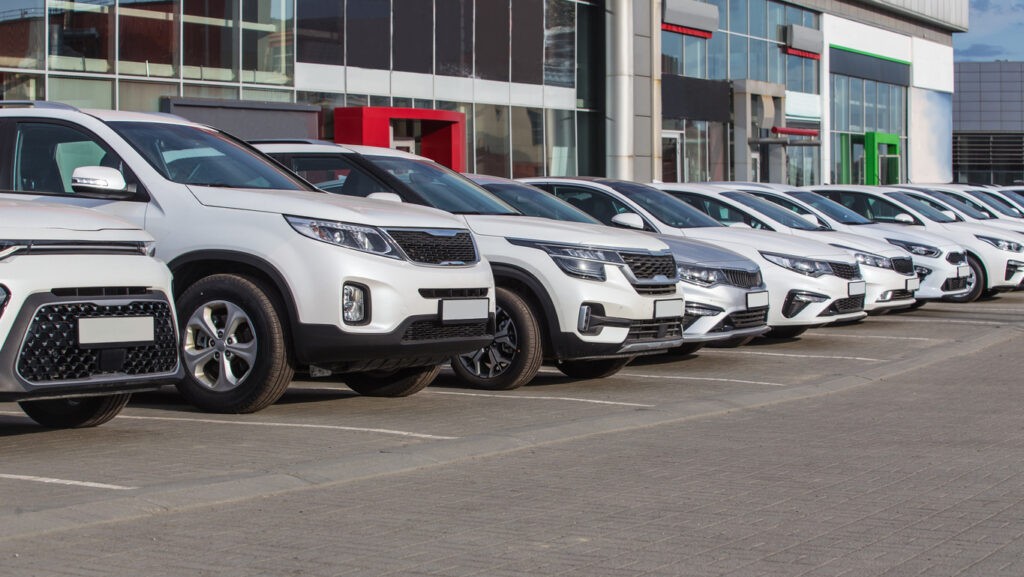
Kazakhstan's automobile market continues to grow, with sales of new cars on track to match or exceed last year’s record. In 2023, Kazakh motorists purchased over 198,000 new vehicles, and experts predict similar or higher figures for 2024. According to the Kazakhstan Automobile Union (KAO), 20,984 passenger cars and commercial vehicles were sold in November 2024, a 10.7% increase compared to November 2023. Over the first 11 months of 2024, Kazakh dealers sold 179,628 new cars, surpassing the 175,100 sold during the same period last year. Despite earlier concerns of a potential market slump, industry experts remain optimistic. KAO head Anar Makasheva had cautioned that the 2023 record represented “inorganic growth” driven by pent-up demand. However, Artur Miskaryan, general director of the Agency for Monitoring and Analysis of the Automobile Market (AMAAR), believes the market’s positive trend will continue. “Kazakhstan may well repeat or even surpass last year’s record for fleet renewal, potentially reaching 200,000 new car sales,” Miskaryan stated. He acknowledged some fluctuations, noting that in certain months, sales fell below 2023 levels but were offset by stronger performance in other periods. Kazakhstan’s domestic car manufacturers, based in Kostanai and Almaty, are also close to replicating last year’s success. In 2023, locally produced vehicles accounted for over 70% of the 198,000 new cars sold - approximately 148,000 units. Miskaryan estimates that domestic production will maintain a similar share in 2024. As previously reported by the The Times of Central Asia, stricter regulations for importing foreign cars into Kazakhstan were introduced on December 1, 2024​. However, experts anticipate that these changes will not significantly affect the market until spring 2025. Kazakhstan’s automobile sector continues to demonstrate resilience and robust growth, positioning itself for another record-breaking year in 2024.

Uzbekistan’s Foreign Trade Turnover Reaches $59.4 Billion in 2024

From January to November 2024, Uzbekistan’s foreign trade turnover (FTT) reached $59.4 billion, marking an increase of $2.1 billion or 3.6% compared to the same period in 2023, according to the Uzbek Statistical Agency. The volume of exports rose to $24.2 billion, a 4.4% increase compared to January-November 2023. Imports totaled $35.1 billion, growing by 3.0% over the same period. Kazakhstan emerged as one of Uzbekistan’s largest economic partners, following China and Russia. Factors contributing to this include a shared border, trade liberalization, and economic collaboration within the CIS free trade zone. Uzbekistan currently conducts trade with 195 countries, with significant FTT shares attributed to: China: 19.0% Russia: 18.0% Kazakhstan: 6.5% Turkey: 4.4% South Korea: 3.0% The Commonwealth of Independent States (CIS) countries accounted for 35.4% of Uzbekistan’s FTT during this period, reflecting a 3.0% increase from 2023. The growing economies of Uzbekistan’s trading partners in the CIS suggest a potential for increased demand for Uzbek exports. However, trade with non-CIS countries saw a decline. Uzbekistan’s trade share with other foreign nations dropped by 3.0% compared to the same period in 2023, comprising 64.6% of the total FTT.

Uzbekistan to Build New Solar Plant with World Bank Support

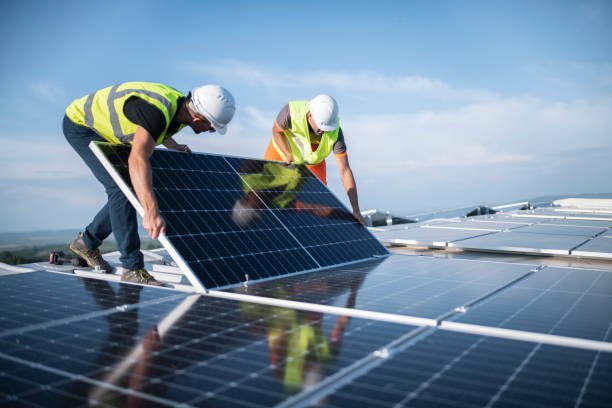
The World Bank has approved a $3.5 million payment guarantee to support Uzbekistan’s renewable energy development. The guarantee covers the National Electric Grid of Uzbekistan JSC’s obligation to purchase electricity from a 100-megawatt solar power plant to be built and operated by the French company Voltalia in the Khorezm region. Details of the Solar Plant Project The solar plant, set to be commissioned in November 2025, will span 177 hectares and generate more than 240 gigawatt-hours of renewable energy annually. It is projected to reduce CO₂ emissions by over 230,000 metric tons each year and produce enough clean energy to power approximately 60,000 households. This initiative aligns with Uzbekistan’s commitment to increasing clean energy production and advancing its transition to a green economy. Broader World Bank Support In addition to this project, the World Bank has allocated $800 million to accelerate Uzbekistan’s transformation into an inclusive and stable market economy. This financing supports reforms to: Improve the business environment. Enhance agriculture, railways, and energy efficiency. Strengthen public finance management. Expand social services. Increase preparedness for environmental risks. Favorable Financing Terms The World Bank’s financial support employs highly concessional loans, offering low-cost, long-term repayment options that are more favorable than standard international financial market rates. Uzbekistan’s collaboration with the World Bank underscores its strategic focus on sustainable development and clean energy to meet environmental and economic goals.