• KZT/USD = 0.00221
  • TJS/USD = 0.10830
  • UZS/USD = 0.00008
  • TMT/USD = 0.29760
  • KZT/USD = 0.00221
  • TJS/USD = 0.10830
  • UZS/USD = 0.00008
  • TMT/USD = 0.29760
  • KZT/USD = 0.00221
  • TJS/USD = 0.10830
  • UZS/USD = 0.00008
  • TMT/USD = 0.29760
  • KZT/USD = 0.00221
  • TJS/USD = 0.10830
  • UZS/USD = 0.00008
  • TMT/USD = 0.29760
  • KZT/USD = 0.00221
  • TJS/USD = 0.10830
  • UZS/USD = 0.00008
  • TMT/USD = 0.29760
  • KZT/USD = 0.00221
  • TJS/USD = 0.10830
  • UZS/USD = 0.00008
  • TMT/USD = 0.29760
  • KZT/USD = 0.00221
  • TJS/USD = 0.10830
  • UZS/USD = 0.00008
  • TMT/USD = 0.29760
  • KZT/USD = 0.00221
  • TJS/USD = 0.10830
  • UZS/USD = 0.00008
  • TMT/USD = 0.29760
18 October 2026

Viewing results 31 - 36 of 2773

Industrial AI Reaches Kazakhstan’s Factories, but Many Projects Remain Experimental

Artificial intelligence (AI) is already monitoring mining trucks, production lines, and workplace safety at industrial sites in Kazakhstan. Yet a gap remains between a successful experiment and technology that works every day at a factory or mine. Closing it was one of the main issues discussed at the third meeting of Kazakhstan’s Council for the Development of Artificial Intelligence. A study by the British Chamber of Commerce in Kazakhstan, with contributions from Narxoz University and the Kazakh-British Technical University, found that 58.8% of AI projects among the industrial companies surveyed remained at the pilot stage, with none reaching full-scale deployment. The sample was small, comprising just 17 executives and specialists from several industrial sectors, so its findings cannot be extrapolated to Kazakhstan’s entire industrial sector. The responses illustrate the problems companies encounter after their first experiments with AI. Respondents most often cited a shortage of in-house specialists and expertise, followed by implementation costs. Yet 70.6% of completed pilots cost less than $50,000. The greater expense can come when the technology has to be integrated with existing equipment, data, and production processes. The government’s 2025–26 roadmap covers 41 projects at 11 major industrial enterprises. They include Qarmet, which operates the country’s largest steelworks in Temirtau; copper producers Kazakhmys and KAZ Minerals; gold producer Solidcore Eurasia; and mining and metals group Eurasian Resources Group (ERG). Industrial AI Acceleration has become one testing ground for deploying artificial intelligence directly at industrial sites. More than 12 companies submitted over 140 problems for AI teams to tackle, including equipment maintenance, safety, and procurement. Of 24 pilot projects initiated under the program, seven have reached industrial operation. Some technologies have already made it onto factory floors and into mines. ERG uses its manufacturing execution system, ERG MES, to monitor production in real time. It collects data on output, technological processes, production losses, and equipment downtime. The Ministry of Industry and Construction estimates the economic effect at around 1.5 billion tenge, or approximately $3.39 million at the official exchange rate on October 2. At KAZ Minerals’ Aktogay copper mine in eastern Kazakhstan, AI is used to manage the movement of mining trucks. Solidcore Eurasia uses the technology in medical examinations for employees working in hazardous production environments. The Council also discussed the bureaucratic obstacles that can hold up successful projects. After a pilot, companies can face further approvals and testing, along with procurement and regulatory hurdles. Tokayev proposed avoiding the entire testing cycle again when a solution has already demonstrated results at a company operating under similar production conditions. The government and Samruk-Kazyna are to select companies for wider AI deployment. Samruk-Kazyna is Kazakhstan’s sovereign wealth fund, which manages state assets across major industries. The government also wants production workers to identify problems for developers. Engineers and operators see equipment downtime, product defects, and wasted materials firsthand. These problems are to form a list of practical challenges for technology companies and researchers. The list is intended in part to guide Qazaq AI Research University, a specialized university...
China Accounts for Nearly Half of Foreign Direct Investment in Kyrgyzstan in 2025

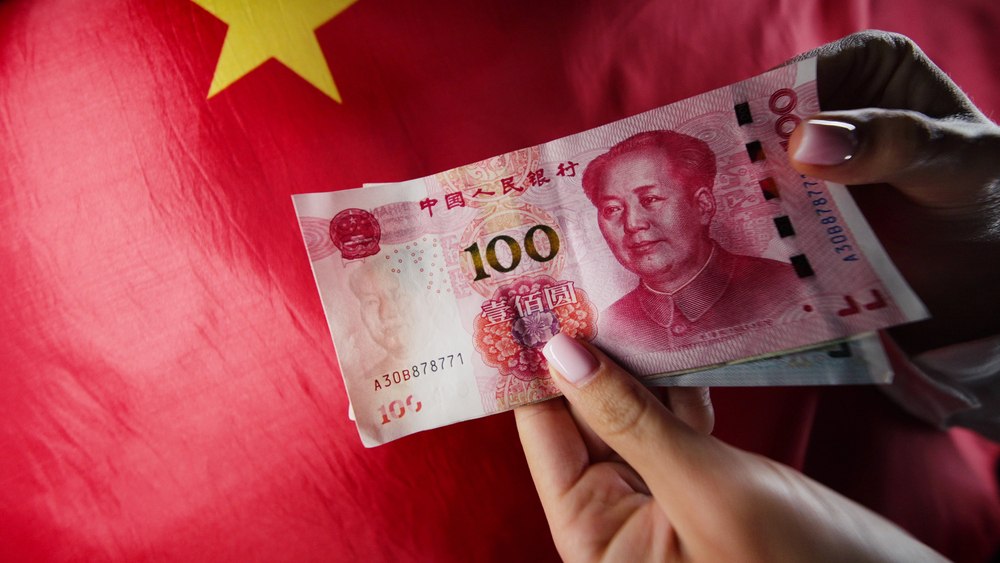
Kyrgyzstan received $1.31 billion in foreign direct investment (FDI) in 2025, up 27.3% from the previous year. Nearly half came from China, according to a new report from the country's National Statistical Committee entitled Investments in the Kyrgyz Republic 2021-2025. The figures are for gross FDI inflows, meaning they measure investment entering Kyrgyzstan without subtracting money flowing back out. China accounted for 47.5% of gross FDI, followed by Russia with 13.9%, Kazakhstan with 9.3%, Turkey with 9.1%, and the Netherlands with 5.4%. Together, these five countries accounted for more than 85% of the total. The sources of foreign capital shifted significantly over the year. FDI from Commonwealth of Independent States (CIS) countries fell by 25.2%, mainly because of lower investment from Russia, Azerbaijan, and Uzbekistan. Russian investment fell particularly sharply, from $279.3 million in 2024 to about $182 million in 2025, a drop of around 35%. Manufacturing attracted $618.8 million, or 47.2% of total FDI, while mining received $246.3 million, or 18.8%. Compared with 2024, investment in manufacturing rose 1.8-fold and investment in mining more than doubled, while investment in finance and insurance fell by 21.3%. Foreign investment was also concentrated geographically. About 86% went to businesses in Bishkek and the Chuy, Jalal-Abad, and Naryn regions. Investment growth has continued in 2026. Kyrgyzstan received $386.7 million in FDI in the first quarter, up 34% from the same period a year earlier. The Times of Central Asia previously reported on the results for the first three months of the year.

M360 Eurasia Mobile Industry Forum Set for Astana in 2027

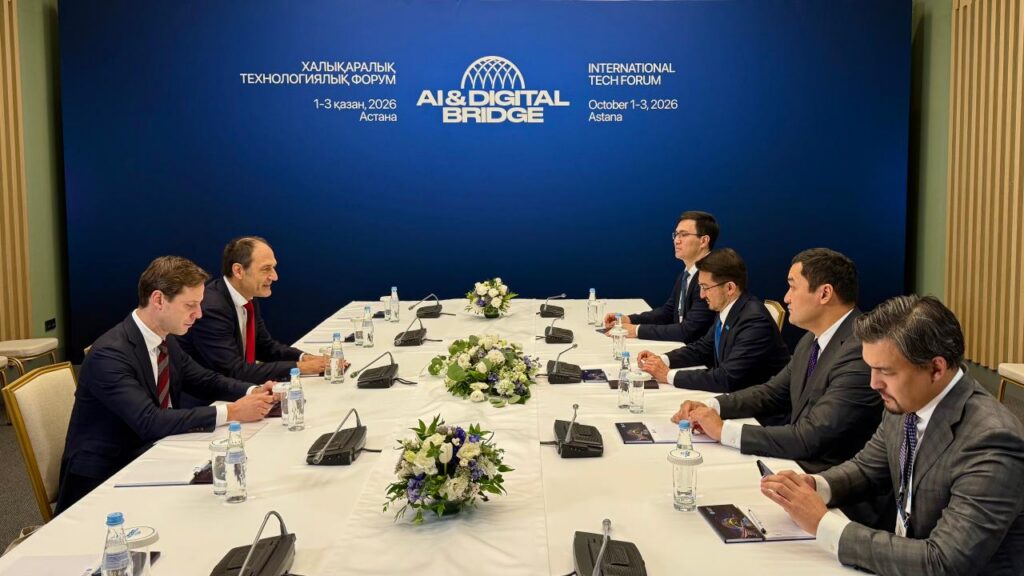
M360 Eurasia, a regional mobile-industry forum organized by the GSM Association (GSMA), will be held in Astana in the fall of 2027. Kazakhstan’s Ministry of Artificial Intelligence and Digital Development and the GSMA agreed to bring the event to the capital during AI & Digital Bridge 2026. The GSMA represents mobile operators and companies across the wider mobile ecosystem. It also organizes Mobile World Congress events and the regional M360 series. The forum will address artificial intelligence (AI) and connectivity, including access to digital services and the rules governing them. The memorandum was signed by Deputy Prime Minister and Minister of Artificial Intelligence and Digital Development Zhaslan Madiyev and Laszlo Toth, the GSMA’s head of Europe and Central Asia. “For our country, hosting M360 Eurasia will serve as an authoritative platform to strengthen international cooperation, attract investment, and advance infrastructure, telecom, and AI initiatives across Central Asia and beyond,” Madiyev said in the announcement. The GSMA said its cooperation with Kazakhstan would include 5G infrastructure and AI tools in local languages. Kazakhstan is expanding its 5G networks and in September launched Starlink Mobile’s direct-to-cell service with Beeline Kazakhstan, allowing compatible smartphones to connect directly to satellites outside terrestrial mobile coverage. Kazakhstan and Azerbaijan are also building a fiber-optic link across the Caspian Sea intended to provide an additional data route between Asian and European networks. The previous two editions of M360 Eurasia were held in Uzbekistan in partnership with telecommunications group VEON. More than 50 speakers took part in the 2026 forum in Samarkand, which drew representatives from 250 companies in more than 40 countries and territories. Beeline Kazakhstan will serve as host sponsor for the 2027 event.

World Bank Says Middle Corridor Needs More Than $55 Billion by 2040

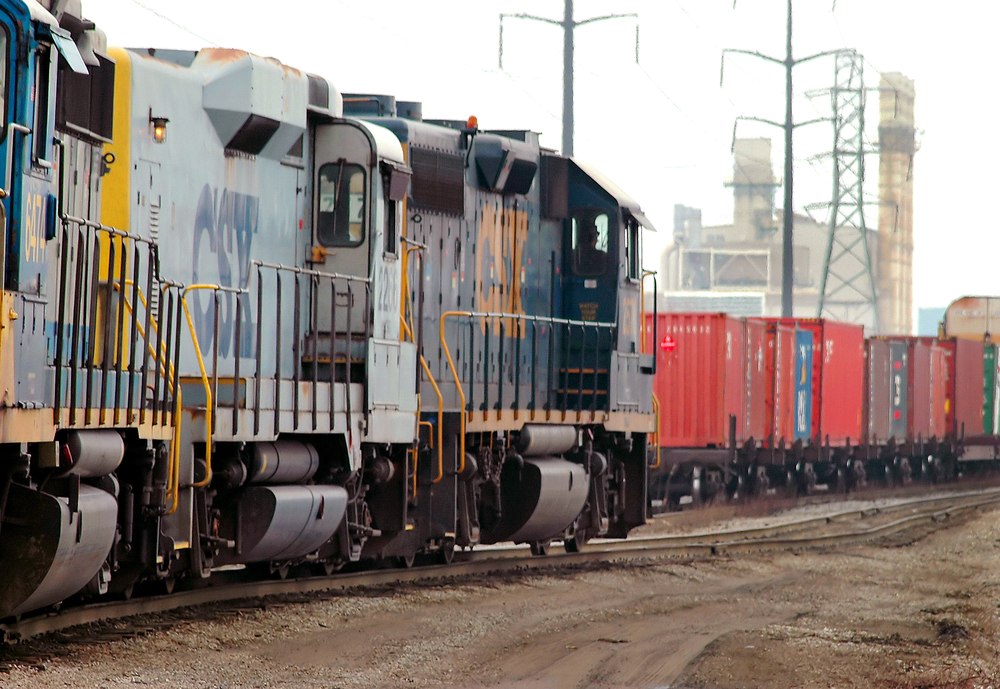
Developing a transport corridor linking China and Central Asia with Europe across the Caspian Sea will require more than $55 billion in investment through 2040. But the World Bank’s recent report, Integration: World-Class Trade Logistics Along the Trans-Caspian Transport Corridor, argues that infrastructure alone will not resolve the difficulties of moving freight across borders and between rail and ships. The route is the Trans-Caspian Transport Corridor, better known as the Middle Corridor. Trains typically travel from China through Kazakhstan to the Caspian ports of Aktau and Kuryk, where containers are transferred to ships. In Azerbaijan, they return to rail and continue through Georgia and Turkey toward Europe. The report covers nine countries with a combined population of nearly 200 million. With targeted investment, the World Bank estimates that trade volumes along the corridor could more than triple and travel times could be halved. GDP across those countries could be around 3.3% higher by 2040, with about 2 million additional jobs. If infrastructure investment is combined with reforms to make trade and transport more efficient, corridor volumes could quadruple compared with 2023 and travel times could fall by about two-thirds. At least $25 billion would be needed to relieve bottlenecks on railways and at Caspian ports. Another estimated $30.5 billion would improve connections between the main corridor and local economies, including terminals and digital systems. In February, the World Bank approved an $846 million guarantee from the International Bank for Reconstruction and Development, alongside a $564 million co-guarantee from the Asian Infrastructure Investment Bank. The package is intended to help mobilize $1.41 billion in long-term commercial financing for rail infrastructure along Kazakhstan’s section of the Middle Corridor. One of the principal projects is the roughly 322-kilometer Mointy-Kyzylzhar railway. The new line is expected to shorten the route by 149 kilometers and relieve pressure on the existing rail network. But hours saved on the Kazakh rail leg could still be lost waiting for a ship or crossing a border. The World Bank proposes a single digital corridor system built around a Transport, Transit, and Trade (T3) document. A carrier would enter cargo information once, allowing transport and customs authorities in different countries to use the same data. The bank also proposes a joint venture between railway and Caspian shipping operators. It would allow customers to buy a single container freight service for the route rather than arranging rail and maritime transport separately. During a September visit to Kazakhstan, World Customs Organization Secretary General Ian Saunders called for common international data standards and closer coordination between neighboring customs administrations. The Middle Corridor is often described as an alternative route for Chinese goods traveling to Europe. Its railways and ports also need to carry goods produced by Central Asia’s own economies. The five Central Asian countries exported $8.1 billion worth of goods to one another in January-July 2026, up 25.4% from a year earlier. The World Bank expects cheaper and more predictable transport to help local producers sell to neighboring countries and more distant...

How Central Asian Small Businesses Are Earning More From Local Products

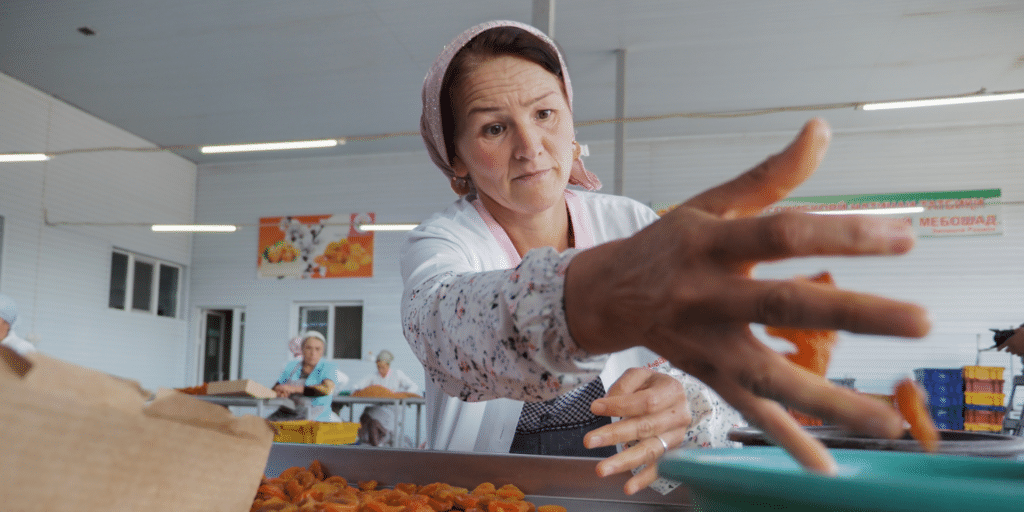
For Ikhtiyor Alimov, finding foreign buyers was only part of the challenge. His dried-fruit business in northern Tajikistan also needed enough equipment to fill its orders. Alimov founded Mevai Zarrin in Isfara with eight workers and handmade machinery. Its processing capacity eventually reached 200 kilograms a day, but manual production limited further growth. With the support of the United Nations Development Programme (UNDP), the company upgraded its equipment and packaging. It can now process 600–650 kilograms daily, according to the organization’s account of its development. “We were able to reduce our product waste by 20%,” Alimov said in UNDP’s regional account of the program. Across Central Asia, small producers face similar difficulties. Processing a harvest before selling it can increase producers’ earnings, but expansion requires investment that many family businesses struggle to afford. The Finland-funded Aid for Trade initiative, implemented by the UNDP, is closing after more than 15 years of work across Kyrgyzstan, Tajikistan, and Uzbekistan. UNDP and Kyrgyzstan’s Ministry of the Economy presented results in Bishkek on September 24, discussing which forms of support should continue beyond 2026. In Tajikistan, UNDP reported that the initiative helped create 147 jobs, including 90 for women since 2022. At Mevai Zarrin, support depended partly on buying fruit from local farmers and connecting producers in southern Tajikistan with processors in the north. The company signed contracts with ten farming households in Khatlon, securing supplies while giving growers another outlet for their harvests. Pooling smaller harvests can make deliveries large enough for a processor to buy. For farmers, those arrangements offer a route beyond nearby markets without requiring each household to become an exporter. Mevai Zarrin also obtained FSSC 22000 food safety certification to help it pursue new customers. In UNDP’s September profile, Alimov said the company had sent samples to prospective buyers in Germany and was awaiting their response. Processing the Harvest In Uzbekistan’s Andijan region, Dildora Nurmatova’s family business, ErElDi, has increased its profits by processing peanuts. Nurmatova began investigating the crop during her agricultural studies. By 2024, her enterprise was harvesting five metric tons from one hectare. According to UNDP’s regional retrospective, selling processed snacks rather than raw peanuts tripled her profits. [caption id="attachment_57615" align="aligncenter" width="1920"] Dildora Nurmatova in her peanut field in Uzbekistan’s Andijan region. Image: Elyor Nemat, UNDP Uzbekistan[/caption] Aid for Trade supplied processing and packaging equipment, alongside a separate workshop and a three-phase electricity connection. Business advice helped the family develop products and organize production. The company supplies packaged peanuts to Andijan’s wholesale market. Lower-grade kernels go into milled products for bakeries and ice-cream producers, giving the family a market for material that cannot be sold as premium snacks. ErElDi’s customers are close to home. The family can earn more from its harvest by doing the processing itself, before it considers the costs of finding buyers abroad. In Kyrgyzstan, UNDP reported that the project contributed to 837 new jobs, including 548 for women, and supported export contracts worth $17.1 million since 2022. [caption id="attachment_57610" align="aligncenter" width="2400"] Beekeepers...

Kazakhstan Plans Fourth Major Oil Refinery by 2033

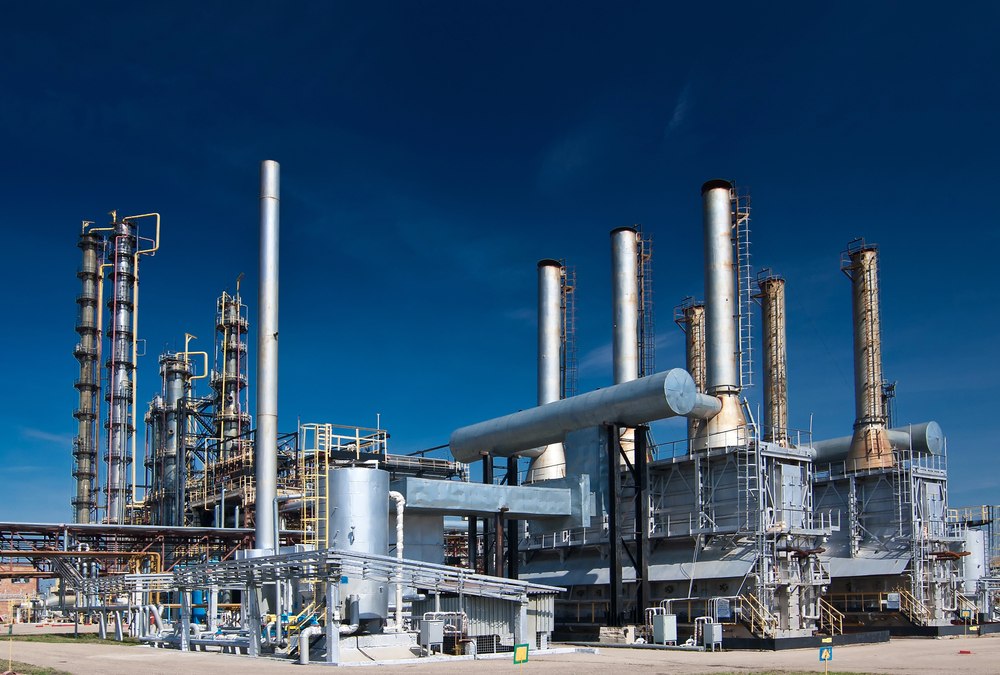
Kazakhstan plans to commission a fourth major oil refinery by 2033 and choose its location by the end of 2026. Daulet Arykbayev, director of the Oil Transportation and Refining Department at Kazakhstan’s Ministry of Energy, announced the plans at the Kazakhstan International Oil and Gas Exhibition and Conference (KIOGE 2026) in Almaty. The new refinery is expected to process up to 10 million tons of oil per year. Potential sites are being assessed in Ulytau, Atyrau, Mangystau, and Turkestan regions. “We have decided to accelerate the implementation of the new refinery project. By the end of this year, the assessment of four potential regions will be completed, after which the optimal region for construction will be officially selected. The new plant will become the core of a modern petrochemical cluster,” Arykbayev said. In February 2026, the government set a target of increasing the country’s total oil-refining capacity to around 40 million tons per year by 2033. The previous industry plan envisaged construction of the fourth refinery between 2032 and 2040. At KIOGE, the Energy Ministry provided updated capacity figures. The capacity of the three major refineries is expected to rise to a combined 27.7 million tons per year. Including the recently expanded Caspi Bitum plant, Kazakhstan’s existing refining capacity would reach 29.2 million tons. The fourth refinery would add up to another 10 million tons, bringing the national total to around 39 million tons annually. Kazakhstan’s three largest refineries are in Atyrau in the west, Pavlodar in the northeast, and Shymkent in the south. The Shymkent refinery’s capacity is planned to double from 6 million to 12 million tons per year by 2030. The Pavlodar Petrochemical Plant is expected to expand from 5.5 million to 9 million tons by 2031, while the Atyrau refinery’s capacity is planned to rise from 5.5 million to 6.7 million tons by 2028. To supply the expanded Shymkent refinery, Kazakhstan plans to increase the capacity of the Kazakhstan-China oil pipeline system. The project includes five new pumping stations and a 189-kilometer parallel pipeline section. Capacity on the Kenkiyak-Atyrau pipeline is planned to increase to 15 million tons per year, while the Kenkiyak-Kumkol section is expected to reach 20 million tons. The government is also seeking foreign investors to help finance the fourth refinery.