• KGS/USD = 0.01144 0%
  • KZT/USD = 0.00217 0%
  • TJS/USD = 0.10456 0%
  • UZS/USD = 0.00008 0%
  • TMT/USD = 0.28571 0%
  • KGS/USD = 0.01144 0%
  • KZT/USD = 0.00217 0%
  • TJS/USD = 0.10456 0%
  • UZS/USD = 0.00008 0%
  • TMT/USD = 0.28571 0%
  • KGS/USD = 0.01144 0%
  • KZT/USD = 0.00217 0%
  • TJS/USD = 0.10456 0%
  • UZS/USD = 0.00008 0%
  • TMT/USD = 0.28571 0%
  • KGS/USD = 0.01144 0%
  • KZT/USD = 0.00217 0%
  • TJS/USD = 0.10456 0%
  • UZS/USD = 0.00008 0%
  • TMT/USD = 0.28571 0%
  • KGS/USD = 0.01144 0%
  • KZT/USD = 0.00217 0%
  • TJS/USD = 0.10456 0%
  • UZS/USD = 0.00008 0%
  • TMT/USD = 0.28571 0%
  • KGS/USD = 0.01144 0%
  • KZT/USD = 0.00217 0%
  • TJS/USD = 0.10456 0%
  • UZS/USD = 0.00008 0%
  • TMT/USD = 0.28571 0%
  • KGS/USD = 0.01144 0%
  • KZT/USD = 0.00217 0%
  • TJS/USD = 0.10456 0%
  • UZS/USD = 0.00008 0%
  • TMT/USD = 0.28571 0%
  • KGS/USD = 0.01144 0%
  • KZT/USD = 0.00217 0%
  • TJS/USD = 0.10456 0%
  • UZS/USD = 0.00008 0%
  • TMT/USD = 0.28571 0%

Viewing results 2317 - 2322 of 5581

ADB to Finance Upgrade of Barskoon–Karakol Section of Issyk-Kul Ring Road in Kyrgyzstan

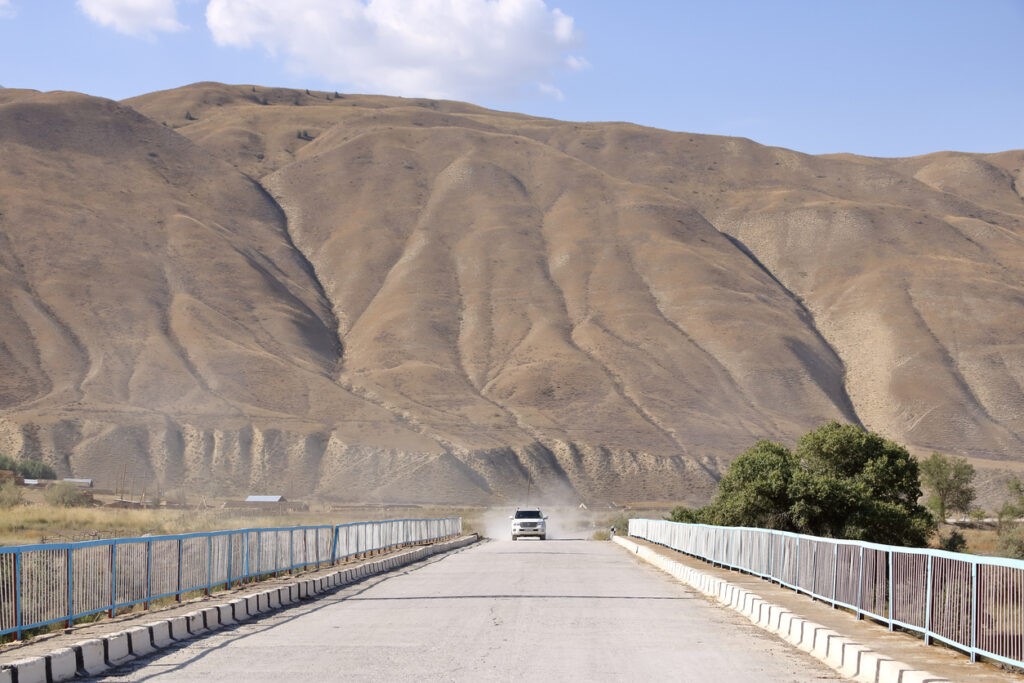
The Asian Development Bank (ADB) announced on September 19 that it had approved $109.5 million in financing to renovate the highway around Lake Issyk-Kul. The lake is one of the most popular tourist destinations in Kyrgyzstan, and a strategic location that connects to neighboring Central Asian countries. ADB’s Issyk-Kul Ring Road Improvement Project will construct 75.2 kilometers of the road traversing the Barskoon to Karakol section of the Issyk-Kul Ring Road, which connects the Central Asia Regional Economic Cooperation (CAREC) Corridor 1. The project will widen the two-lane roadway to four lanes to meet increasing traffic demand, while incorporating climate-adaptation measures into the road design and construction materials. Rest areas, bus stops, streetlights, and safer access for pedestrians will also be constructed. The ADB funding comprises an $87 million concessional loan and a $22.5 million grant from the Asian Development Fund. ADB Principal Transport Specialist Oyunchimeg Erdene commented: “The Barskoon–Karakol road section [on the southern shore of Lake Issyk-Kul] is the remaining portion of the Issyk-Kul Ring Road for improvement. Completing this will mean eliminating congestion and boosting tourism that will support the growth of businesses in the area.” Kyrgyzstan’s Deputy Minister of Transport, Beknazar Bazaraliev, earlier said that the rehabilitation of the Issyk-Kul Ring Road is to be completed in 2028. The rehabilitation of the 440 km long Issyk-Kul Ring Road was divided into several parts and is financed by the government and international financial organizations.
CSTO to Finalize Tajik-Afghan Border Security Plan by End of Year

The program by the Collective Security Treaty Organization (CSTO) to strengthen the Tajik-Afghan border will be adopted by the end of 2024, the Secretary-General of the CSTO, Imangali Tasmagambetov, announced. “Continuous work is underway to develop and implement specific measures to strengthen our security space. The most striking example is the CSTO Targeted Interstate Program to Strengthen the Tajik-Afghan Border, scheduled for adoption this year,” he said. According to him, the CSTO is characterized by open and honest discussions of all current issues, without exception, in the mode of constructive and “soft” alliance and decision-making strictly in compliance with the principle of consensus. “And in terms of fundamental issues of mutual support and collective security, we act exclusively consolidated,” Tasmagambetov said. “Our common task for the foreseeable future is to strengthen the role and significance of the organization in the changing system of international relations while maintaining a commitment to established principles and priorities and at the same time corresponding to the modern context of regional and global security,” he added. The first decision to strengthen the Tajikistan-Afghanistan border was made in 2013. The program itself consists of three stages, the first of which is designed for five years. The state border between Tajikistan and Afghanistan is part of the southern border of the so-called CIS and post-Soviet territory. The total length of its border is 1374.2 km, of which 1184.4 km is a river border and 189.8 km is an island border.

Kyrgyzstan Asks IAEA for $45 Million for Nuclear Waste Remediation

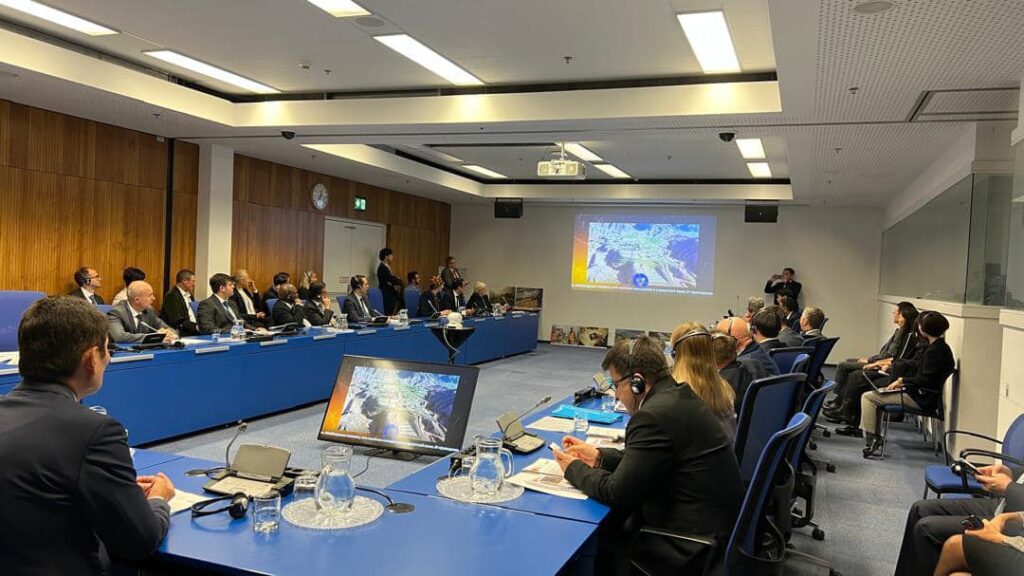
Kyrgyzstan's Deputy Minister of Emergency Situations, Azamat Mambetov, has asked for support from Central Asian countries at the International Atomic Energy Agency's General Session in Vienna, Austria. The 68th session of the IAEA General Conference is taking place from September 16 to 20, 2024. An official from the Kyrgyz Republic Ministry of Emergency Situations made a speech that called for attention to be paid to the importance of ensuring environmental safety in the region. “In his speech, Azamat Mambetov emphasized the importance of the problem of radiation safety in Central Asia and called for the intensification of international efforts to reclaim uranium tailings in the region,” the Ministry of Emergency Situations stated. The IAEA adopted a resolution on “The Role of the International Community in Preventing Radiation Threats in Central Asia.” A strategic master plan was developed to reclaim uranium sites in the region and create a special account for environmental remediation in Kyrgyzstan, Uzbekistan, and Tajikistan. The Deputy Minister of Emergency Situations of Kyrgyzstan informed IAEA members about the process of completing the reclamation of two nuclear waste sites in the country's south. This has allowed about 80,000 people in that area to live safely. The Kyrgyz Ministry of Emergency Situations stressed that it is grateful to all countries and international organizations that have made a significant contribution to the environmental rehabilitation of the tailing dumps left over from Soviet-era uranium mining in Central Asia. However, approximately another $45 million is needed to implement the Strategic Master Plan fully. According to the Kyrgyz Ministry of Emergency Situations, there are currently 92 toxic and radioactive waste dumps in the country. Of these, 23 tailings contain uranium elements, while the rest contain radioactive rock residues, heavy metals, and cyanide.

Agreement by Kazakhstan and Turkey on Air Transit

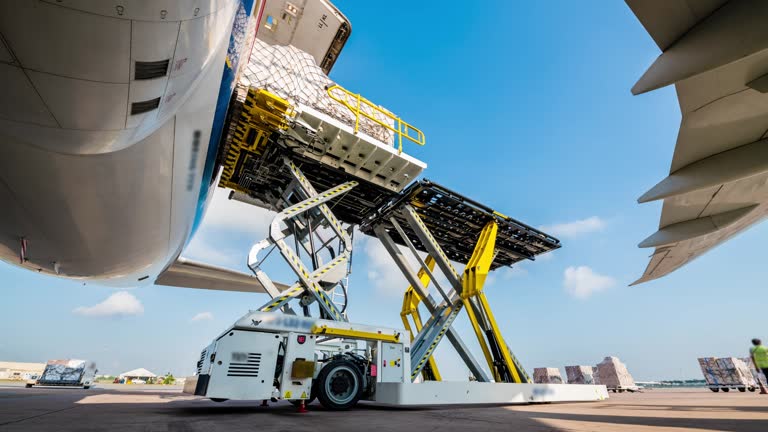
The Government of Kazakhstan has signed an agreement with Turkey on the transit of military equipment and personnel through the airspace of both countries. The resolution, adopted on September 11, establishes a procedure for using air corridors regulated and authorized by the Ministry of Defense, responsible for the transit of military equipment and personnel; the Ministry of Foreign Affairs, responsible for issuing annual and one-time diplomatic permits (DCNs); and the Turkish Ministry of National Defense. Each party has committed to submitting a formal request through diplomatic channels by December 1 of a given year to obtain an annual diplomatic authorization number (DCN) which will be valid for transit operations  from January 1 to December 31 of the following year. Enabling the transit of official delegations, military equipment and personnel, humanitarian aid, and diplomatic cargo, the decree comes into force from the day of its signing. The draft agreement between the governments of Kazakhstan and Turkey on the transit of military property and personnel through the airspace of both countries was published on the portal “Open NPA” on August 13 and was under discussion until August 27.  The move which illustrates the strengthening relationship between the two countries, follows Kazakhstan's president's attendance  at Recep Tayyip Erdogan's inauguration as president in Ankara in June 2023,  Erdogans visit to Astana in November of the same year, and his return in July 2024, for the SCO Summit.

Kazakhstan Now Home to 99% of the World’s Saiga Population

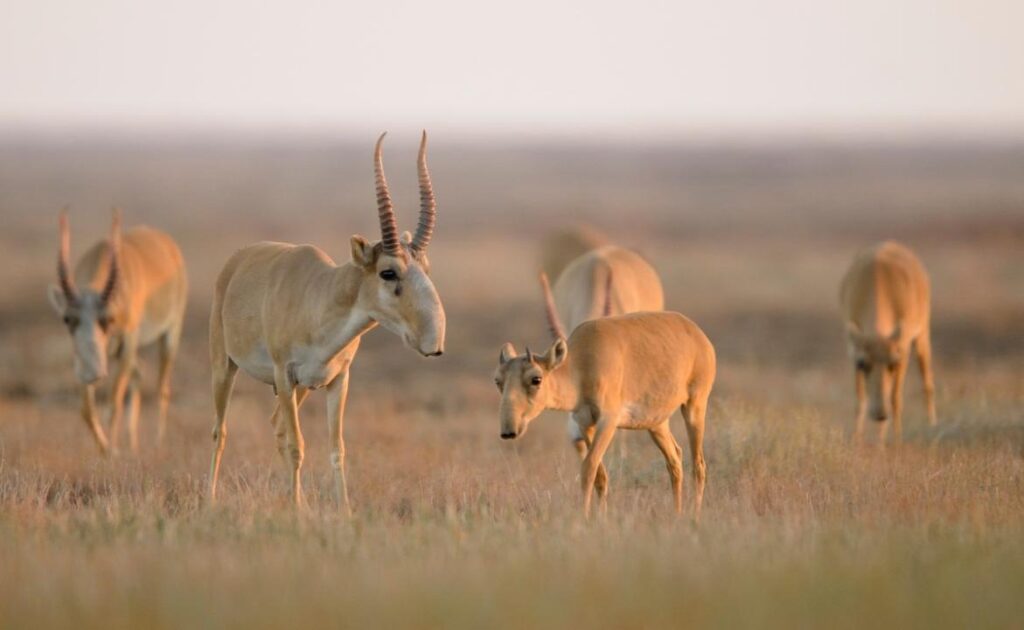
The Minister of Ecology and Natural Resources of Kazakhstan, Yerlan Nysanbayev, has announced that the number of saigas in Kazakhstan has risen to around four million, equivalent to 99% of the global population. Just over half of the population - 2.8 million- resides in West Kazakhstan Oblast and the overall figure takes into account those born during May's birthing season. The presence of such large numbers of this type of antelope has not however, always been welcomed. As referenced by Nyanbayev, to lessen their damage to agriculture, Kazakhstan had previously taken measures to regulate the population. As recently as 2023, 42,000 saigas were seized, with their meat sold through processing plants in four regions. Under instruction of the Head of State, the practice has been stopped and commending the move, Nysanbayev reported, “No other state today has such a population. This is thanks to the efforts that the state: Money was spent, specialized enterprises were organized, and many legislative measures were taken." Saigas are one of the oldest breeds on the planet, dating back 250,000 years. Capable of reaching speeds of up to 80 kilometers per hour, and with unique nasal filters to help clean the air of dust and keep cool in the heat, the saiga migrate great distances, traveling up to 1,000 kilometers in search of food. A ban on shooting and hunting saigas in Kazakhstan was introduced in 1999. This decision was part of a conservation effort to protect the animals, whose population had been significantly reduced by poachers intent on seizing their horns, highly valued in traditional medicine. In December 2023, the International Union for Conservation of Nature (IUCN) updated the status of the Saiga from Critically Endangered to Near Threatened, but estimated the global population at 1.9 million, up from a low of 39,000 as recently as 2005. An April 2024 survey conducted by the Altyn Dala Conservation Initiative, however, recorded a population of 2,833,600 in Kazakhstan prior to the birthing season. The figure 4.1 million, therefore, falls within the range of the recent average increase in numbers of 48%. Saiga Antelopes – which migrate in excess of 1,000 kilometers between their summer and winter ranges because of “extreme variations” in climate - remain acutely susceptible to sudden mass deaths from pasteurellosis, an acute bacterial disease which killed up to 200,000 of the species in a three-week period in Kazakhstan in 2015.

Rahmon Invites German Chancellor to Cooperate on Rogun HPP

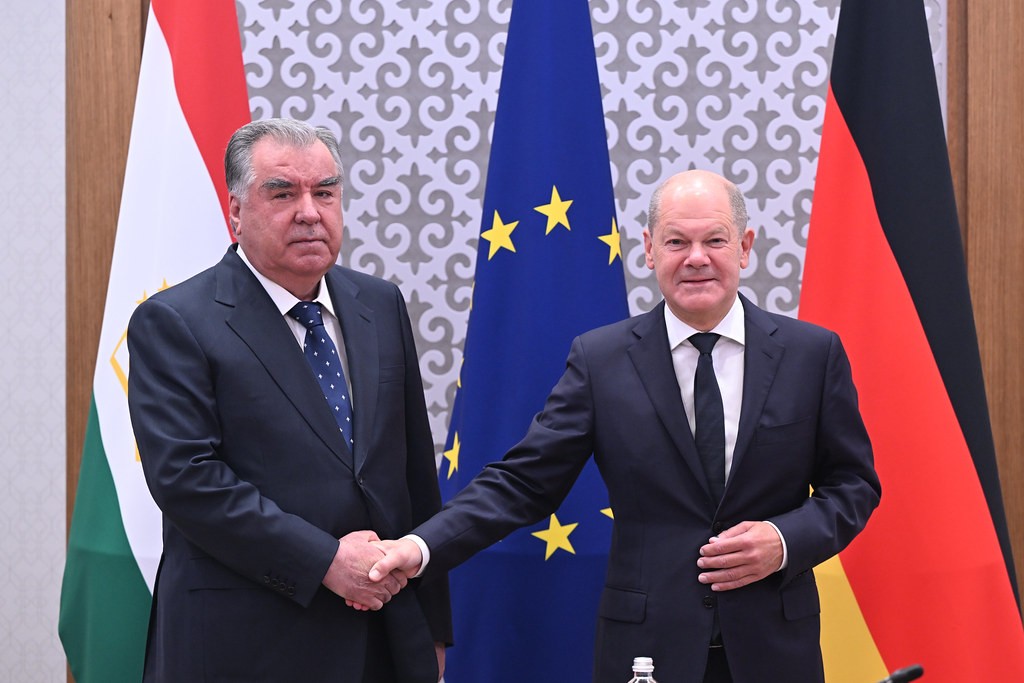
During the summit of Central Asian countries and Germany on September 17 in Astana, Tajik President Emomali Rahmon spoke with German Chancellor Olaf Scholz on expanding Tajikistan’s cooperation with Germany and furthering Germany's business interests in the country. The president noted the significant contribution made by the German Society for International Cooperation and the German Development Bank to Tajikistan's implementation of its national strategies. With regard to future projects, the parties discussed developing effective cooperation in economy and trade, industry, hydropower, solar and wind energy, transport, and agriculture. The two leasers also exchanged views on mining and processing minerals and scarce earth metals, the expansion of bilateral cooperation in industry and agriculture, and the prospects of exporting products from Tajikistan to Germany. Talks also covered global problems related to drinking water, melting glaciers, climate change, and food security. Olaf Scholz confirmed Germany's interest in cooperating with Tajikistan in energy fields, including hydropower and other green energy sources, mining, environmental protection, and security, and emphasized,   “we encourage cooperation with Tajikistan to global German companies." According to the president's press service, Emomali Rahmon recalled Germany’s contribution to the construction of the Tajikistan and Sebzor power plants in Badakhshan and the modernization of the Nurek hydroelectric power plant. Looking ahead, the president expressed confidence that such cooperation could continue on the Rogun power plant. The estimated  cost of completing the construction of the Rogun HPP is $6.4 billion, and when fully operational, about 70% of the electricity produced will be exported to other Central Asian countries. The meeting closed with Rahmon inviting Scholz to come to Tajikistan on an official visit.