• KGS/USD = 0.01144 0%
  • KZT/USD = 0.00212 0%
  • TJS/USD = 0.10456 0.19%
  • UZS/USD = 0.00008 0%
  • TMT/USD = 0.28490 0%
  • KGS/USD = 0.01144 0%
  • KZT/USD = 0.00212 0%
  • TJS/USD = 0.10456 0.19%
  • UZS/USD = 0.00008 0%
  • TMT/USD = 0.28490 0%
  • KGS/USD = 0.01144 0%
  • KZT/USD = 0.00212 0%
  • TJS/USD = 0.10456 0.19%
  • UZS/USD = 0.00008 0%
  • TMT/USD = 0.28490 0%
  • KGS/USD = 0.01144 0%
  • KZT/USD = 0.00212 0%
  • TJS/USD = 0.10456 0.19%
  • UZS/USD = 0.00008 0%
  • TMT/USD = 0.28490 0%
  • KGS/USD = 0.01144 0%
  • KZT/USD = 0.00212 0%
  • TJS/USD = 0.10456 0.19%
  • UZS/USD = 0.00008 0%
  • TMT/USD = 0.28490 0%
  • KGS/USD = 0.01144 0%
  • KZT/USD = 0.00212 0%
  • TJS/USD = 0.10456 0.19%
  • UZS/USD = 0.00008 0%
  • TMT/USD = 0.28490 0%
  • KGS/USD = 0.01144 0%
  • KZT/USD = 0.00212 0%
  • TJS/USD = 0.10456 0.19%
  • UZS/USD = 0.00008 0%
  • TMT/USD = 0.28490 0%
  • KGS/USD = 0.01144 0%
  • KZT/USD = 0.00212 0%
  • TJS/USD = 0.10456 0.19%
  • UZS/USD = 0.00008 0%
  • TMT/USD = 0.28490 0%

Viewing results 67 - 72 of 123

Ashgabat Hosts Turkic Writers’ Forum

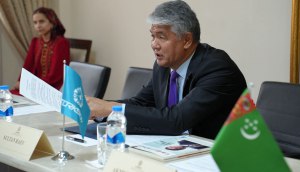
On October 18-19, leading cultural and literary figures gathered in Ashgabat, to attend a forum of Turkic writers organized within the program “Anau—Cultural Capital of the Turkic World 2024". With a focus on the importance of preserving and developing common cultural heritage, the event attracted representatives of the writers' unions of Turkey, Kyrgyzstan, Uzbekistan, and Kazakhstan, as well as prominent cultural figures of Turkmenistan. Honored guests included Ulugbek Esdevlet, president of the TURKSOY Writers' Union, and Sultan Raev, secretary general of the organization, who in his address, emphasized: “This forum is a unique platform for demonstrating the rich literary heritage of the Turkic world and passing on our common cultural heritage to future generations.” During the forum, the Union of TURKSOY Writers held a meeting to discuss promising projects for developing the literature of Turkic-speaking peoples, including programs to support young authors, the expansion of translation activities, and the organization of international literary contests. In addition to complementary activities such as poetry readings, the forum afforded students from the Turkmen State Institute of Culture, a unique opportunity to engage with prominent writers.
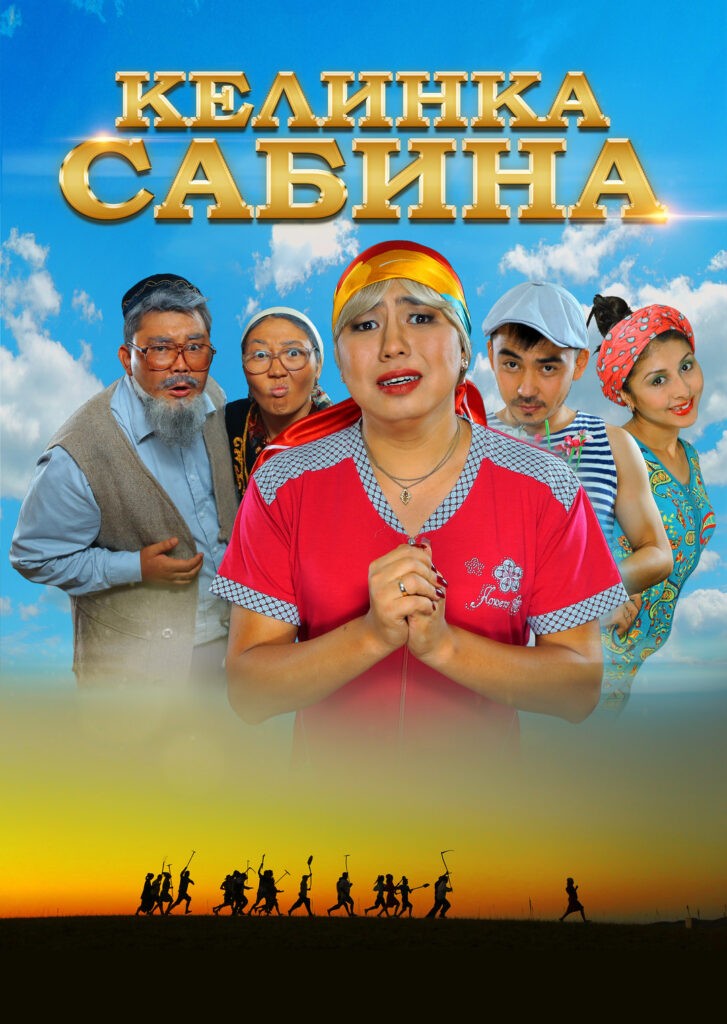
Image of Kelin in Kazakh Films

In Kazakh culture, a special place is occupied by the traditional relationship between yene (mother-in-law) and kelin (daughter-in-law). This relationship is a reflection of family values and cultural norms that have developed over the centuries. In recent years, the theme of yene and kelin has been actively developed in Kazakh cinematography, where directors and screenwriters reveal the depth of these relationships, emphasizing their complexity and multifaceted nature. In a traditional Kazakh family, yene plays an important role. She not only passes on domestic and cultural traditions to the younger generation but also helps the kelin to adapt to the new family. In turn, the kelin is responsible for managing the household and caring for the family, which is perceived as an important and honorable part of her social role. However, this relationship, based on mutual respect and support, is often not without its difficulties. As in any culture, traditions are sometimes the cause of conflict and tension. These complexities, caused by societal expectations and personal ambitions, are reflected in Kazakhstan films, which increasingly focus on the role of the kelin in modern life. The cinematography of Kazakhstan has become a powerful tool for researching and discussing traditional family relations. One of the most popular films on this topic is the comedy film Kelinka Sabina. In this film, the main focus is on the difficulties a young kelin faces when she enters a traditional family. The movie not only demonstrates the clash of cultures but also shows how the characters learn to accept each other despite the differences in outlook and habits. Kelinka Sabina became a sensation in Kazakhstan, not only for its comedic scenes but also for its heartfelt and poignant moments that invite viewers to reflect on family values. The film explores the dynamics between mother-in-law and daughter-in-law while humorously addressing the integration of modernity and tradition, highlighting the challenges of adapting to new ways of life. Another landmark film on this subject is Daughter-in-law is Also Human, which takes a more serious and in-depth look at the issue of female self-identification in traditional society, touching on important topics such as gender stereotypes, prejudice against women, and their role in modern Kazakhstan. The main character has to face the fact that she is expected to fully commit to the traditional role of a kelin, but she strives to maintain her personal space and rights. Her story of self-assertion serves as an example of how young Kazakh women can fight for their rights and change established stereotypes and expectations set by generations. Another film in the same series, Kelinka is Also a Person 2, takes a significant step in addressing the role of women in Kazakh society by broadening perceptions of what it means to be a kelin in the modern world and opening up a discussion on gender roles and women's rights. The image of the kelin in Kazakh films epitomizes the complex and multifaceted aspects of Kazakh culture. The relationship between yene and kelin extends beyond a simple...

Archaeologists unlock Secrets of Ancient Civilization in Turkmenistan

Large-scale archaeological research continues in the Karakum desert at the ancient site of Gonur-Depe. This unique monument, discovered in 1972, is the key to unlocking the mysteries of the ancient civilization Margush, which flourished in the delta of the Murghab River about four millennia ago. The Turkmen-Russian Margush Archaeological Expedition, operating under the international agreement, is nearing the end of another field season. The scientists uniting specialists from the Institute of Ethnology and Anthropology of the Russian Academy of Sciences, the Institute of History of Material Culture of the Russian Academy of Sciences, and Turkmen researchers continue painstaking work to study and describe numerous artifacts found at this ancient settlement. The excavation season brought some interesting findings. Among them, a miniature cylindrical seal made of talc-agalmatolite, a fragment of a clay bulla with imprints of a snake-shaped seal, and a unique clay lid from a vessel with imprints of a rope and a cloisonné seal stands out. Of particular interest are sets of semi-precious stone beads found in five burials. The skill of ancient jewelers has astonished modern researchers—some lapis lazuli beads have a diameter of only 1 millimeter. Archaeologists have also conducted research aimed at studying the technologies of ancient builders. For the first time, a gypsum kiln was described in detail, making it possible to reconstruct the technological process of producing building materials in ancient Gonur-Depe. The results of these studies will be presented at an international scientific conference in Ashgabat, where scientists from different countries will discuss the discoveries and their significance as regards understanding the history of the ancient civilization of Margiana. The discoveries made in Gonur-Depe not only shed light on the life of the ancient inhabitants of these places but also emphasize the importance of international cooperation in archaeology and history. Each discovery brings us closer to understanding the rich cultural heritage left by an ancient civilization in the heart of the Karakum desert.

Italian University to Send its Professors to Turkmenistan

The Turkmen State University and the University of Perugia for Foreigners have signed a Memorandum of Understanding. The main areas of cooperation include introducing modern methods of teaching foreign languages and exchanging advanced pedagogical experience. Special attention will be paid to developing university relations, which involves exchanging curricula, programs, and methodological materials. Scientific publications and textbooks will also be exchanged, improving the quality of foreign language teaching in both educational institutions. A notable aspect of the agreement is the deployment of Italian language instructors from the University of Perugia to Turkmen State University. This initiative provides students with a unique opportunity to learn Italian directly from native speakers. The University of Perugia for Foreigners, founded in 1921, is one of Italy's oldest and most prestigious universities. It is the only institution of higher education in the country that specializes in teaching the Italian language and culture to international students. Located in the picturesque city of Perugia, the university offers a wide range of programs, from language courses to full degree programs in Italian language and culture.

U.S. Supports Restoration of Medieval Mausoleum in Karakalpakstan, Uzbekistan

The  12th Century Khalif Erejep Mausoleum, restored with a $80,000 grant from the U.S. Ambassadors Fund for Cultural Preservation (AFCP), has reopened in Khojayli in Uzbekistan’s northwestern Karakalpakstan region. As reported by the U.S. Embassy in Uzbekistan, the condition of the site was first assessed using  advanced techniques such as geophysics, geodesy, archaeological investigations, structural monitoring, 3D scanning, photogrammetry, and radiocarbon dating. Information boards with interactive elements installed at the site, now offer visitors both detailed insights into the mausoleum’s history and the conservation techniques applied. In addition to the above, an audio guide provides informative commentary accessible via mobile devices, and a dedicated website, www.mizdakhkan.com, has been launched to broadcast the site’s historical background, updates on conservation efforts, and practical visitor information. During his visit on October 15, U.S. Ambassador Jonathan Henick, announced:  “Karakalpakstan’s rich history and culture shine through this important monument. It reflects Karakalpakstan’s deep traditions and ancient soul. The preservation of the Khalif Erejep Mausoleum is a testament to the strong partnership between the United States and Uzbekistan. Through the Ambassadors Fund for Cultural Preservation, we are honored to support Uzbekistan’s efforts in preserving its rich history for future generations.” Established by Congress in 2001 and administered by the U.S. Department of State, the Ambassador’s Fund for Cultural Preservation (AFCP) provides direct grant support for preserving cultural sites, cultural objects and collections, and forms of traditional cultural expression in developing countries worldwide. Since 2001, the Fund has supported 15 projects, with a total budget of $1,300,000 in Uzbekistan focused on the restoration of ancient and historic buildings, the assessment and conservation of rare manuscripts and museum collections, the preservation and protection of important archaeological sites, and the documentation of traditional craft techniques.

Scientists Attempt to Unlock the Secrets of Turkic Runes in Altai

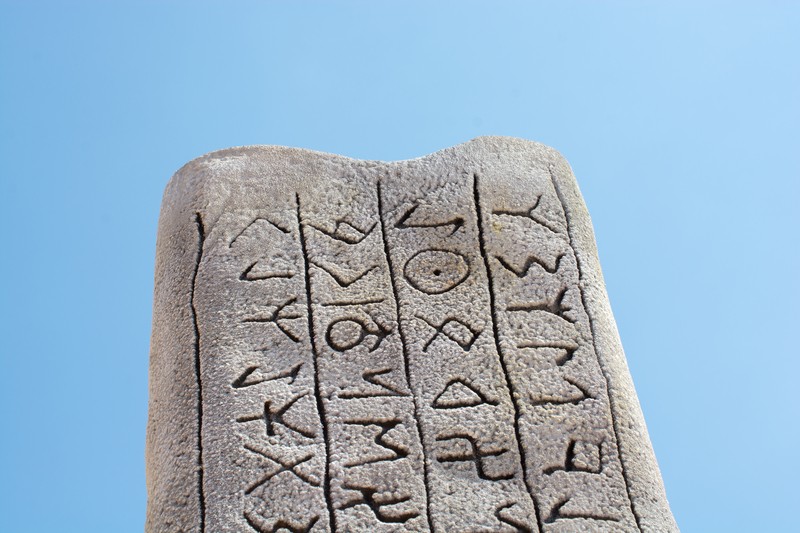
Russian scientists have started deciphering unique Turkic runic inscriptions in Altai, dating back to the VI-X centuries AD. Speaking at the International Conference “Mountain Altai - the ancestral home of the Turks,” Alexander Vasiliev, head of the Oriental History Department of the Institute of Oriental Studies of the Russian Academy of Sciences, reported that whilst some 120 such texts have been identified, a significant number has yet to be deciphered due to a lack of "keys". According to Vasilyev, problems in evaluating inscriptions arise as a result of the different graphic systems used by Turkic peoples in various historical periods. Hence, researchers face a difficult task in making these texts accessible and determining the exact nature of the archaeological objects found. Historians also note that with the emergence of Mongolian vertical writing, the influence of the Turkic writing system began to weaken. Previous attempts to decipher these texts using Iranian and Finno-Ugric languages, proved unsuccessful. Assuming that the key to understanding the inscriptions lies in one of the ancient Turkic languages, scientists are now focusing on the Chuvash language, which retains ancient features, or the Kypchak language group. The decipherment of Turkic runic inscriptions began with the discovery of the famous Orkhon-Yenisei texts in Mongolia in the 19th century. In 1893, Danish scholar Wilhelm Thomsen was the first to successfully decipher these ancient texts using analogies to ancient Turkic words such as “tengri” (sky). These inscriptions, dating from the 7th to 10th centuries, recount the lives of the Turkic kagans and their victories. In addition to the Orkhon texts, significant inscriptions have been found in the Yenisei Valley and the Altai Mountains. An international conference in Manzherok, in the Altai Republic, brought together scholars to discuss not only the problems of deciphering the Turkic script but also the formation of the Turkic civilization and the history of cultural interaction between the Turks and other peoples, including Slavic cultures.