• KGS/USD = 0.01144 0%
  • KZT/USD = 0.00211 0%
  • TJS/USD = 0.10609 0.28%
  • UZS/USD = 0.00008 0%
  • TMT/USD = 0.28530 0%
  • KGS/USD = 0.01144 0%
  • KZT/USD = 0.00211 0%
  • TJS/USD = 0.10609 0.28%
  • UZS/USD = 0.00008 0%
  • TMT/USD = 0.28530 0%
  • KGS/USD = 0.01144 0%
  • KZT/USD = 0.00211 0%
  • TJS/USD = 0.10609 0.28%
  • UZS/USD = 0.00008 0%
  • TMT/USD = 0.28530 0%
  • KGS/USD = 0.01144 0%
  • KZT/USD = 0.00211 0%
  • TJS/USD = 0.10609 0.28%
  • UZS/USD = 0.00008 0%
  • TMT/USD = 0.28530 0%
  • KGS/USD = 0.01144 0%
  • KZT/USD = 0.00211 0%
  • TJS/USD = 0.10609 0.28%
  • UZS/USD = 0.00008 0%
  • TMT/USD = 0.28530 0%
  • KGS/USD = 0.01144 0%
  • KZT/USD = 0.00211 0%
  • TJS/USD = 0.10609 0.28%
  • UZS/USD = 0.00008 0%
  • TMT/USD = 0.28530 0%
  • KGS/USD = 0.01144 0%
  • KZT/USD = 0.00211 0%
  • TJS/USD = 0.10609 0.28%
  • UZS/USD = 0.00008 0%
  • TMT/USD = 0.28530 0%
  • KGS/USD = 0.01144 0%
  • KZT/USD = 0.00211 0%
  • TJS/USD = 0.10609 0.28%
  • UZS/USD = 0.00008 0%
  • TMT/USD = 0.28530 0%

Viewing results 67 - 72 of 882

Hydropower, Social Media and Climate Change: Some News From Tajikistan That You May Have Missed

Drought Triggers Power Rationing at Nurek Hydro Station In early December, the Tajik government reintroduced electricity rationing after reservoir levels at the Nurek Hydroelectric Power Station fell sharply, due to an unusually dry autumn. The station normally supplies around 70% of the national grid, but current water levels are significantly below last year’s benchmark, affecting both domestic consumption and exports. According to Reuters, water levels have dropped more than three meters in the past month. With shortages now affecting many regions, authorities have ordered public buildings to cut electricity outside of working hours and have switched off most street lighting. Tajikistan is seeking emergency imports from Uzbekistan, Turkmenistan and Kazakhstan to stabilize supply. The crisis highlights vulnerabilities in a system dominated by hydropower. While Tajikistan has invested heavily in modernizing Nurek and other plants to improve winter reliability, lower precipitation remains a persistent threat. For regional energy markets, particularly those looking at cross-border electricity trade, the situation demonstrates how even large renewable systems are becoming more unpredictable under climate stress. Rogun: Progress, Profits, and Persistent Disputes Ambition continues to define the Rogun hydropower project, intended to make Tajikistan a top electricity exporter in the Eurasia region. With a projected capacity of 3,780 MW, Rogun is designed to host the world’s tallest dam. Financing momentum is building: the Asian Infrastructure Investment Bank has launched a $500 million multi-phase initiative, and Tajikistan has signed an energy-sale agreement with Uzbekistan at 3.4 US cents per kWh, paving the way for long-term regional integration. But Rogun’s size continues to attract scrutiny, especially downstream. An investigation has been approved by the World Bank’s Inspection Panel into claims from Uzbekistan and Turkmenistan that altered flows on the Amu Darya river could damage farmland and ecosystems. The project’s social footprint is also expanding, with resettlement estimates reaching as high as 60,000 people. Development banks have slowed some financing, pending stricter environmental and regional safeguards. Local environmental researchers and activists argue that international oversight is still insufficient, warning that the cumulative ecological impact of Central Asian dam-building could become irreversible if accountability is delayed. Digital “Likes” Decriminalised, But Restrictions Remain President Emomali Rahmon has signed amendments to remove criminal penalties for “liking” or otherwise reacting to online content labelled as "extremist". Under previous legislation, social media users could face up to 15 years in prison for interacting with banned material. More than 1,500 people have been prosecuted under those rules, according to Reuters. The government presented the reform as a correction of overly zealous enforcement, following Rahmon’s public criticism of harsh prosecutions. Yet rights monitors see only minimal change. The latest Human Rights Watch report on Tajikistan notes a continued clampdown on media, opposition figures and citizen journalists. The Committee to Protect Journalists ranks Tajikistan among the most restrictive media environments in Eurasia. European officials have echoed these concerns. An OSCE-backed statement by European embassies denounced the opaque eight-year treason conviction of journalist Rukhshona Khakimova, reportedly linked to analysis of Chinese policy. For many observers, the relaxed online...

South Kazakhstan Braces for Irrigation Water Shortages in 2026

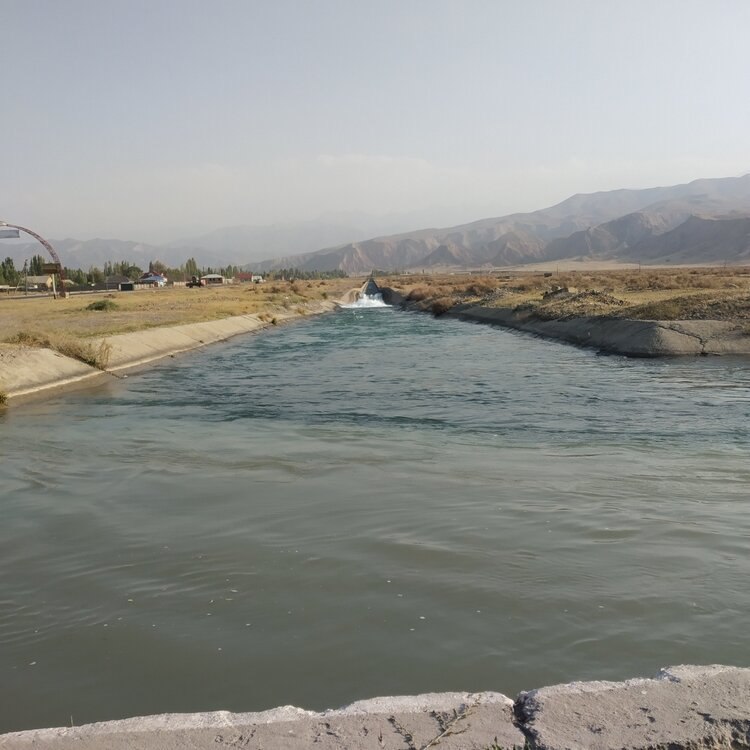
On December 4–5, Kazakhstan’s Deputy Prime Minister Kanat Bozumbayev, accompanied by Minister of Water Resources and Irrigation Nurzhan Nurzhigitov and Minister of Agriculture Aidarbek Saparov, visited the southern regions of Turkistan, Kyzylorda, and Zhambyl. The delegation met with local farmers to address the growing risks posed by declining transboundary water inflows and to discuss measures to ensure efficient water use during the 2026 irrigation season. Agriculture in these arid regions depends heavily on water from the Syr Darya River, which originates in Kyrgyzstan. According to the Ministry of Water Resources and Irrigation, Kazakhstan’s agricultural sector consumed 11.01 billion cubic meters of water during the 2025 irrigation season, with 98% used in the south. The Zhambyl region irrigated 79,000 hectares using 1 billion m³ of water and remains largely reliant on upstream supplies from Kyrgyzstan. This past season, Kyrgyzstan committed to providing more than 600 million m³ of water to Kazakhstan via the transboundary Chu and Talas rivers. The Kyzylorda and Turkistan regions were the largest consumers of irrigation water, drawing 3.5 billion m³ and 3.4 billion m³, respectively, to irrigate 125,000 and 400,000 hectares. Officials presented water inflow forecasts for 2026 and outlined measures to improve efficiency amid declining water availability. The Syr Darya basin continues to experience low-flow conditions, with reduced inflows into the Naryn-Syr Darya system threatening irrigation supplies for the upcoming growing season. Farmers were urged to adopt water-saving technologies, limit the cultivation of water-intensive crops, diversify planting, and transition to drought-resistant varieties. Bozumbayev noted that during the recent session of the Interstate Water Coordination Commission in Ashgabat, participating countries projected a further decline in water inflows for 2026. He warned that the Toktogul Reservoir in Kyrgyzstan, located on the Naryn River, a key tributary of the Syr Darya, may reach record-low levels, putting irrigation supplies at serious risk. “Given the continued decline in available water resources, there is a real risk of shortages during the next growing season. This is a natural challenge faced by all Central Asian countries. To minimize the impact, we must accelerate crop diversification and the introduction of water-saving irrigation technologies. The state has created all the necessary conditions for this. This is not simply about conserving water; the country’s water and food security depend on it,” Bozumbayev said. To support adoption of efficient irrigation systems such as drip and sprinkler technologies, the government has increased reimbursement for farmers' costs from 50% to 80%, on drilling wells and installing irrigation equipment. A differentiated irrigation tariff has also been introduced: for farmers using water-saving technologies, the subsidy on irrigation water has been raised from 60% to 85%. These measures have helped expand the area under modern irrigation systems from 312,200 hectares in 2023 to 580,000 hectares in 2025, representing 30% of all irrigated farmland. The government aims to increase this figure to 1.3 million hectares, or 70% of total irrigated land, by 2030. In Kyzylorda, the country’s main rice-producing region, the Ministry of Agriculture has announced that rice cultivation in 2026 must not...

China’s Expanding Electric Bus Footprint in Central Asia

In recent years, there has been a visible increase in electric vehicle exports from China to Central Asia. Although much public attention goes to electric cars, the spread of Chinese electric buses across the region is equally meaningful. Kyrgyzstan provides a clear example of this trend, where manufacturers such as Yutong and Anhui Ankai Automobile have become important actors in the country’s effort to modernize its public transport system. Through the Asian Development Bank-funded Urban Transport Electrification Project, Kyrgyzstan purchased 120 battery electric buses from Anhui Ankai Automobile. A complementary initiative by the European Bank for Reconstruction and Development under its Green City program is supporting the delivery of 95 new 12-meter Yutong buses. The first batch of 20 Yutong vehicles reached the country in November 2025, marking a practical step forward in Kyrgyzstan’s shift toward cleaner transportation. Mutual Benefits and Strategic Alignment Cooperation in the electric bus sector offers advantages for China and Kyrgyzstan in different but interconnected ways. For Chinese companies, emerging markets such as Kyrgyzstan present new commercial openings at a time when access to some advanced markets faces stricter regulatory conditions. Exporting electric buses to Central Asia allows Chinese manufacturers to diversify revenue streams while strengthening their global presence. The growing visibility of Chinese green technologies also fits within the broader vision of the Green Silk Road, which aims to reinforce an image of China as a partner in sustainable development. China’s involvement in Kyrgyzstan’s electric mobility market broadens the scope of bilateral engagement. Previous cooperation often focused on large infrastructure and energy projects. The addition of electric mobility creates a more diversified framework that touches directly on urban life and community-level benefits. Opportunities for Kyrgyzstan’s Green Transition Kyrgyzstan stands to gain significantly from the expansion of electric public transport, especially with the support of multilateral development banks. Access to affordable and modern electric buses enables cities to renew outdated fleets and reduce their reliance on conventional diesel-powered vehicles. Environmental and public health benefits are among the most important outcomes. The transportation sector accounts for an estimated 28% of Kyrgyzstan’s national greenhouse gas emissions, making a transition to cleaner mobility essential for meeting sustainability goals. Electric buses can reduce air pollution in densely populated areas and improve overall urban health. Kyrgyzstan’s electricity mix relies heavily on domestically generated renewable energy, particularly hydropower. This makes the shift to electric mobility even more beneficial. When electric buses are powered by renewable sources, the overall carbon footprint of the fleet is significantly lower. Reduced dependence on imported fossil fuels further strengthens national energy security. A Gradual but Meaningful Transformation The growing presence of Chinese electric buses in Kyrgyzstan reflects a broader regional transformation. Public transport electrification is becoming an important element of Central Asia’s green development path. While challenges remain in finance, maintenance, and charging infrastructure, the overall direction is clear. Partnerships that bring together Chinese manufacturers, multilateral development institutions, and Central Asian governments are creating new opportunities for sustainable mobility. For Kyrgyzstan, these developments support cleaner cities and...

Journal Retracts Climate Study After Discovering Errors in Uzbekistan’s Economic Data

The scientific journal Nature has retracted a high-profile article on the economic impacts of climate change after significant inaccuracies were discovered in economic data related to Uzbekistan. The study, originally published online on April 17, 2024, examined how rising global temperatures could affect economic output by mid-century. According to the retraction notice, the dataset contained serious errors in Uzbekistan’s economic indicators from 1995 to 1999, which substantially altered the study’s findings. The authors acknowledged that the results were highly sensitive to the inclusion of Uzbekistan. Upon review, they found the country’s reported economic figures during that period were inaccurate. They also noted additional complications, including inconsistencies caused by transitions between data sources, and the failure to fully account for long-term economic trends. Another methodological issue, spatial auto-correlation, which affects uncertainty estimates, had not been incorporated into the original analysis. Once the authors corrected the dataset and adjusted their methodology, the study’s conclusions changed significantly. Specifically, the projected range of climate-related economic damages by 2050 shifted from 11-29% to a broader 6-31%. The statistical likelihood that damages would differ significantly under various emissions scenarios by mid-century also fell, from 99% to 90%. Due to the scale of these changes, the authors concluded that a simple correction was insufficient and opted for a full retraction. A revised version of the study, updated with corrected data and improved methodology, has been made publicly available but has not yet undergone peer review. The authors plan to resubmit the article, and Nature has stated it will update the retraction notice if the revised version is accepted for publication. The researchers thanked the members of the scientific community who identified the discrepancies, and emphasized the importance of transparent corrections in climate science.

Central Asian Countries Agree on 2026 Water Allocations from Amu Darya and Syr Darya

Central Asian states have reached an agreement on water allocations from the Amu Darya and Syr Darya rivers for 2026. The decision was made during the 91st meeting of the Interstate Coordination Water Management Commission (ICWC), held in Ashgabat on November 13, 2025, according to Kun.uz. At the meeting, the countries agreed on how water resources will be managed during the 2025–2026 non-growing season, the period when agricultural demand is low. For the Amu Darya, the total allocation from October 2025 to October 2026 is set at approximately 55.4 billion cubic meters, with 15.9 billion cubic meters designated for the cold months from October through April. Under the agreement, Tajikistan will receive 9.8 billion cubic meters, while Turkmenistan and Uzbekistan will each receive 22 billion. A key provision is that roughly 44 billion cubic meters of the Amu Darya’s flow must reach the Kerki hydrological station in Turkmenistan to sustain downstream areas. Additionally, 4.2 billion cubic meters is allocated to support the Aral Sea and the Amu Darya delta, with half to be delivered in winter and early spring. Another 800 million cubic meters will be used for irrigation in Dashoguz, Khorezm, and Karakalpakstan. These allocations are crucial for both communities living in water-scarce regions and for preserving fragile river ecosystems. For the Syr Darya, the total allocation for the non-growing season is 4.219 billion cubic meters. Of this, Uzbekistan will receive the majority share, 3.347 billion cubic meters. Kazakhstan will receive 460 million cubic meters through the “Dustlik” canal, Tajikistan 365 million, and Kyrgyzstan 47 million. These figures are based on projected river inflows, reservoir capacities, and the need to maintain ecological flows. The ICWC also approved operational plans for key reservoirs. In Tajikistan, the Nurek Reservoir is expected to enter the non-growing season with 10.5 billion cubic meters and decline to around 9.7 billion by spring. The Tuyamuyun reservoir, located on the Uzbekistan–Turkmenistan border, will start with 4.5 billion cubic meters and reduce to 3.4 billion. Both will gradually release water to support irrigation and sustain the Amu Darya’s flow. In the Syr Darya basin, total water volume in the Toktogul, Andijan, and Charvak reservoirs at the beginning of the season is approximately 10.6 billion cubic meters, slightly below average. Tajikistan’s Bahri Tojik reservoir is expected to contain 2.6 billion cubic meters, while Kazakhstan’s Chardara reservoir will hold about 1.65 billion. Collectively, the Syr Darya basin will have around 14.9 billion cubic meters of water at the start of winter, roughly 90% of the long-term seasonal average. The 92nd ICWC meeting is scheduled to take place in Dushanbe, where officials will assess reservoir performance and water usage during the 2025-2026 season. The agenda will also include strategies to strengthen regional water security in the face of escalating climate pressures.

Russia Revives Plan to Redirect Siberian Rivers as Central Asia Faces Worsening Water Crisis

The long-contested idea of diverting Siberian rivers to Central Asia has re-emerged after the Russian Academy of Sciences announced on November 14 that it is studying a new version of the project. The updated proposal revives elements of a Soviet-era plan from the 1970s and 1980s that aimed to channel water from the Ob River basin to arid regions of Central Asia. This time, however, the focus is on a closed pipeline system, rather than open canals, to transport large volumes of water to countries facing acute shortages, particularly Uzbekistan, according to Fergana News. Discussions within the Russian Academy had reportedly already begun prior to the announcement. Researchers are now calling on Russia’s Ministry of Science and Higher Education to include a full study of the project in its state research plan. They argue that Central Asia is entering a critical phase of water scarcity that demands long-term strategic solutions. The renewed interest comes amid escalating water stress across the region. Rapid population growth, retreating glaciers, and intensifying irrigation demands have pushed existing water systems to their limits. While some view the proposed pipeline as a potential lifeline for stabilizing regional water supplies, environmental concerns remain central to the debate, echoing the very reasons the original project was shelved. A Long History of Controversy The idea of redirecting northern rivers is not new. It was first proposed in the 19th century by Ukrainian-born engineer Yakov Demchenko, who envisioned transferring water from the Ob and Irtysh rivers to replenish the shrinking Aral Sea. In the Soviet period, the concept gained political traction. By the late 1960s, it had entered official planning discussions, prompting detailed studies by the Academy of Sciences, the State Planning Committee, and the Ministry of Water Resources. In 1970, the project was formally designated a state priority, with plans for transferring up to 25 cubic kilometers of water annually. Extensive technical documentation was produced, and construction began on supporting infrastructure, including the Irtysh-Karaganda canal. Designs for the main channel envisioned a span of more than 2,500 kilometers and a capacity exceeding 1,000 cubic meters per second. However, by 1986, the project was halted due to mounting economic pressures, scientific opposition, and growing awareness of potential environmental risks. Experts warned of large-scale flooding, disruptions to groundwater, damage to fish stocks, displacement of Indigenous communities, and unpredictable impacts on permafrost and regional climate systems. Renewed Debate in a Region Under Stress Though shelved in the late Soviet era, the project has resurfaced multiple times since the collapse of the USSR. Former Moscow mayor Yuri Luzhkov advocated for its revival in 2002, and Russian and Kazakh presidents discussed it publicly in 2010. Yet concerns about environmental and geopolitical ramifications have consistently stalled progress. Meanwhile, the water crisis in Central Asia has only deepened. Glaciers in the Tien Shan and Pamir mountains which feed the Amu Darya and Syr Darya rivers have shrunk by more than 25% in recent decades. The region’s population has grown to approximately 80 million, nearly 50% higher...