• KGS/USD = 0.01144 0%
  • KZT/USD = 0.00204 0%
  • TJS/USD = 0.10398 0%
  • UZS/USD = 0.00008 0%
  • TMT/USD = 0.28490 0%
  • KGS/USD = 0.01144 0%
  • KZT/USD = 0.00204 0%
  • TJS/USD = 0.10398 0%
  • UZS/USD = 0.00008 0%
  • TMT/USD = 0.28490 0%
  • KGS/USD = 0.01144 0%
  • KZT/USD = 0.00204 0%
  • TJS/USD = 0.10398 0%
  • UZS/USD = 0.00008 0%
  • TMT/USD = 0.28490 0%
  • KGS/USD = 0.01144 0%
  • KZT/USD = 0.00204 0%
  • TJS/USD = 0.10398 0%
  • UZS/USD = 0.00008 0%
  • TMT/USD = 0.28490 0%
  • KGS/USD = 0.01144 0%
  • KZT/USD = 0.00204 0%
  • TJS/USD = 0.10398 0%
  • UZS/USD = 0.00008 0%
  • TMT/USD = 0.28490 0%
  • KGS/USD = 0.01144 0%
  • KZT/USD = 0.00204 0%
  • TJS/USD = 0.10398 0%
  • UZS/USD = 0.00008 0%
  • TMT/USD = 0.28490 0%
  • KGS/USD = 0.01144 0%
  • KZT/USD = 0.00204 0%
  • TJS/USD = 0.10398 0%
  • UZS/USD = 0.00008 0%
  • TMT/USD = 0.28490 0%
  • KGS/USD = 0.01144 0%
  • KZT/USD = 0.00204 0%
  • TJS/USD = 0.10398 0%
  • UZS/USD = 0.00008 0%
  • TMT/USD = 0.28490 0%

Viewing results 361 - 366 of 831

Kazakhstan and China Begin Negotiations on Joint Use of Transboundary Rivers

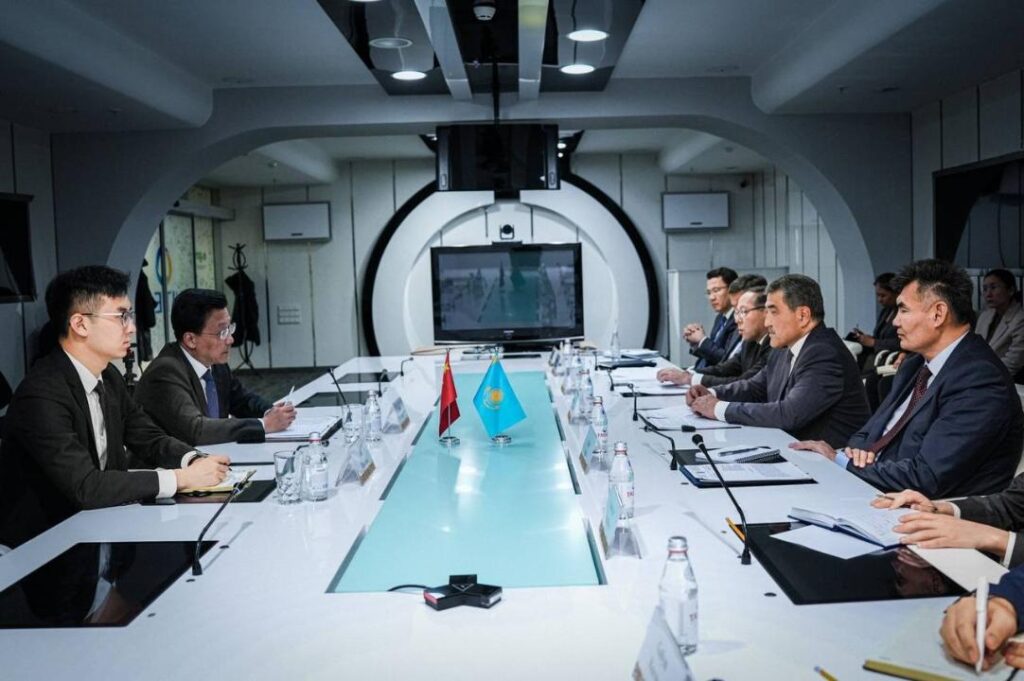
On November 1, Kazakhstan’s Minister of Water Resources and Irrigation Nurzhan Nurzhigitov met with Zhang Xiao, the Chinese Ambassador to Kazakhstan, to discuss bilateral water cooperation and the joint use and distribution of water from transboundary rivers. Three large rivers in Kazakhstan — the Ertis, the Ile, and the Emel — originate in China. The two countries established a special working group of experts to negotiate the provision of water to the Ile-Balkhash basin and develop fisheries and tourism in the region. The Ministry of Water Resources and Irrigation of Kazakhstan intends to sign a memorandum of cooperation with the Ministry of Water Resources of China shortly. The Kazakh minister and Chinese ambassador discussed joint modernization and automation of Kazakhstan's water infrastructure, production and use of water-saving technologies, and advanced training of Kazakhstani water specialists in China. Late in August, The Times of Central Asia reported that the Kapchagay reservoir outside Almaty was full for the first time in ten years. The reservoir collects water from the Ile (or Ili) River, which originates in China and is meant to regulate the river's flow on its way to Kazakhstan’s largest lake, Balkhash.

EBRD and EU Support Solar Power Project in Uzbekistan

The European Bank for Reconstruction and Development (EBRD) is providing funds to construct a solar power plant in Uzbekistan’s Khorezm region. The EBRD’s financial package of up to $54.6 million (€50.5 million) will be provided to Sarimay Solar, a special-purpose company fully owned by Voltalia, an international energy producer and service provider based in France. The package will consist of a senior loan of up to $44.8 million (€41.5 million) and a special facility of €9 million, which will support Sarimay Solar during construction. The project will benefit from an unfunded guarantee covering a senior loan tranche of $7 million (€6.5 million) provided by the European Union’s European Fund for Sustainable Development Plus. The financing will help Sarimay Solar construct and operate a 100 MWac (126MWdc) greenfield solar photovoltaic plant, contributing to Uzbekistan’s aim of further decreasing its reliance on carbon-intensive thermal power generation and developing up to 25 GW of solar and wind capacity by 2030. Once operational, the plant is expected to generate up to 252 GWh of electricity yearly and reduce annual CO2 emissions by more than 141,000 tons. For the fourth year in a row, Uzbekistan has been the leading recipient of EBRD funding in Central Asia. The Bank has invested around €4.9 billion in 167 projects across the country, most of which support private entrepreneurship.

IFC Increases Investments in Central Asia

The International Finance Corporation (IFC), a member of the World Bank Group, says it committed $1.04 billion in Central Asia in the fiscal year 2024, which started on July 1, 2023, and ended on June 30, 2024. The funds comprised over $400 million in long-term financing from IFC’s account, $600 million in mobilization, and $35 million in short-term trade and supply-chain finance to facilitate trade flows. The funds, coupled with advisory support, aimed to increase private sector participation, create jobs, boost financial inclusion, bolster infrastructure, and support the region’s green transition. Priority sectors included finance, capital markets, renewable energy, agriculture, and infrastructure. Over the last fiscal year, IFC-supported projects in the Central Asian region created about 35,000 jobs, including more than 13,000 for women. Strengthening local financial markets is among its key objectives. To that end, the IFC invested $228 million in 10 financial institutions in Kazakhstan, Kyrgyzstan, Tajikistan, and Uzbekistan, with up to half earmarked for women entrepreneurs and rural enterprises. The IFC also supported local financial institutions in growing their micro, small, and medium enterprises (MSME) businesses, advancing climate finance and digital transformation, and issuing the first-ever sustainability, social, and green bonds. The IFC and the World Bank financed a new solar plant with the country’s first battery energy storage system to support Uzbekistan's green transition and climate action. The plant is expected to provide electricity access to approximately 75,000 households in the Bukhara region. In Tajikistan, the IFC invested in the country’s first green bond, issued by Eskhata Bank. The bond will support climate-smart projects and MSMEs undertaking environmental projects. In Kazakhstan and Kyrgyzstan, in addition to investments to increase financial inclusion, the IFC has been evaluating new advisory and investment opportunities, including PPPs in areas such as drinking water supply, renewable energy (including geothermal solutions for heating and cooling), railway projects as part of the Middle Corridor, and the first municipal green bonds in Central Asia. The IFC also supports Kazakhstan's accelerated methane mitigation efforts, which align with the Global Methane Pledge. Wiebke Schloemer, the IFC’s Director for Türkiye and Central Asia, reiterated its commitment to the region: “Over the past 20 years, the region has seen substantial development, with an average annual growth rate of 6.2 percent. Central Asia must leverage the green transition to boost private investment, strengthen connectivity, and reduce resource dependency to continue this growth. The IFC aims to address these goals and continue to deliver solutions where we are needed most — from increasing access to finance for farmers and women entrepreneurs to creating jobs to continue to help countries transition to net zero.”

IFC Provides $240 Million Loan to Boost Uzbekistan’s Renewable Energy

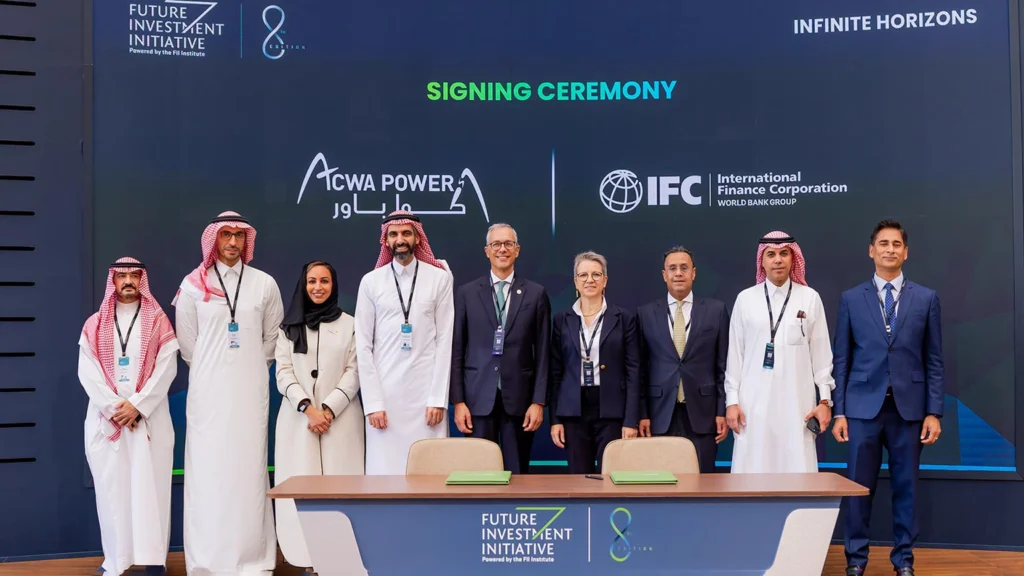
The IFC has announced a $240 million Islamic Equity Bridge Loan for ACWA Power to boost Uzbekistan’s renewable energy sector. The announcement was made at the 8th Future Investment Initiative conference in Riyadh, Saudi Arabia. The financing will cover a 1-gigawatt solar PV plant, a 668-megawatt Battery Energy Storage System (BESS), and around 500 kilometers of high-voltage transmission lines. These projects aim to advance Uzbekistan’s clean energy goals, potentially cutting greenhouse gas emissions by 1.3 million tons of CO2 annually and generating around 2,400 gigawatt hours of electricity per year. Al Muhaidib, ACWA Power's Chief Financial Officer, stated that “we are honored to collaborate with IFC on this transformative project in Uzbekistan, which embodies our shared vision of advancing sustainable energy solutions. This initiative will establish a new standard for cross-border ACWA Power recourse funding support, effectively addressing energy demands while championing environmental sustainability.” The $240 million financing, structured as an Islamic Finance Murabaha, includes an A-Loan of up to $227.75 million and a $12.25 million trust loan through IFC’s Managed Co-Lending Portfolio Program. This funding will support ACWA Power’s equity contributions to the project’s development over the next four years. By optimizing equity returns, this structure helps project developers offer competitive tariffs and attract private investors, advancing Uzbekistan’s goal of reaching 40% renewable energy by 2030. “This project reflects IFC’s commitment to tackling climate change, accelerating the clean energy transition in emerging markets, and supporting public and private sector entities in Saudi Arabia with innovative investments in the region and beyond,” said Laura Vecvagare, IFC’s Regional Head of Industry for Infrastructure and Natural Resources in the Middle East, Central Asia, Türkiye, Afghanistan, and Pakistan. Saudi company ACWA Power’s investment portfolio in Uzbekistan now includes eight projects worth over $6.8 billion, with a more than 5.5 GW design capacity. The company’s success highlights Uzbekistan as an attractive investment hub and a leader in renewable energy in Central Asia.

Report Addresses Air Pollution in Almaty

On October 30, the United Nations Development Programme (UNDP) in Kazakhstan, together with the Urban Center of Almaty Management University, presented the results of their joint efforts within the Green and Safe Streets Initiative, which aims to address air pollution in Kazakhstan’s largest city, Almaty. This initiative is part of the regional City Experiment Fund program funded by the Ministry of Finance of Slovakia. The Green and Safe Streets Initiative included three interrelated clusters of activities: a social impact campaign, tactical urban actions on Berezovsky, Turgut Ozal, and Kazybek bi streets in Almaty, and the installation of air pollution measuring devices, which resulted in the development of methodological recommendations. These actions helped identify further steps to address the complex challenge of improving air quality in Almaty. The actions and approaches implemented within the City Experiment Fund framework are expected to help reduce air pollution by increasing green spaces, introducing energy-efficient technologies in the housing sector, improving infrastructure for pedestrians and cyclists, and prioritizing public transport. According to IQAir, Almaty, along with the industrial city of Karaganda, has the highest level of air pollution in Kazakhstan and is among the 25 most polluted cities in the world. The primary sources of air pollution in Almaty are motor vehicles and private-sector and municipal heating that burns coal. During the winter, Almaty is covered by a deep smog that causes severe health problems and a high prevalence of respiratory diseases in the local population. According to an Asian Development Bank report, the decline in Almaty’s air quality is attributable to the city’s population growth, rapid urbanization, inefficient public transportation, and heavy reliance on coal for power generation and residential heating. The city’s valley setting exacerbates these factors, creating ideal conditions for solid temperature inversions during the late fall and winter that trap pollutants in the lower atmosphere. Additionally, the ADB report concludes that the city’s low wind speeds cause pollutants to accumulate and recirculate at the city's surface level.

Only Half of Kazakhstan’s CO2 Emissions are Subject to State Regulation

Environmentalists say that Kazakhstan's quota system for greenhouse gas emissions covers only half of the country's emissions. This means that the state only has real leverage over large industrial polluters. Experts say that the state needs to pay further attention in the near future to emissions in three sectors: agriculture, forestry, and waste management systems. These sectors currently remain virtually uncontrolled in terms of environmental emissions. Kazakhstan ratified the UN Framework Convention on Climate Change in 1995 and, in 2016, presented its plan to the world community for transitioning to a green economy and achieving carbon neutrality. The carbon neutrality strategy envisages a 15% reduction in the 1990 level of emissions by 2030 (from 386.3 to 328.4 million tons of CO2) and achieving a net zero balance of greenhouse gases by 2060. The country has implemented a quota system for greenhouse gas emissions, and any industrial facility with emissions exceeding 20,000 tons of carbon dioxide per year is subject to quotas. However, those “polluters” whose activities result in emissions of 10 to 20 thousand tons of CO2 are subject to regulation and must report to the state for their emissions, but they are not subject to quotas. Finally, economic entities that do not even reach 10,000 tons of emissions are not obliged to notify the state about the environmental damage they cause. As a result, the state can regulate only half of emissions. Aigul Malikova, coordinator of the Central Asia Regional Environmental Network in Kazakhstan, explained to The Times of Central Asia: “In 2021, according to the national inventory, the actual volume of emissions across Kazakhstan amounted to 340 million tons, and quotas, including even additional ones, were issued for only 176 million, which means that only half of all greenhouse gas emissions fall under regulation, and in fact, we can affect only half of all emissions now. The situation is aggravated by the fact that in 2021, Kazakhstan produced one-third more emissions than the quotas granted; in 2022, this excess was 3%; that is, even regulated enterprises emit more than they are allowed under the quotas.” Malikova also noted there is no data for 2023. Still, it is already clear that the government needs to control not only major industrial polluters but also other sectors of the economy that need to be more accountable in terms of emissions regulation to achieve carbon neutrality. However, assessing their contribution to total emissions is difficult since they are not even legally required to submit reports. Paradoxically, such sectors include agriculture and forestry, which by definition should be environmentally “clean,” as well as the waste management system and housing and communal services. “For these three sectors - agriculture and forestry, waste management and housing, and communal services - data on greenhouse gas emissions could not be assessed at all. In the national reporting, this data is absent in the context of regions. In the reporting of the carbon cadastre, this data is also absent, and because they are not subject to quotas, no...