• KGS/USD = 0.01144 0%
  • KZT/USD = 0.00211 0%
  • TJS/USD = 0.10523 0%
  • UZS/USD = 0.00008 0%
  • TMT/USD = 0.28530 0%
  • KGS/USD = 0.01144 0%
  • KZT/USD = 0.00211 0%
  • TJS/USD = 0.10523 0%
  • UZS/USD = 0.00008 0%
  • TMT/USD = 0.28530 0%
  • KGS/USD = 0.01144 0%
  • KZT/USD = 0.00211 0%
  • TJS/USD = 0.10523 0%
  • UZS/USD = 0.00008 0%
  • TMT/USD = 0.28530 0%
  • KGS/USD = 0.01144 0%
  • KZT/USD = 0.00211 0%
  • TJS/USD = 0.10523 0%
  • UZS/USD = 0.00008 0%
  • TMT/USD = 0.28530 0%
  • KGS/USD = 0.01144 0%
  • KZT/USD = 0.00211 0%
  • TJS/USD = 0.10523 0%
  • UZS/USD = 0.00008 0%
  • TMT/USD = 0.28530 0%
  • KGS/USD = 0.01144 0%
  • KZT/USD = 0.00211 0%
  • TJS/USD = 0.10523 0%
  • UZS/USD = 0.00008 0%
  • TMT/USD = 0.28530 0%
  • KGS/USD = 0.01144 0%
  • KZT/USD = 0.00211 0%
  • TJS/USD = 0.10523 0%
  • UZS/USD = 0.00008 0%
  • TMT/USD = 0.28530 0%
  • KGS/USD = 0.01144 0%
  • KZT/USD = 0.00211 0%
  • TJS/USD = 0.10523 0%
  • UZS/USD = 0.00008 0%
  • TMT/USD = 0.28530 0%

Viewing results 739 - 744 of 3379

U.S. Senator Says Epstein Targeted Women, Girls in Turkmenistan, Other Countries

Is there a Central Asia connection to the Jeffrey Epstein sex trafficking investigation? U.S. Senator Ron Wyden, a Democrat, is urging the U.S. Department of Justice to trace financial transactions that he says show Epstein used Russian banks to process payments in a sex trafficking scheme that targeted women from Turkmenistan and other countries. Wyden, the top Democrat on the Republican-controlled Senate Finance Committee, said in a statement this month that committee investigators were allowed to look at some Epstein records in the Treasury Department building while President Joe Biden was in office last year. The files detail several thousand wire transfers totaling more than $1 billion going in and out of just one of Epstein’s bank accounts, he said. “The file shows Epstein used multiple Russian banks, which are now under sanctions, to process payments related to sex trafficking,” Wyden said. “A lot of the women and girls he targeted came from Russia, Belarus, Turkey, and Turkmenistan. You shudder to think about the kinds of people who must have been involved in trafficking these women and girls out of those countries and into Epstein’s web of abuse.” The administration of President Donald Trump had promised openness in the Epstein case but has since angered some supporters by declining to release more documents about the disgraced financier, who died in jail in 2019 while awaiting trial after being charged with the sex trafficking of minors. The official cause of death was suicide. Conspiracy theories have swirled over the circumstances of Epstein’s death, his relationships with wealthy and influential people, and how he was able to avoid scrutiny for so long. Investigative journalist Julie K. Brown, who conducted key reporting on the Epstein case, noted Wyden’s efforts as well as what she described as “some resistance” from justice and treasury officials. She spoke in an interview with The Daily Beast podcast this week. “Senator Ron Wyden is looking into the financial aspect of Epstein’s crimes and there’s some evidence that he was doing business overseas and I think that’s the next front that we have to look at, is to follow the money – how he made his money, who he was paying, who he was getting money from,” said Brown, author of Perversion of Justice: The Jeffrey Epstein Story. Turkmenistan has not made significant efforts to meet basic standards for the elimination of human trafficking but has taken some steps to address the problem, according to a U.S. Department of State report in 2024.
Kazakhstan and Turkey Tighten Ties Amid Shifting Caspian Dynamics

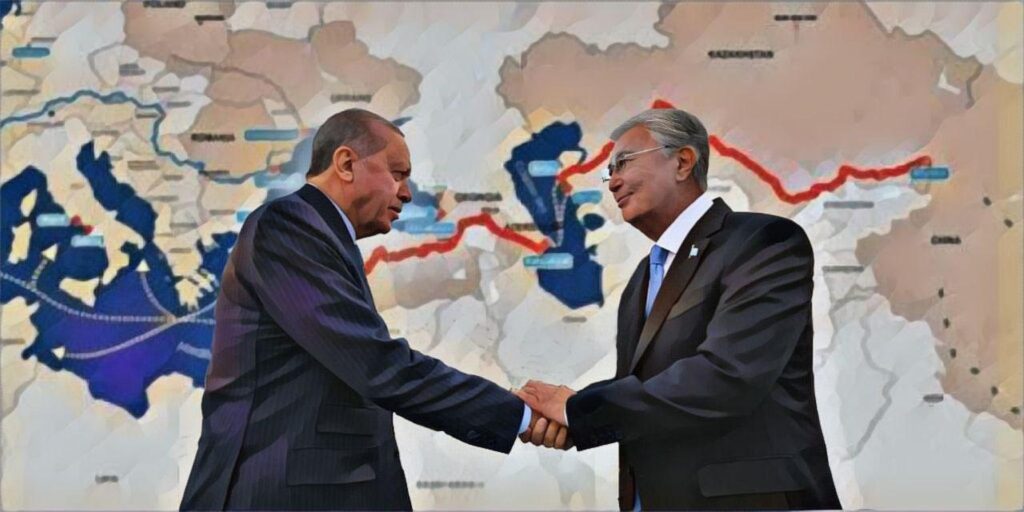
Kazakhstan’s President Kassym-Jomart Tokayev arrived in Turkey on an official visit late on Monday, where he held talks with President Recep Tayyip Erdoğan. The two leaders went on to co-chair the fifth meeting of the Kazakhstan–Turkey High-Level Strategic Cooperation Council. Coming amid heightened tensions in the Caspian region, particularly between Russia and Azerbaijan, the trip appears aimed at recalibrating regional dynamics, though analysts say its full implications remain unclear. Tokayev’s visit ended on a ceremonial high, as Erdoğan bestowed upon him the Devlet Nişanı, Turkey’s highest state honor. Accepting the award, Tokayev — who noted he had previously declined both domestic and foreign distinctions — thanked the Turkish president and people, highlighting Kazakhstan’s political and economic achievements. Erdoğan, in turn, praised Kazakhstan as the “center of peace and stability in its region.” Yet with Kazakhstan straddling both Central Asia and the Caspian basin — each a strategic priority for Ankara — it remains unclear which “region” Erdoğan had in mind. Much of the visit, however, played out behind closed doors. The official press release offered only general statements and few specifics. But the images released were polished and plentiful. Ahead of the summit, Tokayev met with prominent Turkish business leaders already active in Kazakhstan or planning future investments in the country’s economy. Political analyst Adil Kaukenov, a China specialist, weighed in on Tokayev’s business meetings via his Telegram channel, stating that the main topics were processing and logistics. His colleague Daniyar Ashimbayev, meanwhile, interpreted the visit as evidence that Astana is pursuing the foreign policy course it deems necessary. “I have already written about the logistical and geopolitical rivalry between Central Asia, the South Caucasus, and Asia Minor,” Ashimbayev observed. “A strange situation even arose when Kazakhstan signed one agreement on the Trans-Afghan Highway with Kabul, and Tashkent signed another. Or the constant discussion between Tashkent and Baku on the development of the Trans-Caspian corridor without the participation of Ashgabat and Astana. Tensions have risen in relations between Baku and Moscow, which could jeopardize Caspian logistics. Against this backdrop, the Kazakh authorities are methodically pushing through their agenda.” Ashimbayev also recalled Kazakhstan’s recent diplomatic successes, such as securing EU sanctions exemptions for agricultural and coal exports. “In this regard, Tokayev’s trip to Ankara was intended to resolve possible contradictions and misunderstandings in bilateral relations,” Ashimbayev concluded. While official sources emphasized economic and cultural-humanitarian cooperation as the main themes of the visit, Ashimbayev hinted that more sensitive topics may have been discussed privately. “The Turkish release mentions that the parties discussed defense issues, while the Kazakh release says they talked about IT,” he noted. “But by and large, the meaning of the talks is that both leaders calmly sorted out mutual issues, with no one acting as a supplicant or ‘vassal’ (as is sometimes the case at similar meetings). Kazakhstan methodically focused on the issues of interest to it and correctly discussed the issues raised by the host of the summit.” A closer analysis of publications on Akorda, the Kazakh presidential...

EU–Kazakhstan Relations: Strategic Cooperation Amid Geopolitical Shifts

In a recent podcast discussion, EU Ambassador to Kazakhstan Aleška Simkić and Kazakhstan’s Ambassador to the EU and NATO, Roman Vassilenko, discussed the evolving relationship between the European Union and Kazakhstan and broader Central Asia. Their exchange offered insight into the shared strategic interests driving EU–Kazakhstan cooperation across trade, energy, critical raw materials, connectivity, and mobility. Trade and Investment: A Stable Foundation Trade and investment continue to underpin the relationship; the European Union remains Kazakhstan’s largest trading partner and top foreign investor. Bilateral trade reached $49.7 billion in 2024, with the majority comprising energy exports from Kazakhstan, highlighting its role as a key supplier to European markets. The EU collectively accounts for a significant share of Kazakhstan’s FDI, equal to €54.8 billion in 2022, representing approximately 50–55% of Kazakhstan’s total FDI. The Enhanced Partnership and Cooperation Agreement (EPCA), in effect since 2020, underpins the EU–Kazakhstan bilateral relationship, providing a legal framework for cooperation across 29 sectors. As noted by both ambassadors, it enables structured dialogue on trade, energy, governance, and sustainability. While political engagement has increased, both sides acknowledge that deeper implementation is needed to fully leverage the EPCA in line with the EU’s broader strategy for Central Asia. Roman Vassilenko acknowledged the recent momentum: “I think the relationship between Kazakhstan and the EU has strengthened tremendously over the past three and a half years. With a relatively new Commission in place in Brussels, and with the President of Kazakhstan committed to strengthening ties with the European Union as part of our balanced and pragmatic foreign policy, we are at a moment where we can truly advance, deepen, and strengthen our relations in many ways.” [caption id="attachment_34435" align="aligncenter" width="1431"] EU Ambassador to Kazakhstan, Aleška Simkić (left) with Kazakhstan’s Ambassador to the EU and NATO, Roman Vassilenko (right); Image: EU Delegation to Kazakhstan.[/caption] Energy and Raw Materials: Strategic Realignment While energy has long anchored EU–Kazakhstan ties, both ambassadors emphasized a shift toward broader, forward-looking cooperation. Ambassador Vassilenko identified critical raw materials and green hydrogen as emerging areas of strategic importance, offering Kazakhstan opportunities to diversify its economy while supporting the EU’s green transition. Kazakhstan, with its mineral wealth and renewable energy potential, is well-positioned to contribute to Europe’s supply chain resilience in clean technologies. The country’s abundant reserves of critical minerals—such as rare earths, copper, lithium, and cobalt—align with Europe’s need to diversify sources for its green transition. Coupled with growing investment in renewable energy and deepening cooperation with European partners, Kazakhstan stands out as a strategic supplier for clean-tech industries. Both envoys stressed the importance of moving from basic resource exports toward long-term industrial partnerships — including local processing, infrastructure development, and regulatory alignment — as a means of ensuring mutual benefit. Connectivity: The Middle Corridor and Infrastructure Links Connectivity also features prominently. The Trans-Caspian International Transport Route, or “Middle Corridor,” is increasingly viewed as a viable overland route connecting China to Europe via Kazakhstan. Cargo volumes have risen, and both the EU and regional stakeholders are investing in capacity...

Kazakhstan Faces Turbulence as External Pressures Mount

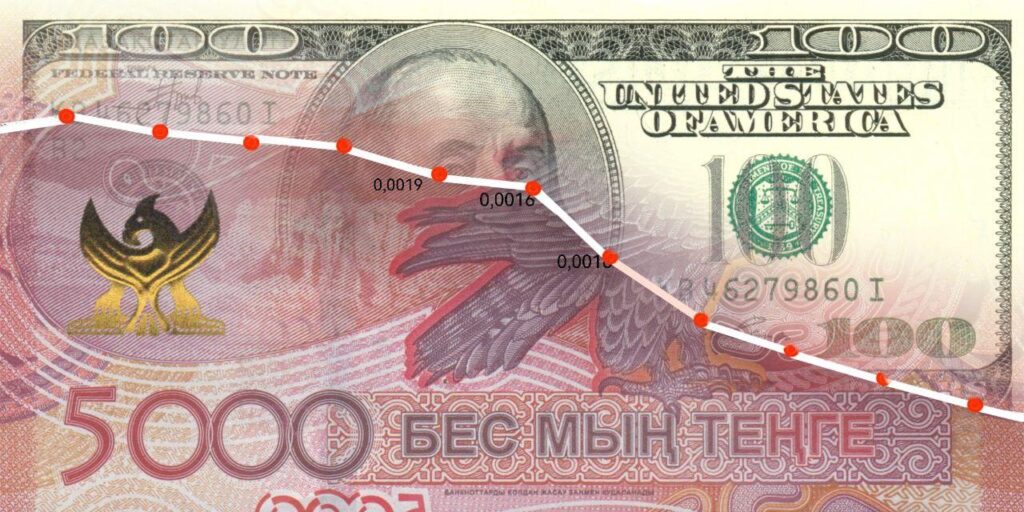
Kazakhstan, Central Asia’s largest economy, is facing a convergence of pressures that President Kassym-Jomart Tokayev and National Bank Chairman Timur Suleimenov must now manage simultaneously, from currency depreciation and geopolitical turmoil to volatile oil markets and contentious fiscal reforms, that are testing its economic resilience. Geopolitical Pressures Escalate By mid-2025, it had become increasingly apparent that Kazakhstan has limited capacity to influence global geopolitical dynamics. Like many “middle powers,” the country must adapt to the actions of larger states, whose unpredictable decisions continue to exert downward pressure on the tenge and fuel inflation. On July 28, U.S. President Donald Trump shortened a previously issued 50-day ultimatum to Russian President Vladimir Putin, giving him just 10-12 days to agree to a peace deal with Ukraine. This development added to the mounting uncertainty already impacting Kazakhstan’s economy. As previously reported by The Times of Central Asia, analysts warn that Trump’s secondary sanctions, 100% tariffs targeting Russia’s trading partners, could potentially be extended to Kazakhstan and other Central Asian economies. Though Kazakhstan is not among Russia’s largest trading partners, its economic links to Moscow are still substantial. The country relies heavily on imports from Russia, including electricity, gasoline, food, and medicine. Adding to the pressure, on July 7, Trump announced a 25% tariff on Kazakhstani goods, effective August 1, 2025. While $1.8 billion of Kazakhstan’s $2 billion in exports to the U.S. (mostly oil, metals, and rare earth elements) are exempt, the move has nonetheless rattled Kazakhstan’s already fragile industrial sector and spooked investors. Oil price instability, largely driven by Western efforts to curtail Russian exports, also poses a major risk. Oil revenues make up the bulk of Kazakhstan’s export income and are a key source of budget financing. Further complicating matters, new Russian restrictions require foreign tankers to obtain Federal Security Service (FSB) approval before accessing key Black Sea ports. This affects the Caspian Pipeline Consortium (CPC), which handles more than 80% of Kazakhstan’s oil exports and is partly owned by U.S. firms Chevron and ExxonMobil. Reuters estimates the new rules could disrupt over 2% of global oil supply. Tenge Hits Historic Low As of July 28, the tenge dropped to a record low of 544.87 per U.S. dollar. The depreciation is driving up the cost of imports, an acute problem in an import-dependent economy, pushing more families to spend over half their income on food. Companies with debt obligations in U.S. dollars are also seeing their liabilities grow, worsening the investment climate and prompting firms to scale back on planned expansions. Central Bank Warns Against Intervention National Bank Chairman Timur Suleimenov cautioned against government intervention in currency markets, a position supported by President Kassym-Jomart Tokayev, who has repeatedly cautioned against short-term administrative measures that can destabilize the economy. Suleimenov noted that past attempts to control the exchange rate led to abrupt and damaging devaluations. Suleimenov attributed the tenge’s vulnerability to rising fiscal injections and an 18% increase in the money supply, stressing that without parallel growth in GDP and industrial output,...

Turkmenistan’s Strategic Reentry into Gas Diplomacy

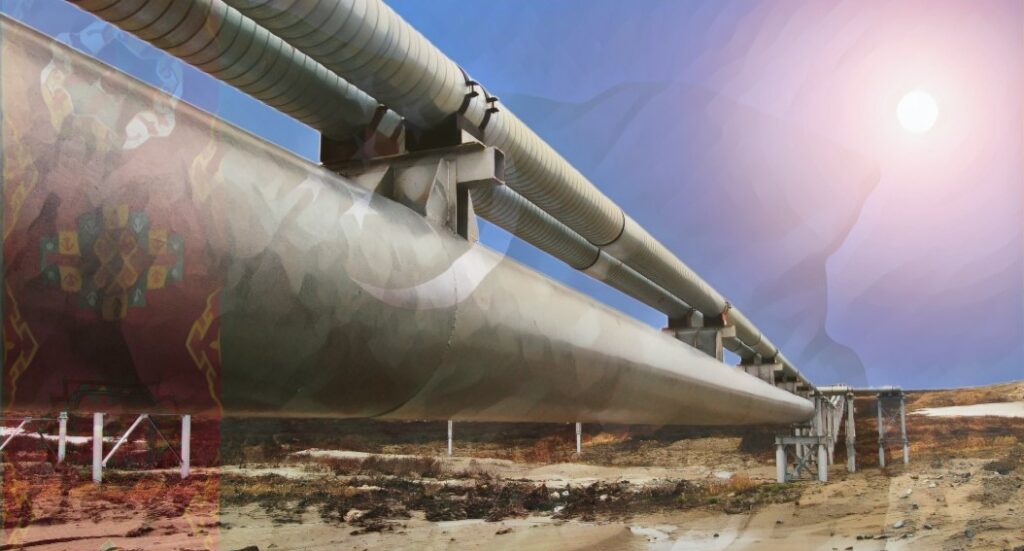
Turkmenistan holds the world’s fourth-largest proven gas reserves. And yet, its energy diplomacy has until quite recently remained inert. The paradox is systemic: it possesses more gas than infrastructural escape routes; yet as demand for non-Russian energy rises across Eurasia’s westward axis, Ashgabat’s relevance grows, not so much because it radically evolves but because the system around it does. Historically, 80–90% of Turkmen gas has flowed east through the Central Asia–China pipeline, sometimes called the Turkmenistan–China corridor. The dependency is acute, and the pricing asymmetrical. Previous efforts to increase flows in other directions — across Iran, via Azerbaijan, southward to South Asia, or across the Caspian Sea — have been dashed on the rocks of logistics and geopolitics. The early 2000s were especially pivotal, when Turkmenistan's delay in engaging with the EU’s Southern Gas Corridor initiative shaped a decade of missed leverage. What we are seeing now is not a late start but a late modulation of the country's energy vectors across weakly emerging paths. Geoeconomic Constraints as Strategic Catalysts Dependency on China as a monopsonist (sole purchaser) implies not just limited diversification but two deeper vulnerabilities. First, price-setting mechanisms remain inscrutably opaque. Second, the lack of alternative outlets structurally reinforces the asymmetry. Attempts to broaden options through Iran or Azerbaijan, though nominally ongoing, rely more on swaps than corridors, and even these are uneven. The Dauletabad–Sarakhs–Khangiran pipeline, completed in 2010, should have represented a minor second axis. However, it operates at a trickle, if at all, due to Iran's past failure to pay contracted sums in a timely fashion, requiring international arbitration. Another example is the Turkmenistan–Afghanistan–Pakistan–India (TAPI) pipeline, discussed since the 1990s, and in which India lost interest two decades ago. TAPI remains on hold, hampered by Afghanistan’s security volatility and a practical lack of commercial prospects that produce financing shortfalls. The Trans-Caspian Gas Pipeline (TCGP) was long stalled by legal uncertainties over Caspian Sea seabed rights and opposition from Russia and Iran. Even since the sea’s status under international law was settled by the Caspian Convention, signed in 2018, planning for this pipeline remains somnolent, despite its removal of many legal barriers to TCGP construction. Swap agreements are usually regarded as workaround tools, but for Turkmenistan, they have become more permanent structural mechanisms, allowing Ashgabat to insert itself into third‑party supply chains without transit risk. Iran’s infrastructure is unreliable but offers compression and metering; Azerbaijan’s network enables reverse flows and flexibility. A modest but symbolically important addition is the Dostluk field, a previously disputed offshore deposit between Azerbaijan and Turkmenistan in the Caspian Sea. A 2021 Memorandum of Understanding resolved maritime delimitation and designated the field for joint development. Even when summed all together, these vectors remain mainly null. Once seen as “backup” export routes, they have failed structurally. Turkmenistan, infrastructurally entangled yet geopolitically uncommitted, still lacks true backup and instead manages redundancy, maintaining multiple provisional export channels simultaneously. It must still respond adaptively to shifting constraints while balancing fragile options. Turkmenistan's Attempts to Rewire Its Client...

Opinion: Ghosts of the Gulag: Kazakhstan’s Uneasy Dance With Memory and Moscow

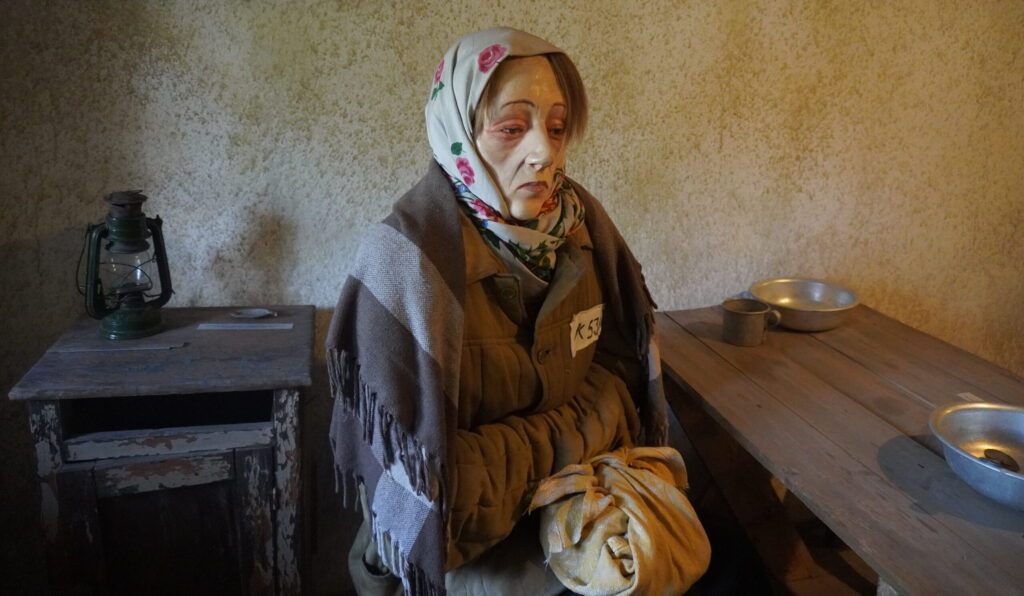
In May 2025, the authorities in Moscow unveiled a life-size bas‑relief sculpture of Josef Stalin in the Taganskaya metro station. The next month, a statue of Lenin was pulled down in Osh, Kyrgyzstan. Between these two symbolic acts lies Kazakhstan, caught in a tug-of-war over the memory of Soviet-era repression. Between 1920 and 1960, millions of prisoners were deported to more than fifty labor camps across what was later to become the Republic of Kazakhstan. Those who weren’t executed on the spot — political opponents, intellectuals, artists — were forced to work in mines, construction sites, or collective farms feeding Soviet industrial expansion. The death toll remains unknown but is believed to be in the millions. Today, this dark past draws in history buffs and thrill-seekers. But darktourism.com, the go-to website on the topic, warns them: forgotten cemeteries, ghost villages, crumbling camps — this gulag archipelago is well hidden in the steppes. No sign points the way to the Museum of Political Repression in Dolinka, housed in the former headquarters of Karlag, one of the largest camps of the Soviet Gulag system. The only other gulag transformed into a museum is ALZHIR, built on the ruins of the Akmola camp near Astana. It commemorates the 18,000 women imprisoned between 1939 and 1953 for being the wives of “traitors to the motherland.” These two museums now stand as official symbols of Soviet repression in Kazakhstan, and, more subtly, as frontline sites in a broader memory war across the former Soviet Union. Selective Memory When the museums were nationalized in the 2000s, their message became tightly controlled. Portraits and quotes from former president Nursultan Nazarbayev began to cover the walls. Guillaume Tiberghien, a specialist in dark tourism at the University of Glasgow, calls it a “selective interpretation of history.” The goal? To unify the country’s 160 ethnic groups under a shared narrative of collective suffering. At both Karlag and ALZHIR, guides emphasize acts of solidarity between Kazakh villagers and deportees — hospitality, compassion, bits of cheese tossed over barbed wire fences to feed the starving. [caption id="attachment_34338" align="aligncenter" width="2560"] Execution scene recreated at the Karlag museum; image: Manon Madec.[/caption] The past is staged. Between wax statues with sunken faces, sound effects mimicking heartbeats, and torture room reconstructions, the visitor is drawn into a visceral experience, sometimes at the cost of accuracy. “You wonder if the museum overdoes it to trigger emotion,” Tiberghien remarks. Margaret Comer, a memory studies expert at the University of Warsaw, explains: “It’s sometimes easier to mourn victims than to identify perpetrators.” [caption id="attachment_34337" align="aligncenter" width="2560"] Execution scene and fake blood, reconstructed in the Dolinka museum; image: Manon Madec.[/caption] The complicity of local Kazakhs is never addressed. Russian responsibility is blurred behind vague terms like “NKVD” or “Stalinist repression.” At ALZHIR, visitors learn only about Sergey Barinov — a Russian commandant described as cultured, discreet, and caring toward the women detained. The other two camp directors are never mentioned. In other former Soviet republics — Ukraine, the Baltics, Georgia — such...