• KGS/USD = 0.01144 0%
  • KZT/USD = 0.00191 0%
  • TJS/USD = 0.10798 0%
  • UZS/USD = 0.00008 0%
  • TMT/USD = 0.28571 0%
  • KGS/USD = 0.01144 0%
  • KZT/USD = 0.00191 0%
  • TJS/USD = 0.10798 0%
  • UZS/USD = 0.00008 0%
  • TMT/USD = 0.28571 0%
  • KGS/USD = 0.01144 0%
  • KZT/USD = 0.00191 0%
  • TJS/USD = 0.10798 0%
  • UZS/USD = 0.00008 0%
  • TMT/USD = 0.28571 0%
  • KGS/USD = 0.01144 0%
  • KZT/USD = 0.00191 0%
  • TJS/USD = 0.10798 0%
  • UZS/USD = 0.00008 0%
  • TMT/USD = 0.28571 0%
  • KGS/USD = 0.01144 0%
  • KZT/USD = 0.00191 0%
  • TJS/USD = 0.10798 0%
  • UZS/USD = 0.00008 0%
  • TMT/USD = 0.28571 0%
  • KGS/USD = 0.01144 0%
  • KZT/USD = 0.00191 0%
  • TJS/USD = 0.10798 0%
  • UZS/USD = 0.00008 0%
  • TMT/USD = 0.28571 0%
  • KGS/USD = 0.01144 0%
  • KZT/USD = 0.00191 0%
  • TJS/USD = 0.10798 0%
  • UZS/USD = 0.00008 0%
  • TMT/USD = 0.28571 0%
  • KGS/USD = 0.01144 0%
  • KZT/USD = 0.00191 0%
  • TJS/USD = 0.10798 0%
  • UZS/USD = 0.00008 0%
  • TMT/USD = 0.28571 0%
13 November 2025

Viewing results 1 - 6 of 5

The View From Ankara – President Tokayev’s Working Visit to Turkey

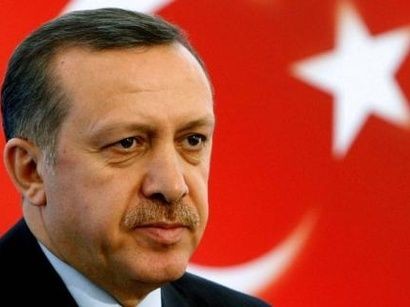
The official visit of President of Kazakhstan Kassym-Jomart Tokayev to Turkey on July 29, 2025, carries a multidimensional and strategic significance that extends far beyond the boundaries of diplomatic protocol. This engagement stands out as part of an ongoing multidimensional process of transformation marked by deepening regional alliances in the fields of science, energy, and logistics. Invited by President Recep Tayyip Erdoğan, Tokayev co-chaired the fifth meeting of the Turkey-Kazakhstan High-Level Strategic Cooperation Council. As a result of this summit, 20 bilateral agreements were signed, encompassing new frameworks of regional integration, especially in the fields of mining, energy, transportation, and higher education. Energy Diplomacy and Resource Geopolitics One of the most striking dimensions of the visit was the negotiation of new cooperation mechanisms aimed at transporting Kazakh oil to global markets via Turkey. According to President Tokayev, currently 1.4 million tons of Kazakh oil are transported annually through the Baku–Tbilisi–Ceyhan pipeline. Under the newly signed memoranda of understanding, the parties aim to increase this volume. This development not only strengthens Turkey’s ambition to become a regional energy hub but also holds critical importance for Kazakhstan’s strategy to diversify export routes and secure access to safe ports. Furthermore, the expressed intent of Turkish Petroleum Corporation (TPAO) to operate in Kazakhstan signals that the collaboration may extend beyond transport into production processes as well. Kazakhstan's reserves of rare earth elements and strategic minerals are of considerable value to both European and Asian economies prioritizing green energy transitions. In this context, the agreements signed in the mining sector may herald a new phase — one that mandates not only commercial but also technological and scientific R&D collaborations. Strategic Dimensions of the Middle Corridor Another key agenda item during the visit was the development and activation of the Trans-Caspian International Transport Route, commonly referred to as the ‘Middle Corridor.’ According to data shared by Tokayev, approximately 85% of road freight transported between China and Europe passes through Kazakhstan. This positions Kazakhstan as the backbone of the region’s logistics infrastructure. Turkey’s central role in the Middle Corridor makes it a decisive actor in the route’s integration with Europe. In this regard, Kazakhstan’s efforts to modernize its rail and road infrastructure, alongside its revival of maritime transport on the Caspian Sea, when combined with Turkey’s port capacity and transportation infrastructure, offer significant synergistic potential. These developments also underscore the strategic importance of the Zangezur Corridor and reinforce the value of uninterrupted transportation from China to Europe via Turkey, bypassing the Iranian route. Education and Academic Diplomacy The visit also drew attention for its scientific and cultural dimensions, in addition to its economic focus. Joint initiatives such as Gazi University’s planned establishment of a branch within the South Kazakhstan Pedagogical University can contribute to aligning the Turkish higher education model with Kazakhstan’s ongoing education reforms. Moreover, the Turkish Maarif Foundation’s new school initiatives in Kazakhstan signify a broadening and institutionalization of bilateral cooperation in education. These efforts may extend beyond student exchange programs to encompass joint research...

Kazakhstan and Turkey to Jointly Develop Trans-Caspian Transport Route

Kazakhstan’s national railway operator, Kazakhstan Temir Zholy (KTZ), and Turkey’s TCDD Taşimacilik A.Ş. have signed a cooperation agreement to enhance railway freight transportation along the Trans-Caspian International Transport Route (TITR), also known as the Middle Corridor. Bypassing Russia, the TITR links China and Europe via Central Asia and the Caspian Sea. Freight volumes along the corridor surged by 60% in 2024, reaching 4.5 million tons. Projections suggest that figure could surpass 10 million tons by 2030. According to KTZ, the agreement outlines several joint initiatives aimed at improving the route’s efficiency and competitiveness. Key measures include: Launching regular rail services between Kazakhstan and Turkey; Increasing freight volumes on the Baku-Tbilisi-Kars railway line; Expanding two-way cargo flows between China and Europe/Africa; Streamlining transit procedures and logistics coordination; Simplifying customs and administrative processes to speed up cross-border cargo movement. The partnership will also focus on implementing digital solutions such as paperless documentation and real-time tracking of containers and rolling stock. These initiatives are expected to enhance Kazakhstan’s transit and logistics capacity and reinforce its strategic role in global supply chains. The agreement was signed during President Kassym-Jomart Tokayev’s official visit to Turkey. During the visit, Tokayev reiterated Kazakhstan’s commitment to developing the Trans-Caspian route and highlighted interest in attracting Turkish investment in key infrastructure sectors, including railways, dry ports, cargo terminals, and shipbuilding. As part of the visit, KTZ also held talks with Mersin International Port, part of the PSA International Group, on expanding cooperation to develop the Middle Corridor and establish more efficient multimodal logistics links between Asia and Europe. KTZ Chairman Talgat Aldybergenov affirmed both sides’ commitment to ensuring stable freight volumes and underscored Mersin’s role as a strategic transshipment hub for the Middle Corridor. To further strengthen the logistics chain, Kazakhstan proposed leveraging the potential of KPMC, a joint venture between KTZ and PSA International, which is already involved in developing multimodal services along the Xi’an-Istanbul route.

Kazakhstan to Boost Oil Exports to Turkey via BTC Pipeline

Kazakhstan plans to increase crude oil exports to Turkey through the Baku-Tbilisi-Ceyhan (BTC) pipeline, President Kassym-Jomart Tokayev announced following bilateral talks with Turkish President Recep Tayyip Erdoğan in Ankara. “Currently, 1.4 million tons of Kazakh oil are transported annually to Turkey through the BTC pipeline. We discussed the possibility of expanding volumes and welcomed Turkish Petroleum’s plans to enter the Kazakh market. Kazakhstan is also interested in Turkish companies’ investment potential and expertise in energy diversification and power plant construction. We are ready to implement large-scale joint projects,” Tokayev stated at a joint press conference. Kazakhstan began exporting oil via the BTC pipeline in 2008, initially at just 300,000 tons per year. Expansion has since been limited by the pipeline’s capacity, 50 million tons annually, with Kazakhstan allocated a quota of 1.5 million tons and by the restricted tanker fleet of KazTransOil, the transport subsidiary of the national oil and gas company KazMunayGas (KMG), which ships crude across the Caspian Sea from the port of Aktau. In 2022, President Tokayev prioritized the development of the Trans-Caspian corridor as part of Kazakhstan’s export diversification strategy. That same year, Azerbaijan signaled readiness to raise Kazakhstan’s BTC quota to 2.2 million tons. As a result, shipments surged 5.5-fold to 1.392 million tons in 2023 and surpassed 1.4 million tons in 2024. The government now aims to reach 1.5 million tons in 2025. During the Ankara visit, KMG Chairman Askhat Khasenov met with Turkish Petroleum Corporation (TPAO) President Ahmet Türkoğlu to discuss potential cooperation in exploration, transport, and oil and gas sector development. “Currently, KMG and TPAO working groups are assessing prospects for joint initiatives in geological exploration in Kazakhstan,” the press release stated. Khasenov emphasized that strengthening ties with Turkey’s leading energy firms aligns with Kazakhstan’s strategic foreign policy. He expressed confidence that enhanced collaboration with TPAO would boost economic relations between the two countries. As previously reported by The Times of Central Asia, Kazakhstan has encountered growing challenges in transporting oil via Russian ports due to new regulations and export bottlenecks.

Kazakhstan and Turkey Reshape Their Eurasian Partnership

President Kassym-Jomart Tokayev’s visit to Ankara consolidated bilateral ties, but it also marked a deeper strategic inflection. The visit marks a broader regional convergence between two major Eurasian actors as they coordinate a strategic regional architecture. Thus, Tokayev’s language emphasized an “expanded strategic partnership,” signaling a move beyond traditional trade or cultural diplomacy. Ankara, for its part, went well beyond symbolic gestures in its response, with binding institutional agreements and substantive infrastructural commitments. The timing of the visit underscores its significance against the current geopolitical backdrop, where Central Asia is once again the object of keen attention from external actors vying for footholds and influence. In this context, the Kazakhstan–Turkey axis appears not as a knee-jerk reaction to outside machinations but as a deliberate autonomous regional vector that enhances the agency of both countries. Strategic Depth of the Tokayev Visit Tokayev’s trip to Turkey represents an assertion of multidimensional regional agency: Kazakhstan’s long-standing multi-vector foreign policy was once a balancing act among great powers, but it has now entered a phase of selective consolidation. This bilateral intensification indexes a shift in the configuration of Eurasian geoeconomics, as strategic weight disperses across an increasingly differentiated agentic field. The Astana–Ankara alignment means that both countries can act with diminished external dependence, even as global architectures become more unstable and contested. Tokayev’s diplomacy suggests the emergence of an equilibrium strategy anchored in regional connectivity rather than bloc affiliation. Ankara’s perspective is equally structural. The shared vocabulary — “coordination,” “deepening,” “integration” — signals a logic of long-horizon strategic cooperation. Complementarities Across the Bilateral Core The current Kazakhstan–Turkey relationship exhibits a structurally complementary relationship rarely sustained at this depth between two regional powers so geographically distant from one another. On one side, Kazakhstan brings economic scale, resource depth, and transit centrality to the Middle Corridor. On the other, Turkey brings not only industrial experience and defense sector credibility but maritime access, NATO membership, and a flexible political reach into Europe, the Middle East, and the Mediterranean basin. The evolution of mutual strategic trust based on converging structural interests binds these capacities of the two sides together. For Kazakhstan, Turkey provides logistical continuity and downstream industrial expansion; Ankara also diversifies Astana's international geoeconomic network. For Turkey, Kazakhstan provides resource access, eastward corridors, and meta-regional relevance beyond the Black Sea. These structural interests converge across multiple material economic sectors: energy, defense-industrial cooperation, agrotechnology, education, and digital logistics. Nor is this convergence driven solely by state policy: both countries’ private sectors increasingly perceive each other as entry points into economic systems adjacent to one another. The Organization of Turkic States (OTS) as an Institutional Amplifier The Organization of Turkic States (OTS), now maturing into an institutionalized platform for regional legitimacy with a shared symbolic and infrastructural vocabulary, enables Kazakhstan–Turkey cooperation to transcend the limits of bilateralism while maintaining its coherence. Joint positions on transport, trade, education, and foreign policy are advanced and discussed within a common multilateral setting where proposals are negotiated horizontally with other Turkic states. Through...

Kazakhstan and Turkey Tighten Ties Amid Shifting Caspian Dynamics

Kazakhstan’s President Kassym-Jomart Tokayev arrived in Turkey on an official visit late on Monday, where he held talks with President Recep Tayyip Erdoğan. The two leaders went on to co-chair the fifth meeting of the Kazakhstan–Turkey High-Level Strategic Cooperation Council. Coming amid heightened tensions in the Caspian region, particularly between Russia and Azerbaijan, the trip appears aimed at recalibrating regional dynamics, though analysts say its full implications remain unclear. Tokayev’s visit ended on a ceremonial high, as Erdoğan bestowed upon him the Devlet Nişanı, Turkey’s highest state honor. Accepting the award, Tokayev — who noted he had previously declined both domestic and foreign distinctions — thanked the Turkish president and people, highlighting Kazakhstan’s political and economic achievements. Erdoğan, in turn, praised Kazakhstan as the “center of peace and stability in its region.” Yet with Kazakhstan straddling both Central Asia and the Caspian basin — each a strategic priority for Ankara — it remains unclear which “region” Erdoğan had in mind. Much of the visit, however, played out behind closed doors. The official press release offered only general statements and few specifics. But the images released were polished and plentiful. Ahead of the summit, Tokayev met with prominent Turkish business leaders already active in Kazakhstan or planning future investments in the country’s economy. Political analyst Adil Kaukenov, a China specialist, weighed in on Tokayev’s business meetings via his Telegram channel, stating that the main topics were processing and logistics. His colleague Daniyar Ashimbayev, meanwhile, interpreted the visit as evidence that Astana is pursuing the foreign policy course it deems necessary. “I have already written about the logistical and geopolitical rivalry between Central Asia, the South Caucasus, and Asia Minor,” Ashimbayev observed. “A strange situation even arose when Kazakhstan signed one agreement on the Trans-Afghan Highway with Kabul, and Tashkent signed another. Or the constant discussion between Tashkent and Baku on the development of the Trans-Caspian corridor without the participation of Ashgabat and Astana. Tensions have risen in relations between Baku and Moscow, which could jeopardize Caspian logistics. Against this backdrop, the Kazakh authorities are methodically pushing through their agenda.” Ashimbayev also recalled Kazakhstan’s recent diplomatic successes, such as securing EU sanctions exemptions for agricultural and coal exports. “In this regard, Tokayev’s trip to Ankara was intended to resolve possible contradictions and misunderstandings in bilateral relations,” Ashimbayev concluded. While official sources emphasized economic and cultural-humanitarian cooperation as the main themes of the visit, Ashimbayev hinted that more sensitive topics may have been discussed privately. “The Turkish release mentions that the parties discussed defense issues, while the Kazakh release says they talked about IT,” he noted. “But by and large, the meaning of the talks is that both leaders calmly sorted out mutual issues, with no one acting as a supplicant or ‘vassal’ (as is sometimes the case at similar meetings). Kazakhstan methodically focused on the issues of interest to it and correctly discussed the issues raised by the host of the summit.” A closer analysis of publications on Akorda, the Kazakh presidential...