• KGS/USD = 0.01144 0%
  • KZT/USD = 0.00213 0%
  • TJS/USD = 0.10456 0.19%
  • UZS/USD = 0.00008 0%
  • TMT/USD = 0.28490 0%
  • KGS/USD = 0.01144 0%
  • KZT/USD = 0.00213 0%
  • TJS/USD = 0.10456 0.19%
  • UZS/USD = 0.00008 0%
  • TMT/USD = 0.28490 0%
  • KGS/USD = 0.01144 0%
  • KZT/USD = 0.00213 0%
  • TJS/USD = 0.10456 0.19%
  • UZS/USD = 0.00008 0%
  • TMT/USD = 0.28490 0%
  • KGS/USD = 0.01144 0%
  • KZT/USD = 0.00213 0%
  • TJS/USD = 0.10456 0.19%
  • UZS/USD = 0.00008 0%
  • TMT/USD = 0.28490 0%
  • KGS/USD = 0.01144 0%
  • KZT/USD = 0.00213 0%
  • TJS/USD = 0.10456 0.19%
  • UZS/USD = 0.00008 0%
  • TMT/USD = 0.28490 0%
  • KGS/USD = 0.01144 0%
  • KZT/USD = 0.00213 0%
  • TJS/USD = 0.10456 0.19%
  • UZS/USD = 0.00008 0%
  • TMT/USD = 0.28490 0%
  • KGS/USD = 0.01144 0%
  • KZT/USD = 0.00213 0%
  • TJS/USD = 0.10456 0.19%
  • UZS/USD = 0.00008 0%
  • TMT/USD = 0.28490 0%
  • KGS/USD = 0.01144 0%
  • KZT/USD = 0.00213 0%
  • TJS/USD = 0.10456 0.19%
  • UZS/USD = 0.00008 0%
  • TMT/USD = 0.28490 0%

Viewing results 1663 - 1668 of 3325

Uzbekistan Flings Open Doors to Tourists, Foreign and Local

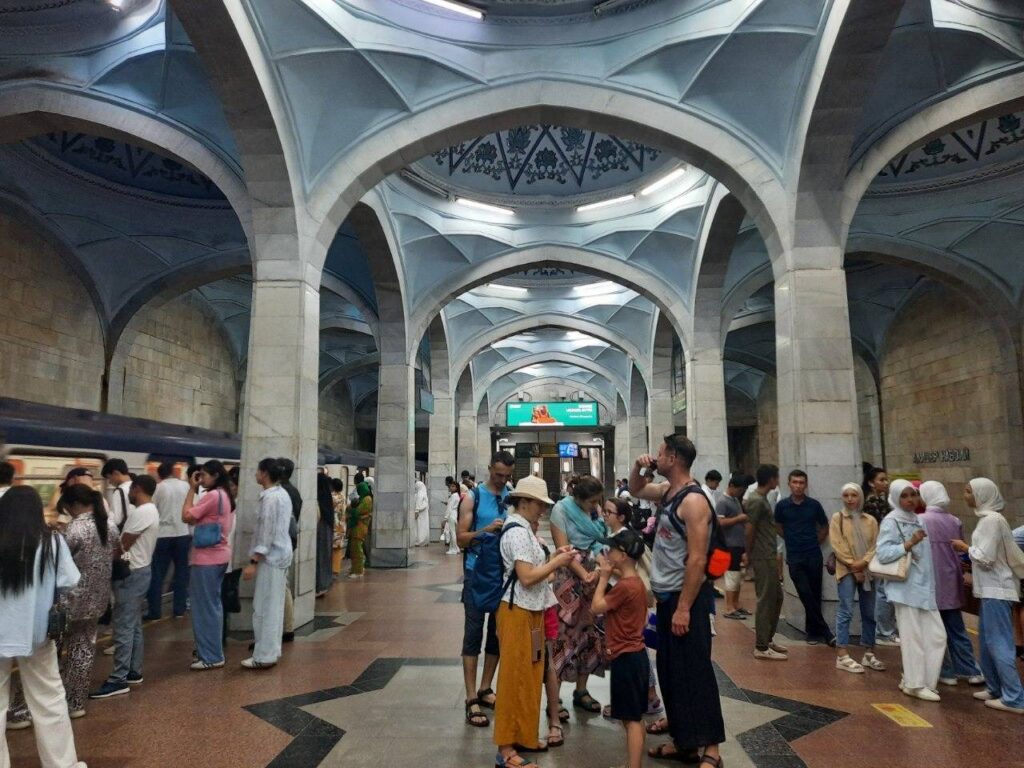
A lot of foreign tourists in Uzbekistan head for fabled Silk Road cities such as Khiva, Bukhara and Samarkand, but some also go to the Alisher Navoi underground station in the Tashkent metro. There, they admire turquoise imagery and a domed ceiling evoking centuries-old Islamic architecture in a Soviet-era transit system used by hundreds of thousands of commuters every day. The subway system in the Uzbek capital is a showcase for Uzbekistan´s internal tourism ambitions, enticing travelers with posters and video advertisements aimed at generating a domestic market alongside international visitors. State and private TV channels pitch trips to historical and pilgrimage sites for local people. [caption id="attachment_20926" align="aligncenter" width="510"] Tourists visit 16th century historical and religious sites in Nurota, an Uzbek town. Photo: TCA, Sadokat Jalolova.[/caption] These are expansionary times for tourism in the Central Asian country, which is loosening visa restrictions and ramping up its image as a leisure destination while Barcelona, Venice and other international tourism heavyweights in Western Europe are under strain. There are challenges: Infrastructure shortcomings, urban pollution, unregulated construction and occasional friction with UNESCO guidelines. Tourism in Uzbekistan is mostly regional, with the vast majority of foreign visitors coming from post-Soviet states. Some 3.5 million foreign tourists entered the country in the first six months of this year, a 13.3% increase over the same period in 2023, according to the national statistics agency. Of those, 3.2 million came from Kyrgyzstan, Tajikistan, Russia, Kazakhstan and Turkmenistan. Smaller numbers came from Türkiye (52,000), China (29,000), India (28,000), South Korea (20,000), Italy (18,000), and other countries. [caption id="attachment_20928" align="aligncenter" width="522"] The Kalon Mosque, Minaret and the Mir-I-Arab Madrasa, Bukhara. Photo: TCA, Stephen M. Bland[/caption] Gil Stein, a professor of ancient Near Eastern studies at the University of Chicago, led a university-affiliated tourist group to explore “the traditional crafts and foods of Central Asia” for two weeks in June. The group traveled mostly in Uzbekistan, following a brisk schedule that included Khiva, Bukhara, Samarkand, Tashkent and the Ferghana Valley – the latter is a fertile, less-touristed region extending into Kyrgyzstan and Tajikistan. Uzbekistan is “preserving cultural heritage as a way of attracting cultural heritage tourism” and the industry caters to “three or four classes of tourist,” including the local market as well as those seeking to visit Islamic holy places and Buddhist heritage sites, Stein said. His group visited workshops, some run by sixth generation artisans, to marvel at weaved silk, hand-forged Damascus steel knives and other products. “Traditional crafts are alive and well” and they are “patronized by modern Uzbeks” as well as foreign tourists, said Stein, who has traveled to Central Asia for years. He described a “broader opening up” in Uzbekistan as it looks to expand international contacts alongside relationships with China and Russia, the big regional powers. Uzbekistan’s tourism revenue was $2.14 billion in 2023, about 2.35% of GDP. Current measures to boost tourism include a $50 million credit line for local tourism organizations, tax exemptions for some industry operators, hotel management courses, and...


Kazakhstan Intensifies Efforts to Combat Extremism

There appears to be a small, but growing problem with terrorism and extremism in Kazakhstan. More than 30 people from regions around the country have been detained in Kazakhstan so far in 2024, and in March, Russia’s Federal Security Service (FSB) killed two Kazakh citizens who were in Russia, allegedly to carry out a terrorist attack. In response, the country’s Committee for National Security (KNB) had conducted dozens of raids. Kazakhstan’s government gave the KNB additional powers to monitor the internet, and authorities are tightening the law on religion. Kazakhstan’s southern neighbors, Tajikistan, Turkmenistan, and Uzbekistan, border Afghanistan. Tajikistan and Uzbekistan have had problems with the Taliban and other militant groups during the last 25 years. These include domestic terrorist groups, the Islamic Movement of Uzbekistan and the Tajik-led Jamaat Ansarullah, both of which have been based in northern Afghanistan. Kazakhstan has largely avoided problems with Islamic radicals. Citizens from all the Central Asian states have gone to Afghanistan and Middle Eastern countries to join jihadist groups, including a small number of Kazakh citizens. Turkey extradited a 22-year-old Kazakh citizen back to Kazakhstan on January 27, 2024. The Kazakh national, according to the KNB, was a “native of the Turkestan region [who] went to Syria in 2020, where he joined one of the armed groups operating there.” The Islamic State of Iraq and Syria (ISIS) released a propaganda video in November 2014 that showed Kazakh nationals, including children, in a training camp in Syria. The video described them as “some of our newest brothers from the land of Kazakhstan.” A group of some 25 men whom authorities said were Islamic militants staged attacks in the northwestern Kazakh city of Aktobe, near the Russian border in early June 2016. The group robbed two stores that sold hunting rifles and were involved in shoot-outs with the police and soldiers. At least 25 people were killed, most of them the attackers. Deputies in Kazakhstan’s Mazhilis, the lower house of parliament, voiced concerns in October 2023 that radical forms of Islam were spreading in Kazakhstan. Controversial MP Yermurat Bapi said followers of these radical Islamic groups were taking over bazaars in the Atyrau, Aktobe, Mangystau, Ulytau, and Almaty provinces. Bapi and 13 other deputies called on the government and KNB to take measures against these groups and stem extremist and terrorist propaganda from being disseminated inside Kazakhstan. On February 17, 2024, the KNB staged a combined 49 raids on eight unspecified religious extremist groups in the Aktobe, Atyrau, East Kazakhstan, Zhambyl, West Kazakhstan, Turkestan, and Zhetysu provinces. The KNB said it detained 23 people and seized weapons, ammunition, religious literature, narcotics, and cash. On April 1, 2024, the KNB detained a man in the Caspian coastal city of Aktau and found material for making explosives. According to the KNB, the suspect was a follower of a “radical religious ideology,” and was planning to carry out a terrorist attack.” At the start of July, five people were detained in KNB raids in the Atyrau and...

Tajikistan-Born Singer, Criticized in Russia, Prepares to Release an Anti-War Song

In 2023, Tajik-Russian singer Manizha Sanghin, harshly criticized in Russia for her public comments on sensitive issues, travelled to the picturesque “Valley of the Forty Girls” in southern Tajikistan to record an anti-war song to be released on Friday. The mountainous location, known to Tajiks as Childukhtaron, derives its name from ancient lore about a group of girls who turned into towering rock formations when an invading force swept through their homeland. Whether the girls-turned-rocks were meant to block the invaders, or simply bear silent witness, depends on the telling. Tajikistan-born Sanghin said she felt an affinity for the girls as standing at the foot of the rock, she recorded ‘Gun’. Written a decade ago, the song was originally about the devastating civil war in Tajikistan in the 1990s but had been put to rest after being abandoned by music producers in Britain. Following  Russia’s full-scale invasion of Ukraine in 2022, they talked about the song again and the singer, a goodwill ambassador for UNHCR, the U.N. refugee agency, said in YouTube video, "I thought, I have to release it. Because now, it's not just a song about war in Tajikistan. It's a song about war in Ukraine, in Gaza, and all wars around the globe." Music producer Liz Horsman who described Sanghin as" brave in the face of ongoing investigations into her anti-war stance,” readily agreed to record the song and since the war made travel between Britain and Russia impossible, the pair arranged to meet in Tajikistan. Seven months pregnant with her daughter, Sanghin described her return to her homeland as “very poetic”. Over the years, the singer has sparked a fair share of controversy. In 2021, when she represented Russia at the Eurovision contest with a song called “Russian Woman,” she was condemned for advocating women’s and LGBT rights. She was then denounced online and Russian promoters cancelled many of her concerts after she criticized the invasion of Ukraine. She was further alienated following her comments about the brutal treatment of several Tajik suspects in a terrorist attack that killed 144 people at a Moscow music venue in March. Sanghin condemned the attack but described the abuse of the suspects as “public torture.” “I am a systemic victim of cyberattacks and cyberbullying. Sometimes I have to block thousands of bots a week and sometimes daily... They follow, mass unfollow and report my profile,” Sanghin said on Instagram in May. “Instagram’s algorithm then thinks that I am breaking community rules and doesn’t show my posts to most of my followers. (Sometimes it can last for months).” Sanghin asked followers on the social media platform to leave a comment or just a heart emoji as a possible way to help her “get out of this ‘shadow ban.’”  

How Limits on Electricity Use will Impact Uzbekistan

This year, Uzbekistan implemented reforms aimed at modernizing and optimizing energy consumption, including a new scheme introduced by the Cabinet of Ministers of the Republic of Uzbekistan. Entitled “Additional measures to introduce market mechanisms in the fuel and energy sector,” the scheme comprises a new pricing structure for fuel and energy resources for 2024-2025, alongside revised basic standards for monthly household electricity and natural gas consumption, starting May 1, 2024. Under the new regulations, residents must pay 450 UZS (3.6 cents) for each kilowatt used up to 200 kWh per month and 900 UZS (7.2 cents) for 201 kWh to 1,000 kWh per month. If energy consumption increases, the price changes accordingly. Household consumers living in apartment buildings and dormitories equipped with centralized electric plates for cooking will be charged 225 UZS (1.8 cents) for up to 200 kWh per month, from 201 kWh to 1,000 kWh – 450 UZS (3.6 cents). Negative reaction to the move has been widespread with numerous complaints posted on social networks such as Instagram and Facebook, demanding the cancellation of the limit of up to 200 kWh. One of the key protests is that the number of family members was not considered when setting the limit and that it will need to increase in the colder months of autumn-winter. Residents also commented they will need to save up to pay for their bills and one Facebook post commented that the 200-kWh limit should be cancelled or at least increased to 500 kWh. In response  to public outcry, Uzbekistan's Ministry of Energy  issued an official statement announcing that there was no reason to revise its decision and reported that since 71% of the population consumed less than 200 kW of electricity in June, the limit was realistic. When interviewed by TCA on the situation, Umida Ahadova from the Navoi region, commented, “Four people live in our family, and electricity is mainly used for housework. Since it is summer, we often use the air conditioner to cool the house. But the electricity consumption rarely exceeds the set limit of 200 kW." Another interviewee Roziboyeva, who shares a rented house in Tashkent with seven friends said, “Eight girls have lived in a 3-room apartment for almost a year, but our energy consumption is only slightly more than 150 kW. That said, we don’t use air conditioners to heat and cool the house." According to the ministerial statement , 1 kWh of electricity costs 895 UZS (7.1 cents) (without VAT). The state reimburses 552.4 UZS (4.4 cents) for each kWh of electricity supplied to the population within the basic norm and 102.1 UZS (0.81 cents) from 201 kW to 1000 kWh. “It should be said that consumers' electricity savings have increased due to increasing tariffs, " claimed the ministry. " As a result, the load on the system is reduced, people’s electricity systems are cut, and accidents are also decreasing." Research conducted by Asia-Plus last year showed that Kazakhstan has the highest electricity tariff among Central Asian countries....

China to Help Kazakhstan Plant Artificial Forests on the Aral Sea

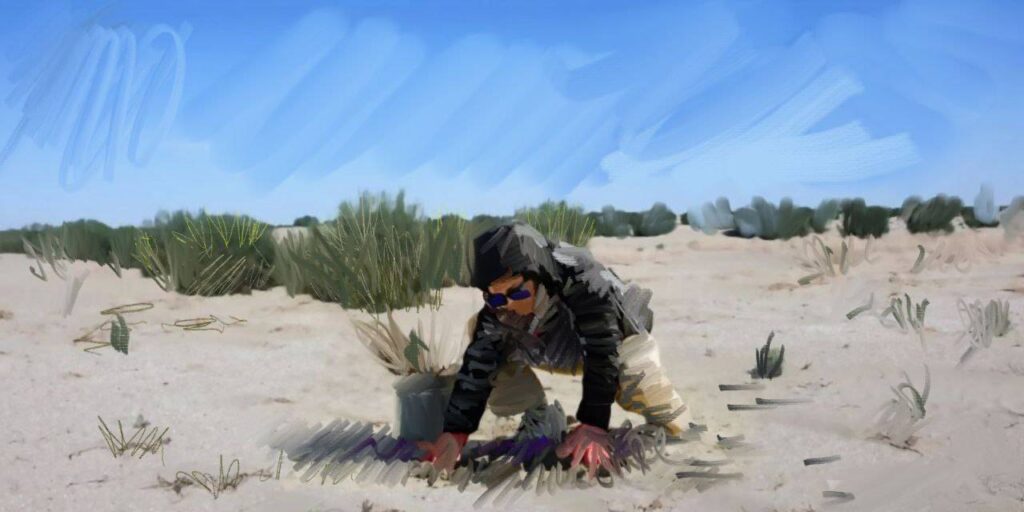
On July 23, Kazakhstan’s minister of ecology and natural resources Erlan Nysanbayev met scientists from the Xinjiang Institute of Ecology and Geography, part of the Chinese Academy of Sciences, to discuss the creation of artificial forest plantations on the dried base of the Aral Sea. Following a proposal to establish a joint Kazakh-Chinese center to resolve environmental issues on the Aral Sea, the Chinese scientists will visit the Kyzylorda region to closely examine work being undertaken on the dried sea base. Spanning across Kazakhstan and Uzbekistan, the Aral Sea was once the fourth largest inland body of water in the world, covering 68,000 km². The destruction of the Aral Sea first dates back as far as the U.S. Civil War, when, finding his supply of American cotton under threat, the Russian tsar decided to use the sea’s tributaries to irrigate Central Asia and create his own cotton bowl. With 1.8 million liters of water needed for every bale of cotton, the water soon began to run out. By 2007, the Aral had shrunk to one-tenth its original size. Up until the late-1990s, the land surrounding the Aral Sea was still cotton fields; today, it’s largely an expanse of salinized grey emptiness. The desiccation of the landscape has led to vast toxic dust-storms that ravage around 1.5 million square kilometers. Spreading nitrates and carcinogens, these storms – visible from space – used to occur once every five years, but now strike ten times a year. According to reports, Kazakhstan intends to plant saxaul shrubs on 1.1 million hectares of dried-up sections of the Aral Sea by 2025. Through joint efforts of the Ministry of Ecology and Natural Resources and the region's administration, 544,500 hectares of saxaul have been sown over the past three years, with a further 275,000 hectares to be planted on the former seabed this year. Wind-borne salt and dust cause significant damage to areas adjacent to the Aral Sea and their inhabitants. Every year, over 100 million tons of salt, dust, and sand are blown from the bottom of the former Aral Sea and mixed into the air.

ADB to Support Climate-Friendly Business Environment in Tajikistan

The Asian Development Bank (ADB) says it has approved a $50 million policy-based grant for a program that will help the government of Tajikistan foster a climate-responsive business environment and support small and medium-sized enterprises (SMEs) in the country. The program aims to transform Tajikistan's business environment through digitization, reforms to increase exports, improvement of infrastructure governance, fiscal transparency, and support for climate-friendly SMEs. Underscoring ADB's commitment to supporting Tajikistan in its transition to a green economy, ADB Director General for Central and West Asia Yevgeniy Zhukov commented, “By promoting climate-responsive investments and improving the overall business environment, we aim to stimulate economic growth, create green jobs, and enhance the country's resilience to climate change." The program will support reforms subsidizing climate-friendly SMEs, and prioritizing funding for female entrepreneurs. It advances digitization and e-commerce through the Agency for Innovation and Digitization and the approval of the E-Commerce program. The program will also support enhanced public investment management through assessments to recommend improvements and prioritize climate-focused projects. Fiscal transparency will improve the Ministry of Finance’s capacity to publish government finance statistics. The program will also promote international trade and investment by streamlining trade documentation processes and updating regulatory frameworks for issuing local and green bonds.