• KGS/USD = 0.01144 0%
  • KZT/USD = 0.00213 0%
  • TJS/USD = 0.10456 0.19%
  • UZS/USD = 0.00008 0%
  • TMT/USD = 0.28490 0%
  • KGS/USD = 0.01144 0%
  • KZT/USD = 0.00213 0%
  • TJS/USD = 0.10456 0.19%
  • UZS/USD = 0.00008 0%
  • TMT/USD = 0.28490 0%
  • KGS/USD = 0.01144 0%
  • KZT/USD = 0.00213 0%
  • TJS/USD = 0.10456 0.19%
  • UZS/USD = 0.00008 0%
  • TMT/USD = 0.28490 0%
  • KGS/USD = 0.01144 0%
  • KZT/USD = 0.00213 0%
  • TJS/USD = 0.10456 0.19%
  • UZS/USD = 0.00008 0%
  • TMT/USD = 0.28490 0%
  • KGS/USD = 0.01144 0%
  • KZT/USD = 0.00213 0%
  • TJS/USD = 0.10456 0.19%
  • UZS/USD = 0.00008 0%
  • TMT/USD = 0.28490 0%
  • KGS/USD = 0.01144 0%
  • KZT/USD = 0.00213 0%
  • TJS/USD = 0.10456 0.19%
  • UZS/USD = 0.00008 0%
  • TMT/USD = 0.28490 0%
  • KGS/USD = 0.01144 0%
  • KZT/USD = 0.00213 0%
  • TJS/USD = 0.10456 0.19%
  • UZS/USD = 0.00008 0%
  • TMT/USD = 0.28490 0%
  • KGS/USD = 0.01144 0%
  • KZT/USD = 0.00213 0%
  • TJS/USD = 0.10456 0.19%
  • UZS/USD = 0.00008 0%
  • TMT/USD = 0.28490 0%

Viewing results 1669 - 1674 of 3328

ADB to Support Climate-Friendly Business Environment in Tajikistan

The Asian Development Bank (ADB) says it has approved a $50 million policy-based grant for a program that will help the government of Tajikistan foster a climate-responsive business environment and support small and medium-sized enterprises (SMEs) in the country. The program aims to transform Tajikistan's business environment through digitization, reforms to increase exports, improvement of infrastructure governance, fiscal transparency, and support for climate-friendly SMEs. Underscoring ADB's commitment to supporting Tajikistan in its transition to a green economy, ADB Director General for Central and West Asia Yevgeniy Zhukov commented, “By promoting climate-responsive investments and improving the overall business environment, we aim to stimulate economic growth, create green jobs, and enhance the country's resilience to climate change." The program will support reforms subsidizing climate-friendly SMEs, and prioritizing funding for female entrepreneurs. It advances digitization and e-commerce through the Agency for Innovation and Digitization and the approval of the E-Commerce program. The program will also support enhanced public investment management through assessments to recommend improvements and prioritize climate-focused projects. Fiscal transparency will improve the Ministry of Finance’s capacity to publish government finance statistics. The program will also promote international trade and investment by streamlining trade documentation processes and updating regulatory frameworks for issuing local and green bonds.

U.S. to Assist Kazakhstan in Rare Metals Exploration

In Astana on July 18, the U.S. Department of State and Department of Energy, in coordination with Kazakhstan’s Ministry of Foreign Affairs and Ministry of Energy, held the 2024 U.S.-Kazakhstan Strategic Energy Dialogue. The U.S. Embassy in Kazakhstan reported that the Dialogue deepened cooperation between Kazakhstan and the United States on the shared priorities of enhancing energy security, accelerating the clean energy transition and methane mitigation, and developing Kazakhstan’s critical minerals sector. Deputy Assistant Secretary Kimberly Harrington from the Department of State’s Bureau of Energy Resources and Deputy Assistant Secretary Joshua Volz from the Department of Energy’s Office of International Affairs co-led the U.S. delegation. U.S. and Kazakh energy and international affairs experts discussed the current progress and plans to reduce greenhouse gas emissions and sustainably mine and refine critical materials. They also discussed civil nuclear cooperation, renewable energy sources, energy security, and global nuclear security. The U.S. Department of State also signed a memorandum of understanding with the Kazakh National Geological Service and National Mining Company Tau-Ken Samruk to expand and diversify the supply chains of critical minerals. According to the National Geological Service, the main goal of the memorandum of cooperation is to explore the promising regions of Kyzylorda and East Kazakhstan to extract rare metals. With this memorandum, the U.S. Department of State will support Kazakhstan in financing geological exploration and providing technical expertise for these projects.

A Eurasian Perspective on the Historic Conviction of U.S. Senator Bob Menendez

On July 16, a federal court in New York found United States Senator Robert "Bob" Menendez (D) guilty on 16 counts in a corruption trial, including charges of accepting bribes to benefit the governments of Egypt and Qatar, obstruction of justice and extortion. He is the first U.S. senator to be convicted as a foreign agent and the charges collectively carry a potential sentence of 222 years in prison. Bribery charges involved receiving gold bars worth over $100,000 and more than $480,000 in cash as well as a Mercedes-Benz for his wife. “This wasn't politics as usual. This was politics for profit,” summarized Damian Williams, an attorney for the Southern District of New York. According to federal prosecutors, among other things, Menendez helped secure millions of dollars of U.S. aid for Egypt and used his office to assist a multi-million-dollar deal with a Qatari fund. Egypt’s intelligence and military officials are said to have bribed him and his wife at a time when U.S. military aid to the country would have paused due to human rights concerns. Menendez also used his official position “to protect and enrich” individuals in exchange for payments, including helping a New Jersey businessman secure a halal certification monopoly with regards to U.S. meat exports to Egypt. Striking similarities to another recent “influence-for-sale” scandal For many Europeans, this U.S. case resembles the European Union’s own Qatargate scandal, which broke out in 2022 and unveiled how foreign governments (Qatar, Morocco and Mauritania) have been channeling hundreds of thousands of euros to a ring of elected European Parliament officials who, in turn, were leveraging their authority to benefit these clients. The services included “attempts to manipulate the Parliament” and “scheming to kill off six parliamentary resolutions condemning Qatar’s human rights record” as Politico reports. In his plea deal, Antonio Panzeri, the chief of the European Parliament's Subcommittee on Human Rights (DROI), admitted to receiving bribes as well as to leading and participating in a criminal organization. This criminal organization reportedly doled out bribes to EU officials through two NGOs named Fight Impunity and No Peace Without Justice, which were allegedly set up to launder money and help fund the scheme. In Menendez’s case, the money ran through his wife’s consultancy. Qatargate allegations extended beyond the Middle East and North Africa. For instance, Atlantico.fr reported that Panzeri and his associates may have been corrupted by at least two Kazakh criminal figures. Europeans appeared lenient on corruption as Panzeri only received a five-year prison sentence, of which four would be suspended and the one year he’d serve would be under house arrest with an electronic bracelet. Momentum behind investigations of key suspects has since waned, leading the EU Observer to call Qatargate “a missed opportunity to bring Europe to justice”. Foreign policy priorities pushed by Senator Menendez need to be re-examined When public officials are found to have used their office to promote external interests, their past policy activities should be closely examined. Bob Menendez has been a member of...

Ashgabat Hosts Seminar on Artificial Intelligence

The capital of Turkmenistan is hosting a two-day seminar , organized by the OSCE Centre in Ashgabat, on "Artificial Intelligence and its Impact on Freedom of Speech." During the event, international participants, including specialists from Austria and Bulgaria, will analyse the impact of artificial intelligence (AI) technologies on freedom of speech and the role of the media in today's world through various workshops focusing on: the role of artificial intelligence in shaping public opinion and disseminating information;  the risks and opportunities associated with the application of AI in the media;  how to ensure freedom of speech in the context of AI development; and how to combat misinformation and manipulation in the age of artificial intelligence. Opening the seminar, William Leaf, Representative of the OSCE Centre in Turkmenistan, emphasized the importance of freedom of speech and media as integral elements of a democratic society. Noting Turkmenistan's growing interest in developing artificial intelligence, he welcomed the seminar as an important step in understanding its potential and possible challenges. Within the context of an exchange of views and the development of recommendations on the use of artificial intelligence in the media, the event provides a platform for discussions on how such issues affect the principles of freedom of speech and human rights and as such, relates to the OSCE Centre's ongoing assistance in implementing the National Human Rights Action Plan 2021-2025 (NHRAP) provisions on media freedom and freedom of expression.

Saudi Islamic Development Bank Increasing Its Presence in Central Asia

The Saudi-based Islamic Development Bank (IDB) has been particularly active in Central Asia so far in 2024. The growing IDB role is part of Central Asian region’s foreign policy shift toward the Arab world as financial backers to replace Russia, which is devoting huge attention and resources to its war in Ukraine, and China, which is increasingly reluctant to spend large sums of money in Central Asia after pouring in tens of billions of dollars there during the last 25 years. Some of the Central Asian governments owe China substantial amounts of money that they are unlikely to be able to pay for possibly decades. The Central Asian states have been members of the IDB for many years. Kyrgyzstan was first, joining in 1993, followed by Turkmenistan in 1994, Kazakhstan in 1995, Tajikistan in 1996, and Uzbekistan in 2003. One of the IDB’s three regional offices is in Almaty, Kazakhstan (the other two are in Kuala Lumpur, Malaysia and Rabat, Morocco).  The IDB has been dealing individually with the five Central Asian countries on a wide range of projects and programs in recent months. Energy Resources In February, Tajik Minister of Economic Development and Trade Zavqi Zavqizoda announced a deal was reached for the IDB to provide $250 million to Tajikistan. Zavqizoda said $150 million of that would go toward construction of the Rogun hydropower plant (HPP).  The Rogun HPP was a Soviet-era project. Construction started in 1976 but was discontinued shortly after the Soviet Union collapsed. Tajikistan restarted work on the HPP in 2008. Tajik President Emomali Rahmon has repeatedly said that building the HPP with a planned 3600 MW capacity will make the country energy independent and even allow Tajikistan to bring in extra revenue exporting electricity to neighboring countries.  In its 28 years as an IDB member, Tajikistan had received some $620 million from the IDB, so the $250 million announced in February 2024 represents a significant jump in IDB financial help. Not surprisingly, when IDB President Muhammad Al-Jasser visited Kyrgyzstan in June, Kyrgyz President Sadyr Japarov sought IDB investment in the Kambar-Ata-1 HPP, another decades-old project with a multi-billion-dollar price tag that has barely made any progress in being realized during the 33 years Kyrgyzstan has been independent. Al-Jasser did not commit to IDB financing for the Kyrgyz HPP. However, less than a week after Al-Jasser was in Kyrgyzstan, the IDB was one of several international financial organizations that signed on at a conference in Vienna to be a members of a coordination donors’ committee for the Kambar-Ata-1 projects. At a meeting in Istanbul in February, the IDB reaffirmed its support for the Central Asia-South Asia-1000 (CASA-1000) project that aims to export electricity from HPPs in Kyrgyzstan and Tajikistan to Afghanistan and Pakistan. Kyrgyz Energy Minister Taalaybek Ibrayev met with Al-Jasser in June during the latter’s visit to Kyrgyzstan to discuss funding for Kyrgyzstan’s section of CASA-1000. Not Only Energy In June, the IDB pledged up to $2 billion in funding for improvements to water management...

Facing Pressures, Koytendag Nature Refuge in Turkmenistan Aims for UNESCO Status

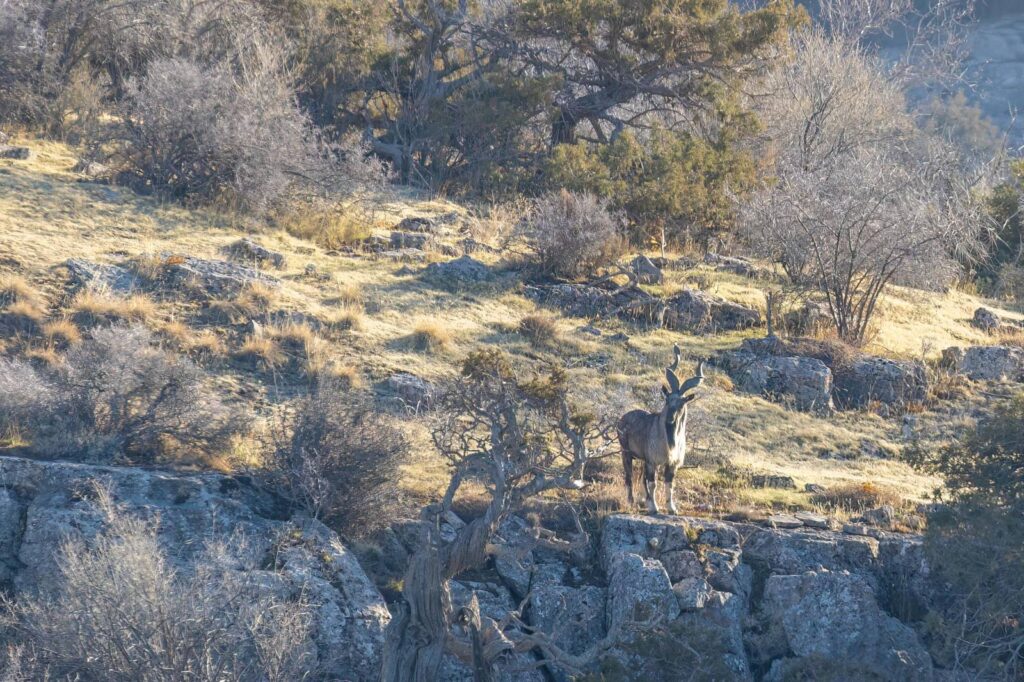
Limestone canyons and grassy plateaus. Vultures, lynx and  markhor, a wild goat known for its corkscrew-style horns. Pistachio trees and juniper forests. The fossilized footprints of dinosaurs and a cave that runs three kilometers into the ground.  The Koytendag State Nature Reserve and surrounding areas in eastern Turkmenistan are a stunning refuge of biodiversity next to Uzbekistan and near Afghanistan. The ecosystem includes river valley plains as well as Ayrybaba, Turkmenistan’s highest mountain at 3,137 meters. Some 50,000 people live in the area. Conservationists are assessing whether the region, which faces pressures such as agricultural encroachment, illegal hunting and unregulated tourism, can become a UNESCO natural world heritage site. [caption id="attachment_20918" align="aligncenter" width="551"] Researchers at the mouth of Koytendag’s Kaptarkhana cave (Image: CLLC)[/caption] There are efforts to reframe the bid for UNESCO status as a “transnational nomination” that pairs Koytendag with Uzbekistan’s adjoining Surkhan State Nature Reserve and could reduce barriers to the movement of wildlife between the two areas. The Koytendag reserve encompasses about 27,000 hectares and the total area of the proposed heritage space in Turkmenistan is 122,000 hectares, according to UNESCO. The U.N. agency says Koytendag is somewhat similar to other mountainous reserves in Central Asia - Chatkal in Uzbekistan, Aksu-Dzhabagly in Kazakhstan and Sary-Chelek in Kyrgyzstan – “but unlike them has a number of highly distinctive geological features.” Turkmenistan’s “system of protected areas,” which includes mountain, desert and marine ecosystems, covers 4.38% of the country, or just over 2,150,000 hectares, the Ministry of Environmental Protection said. Turkmen officials have been working with international conservation groups to protect and restore biodiversity. Conservation X Labs, or CXL, has outfitted some Turkmen rangers with new field uniforms, including those at Koytendag reserve, according to Tatjana Rosen, director of Central Asia Programs for the U.S.-based group.  [caption id="attachment_20920" align="aligncenter" width="533"] Panoramic view of the Koytendag reserve (Image: CLLC)[/caption] Rosen also said CXL and another group, the Center for Large Landscape Conservation, hired an international expert in SMART conservation technology and bought rugged Blackview phones where the SMART software is downloaded. Koytendag rangers have the devices and can use the technology to collect, analyze and report data from the field. Integrating the technology at the national level is ongoing.     Another international donor active at Koytendag is the Critical Ecosystem Partnership Fund, which has funded the conservation of pistachio orchards, the improvement of water supply, the education of local communities about the environment and other projects.   Last year, national and international conservationists conducted a weeklong field mission in Koytendag, surveying flora and fauna and also talking to local communities. At one point, the team chatted with shepherds tending their flocks about sustainable use of pastures and other employment options.    “Overall, it was noted that jobs are scarce in the villages and the demand for shepherding continues to increase,” the Center for Large Landscape Conservation said in a report on the trip.  A meeting of conservationists followed soon after in Ashgabat, Turkmenistan’s capital.  Speleologists have been interested in Koytendag's elaborate cave...