• KGS/USD = 0.01144 0%
  • KZT/USD = 0.00211 0%
  • TJS/USD = 0.10460 0.19%
  • UZS/USD = 0.00008 0%
  • TMT/USD = 0.28490 0%
  • KGS/USD = 0.01144 0%
  • KZT/USD = 0.00211 0%
  • TJS/USD = 0.10460 0.19%
  • UZS/USD = 0.00008 0%
  • TMT/USD = 0.28490 0%
  • KGS/USD = 0.01144 0%
  • KZT/USD = 0.00211 0%
  • TJS/USD = 0.10460 0.19%
  • UZS/USD = 0.00008 0%
  • TMT/USD = 0.28490 0%
  • KGS/USD = 0.01144 0%
  • KZT/USD = 0.00211 0%
  • TJS/USD = 0.10460 0.19%
  • UZS/USD = 0.00008 0%
  • TMT/USD = 0.28490 0%
  • KGS/USD = 0.01144 0%
  • KZT/USD = 0.00211 0%
  • TJS/USD = 0.10460 0.19%
  • UZS/USD = 0.00008 0%
  • TMT/USD = 0.28490 0%
  • KGS/USD = 0.01144 0%
  • KZT/USD = 0.00211 0%
  • TJS/USD = 0.10460 0.19%
  • UZS/USD = 0.00008 0%
  • TMT/USD = 0.28490 0%
  • KGS/USD = 0.01144 0%
  • KZT/USD = 0.00211 0%
  • TJS/USD = 0.10460 0.19%
  • UZS/USD = 0.00008 0%
  • TMT/USD = 0.28490 0%
  • KGS/USD = 0.01144 0%
  • KZT/USD = 0.00211 0%
  • TJS/USD = 0.10460 0.19%
  • UZS/USD = 0.00008 0%
  • TMT/USD = 0.28490 0%

Viewing results 1675 - 1680 of 3316

Stay or Go? Uzbek Students Ponder Studies at Home, Abroad

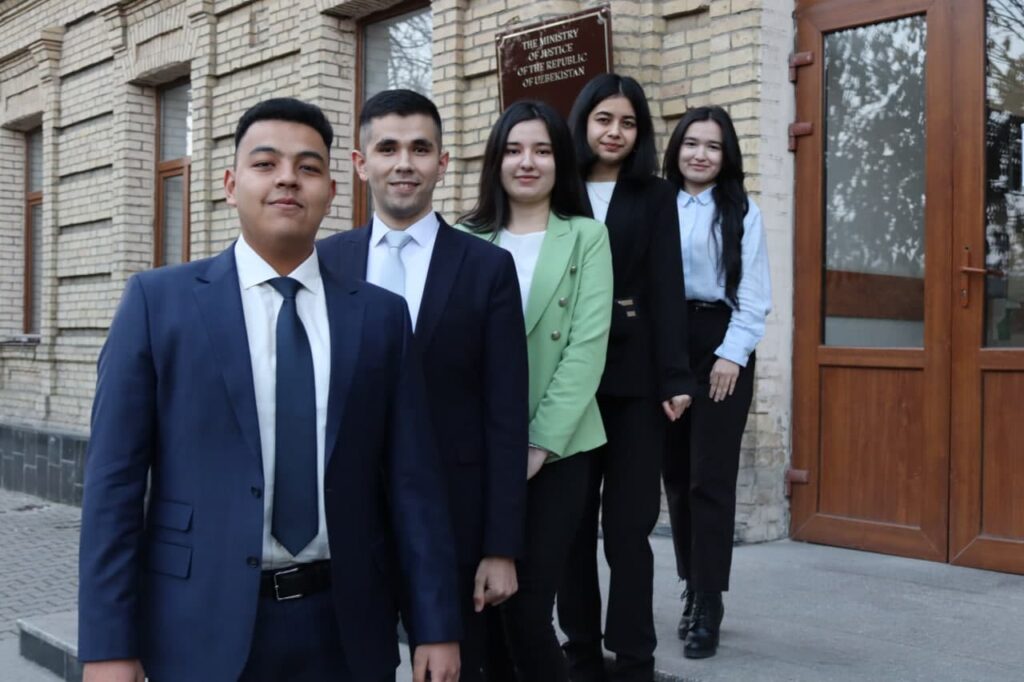
Like many Uzbek students, Nigina Poziljonova left Uzbekistan to study at a university abroad. She doesn’t regret her decision. “Unlike the teachers I personally saw in Uzbekistan, professors are happy when students say, ‘I don’t understand, please explain again,’” said Poziljonova, who is studying for a bachelor’s degree in business economics with data science at the University of Cassino in Italy. “If necessary, they are willing to spend two hours after class for that student. If I fail one exam, I can take it 5 times a year for 3 years for free,” said the Uzbek student, who nevertheless describes her Italian experience as “more challenging than I anticipated.” --- The perceived shortcomings of higher education have long been a preoccupation in Uzbekistan, which has a large population of young people and is the most populous country – with about 35 million citizens – in Central Asia. Authorities are trying to fix the problem. Last month, Minister of Higher Education Kongratbay Sharipov said 20 underperforming universities will be closed because only 5-10% of their graduates are employed. Uzbekistan has more than 200 universities - 114 are state-run, 65 are private and 30 are foreign university branches, according to 2023 data. Uzbekistan had the fifth largest number of “tertiary” students (students who have completed secondary school) studying abroad – 109,945 – among countries around the world that were surveyed, according to UNESCO data in 2021. Around that time, more than 570,000 students were studying in higher education institutions in Uzbekistan. As in many countries, a lot of Uzbek students believe a quality education lies abroad and their increasing command of English and openness to the world can bring that goal within reach. Additionally, Uzbekistan’s El-Yurt Umidi foundation, a state agency launched in 2018, covers tuition fees and living expenses of talented people who want to study abroad. The foundation signs a contract with scholarship holders that requires them to return to Uzbekistan and work for three years. Many students study at universities in neighboring countries such as Kazakhstan, Kyrgyzstan, and Tajikistan, and then, after one or two years, transfer to universities in Uzbekistan. According to Kyrgyz data, some 38,857 Uzbek students studied in higher education institutions in Kyrgyzstan in 2022 and the figure reached 40,282 in 2023. Uzbek President Shavkat Mirziyoyev chaired a meeting in May at which officials discussed the 306 majors available at the bachelor’s level in Uzbekistan, and the 625 specialties at the master’s level. They acknowledged that some don’t meet international standards and labor market requirements and explored ways to revise them. Opening new courses in areas of high demand was also discussed. Another problem in Uzbek universities is an excessive focus on specializations. At one journalism university, specialists taught multiple sub-topics, including TV, international news, public relations, the internet, as well as military, travel, art, economic and sports journalism. Progress has been made. More people have access to higher education. Starting this year, state grants are given for one year, and in the remaining years of...

Teacher Alua Zhanatova Outlines the Growing Popularity of the Kazakh Language Amongst Young People

Despite the country gaining independence from the Soviet Union back on 16 December 1991, the predominant language in Kazakhstan has long remained Russian. To address the issue, the government set a somewhat ambitious target that by 2020, 95% of the population would be fluent in Kazakh, and more recently, in late 2023, mooted a “Concept for the Development of Language Policy for 2023-2029". Meanwhile, there are encouraging signs of an increasing interest in the Kazakh language among young people in Kazakhstan. TCA talked to Alua Zhanatova, a teacher and bachelor of TARGU University, about the rejuvenation of the country’s native tongue and its importance for society. TCA: What are your thoughts on the current popularity of studying the Kazakh language? In recent years I have observed significant changes in our young people's attitude towards their native language. For a long time, the Kazakh language was generally perceived as formal and cumbersome but nowadays, young people are becoming more interested in learning and using it in everyday life. TCA: What factors have contributed to the revival of interest in the language? There are several key factors. First, is the noticeable, growth in cultural patriotism, which has led to young people embracing their roots, culture and ancestral language. Second, is the significant impact of contemporary media and social networks on popularizing the Kazakh language. The emergence of bloggers using the Kazakh language, the creation of Kazakh content platforms and active discussion in Kazakh in social networks all contribute to making the language more accessible and appealing. TCA: What role do educational institutions and teachers play in this process? I think educational institutions play a major role. It is important that schools and universities provide good tuition in both the Kazakh language and culture. Many educational institutions have started to develop new curricula that make learning the language more exciting and practical, and the expansion of classes taught in Kazakh in schools and universities is facilitating and spurring students’ desire to learn in their mother tongue. TCA: What is the reaction among young people to new initiatives regarding the use of the Kazakh language? Reactions are mostly positive. Young people who previously dismissed Kazakh, are now showing an interest in learning the language, encouraged by the availability of better resources and new teaching methods. I receive a lot of feedback on how useful and enjoyable it is to learn the language through more engaging activities such as games, quests or even social activities. TCA: How do you see the further development of the Kazakh language among young people? I am optimistic about prospective developments. If existing initiatives continue to develop and new forms and methods of teaching emerge, I am confident that the Kazakh language will become not only an important part of cultural identity, but also an active element of modern life. It is important that efforts continue to keep the Kazakh language alive and engaging for young people.   In addition to Alua, TCA also talked to young people from different...

The State of Civil Aviation in Central Asia Post-Pandemic and Amid Russia Sanctions

The pandemic of 2020-21 took a toll on civil aviation worldwide, and Central Asia was no exception. However, since then and post-February 2022, the region’s leading economies - Kazakhstan and Uzbekistan - have improved passenger air transport through low-cost carriers and made themselves more attractive for air cargo. In addition, Russia is steadily exiting the market due to sanctions, whilst Beijing is looking to fill the void. Air cargo: Kazakhstan and Uzbekistan Less than a month ago, the Silk Road in the Sky—Kazakhstan Cargo Hub regional forum on cargo transportation and logistics took place. It was held under the auspices of the International Air Cargo Association (TIACA) with the support of Kazakhstan’s Ministry of Transport and the country’s Aviation Administration. The forum hosted talks between various organizations, with documents signed between Astana, Karaganda, and Aktobe airports with MNG Airlines, MSC Air Cargo, Coyne Airways, and Alpha Sky (Kazakhstan). Memorandums of cooperation were also concluded between TIACA and the airports of Aktau, Aktobe, Astana, Karaganda, Uralsk, and SCAT Airlines, as well as between TIACA and the Joint Authorities for Rulemaking on Unmanned Systems (JARUS). More than 300 participants from 30 countries attended the forum, representing organizations across the freight transport chain, including shippers, forwarders, ground service providers, airports, airlines, manufacturers, and IT service providers. According to the Civil Aviation Committee under Kazakhstan’s Ministry of Industry and Infrastructure, the cooperation of local companies with the international community, as well as their use of advanced technologies, is expected to boost Kazakhstan’s trade with the other countries of Central Asia by 2.4 times – from $6.3 billion to $15.0 billion – amid a $560 million increase in Kazakhstani exports. The Government of Uzbekistan, meanwhile, began looking into the idea of making the country a regional transshipment hub back in September 2022, when Central Asia was seeing an influx of emigrants from Russia, especially Russian men fleeing mobilization. The lion's share of Uzbekistan Airways cargo traffic represents China-Europe deliveries transiting through Uzbekistan. For these deliveries, the company has operated routes such as Tianjin–Athens, Hong Kong–Amsterdam, and Shenzhen–Chalons-Vatry (Paris), with plans to increase freight volumes with the routes Tashkent–Guangzhou–Tashkent (currently being implemented), Tashkent–Lahore–Tashkent (to be launched in 2025-26), Tashkent–Xi'an–Tashkent (launch scheduled for this year), Tashkent–Chengdu–Tashkent (planned for 2026), and Tashkent–Dhaka–Tashkent (to be launched in 2027). Foreign players have shown increased interest in Uzbekistan’s transit potential, as well. For example, Poland’s SkyTaxi has launched cargo transportation from China through Uzbekistan to Europe. The first plane landed in Tashkent back on June 11, 2022. Indeed, Tashkent Airport has gained importance as a transfer point for technical stops and refueling. On July 7, 2022, Azerbaijan’s Silk Way West cargo carrier made its maiden flight on the Baku–Navoi–Hong Kong route. The company delivers goods from Europe to Asia, as well as from the U.S. to Africa. In 2020, an open skies policy was introduced across all regions of Uzbekistan, giving international airlines access to the country’s airports and ground services. Meanwhile, Kazakhstan’s open skies policy was extended last year until...

Central Asia Reacts to Trump Assassination Attempt

An assassination attempt was made on former U.S. president Donald Trump last night, as the current Republican presidential candidate spoke at a rally in the town of Butler, Pennsylvania. Trump was wounded by a gunshot to the ear, before being removed from the stage by members of the US Secret Service. Tragically, one audience member died in the assault, and another was injured. A bloodied Trump said afterwards that he was "fine", and was "not going to give up." The Secret Service has announced that the attacker had been killed. The attack on Trump has alarmed Central Asia and its countries' leaders. Several heads of state have already publicly condemned the assassination attempt. Kazakhstan's president Kassym-Jomart Tokayev strongly condemned the attempt on Trump's life and gave him his support, wishing the former president a speedy recovery. The press secretary of Uzbek leader Shavkat Mirziyoyev commented that the president "is deeply concerned about the assassination attempt", and "strongly condemns this act of violence and wishes Donald Trump a speedy recovery." The president of Azerbaijan, Ilham Aliyev, wrote that he was "Appalled and shocked by the attack on President Trump [sic]. We strongly condemn this act of political violence. We wish President Trump [sic] a soonest recovery."

World Bank to Provide Additional Support for Kambarata-1 Hydropower Project in Kyrgyzstan

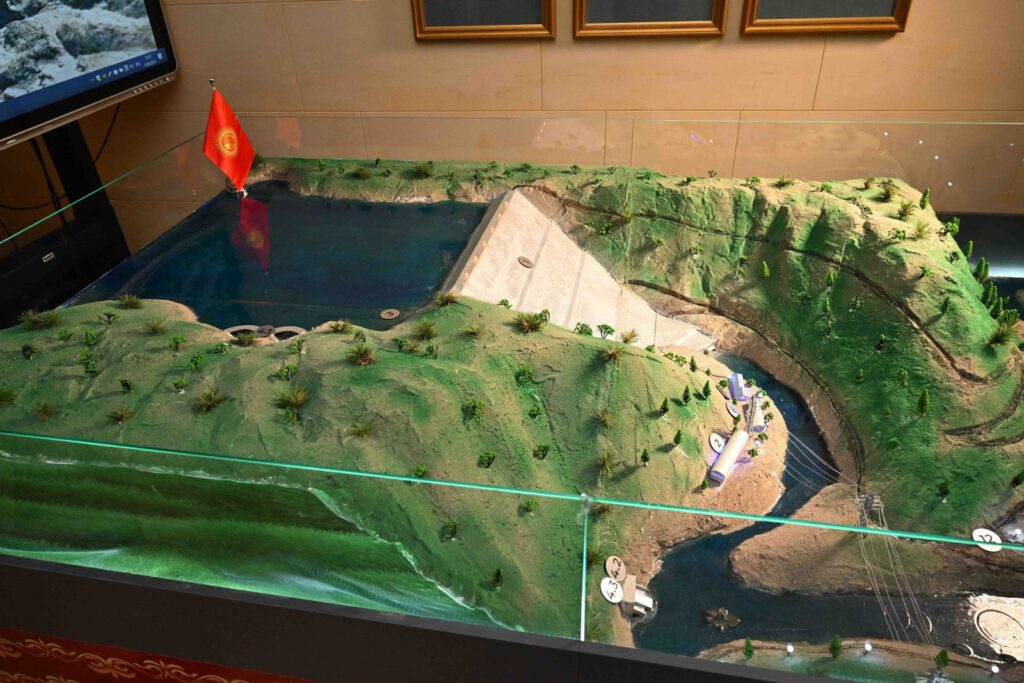
The World Bank announced on July 11 that its Board of Executive Directors has approved $13.6 million in additional financing for the Kambarata-1 Hydropower Plant (HPP) Project in Kyrgyzstan. This additional funding will supplement the ongoing $5 million Technical Assistance Fund. The World Bank is aiming to support the government of the Kyrgyz Republic in preparing the Kambarata-1 HPP project in an environmentally, technically, financially, and commercially sustainable manner. Hugh Riddell, World Bank’s Country Manager for the Kyrgyz Republic, commented: “The World Bank is assisting the Kyrgyz Republic in developing its vast clean energy potential, which would be key to realizing the country’s and region’s bold initiatives on clean energy transition and enhanced regional cooperation on energy and water. World Bank support will help the government of the Kyrgyz Republic to comprehensively prepare the Kambarata-1 HPP Project in a sustainable and bankable way.” The ongoing Technical Assistance for the Kambarata-1 Hydropower Plant Project has made significant progress since its approval in the fall of 2023. The project feasibility update has commenced, and environmental and social reports are being prepared. In addition, a Donor Coordination Committee was established during the International Energy Investment Forum held in Vienna in June 2024. This additional financing is needed to ensure comprehensive and in-depth implementation of several critical activities, including establishing panels of experts on dam safety, environmental, and social concerns. The funding will also help in designing a benefit-sharing plan, structuring the project’s financing plan and commercial framework, and establishing a company to run the dam upon its completion. The additional financing is to be provided on highly concessional terms and comprises $11 million of credit at zero percent interest, with repayments eased over 50 years and a 10-year grace period. In addition to this credit, there is a $2.6 million grant from the Central Asia Water and Energy Program (CAWEP), which requires no repayment. The CAWEP is a multi-donor partnership between the World Bank, the European Union, Switzerland, and the United Kingdom, which is aimed at strengthening regional cooperation on water and energy security in Central Asia, which is facing  a climate emergency. The Donor Coordination Committee for the construction of Kambarata-1 HPP was established at the Kyrgyz Republic International Energy Investment Forum, which was held in Vienna on June 10. The Committee comprises major international financial institutions and development partners, including the World Bank, the OPEC Fund, the Asian Development Bank, the Asian Infrastructure Investment Bank, the Islamic Development Bank, and the European Bank for Reconstruction and Development. Speaking at the Vienna forum, Chairman of the Cabinet of Ministers of the Kyrgyz Republic Akylbek Japarov said that the Kambarata-1 HPP project has broad economic, environmental, and social benefits and prospects for both Kyrgyzstan and the rest of Central Asia. The project will provide Kyrgyzstan and Central Asia with clean energy at the lowest possible cost. The Kambarata-1 HPP will be situated in the upper reaches of the Naryn River in Kyrgyzstan. Its installed capacity will be 1,860 megawatts, and its average annual...

It Wasn’t Like This Under Nazarbayev: Kazakhstan’s Party Political Landscape

Speaking on June 27 on the eve of Media Workers Day at a reception where awards were presented to distinguished journalists, Kazakh President Kassym-Jomart Tokayev paid special attention to the powers of the head of state. Tokayev emphasized that the term of presidential powers approved in the referendum is a reality that will not be altered through amendments to the Constitution. This means that in 2029, Kazakhstan will see a new president, chosen through a legal expression of its citizens' will. This new president will not appear out of nowhere; they will likely be nominated by one of the existing political parties, which will enter the electoral battle for the Mazhilis deputy mandates in 2028. The party leading this significant two-year electoral race will have its nominee occupy the presidency of Kazakhstan. The topic of the "problem-2029" is already a subject of discussion within the corridors of power. The current president's team has a dual task - ensuring the continuity of democratic and liberal transformations while preventing a resurgence of the Old Kazakhstan. Having been unable to change the country's leadership in 2022, Tokayev's opponents will likely pursue an institutional route. Historically, former president Nursultan Nazarbayev used a similar strategy, having first elected democratically, then extending his powers via a referendum, and gradually amending the Constitution to consolidate his rule without seeking further public approval. Could a current political party be used as a Trojan horse in such a scenario? Here are the players on the present political landscape. Amanat The most influential party in Kazakhstan, Amanat, which formerly supported Elbasy (Father of the Nation) Nursultan Nazarbayev, was founded in 1999 through the merger of several political organizations, with the largest being the Party of People's Unity of Kazakhstan (PNUK). Known as Otan and then Nur Otan (“Radiant Fatherland”) until it was rebranded in 2022, although modern sources attribute this merger to Nazarbayev, he was reportedly not focused on party building at that time. The Otan party, which resulted from the merger, emerged shortly after the early presidential election of 1999, where Nazarbayev won with a "modest" 80.97% of the vote. The runner-up in the election, Serikbolsyn Abdildin claimed that there had been widespread voter fraud and a failure to tally ballots properly, whilst the U.S. Department of State commented that the undemocratic nature of the election "cast a shadow on bilateral relations". In 2006, Otan held two congresses, during which three more political organizations joined: the Asar Party, founded by Nazarbayev's eldest daughter Dariga and her then-husband Rakhat Aliyev, as well as the Civic and Agrarian Parties, previously part of the AIST pre-election bloc. Following these mergers, Otan was renamed Nur Otan. After Rakhat Aliyev was charged, initially with the kidnapping and then with the murder of two executives at a bank he controlled in 2007, Dariga and her son took over his stake, swelling her fortune. In 2013, Forbes named her one of the fifty richest Kazakhs with assets of US$595 million, including a vast media empire. Under...