• KGS/USD = 0.01143 -0%
  • KZT/USD = 0.00192 -0%
  • TJS/USD = 0.10820 0.19%
  • UZS/USD = 0.00008 0%
  • TMT/USD = 0.28575 0%
  • KGS/USD = 0.01143 -0%
  • KZT/USD = 0.00192 -0%
  • TJS/USD = 0.10820 0.19%
  • UZS/USD = 0.00008 0%
  • TMT/USD = 0.28575 0%
  • KGS/USD = 0.01143 -0%
  • KZT/USD = 0.00192 -0%
  • TJS/USD = 0.10820 0.19%
  • UZS/USD = 0.00008 0%
  • TMT/USD = 0.28575 0%
  • KGS/USD = 0.01143 -0%
  • KZT/USD = 0.00192 -0%
  • TJS/USD = 0.10820 0.19%
  • UZS/USD = 0.00008 0%
  • TMT/USD = 0.28575 0%
  • KGS/USD = 0.01143 -0%
  • KZT/USD = 0.00192 -0%
  • TJS/USD = 0.10820 0.19%
  • UZS/USD = 0.00008 0%
  • TMT/USD = 0.28575 0%
  • KGS/USD = 0.01143 -0%
  • KZT/USD = 0.00192 -0%
  • TJS/USD = 0.10820 0.19%
  • UZS/USD = 0.00008 0%
  • TMT/USD = 0.28575 0%
  • KGS/USD = 0.01143 -0%
  • KZT/USD = 0.00192 -0%
  • TJS/USD = 0.10820 0.19%
  • UZS/USD = 0.00008 0%
  • TMT/USD = 0.28575 0%
  • KGS/USD = 0.01143 -0%
  • KZT/USD = 0.00192 -0%
  • TJS/USD = 0.10820 0.19%
  • UZS/USD = 0.00008 0%
  • TMT/USD = 0.28575 0%
13 December 2025

Viewing results 1681 - 1686 of 2337

Kyrgyzstan’s President Declares Own Multi-Million Dollar Property as Part of Asset Legalization

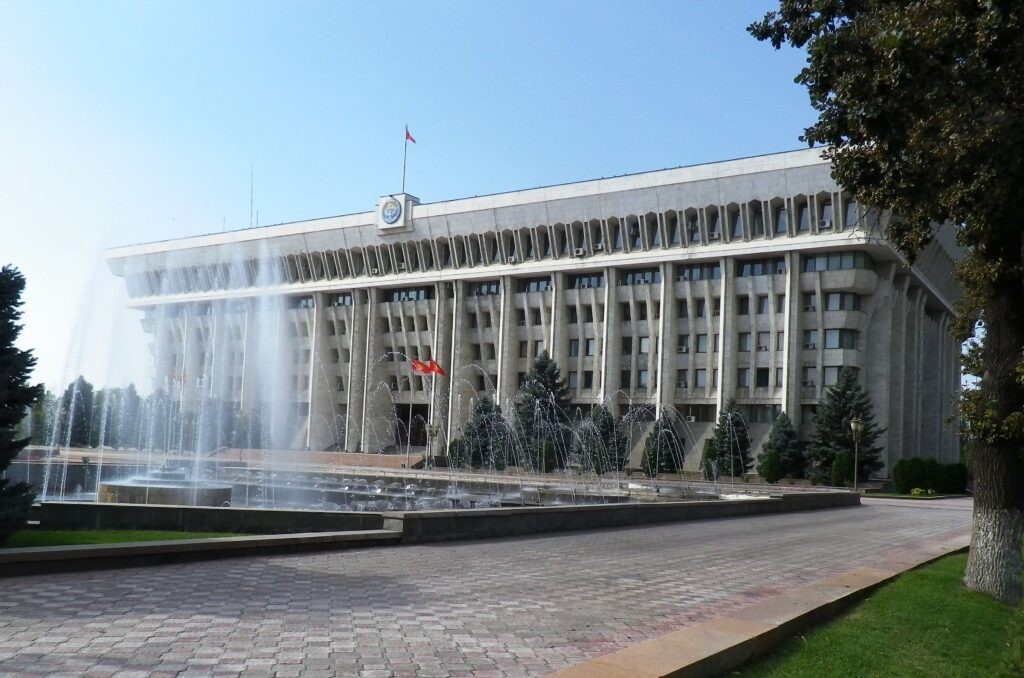
The President of the Kyrgyz Republic, Sadyr Japarov has said that he wants top business people and wealthy citizens to repatriate their assets to Kyrgyzstan instead of storing it abroad - which is why he has decided to start with himself. Last summer, Kyrgyzstan adopted a law on legalization - or declaring assets to the government - of property. According to official statements, its main goal is to transition the property and income of individuals from the shadow economy into legal economic activity through voluntary declaration of assets. The law stands until July 1st, 2024. "Voluntary legalization of and amnesty [for] assets will allow [the nation] to bring some shadow assets into legal turnover, which, as a consequence, will contribute to an increase in legal economic activity. According to the National Statistical Committee of Kyrgyzstan, the shadow economy accounts for 21% of the republic's GDP, and according to unofficial data, the shadow economy accounts for 40% of the republic's GDP. In this regard, the voluntary legalization and amnesty of assets of individuals is part of the preparatory stage of the transition to universal declaration," reads the law's background note. Image: Japarov Facebook post The president noted that all large and medium-sized business people used to register their property in someone else's name to avoid paying taxes to the state, and he was among them because he entered into politics from business. He lamented the fact that the richest citizens still keep their billions in foreign banks. Under the law, authorities guarantee that of all tax declarations previously submitted to state agencies will not be subject to prosecution. This is to give assurance to anyone seeking amnesty that the state will honor current assessments of income and property that have been legalized. The document states that if the amount a person legalizes exceeds 100 million som ($1,100,000), the submitting citizen must pay a so-called declaration payment of one million som ($11,000) to the state. "The value of my property is about 20 million dollars. I paid one million som to the state for the purpose of legalization. This is required by law. I have no savings abroad, and if I had, I would have invested them in our banks," the president wrote. Japarov said he constructed a building in the center of the capital back in 2010, but because of political persecution by the previous authorities, he had to hide the fact the multi-story building belonged to him. Now, he has registered the building under his own name. The head of state stressed that based on the law, the authorities guarantee all citizens the safety of legalized capital: "There is no other goal. There will be no questions [put] to you." The president noted that he's the first to legalize his property, despite the fact that the law came into force more than six months ago. At the end of last year, Japarov also urged owners of markets and large retail outlets to transition their assets out of the shadow economy....
Time for the U.S. to Cement a “Nuclear-Weapon-Free” Central Asia

The Central Asian Nuclear-Weapon-Free Zone (CANWFZ) Treaty, which came into force in 2009, represented a significant advance in international efforts to limit nuclear proliferation. Initiated by the five Central Asian countries—Kazakhstan, Kyrgyzstan, Tajikistan, Turkmenistan, and Uzbekistan—it aims to enhance regional and global security by guaranteeing that the region remains free of nuclear weapons. In May 2014, all five Permanent Members of the UN Security Council signed a Protocol to the CANWFZ Treaty (the permanent five include China, France, Russia, the United Kingdom and the United States, who also happen to be five signatories of the 1968 Non-Proliferation Treaty, or NPT, that have nuclear weapons). This Protocol legally binds them not to use or to threaten to use nuclear weapons against any of the CANWFZ signatories – i.e., the above-listed five Central Asian countries. As the 10th anniversary of the signing of the 2104 Protocol approaches, it is unfortunate that the United States is the only signatory that has not yet ratified it. The CANWFZ Treaty continues to enhance regional security in Central Asia amidst current international tensions and remains a pillar of regional security that deters threats and strengthens global norms. As a gesture of support for the region's nuclear-weapon-free status, U.S. Senate’s ratification of the Protocol would ultimately enhance U.S.’ credibility on the international stage, solidify its strategic commitment to Central Asia at a critical time, and demonstrate that it will continue to pursue a more secure and stable world. It would also be a significant nod towards Kazakhstan's leadership in nuclear disarmament and the country's pro-active stance against nuclear proliferation. The significance of Kazakhstan’s enhanced role Although it took three more years to enter into force, the CANWFZ Treaty was signed in 2006 in the Kazakhstani city of Semei (formerly Semipalatinsk), which used to host Soviet nuclear tests and is located less than 1,400 kilometres away from the Chinese test site at Lop Nor. The USSR conducted over 450 nuclear tests, both underground and atmospheric, at Semipalatinsk between 1949 and 1989. These tests were carried out with scant regard for the health and safety of the local population or the environmental ramifications. The area continues to bear the scars of this era, with elevated levels of cancer, birth defects and other radiation-induced illnesses persisting amongst the population. In response to the devastating impact of nuclear testing, a profound anti-nuclear sentiment took root in Kazakhstan. This culminated in the formation of the civil-society 'Nevada–Semipalatinsk' movement, inspired by similar groups seeking to close U.S. nuclear sites in the state of Nevada. This movement was a pioneering effort in the late 1980s that united Kazakhstan's citizens in opposition to nuclear tests. The Nevada–Semipalatinsk movement was amongst the first (if not the very first) major anti-nuclear movements in the USSR, and its momentum helped drive Kazakhstan towards independence. After its independence in 1991, Kazakhstan inherited the world's fourth largest nuclear arsenal and has cooperated with the West to dismantle it while also preventing the Soviet era nuclear material left on its soil...

Child Brides and Forced Marriages Among Gender Equality Topics

Kyrgyz Ombudsman Dzhamilya Dzhamanbaeva met with USAID's Senior Global Coordinator for Gender Equality and Women's Empowerment, Jamille Bigio in Bishkek. According to the ombudsman's office, the parties discussed important issues in the protection of freedoms and human rights. The key topics of conversation were reportedly the problem of early marriage among women in Kyrgyzstan, and the protection of children's rights. The ombudsman's office cited an example of a 15-year-old girl being married against her will to a much older man. "There is an urgent need to support victims of early marriages, because they are exposed to domestic violence... For example, a 23-year-old mother of three approached the Ombudsman Institute complaining of domestic violence. As it transpired, she had been forcibly married at age 15 to a man three times her age," Dzhamanbaeva said. The ombudsman stated that her office receives many appeals from girls complaining about domestic violence, and its review has revealed facts about forced early marriages. According to the Institute, such egregious facts are not isolated in Kyrgyzstan, and there is a need for the government to take measures to prevent them. In the past, human rights activists have repeatedly stated that the police are reluctant to consider cases of domestic violence, because the spouses very often reconcile, and the victim withdraws her statement. Furthermore, the Supreme Court has recognized that police systematically fail to prosecute domestic violence cases, "because of widespread misconceptions and gender stereotypes present at all levels of law enforcement and judicial systems." "The police often see no need to intervene in what they consider to be 'private matters,' and do not recognize domestic violence as acts requiring preventive measures or investigation," noted a Kyrgyz Supreme Court report. As a result, law enforcement officials often try to dissuade victims from filing a formal complaint. The situation is similar regarding the practice of bride kidnapping. However, under public pressure, in 2019 the Kyrgyz authorities toughened the punishment for kidnapping girls in order to marry them. According to the criminal code, this offense now carries a prison sentence of 5 to 10 years. Additionally, the fine for forcing girls under the age of 17 into marriage can be up to 200,000 som ($2,200). The ombudsman also said a new bill is being drafted to strengthen the mandate of the ombudsman's office and allow representatives to participate in closed-court sessions involving children. "Currently, the institute's employees are not allowed to attend such sessions, [as per] the criminal code. In this regard, we have no opportunity to ensure the protection in court of the rights of children who have been abused. With the adoption of the new law, we will be able to monitor closed trials," the ombudsman emphasized. USAID's representative, Bigio noted the importance of strengthening cooperation on the protection of children's rights and the development of mechanisms to protect against early marriage, saying that USAID is ready to continue to cooperate with the government of Kyrgyzstan, authorized bodies and human rights defenders and to provide all of...

EBRD Acquires Stake in Air Astana

The European Bank for Reconstruction and Development (EBRD) on February 14th said it has invested $41.1m (€39m) into shares of Kazakhstan’s flagship carrier, Air Astana, supporting the country’s first partial privatization through an initial public offering (IPO). The EBRD’s investment represents a 5% shareholding in Air Astana. The shares will be listed on both the London Stock Exchange and the Kazakhstan Stock Exchange. The IPO is a significant privatization benchmark for Kazakhstan’s economy, which is predominantly controlled by the state.  The IPO funds, including the EBRD’s investment, will be used to support Air Astana’s fleet expansion and renewal program, the construction of an aircraft maintenance facility and the acquisition of a flight simulator, the EBRD press service said. Air Astana plans to expand its current fleet to 80 aircraft by 2029 by acquiring new fuel-efficient planes. The EBRD said it will be working with Air Astana towards achieving its target of becoming carbon neutral by 2050. The bank will also use this opportunity to play a greater role in the decarbonization of aviation and to assist in setting up the sustainable aviation fuels industry in Central Asia.

Air Astana: LSE’s largest IPO of 2024 Set to Test Appetite of Investors

Shares of Central Asia's largest airline Air Astana are now for sale to the public in London, with the company's global depositary receipts (GDRs) trading on the London Stock Exchange (LSE). The GDRs were priced for this month's IPO at $9.50 a piece last week when conditional dealings in began on the LSE and Kazakhstan's Astana International Exchange (AIX). Today, Air Astana's local shares trading on the Almaty's KASE bourse are up 6.1% to 1,241 tenge, whilst dollar-priced GDRs trading on Astana's AIX are down 1.1% to $10.08 at an intra-day volume of just under 30,000 GDRs. The LSE's largest IPO of 2024 to date is set to gauge the demand of frontier and emerging market equity investors for exposure to Central Asian stocks in the aftermath of Russia's 2022 attack on Ukraine. Companies like Air Astana, and notably its low-cost carrier unit Fly Arystan, have in some ways benefited from the disruptions caused by the war and its consequent matrix of international sanctions as people and goods are re-routed through Kazakhstan. Conversely, the threat of more instability in the region and the risks of higher inflation, fuel and operating costs will undoubtedly remain on the minds of potential investors. The IPO in London and Kazakhstan represents a meaningful step for the latter's sovereign wealth fund, Samruk Kazyna, which plans to continue putting the shares of state companies on public markets. According to one former IPO manager from a European bank who declined to be named as the IPO process was underway, Air Astana's offering is the "clearest test in the IPO market to date of investor belief in Kazakhstan’s continued economic development." He also noted that it's "positive to see that four of the nine directors are independent, with three of those independent directors being from outside Kazakhstan" in terms of corporate governance. Air Astana's results for the first nine months of 2023, which were published on December 12th, showed positive top-line growth in revenue, operating profit, and passenger-kilometers flown metrics versus 2022, though the carrier did see a 1% dip in EBITDAR margin (operating profit as a percentage of its revenue) to 28% which investors may focus on going forward.

Kazakhstan’s Proposed Nuclear Power Plant: a Geopolitical Tightrope amid Environmental Concerns

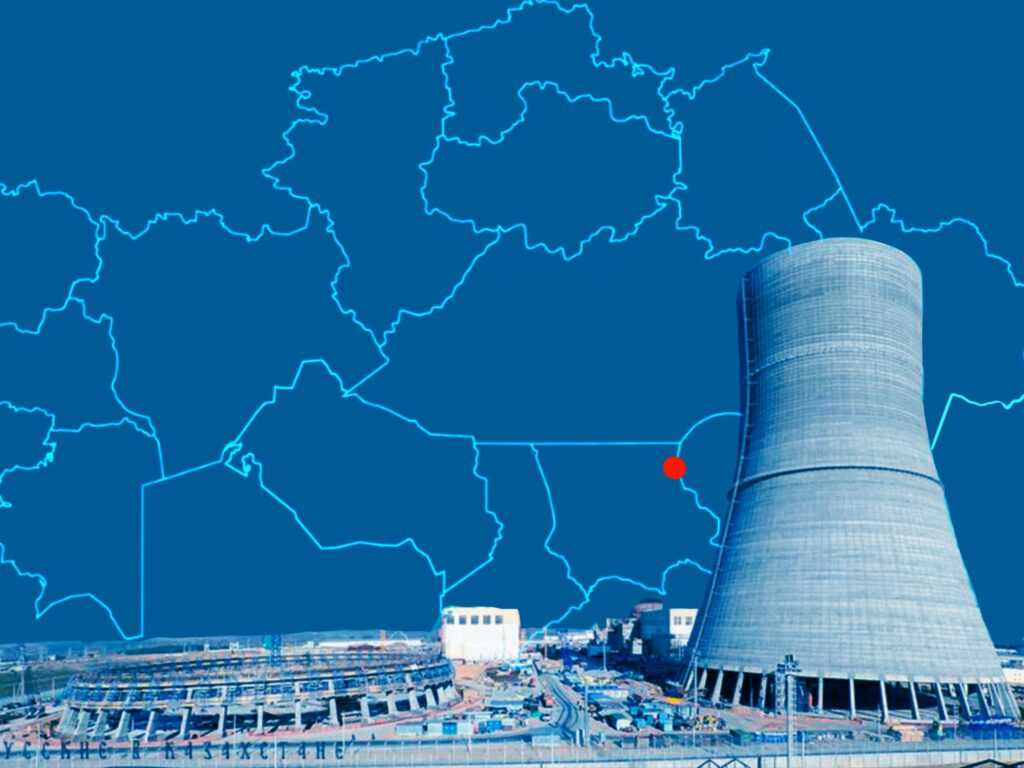
Renowned for its abundant uranium reserves and expansive mining ventures, Kazakhstan is making substantial progress in the realm of nuclear power. Currently, approximately 60 nuclear reactors are under construction worldwide in 17 countries, and with more in the pipeline, demand for uranium has skyrocketed. Kazakhstan is by far the world's largest producer of nuclear fuel, mining 21,227 tons in 2022, which equates to 43% of global production. Kazatomprom, the national atomic company, is the world's largest uranium producer, with its subsidiaries, affiliates, and joint ventures developing 26 deposits. Russia, Japan, China, Canada, and France are all heavily invested, whilst international agreements exist with a plethora of other nations. Kazakhstan’s inaugural venture into the nuclear field was marked by the BN-350 fast-neutron reactor in Aktau, which ran from 1973 to 1999 before being decommissioned. Now, President Tokayev has announced a referendum will be held to decide whether to build the nation’s first fully-fledged nuclear power plant. "On the one hand, Kazakhstan, as the world's biggest uranium producer, should have its own nuclear power capacity," Tokayev stated. "On the other hand, many citizens and some experts have concerns about the safety of nuclear power plants.” The Proving Ground With Kazakhstan having endured the most contamination of all the former Soviet Republics, anything nuclear is a contentious issue. Between 1949 and 1989, the authorities executed more than 750 nuclear tests in Kazakhstan, the bulk of these, including the USSR’s first successful atomic explosion - codenamed Joe-1 - taking place in the Semipalatinsk Polygon (proving ground) in the north-east of the country. By far the hardest hit area, Semipalatinsk saw 456 tests, which affected two million people across 300 square kilometers. Eager to know what to expect in the event of a nuclear war, in 1957 the Soviets secretly opened Dispensary Number Four in Semipalatinsk. Shipping in spectators - teachers were instructed to have their pupils watch explosions - the facility observed and analyzed the effects of radiation on the populous and reported their findings back to Moscow. In this post-apocalyptic land, elevated levels of cancer, tuberculosis and mental illness persist. Today, people swim in crater lakes left by blasts which dot the steppe, though animals won’t go near the water. With all agriculture banned, a vast swathe of land still remains off-limits. Pregnancies are still screened for possible termination, with 6% of babies born “polygon.” Even in inhabited areas, Geiger counters read over 250; the normal level is just fifteen. In their headlong rush to abandon the empire upon the collapse of the USSR, the Russians left more than an undetonated payload in the mines of Semipalatinsk. As soldiers rioted over conditions and unpaid wages, upon its independence Kazakhstan inherited the fourth largest nuclear arsenal in the world. With Libya’s Colonel Gaddafi sniffing around, it was widely rumored that the Iranians, who the CIA publicly alleged to be “actively shopping,” had offered $300 million for weapons-grade uranium. Arriving in Kazakhstan post-haste, through a combination of threats, the promise of a seat at the international table...