• KGS/USD = 0.01144 0%
  • KZT/USD = 0.00211 0%
  • TJS/USD = 0.10526 0%
  • UZS/USD = 0.00008 0%
  • TMT/USD = 0.28530 0%
  • KGS/USD = 0.01144 0%
  • KZT/USD = 0.00211 0%
  • TJS/USD = 0.10526 0%
  • UZS/USD = 0.00008 0%
  • TMT/USD = 0.28530 0%
  • KGS/USD = 0.01144 0%
  • KZT/USD = 0.00211 0%
  • TJS/USD = 0.10526 0%
  • UZS/USD = 0.00008 0%
  • TMT/USD = 0.28530 0%
  • KGS/USD = 0.01144 0%
  • KZT/USD = 0.00211 0%
  • TJS/USD = 0.10526 0%
  • UZS/USD = 0.00008 0%
  • TMT/USD = 0.28530 0%
  • KGS/USD = 0.01144 0%
  • KZT/USD = 0.00211 0%
  • TJS/USD = 0.10526 0%
  • UZS/USD = 0.00008 0%
  • TMT/USD = 0.28530 0%
  • KGS/USD = 0.01144 0%
  • KZT/USD = 0.00211 0%
  • TJS/USD = 0.10526 0%
  • UZS/USD = 0.00008 0%
  • TMT/USD = 0.28530 0%
  • KGS/USD = 0.01144 0%
  • KZT/USD = 0.00211 0%
  • TJS/USD = 0.10526 0%
  • UZS/USD = 0.00008 0%
  • TMT/USD = 0.28530 0%
  • KGS/USD = 0.01144 0%
  • KZT/USD = 0.00211 0%
  • TJS/USD = 0.10526 0%
  • UZS/USD = 0.00008 0%
  • TMT/USD = 0.28530 0%

Viewing results 1843 - 1848 of 3385

Why Kazakhstan’s Deepening Ties With Afghanistan Are Significant

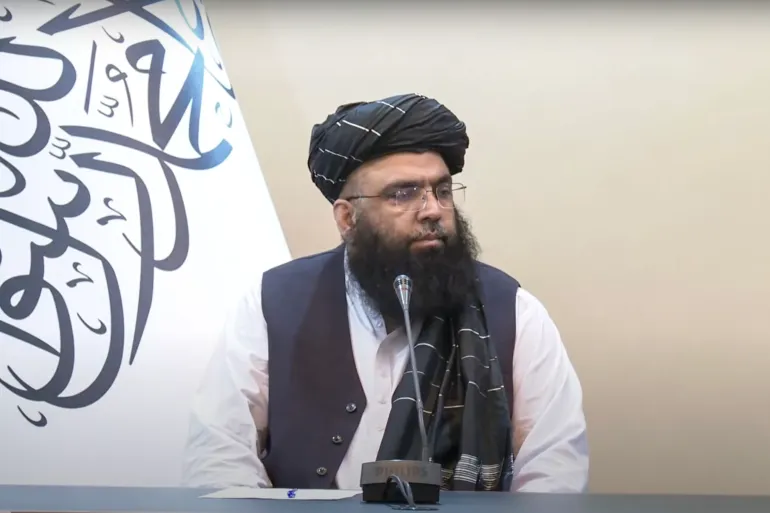
At the end of April a Kazakh delegation made an official visit to Kabul, where a meeting of the Kazakh-Afghan Business Forum and an exhibition of Kazakh products were held. This was the third bilateral event aimed at expanding trade and economic ties between Kazakhstan and Afghanistan. The visit to Kabul indicates Astana’s intention to enhance Kazakhstan’s relations with the new Afghan authorities, and not only through trade. This is evidenced by a number of details that differed from previous official contact. First, an unannounced trilateral government meeting took place between Afghanistan, Kazakhstan and Turkmenistan in Kabul. The result was the announcement that a new logistics route to Afghanistan through Turkmenistan and Kazakhstan would be developed. There is nothing earthshaking about this – Turkmenistan is set to become a transportation hub for international corridors passing through Kazakhstan, primarily the North-South and the Middle corridors, as well as the Lapis Lazuli Corridor (Turkey-Azerbaijan-Turkmenistan-Afghanistan). What is significant is that the sides are striving to create favorable conditions for logistics, especially more competitive transport tariffs so trains can pass through faster. This is particularly important given congestion in Uzbekistan, where bottlenecks occur. The announcement in Kabul also means a direct route to economically attractive western Afghanistan and further south. What else made the Kabul visit notable was the meeting between Kazakh deputy prime minister Serik Zhumangarin, who oversees trade, and Abdul Kabir, the Taliban’s deputy prime minister for political affairs. Given the reputation of the Taliban, it is not in the interests of Astana to simply stage a conversation for the cameras. Unfortunately, details about the Zhumangarin-Kabir meeting are few. According to the available information, the deputy prime ministers discussed security issues in Afghanistan, apparently in the context of how to grow the Afghan economy. Following the meeting, Kabir stated that Afghanistan does not want to be a threat to the region, and intends to improve relations with its neighbors through the progressive development of trade and economic relations. The Zhumangarin-Kabir meeting is said to have taken place on the initiative of the Afghan side. Considering Kabir’s closeness to the emir of the Taliban, it is likely that the initiative came from him. Other notable outcomes of the visit of the Kazakh delegation to Kabul included: discussion of joint projects for geological exploration, mining and processing of solid minerals in Afghanistan, as well as in the IT sector; discussion of the possibilities for supplying Kazakh-made cars and subsequent localization of service centers in Afghanistan; a rise in the quota for Afghan students at Kazakh universities from 30 to 60, as well as a 10-day trip to children’s camps in Kazakhstan for 30 Afghan children in the summer of 2024; and discussion of the possibility of establishing direct flights between the two countries. Aidar Borangaziev is a Kazakhstani diplomat. He has worked in the diplomatic service in Iran and Afghanistan. He is a founder of the Open World Center for Analysis and Forecasting Foundation (Astana). He is an expert in regional security.    

Central Asia as an Emerging Economic Region

Central Asia, spanning an area from the Caspian Sea in the west to China in the east and from Afghanistan in the south to Russia in the north, is rapidly emerging as a significant economic block. Comprising five post-Soviet states — Kazakhstan, Kyrgyzstan, Tajikistan, Turkmenistan, and Uzbekistan — this region is distinguished by its rich natural resources and strategic geographic position, as well as its natural beauty and cultural heritage. With a combined population of around 75 million people, Central Asia has emerged as a dynamically developing market that is increasingly attracting global interest. The transformation unfolding in Central Asia holds both promise and significant challenges for its residents and foreign investors alike. This shift is driven by increasing calls for political reform, the dynamism of a youthful population, and an imperative for sustainable development alongside the pressing need to diversify economic bases.   Structural changes following independence in 1991 set the stage for robust growth from 2000s onward Following the collapse of the Soviet Union in 1991, Central Asian countries faced the challenge of transitioning from centrally-planned to market-oriented economies. This period was marked by significant economic difficulties across the region including negative GDP growth and hyperinflation, compounded by the complexities of privatization, legal reforms, and both social and political instability. The nations responded with different development strategies aimed at market liberalization, infrastructure improvement, and the utilization of natural resources. By 2000, Central Asia experienced a noticeable economic resurgence, marking a striking contrast to the conditions in 1991. In that year, Uzbekistan's GDP growth was at -0.5%, Kyrgyzstan at -7.9%, and Kazakhstan at -11%. A decade later, these countries reported positive growth rates of 4.2%, 5.3%, and 13.5%, respectively. This remarkable turnaround can be attributed to the "low base effect," where the initially low economic indicators set the stage for significant improvements over time. The total GDP of Central Asian countries has grown seven times since the beginning of the 2000s. In comparison with the global economic growth rate of +2.6% annually, the Central Asian region grew by an average of 6.2% between 2000 and 2023 according to IMF data. All Central Asian states are forecasted to outpace the IMF’s projected growth rate for emerging markets and developing economies 2024 which stands at 4.2%; however, actual growth will depend on reforms and foreign investment. Kazakhstan has set the highest growth goal with a five-year target GDP increase to $450 billion, which would require an achievable but challenging 6% annual growth. As illustrated below, Kazakhstan stands out as the economic powerhouse of Central Asia with a GDP almost 1.5 times that of all the other countries combined.     Labor markets: Optimal demographics for growth and innovation According to United Nations data, approximately 75 million people live in Central Asia, representing 1% of the world’s population. Relative to the global median age, all of Central Asia boasts a young population. A youthful population fuels economic growth by replenishing the workforce, driving innovation, and expanding consumer markets. It supports older demographics...

Kazakh Embassy Counselor in UAE Recalled After Domestic Violence Allegations

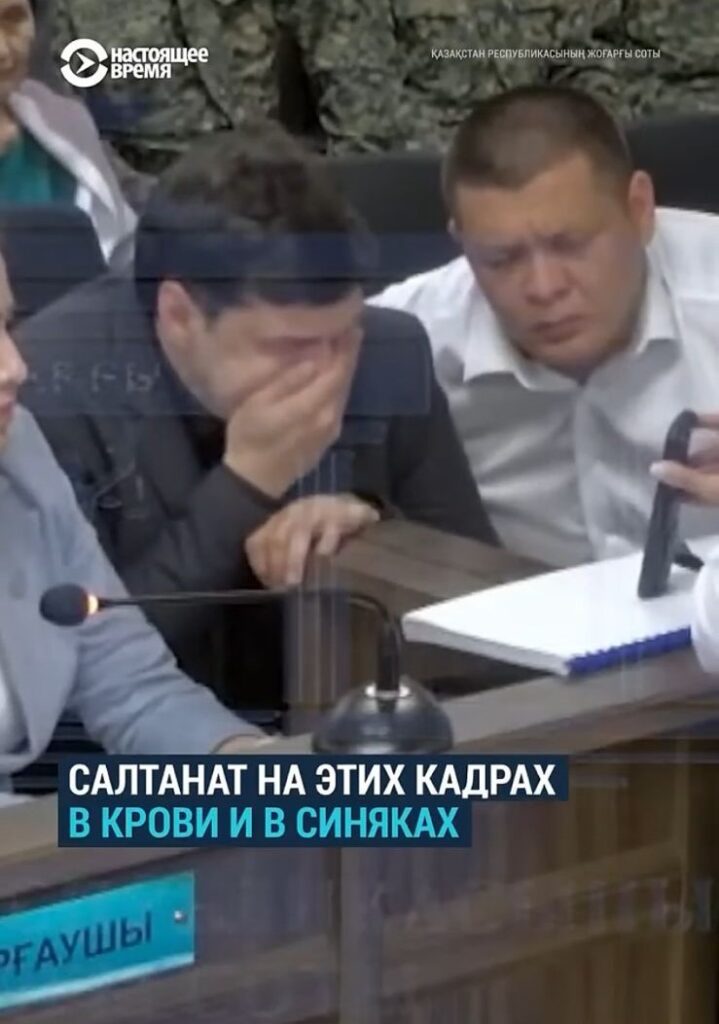
The Ministry of Foreign Affairs of Kazakhstan has recalled an Embassy Counselor from the United Arab Emirates (UAE), Saken Mamash, after the publication of a video message by his wife, Karina Mamash, who alleged ongoing domestic violence, according to a report in Kursiv.kz. "We urgently recalled this employee to Kazakhstan. Further, his case will be dealt with by law enforcement agencies," said an official representative of the ministry. Karina Mamash's appeal was published on an Instagram page run the public foundation, "NeMolchi" (Don't Remain Silent"). In the video, Mamash accuses her husband of years of violence, and expresses fear for her own safety and the safety of their children. "My name is Karina Mamash Gosmanovna. My husband, counselor to the Ambassador of the Republic of Kazakhstan to the UAE, yesterday beat me and my sister, who came to visit me on the 3rd [of May]. I demand help from our state. I am tired of being silent. I am tired of tolerating. For ten years he has been raping me, beating me. I am in danger, and my children are in danger around him. I demand help from our state. Help me," she said, attaching photos of herself and her sister with bruises on their faces to the post. Karina Mamash also insisted that her husband be "stripped of his status as a diplomat and put in jail for all the abuse." Domestic violence has become a key topic of discussion in Kazakhstan amid the high-profile case of Kuandyk Bishimbayev for allegedly killing his common-law wife, Saltanat Nukenova. On April 15, President Tokayev signed into law amendments and additions passed by Kazakhstan’s parliament ensuring the rights of women and the safety of children. The initiative represents a first in the CIS in terms of how far it goes to provide protection for women and children in the country.

Bishimbayev Trial: Will the “Show” Shift Reality?

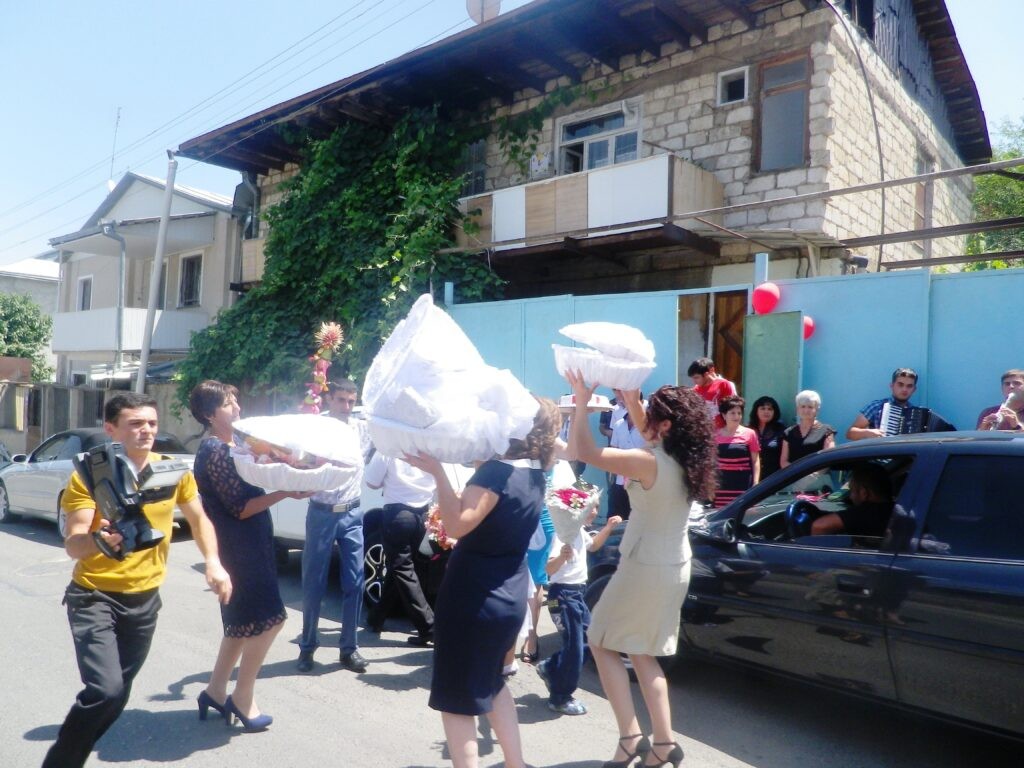
The trial of Kuandyk Bishimbayev, accused of murdering his common-law wife, Saltanat Nukenova, is coming to an end with the verdict now in the hands of the jury. The trial has resonated widely in Kazakhstani society, but according to Gulmira Ileuova, a sociologist and head of the public foundation, Strategy: Center for Social and Political Research, Kazakhstan still has a long way to go to successfully fight abusive relationships. Ileuva commented on the case in an interview with the Times of Central Asia.   TCA: In Kazakhstan, Bishimbayev's trial has received a huge amount of attention, and Nukenova's death is being discussed at home and abroad, with rallies being held in her memory. Moreover, a law toughening penalties for domestic violence has recently been passed. Will that help to radically change the situation with violence to which thousands of Kazakhstani women are subjected every year? Ileuova: It seems to me that Bishimbayev's trial has influenced some categories of people - those who are ready to listen and draw conclusions. But society in a broader sense will not be overtly affected by this situation. Specialists are watching the trial, examining the behavior of lawyers, prosecutors, and other participants. Conclusions are also being drawn that the arguments used by the defense remain childish, infantile. Public opinion attributes to Bishimbayev's lawyers, let's say, the moral image of Bishimbayev himself. Psychologists will also draw conclusions: about problems with upbringing, family relations, etc. But in general, the feeling is that of a show having been created, captivating the audience, and making [the audience] terrified or delighted. Emotional swings are created, adrenaline is produced, and accordingly, people watch and get involved. But I doubt that there has been a profound shift in society against the backdrop of the trial. There needs to be a lot of additional activities, outreach, to tie the new law on domestic violence, in particular, to direct practice. Just the other day, the wife of a Kazakhstani diplomat appealed to the authorities for protection, saying that her husband had been torturing her for years and had beaten her again. This particular man did not draw any conclusions from Bishimbayev's story, including concerning his own actions. This official should have realized that the president was one of the most active initiators of the law on domestic violence. Of course, further public reaction will also be influenced by the expected decision of the court in the Bishimbayev case. If the principle of the inevitability of punishment and changes in the judicial system are demonstrated, there will be a certain shift. However, for now it is perceived mainly as a show. There is still an educational effect [only] in a small segment of society.   TCA: Why doesn't society perceive such clear signals? Why isn't there a shift to zero tolerance for domestic violence? Ileuova: We want change too fast, which is hardly possible because the inertia within society is huge. If women are sold for kalym (bride price or dowry), then they are still...

Kazakhstan to Host Armenia-Azerbaijan Talks on May 10

The foreign ministers of Armenia and Azerbaijan will hold talks in Almaty on May 10 as they seek to end their long-running conflict, Kazakhstan said on Monday. The negotiations will happen in line with “previously reached agreements,” said Aibek Smadiyarov, spokesman for Kazakhstan’s Ministry of Foreign Affairs. Jeyhun Bayramov, Azerbaijan’s top diplomat, and his Armenian counterpart, Ararat Mirzoyan, will attend, according to the Kazakh official. Armenia and Azerbaijan have been locked in tension and conflict over territory since the 1990s, though the two sides have been working to delineate their borders following Azerbaijan’s retaking of control of the disputed Nagorno-Karabakh region last year. As reported by TCA last week, in a statement President Tokayev “welcome[d] the agreement between the Republic of Azerbaijan and the Republic of Armenia to hold talks at the Foreign Ministers’ level on the preparation of a peace treaty between the two states, at the suggestion of the Kazakh side.” Tokayev went on to express his hope the upcoming meeting would help with the “practical implementation” of agreements between the two sides.

Kazakhstan Offers to Host Platform for Russia-Ukraine Negotiations

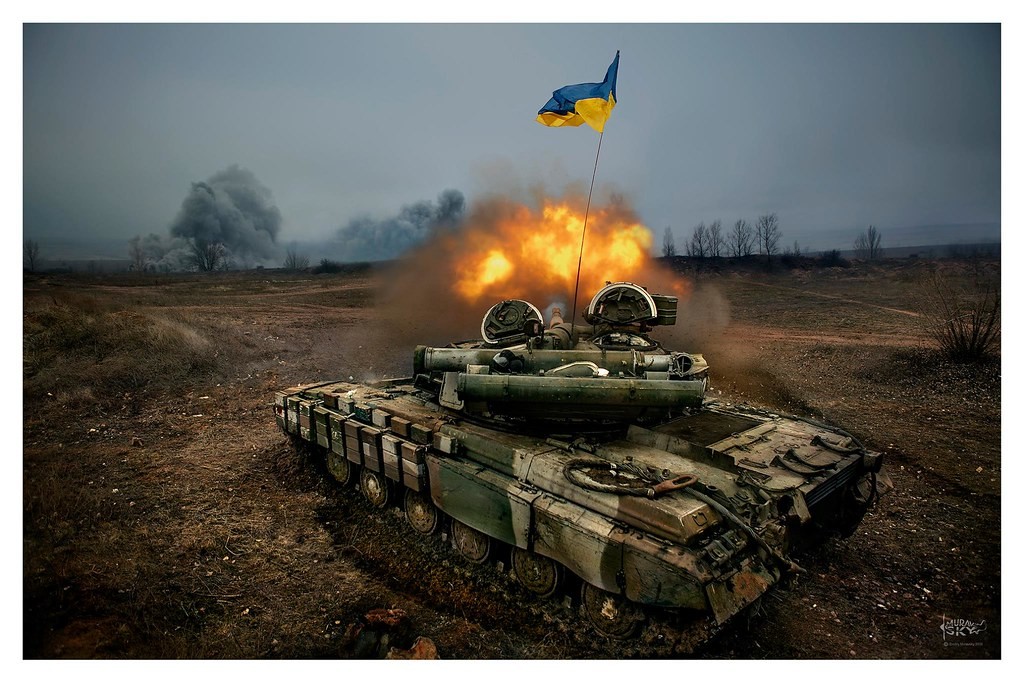
Kazakhstan is prepared to host negotiations to settle the war in Ukraine, according to comments made by Kazakhstan's ambassador to Russia, Dauren Abayev, in an interview with the Russian state news outlet TASS. "Certainly, Kazakhstan is always ready to help on all processes that concern the world. This is not only Russia and Ukraine, but also Armenia and Azerbaijan, on the Syrian issue, on the Iranian issue. It is probably [an overstatement] to say to be mediators, but to provide a platform, to create some conditions, we are certainly ready," Abayev said. He added: "There are many different initiatives now, and there is a clear understanding that without Russia's participation, these processes are impossible. Of course, Russia's opinion should always be taken into account in these processes. Of course, we are ready to be, as I say, not mediators, but to provide a platform, to create some conditions," he added. As previously reported in the media, Kazakhstan's president Kassym-Jomart Tokayev, during his recent visits to Azerbaijan and Armenia, underscored Kazakhstan's readiness to provide platforms for negotiations between Baku and Yerevan. The Armenian foreign ministry said that a direct meeting of the sides will be held as early as May 10. Previously, Kazakhstan provided a platform for negotiations on the war in Syria. Negotiations concerning the Iranian nuclear program have also been held in Kazakhstan.