• KGS/USD = 0.01144 0%
  • KZT/USD = 0.00216 0%
  • TJS/USD = 0.10637 0%
  • UZS/USD = 0.00008 0%
  • TMT/USD = 0.28530 0%
  • KGS/USD = 0.01144 0%
  • KZT/USD = 0.00216 0%
  • TJS/USD = 0.10637 0%
  • UZS/USD = 0.00008 0%
  • TMT/USD = 0.28530 0%
  • KGS/USD = 0.01144 0%
  • KZT/USD = 0.00216 0%
  • TJS/USD = 0.10637 0%
  • UZS/USD = 0.00008 0%
  • TMT/USD = 0.28530 0%
  • KGS/USD = 0.01144 0%
  • KZT/USD = 0.00216 0%
  • TJS/USD = 0.10637 0%
  • UZS/USD = 0.00008 0%
  • TMT/USD = 0.28530 0%
  • KGS/USD = 0.01144 0%
  • KZT/USD = 0.00216 0%
  • TJS/USD = 0.10637 0%
  • UZS/USD = 0.00008 0%
  • TMT/USD = 0.28530 0%
  • KGS/USD = 0.01144 0%
  • KZT/USD = 0.00216 0%
  • TJS/USD = 0.10637 0%
  • UZS/USD = 0.00008 0%
  • TMT/USD = 0.28530 0%
  • KGS/USD = 0.01144 0%
  • KZT/USD = 0.00216 0%
  • TJS/USD = 0.10637 0%
  • UZS/USD = 0.00008 0%
  • TMT/USD = 0.28530 0%
  • KGS/USD = 0.01144 0%
  • KZT/USD = 0.00216 0%
  • TJS/USD = 0.10637 0%
  • UZS/USD = 0.00008 0%
  • TMT/USD = 0.28530 0%

Viewing results 2155 - 2160 of 3518

Quality of Communications Checked in Multiple Regions

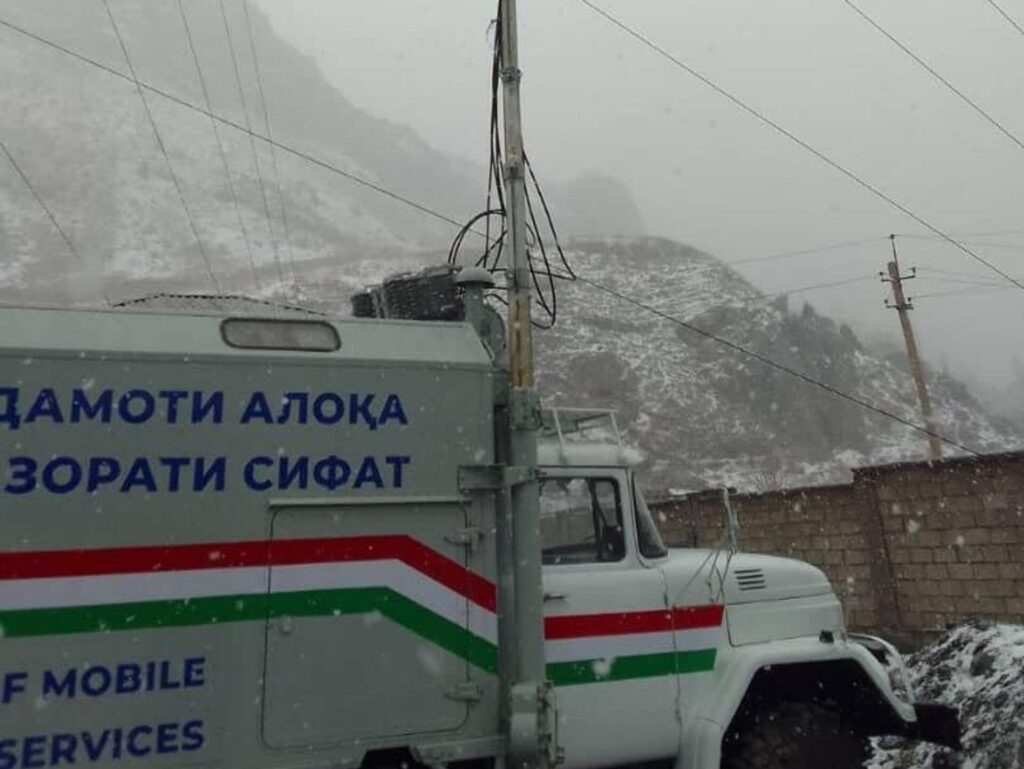
The results of monitoring the quality of mobile communications in the cities and districts of Nurek, Dangara, Vose and Kulyab were presented to the Head of the Communications Service of Tajikistan, Bek Sabur, who arrived on a working visit to the Khatlon region. His visit is connected to the implementation of a decree from the President of Tajikistan "On measures to expand non-cash payments." According to various sources, the level and quality of communications do not meet the requirements. The press service of the Tajik Communications Service reported that Sabur, together with specialists, tested mobile communications in Nurek, Dangar, Vos and Kulyab. "The main purpose of the trip is to determine the accuracy of coverage of base stations in populated areas and identify problems," the press service stated. As a result of the technical inspection, it transpired that not all areas meet the quality requirements for communications. In addition, operator coverage was weak in some places. "The management of the Communications Service ordered providers to install additional stations at the same time as updating the existing ones," the department noted, adding that Sabur held a meeting with the residents of Khatlon to get their opinion on the level and quality of mobile communications. Sabur's visit followed reports received from all over Tajikistan about the low quality of mobile operator services. Tajiks often complain about slow Internet and poor communication. One of the main reasons for this is the lack of infrastructure development. It is also affected by poor energy supply and insufficient development of modern communication technologies in the country. As a result, a significant part of the population has difficulty accessing the Internet. Another problem is the lack of investment in the country's telecommunications industry, although this is slowly being corrected. For example, Tajikistan and China recently signed an agreement that provides for the supply of Chinese equipment to the Republic, which will help improve the quality of the Internet. Tajikistan has also agreed to cooperate with two Russian companies - PITER IX and Digit – in this area. Sabur instructed officials and mobile companies to urgently eliminate the identified shortcomings in order to provide all regions with stable communications and Internet following the Presidential decree.  
How Will Free Trade Zone Between EAEU and Iran Affect Kazakhstan?

The free trade Agreement between the Eurasian Economic Union (EAEU) and Iran will ensure an increase in annual mutual trade to U$18-20 billion in the near future, Andrey Slepnev, a member of the Board for Trade of the Eurasian Economic Commission said during a briefing. The free trade agreement between the EAEU and Iran is scheduled to be adopted on December 25th 2023. “Iran is a large market, our neighbor, and a key country in the international North-South transport corridor,” said Slepnev. “We consider this new agreement as one of the elements of this corridor." Slepnev stated that currently trade between EAEU countries with Iran is carried out, among other things, within the framework of the interim agreement adopted in 2019, which covers about 360 commodity items. But even this has made it possible to double mutual trade in three years, from $2.5 billion to more than $5 billion, and in 2022 to bring it to $6.2 billion. “The conclusion of a full-scale agreement will allow us to double trade in a short time. The first target we are focusing on is $18-20 billion, which is quite realistic to achieve in the foreseeable future," said Slepnev, adding that implementation of the agreement will be carried out on the basis of the WTO. For this purpose, work will be carried out on the harmonization of regulations, since Iran is not a WTO member. In addition, the parties will strive to increase the volume and channels for making payments in their national currencies. “In Kazakhstan, we see prospects for the supply of traditional Kazakh products to Iran; first of all, wheat, barley, agri-food products, metals, and chemical products. This agreement will allow Kazakhstan to increase its presence in the Iranian market," he added. Slepnev stressed that the expansion of the EAEU trade partnership with third countries will make it possible to use and actively develop the transit and transport potential of EAEU countries. Trade with Iran naturally involves the use of the North-South corridor, and will also contribute to the communications in the East-West corridor, which runs through the countries of Central Asia and Russia. “The demand for these intercontinental transport corridors is constantly increasing in the context of international tension. Economically, we live in a time when the one who is faster wins, so our advantage is speed and convenience," Slepnev concluded.

Kazakhstan to Build New Reservoirs to Reduce Dependence on Neighboring Countries

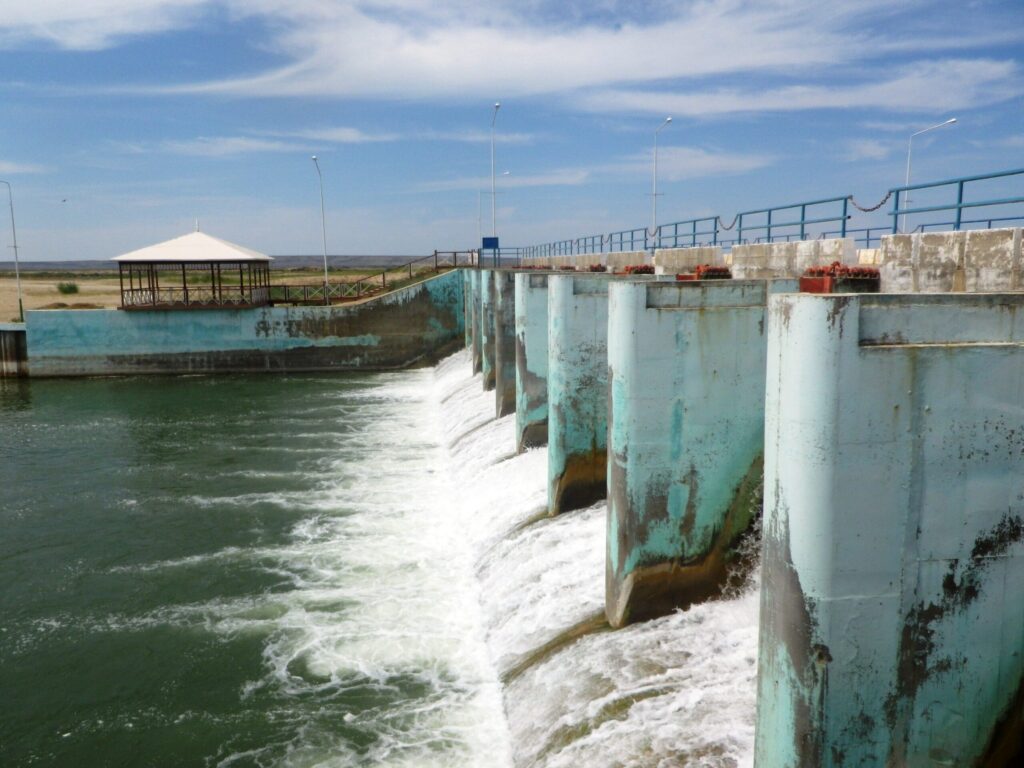
The Ministry of Water Resources and Irrigation of Kazakhstan on December 22nd said it is beginning work on the construction of nine new reservoirs out of a planned twenty to reduce Kazakhstan’s dependence on the water flow from neighboring countries by 25%. The commissioning of new reservoirs will also increase the area of irrigated land by 250,000 hectares and reduce the threat of flooding in 70 rural settlements with a population of 137,000 people. Currently, design documentation is being developed for the nine facilities, and negotiations are underway to attract investors to the construction of new reservoirs. The Ministry of Water Resources and Irrigation has developed a Comprehensive Water Development Plan for 2024-2030. The document includes measures for the construction and reconstruction of reservoirs, reconstruction of hydraulic structures and irrigation systems. “The plan will be implemented in several stages,” said the Minister of Water Resources and Irrigation of Kazakhstan, Nurzhan Nurzhigitov. “In 2024-2026, it is planned to begin construction of twenty new reservoirs with a volume of 2.4 km³ in eleven regions. The implementation of the Comprehensive Plan will increase the volume of available water resources by 3.7 km³, expand the area of irrigated land to 2.2 million hectares, reduce annual losses of irrigation water by 3 km³, and also provide water supply to 41 settlements with a population of more than 55,000 people.” Kazakhstan, especially its southern regions, is highly dependent on irrigation water flow from upstream Kyrgyzstan. This past summer, Kyrgyzstan experienced a shortage of irrigation water and was forced to reduce the water flow to Kazakhstan’s southern Zhambyl region, which negatively impacted the region’s agriculture.

Kazakhstan Launches Construction of New Railroad to China

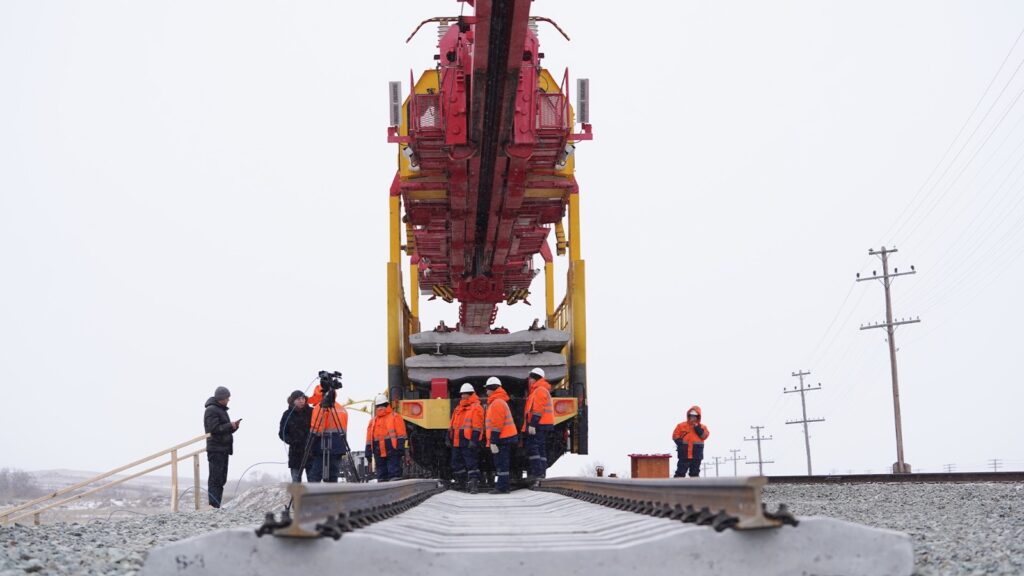
The Prime Minister of Kazakhstan, Alikhan Smailov, via a teleconference on December 20th officially inaugurated the construction of a new railway line, Bakhty-Ayagoz, with a total length of 272 km in the Abay Region of southern Kazakhstan. The project is being implemented upon the instruction of President Kassym-Jomart Tokayev to increase the transport and transit potential of Kazakhstan. The project also involves the opening of a third border crossing with China, Bakhty-Chuguchak. The railway line will increase the throughput capacity between Kazakhstan and China from 28 million to around 48 million tons, lessen the burden on the southern checkpoints, and attract additional volumes of transit. It is planned that the double-track line will begin operating in 2027. The large-scale project will be realized with the participation of a private investor on PPP principles. During the ceremony, the Prime Minister stated that last year Kazakhstan's railroads transported the largest volume of cargo since the country’s independence, which amounted to 245 billion tons/kilometer. These rates have been maintained in the current year, despite the geopolitical situation and infrastructure constraints.[/vc_column_text][vc_single_image image="12823" img_size="full" el_class="scond-image" parallax_scroll="no" woodmart_inline="no"][vc_column_text woodmart_inline="no" text_larger="no"]"Over the past five years, the volume of transit container transportation has grown 3.2-fold. Existing transit corridors are being expanded, and new ones are being opened. The Trans-Caspian International Transport Route, North-South and Southern corridors have become particularly relevant," Smailov said. At the same time, the throughput and infrastructure capacities have reached their peak. To address this strategic issue, a decision was made to implement a number of infrastructure projects in the rail industry. The new line is expected to help increase Kazakhstan's exports and the transit of goods from Russia to China and back.

EDB and Kazakhstan Join Efforts for Water Investment

EDB and Kazakhstan Join Efforts for Water Investment The Eurasian Development Bank (EDB) has signed a memorandum of cooperation with Kazakhstan’s Ministry of Water Resources and Irrigation (MWRI). Ruslan Dalenov, Vice Chairman of the EDB Management Board, and Bekniyaz Bolat, MWRI First Deputy Minister, formalized this partnership during a ceremony in Astana on December 13th. The memorandum aims to establish long-term, mutually beneficial collaboration focused on mobilizing investment and grants for joint water and irrigation projects. “We are committed to jointly developing sustainable infrastructure solutions that will support important water-related projects and contribute to overall economic growth,” said Dalenov. The parties intend to actively cooperate in financing investment projects and exchange expertise through participation in workshops, conferences, and other events. The EDB is currently implementing the Central Asian Water and Energy Complex mega-project based on research and projections on the most effective ways to comprehensively develop the sector. Bank analysts have conducted studies such as Investment in the Water and Energy Complex of Central Asia, Regulation of the Water and Energy Complex of Central Asia, and Efficient Irrigation and Water Conservation in Central Asia. The latter outlines ten practical steps for preserving irrigated land potential and promoting water conservation, including four recommendations for adoption at a regional level and six at a national level. These measures are designed to conserve enough water annually to support sustainable development. The EDB has also identified projects to cater to the region’s electricity and water needs. The Bank is financing the construction of the 100 MW Kulanak HPP in the Kyrgyz Republic. Additionally, the Bank is evaluating several projects aimed at enhancing the region’s water and energy infrastructure.

Recent murder in Kazakhstan draws attention to domestic violence and gender discrimination

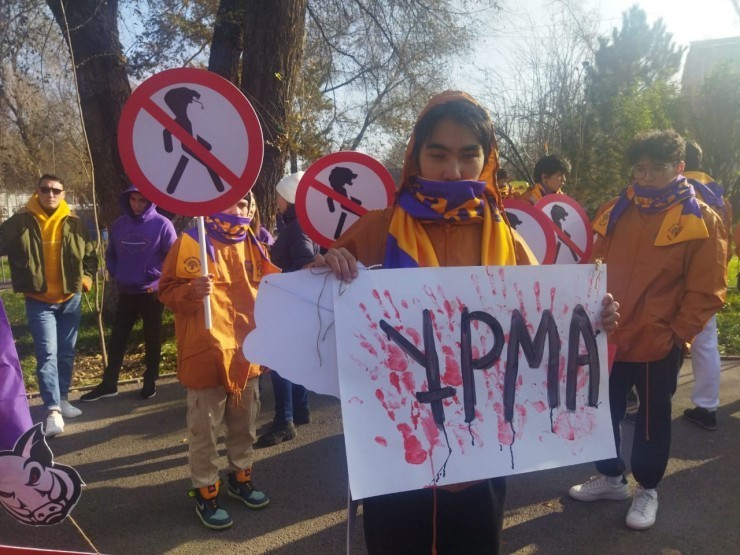
A very public tragedy in Kazakhstan put on display domestic violence at its worst. A quarrel in a restaurant in Astana on the evening of November 8th is reported to have resulted in the death of Saltanat Nukenova, the 31-year-old wife of Kuandyk Bishimbayev. Bishimbayev, who served as Minister of National Economy under former President Nazarbayev, was detained on the same day for suspected murder and remains under arrest awaiting trial. On November 11th, Saltanat was buried in Pavlodar. This appalling incident highlighted the urgent need for stronger protections against domestic violence. An authorized rally was held in Almaty in late November. Around 200 participants came out onto the square behind the Sary Arka cinema, holding posters and chanting slogans against domestic violence. The event was organized by a public movement called Zhana Adamdar and the attendees mostly included young people and students from the movement. Relatives of Saltanat Nukenova also took part. The participants wanted to raise awareness about fighting any manifestation of violence against women and children. Most of the attendees were dressed in the same style, and many of them had scarves with the inscription “Say no to the animal world,” which was also the title of the rally. Speakers at the event detailed the most resonant cases of violence in recent times while the organizers of the rally held a small flash mob and arranged an installation with mannequins in cages with animal masks on them. A minute of silence was observed in honour those who died as a result of violence. Progress in protecting women What proceeded this public tragedy hopefully presents a silver lining. A month later, on December 8, Kazakhstan's current President Kassym-Jomart Tokayev signed a Decree to strengthen human rights with concrete steps towards preventing violence and promoting gender equality. The Decree instructs Kazakhstan’s government to take systematic measures to promote equal rights and opportunities in all spheres of society, as well as to overcome all forms and manifestations of gender discrimination. The decree also encompasses legislation to deter domestic violence and promotes equal rights and safety for both men and women in the Republic of Kazakhstan, as endorsed by UN Security Council resolution 13251. It further involves legislative measures to tighten criminal liability in cases of domestic violence, which have now been implemented. These measures aim to hold perpetrators accountable and ensure that victims can get justice. Additionally, offenders of domestic violence may be required to undergo comprehensive psychological correction as part of their rehabilitation process. The Decree also asks for creating specialized units within the Ministry of Internal Affairs staffed with female officers, who can enhance the effectiveness of combating domestic violence. While the timing of the Decree coincided with the aftermath of Saltanat’s death, there are signs that these steps may have already been in the works. President Tokayev had voiced concerns about domestic violence before the current headlines emerged. At a meeting in the Ministry of Internal Affairs in June 2023, for example, he had affirmed that “comprehensive...