• KGS/USD = 0.01143 -0%
  • KZT/USD = 0.00192 -0%
  • TJS/USD = 0.10820 0.19%
  • UZS/USD = 0.00008 0%
  • TMT/USD = 0.28575 0%
  • KGS/USD = 0.01143 -0%
  • KZT/USD = 0.00192 -0%
  • TJS/USD = 0.10820 0.19%
  • UZS/USD = 0.00008 0%
  • TMT/USD = 0.28575 0%
  • KGS/USD = 0.01143 -0%
  • KZT/USD = 0.00192 -0%
  • TJS/USD = 0.10820 0.19%
  • UZS/USD = 0.00008 0%
  • TMT/USD = 0.28575 0%
  • KGS/USD = 0.01143 -0%
  • KZT/USD = 0.00192 -0%
  • TJS/USD = 0.10820 0.19%
  • UZS/USD = 0.00008 0%
  • TMT/USD = 0.28575 0%
  • KGS/USD = 0.01143 -0%
  • KZT/USD = 0.00192 -0%
  • TJS/USD = 0.10820 0.19%
  • UZS/USD = 0.00008 0%
  • TMT/USD = 0.28575 0%
  • KGS/USD = 0.01143 -0%
  • KZT/USD = 0.00192 -0%
  • TJS/USD = 0.10820 0.19%
  • UZS/USD = 0.00008 0%
  • TMT/USD = 0.28575 0%
  • KGS/USD = 0.01143 -0%
  • KZT/USD = 0.00192 -0%
  • TJS/USD = 0.10820 0.19%
  • UZS/USD = 0.00008 0%
  • TMT/USD = 0.28575 0%
  • KGS/USD = 0.01143 -0%
  • KZT/USD = 0.00192 -0%
  • TJS/USD = 0.10820 0.19%
  • UZS/USD = 0.00008 0%
  • TMT/USD = 0.28575 0%
13 December 2025

Viewing results 553 - 558 of 2334

Joint Military Exercises to Strengthen Ties Between Azerbaijan, Kazakhstan, Pakistan, Turkey, and Uzbekistan

News sources in Azerbaijan citing the Ministry of Defense of the Republic report that five nations, Azerbaijan, Turkey, Uzbekistan, Kazakhstan, and Pakistan, are set to participate in a significant joint military exercise, signaling a coordinated effort to enhance military cooperation, strengthen regional security, and bolster strategic partnerships among the participating countries. Scheduled to take place in September, the Eternal Brotherhood-IV multinational exercise highlights the growing collaboration in defense and security among these countries, which share common geopolitical and strategic interests. Purpose and Objectives The forthcoming exercises aim to improve interoperability among the armed forces of Azerbaijan, Turkey, Uzbekistan, Kazakhstan, and Pakistan. The participating nations - each with their unique military capabilities - are seeking to tackle evolving security challenges such as terrorism, regional instability, and transnational threats. Joint maneuvers will include combat training, search-and-rescue operations, sharing tactical expertise, and honing operational coordination in various combat scenarios. Geopolitical Significance The joint exercises underscore a shared commitment to regional peace and stability at a time of shifting dynamics in global geopolitics. With Central and South Asia witnessing challenges such as the ongoing threats from militant groups, border conflicts, and the need for safeguarding vital trade and energy routes, these drills offer participating nations the opportunity to showcase unity and resilience. As a NATO member, Turkey brings extensive military experience and technological support to the table, while Pakistan has counterterrorism expertise. Kazakhstan and Uzbekistan, with their strategic positions in Central Asia, bring a regional focus to the exercises, ensuring operational relevancy in the heart of Asia. Azerbaijan, meanwhile, is eager to strengthen ties with regional and global partners after its recent military successes. These exercises also send a clear message of the countries’ commitment to multilateral defense strategies to any external adversaries seeking to exploit regional vulnerabilities. A Broader Vision for Partnership The exercises will serve as a platform to test state-of-the-art defense technologies, develop combined operational strategies, and examine responses to scenarios involving asymmetric warfare and hybrid threats. For participating nations, it is an opportunity to refine their respective military tactics and elevate their personnel's proficiency by working alongside allies. Furthermore, the drills are expected to solidify political and military relationships among the nations, extending cooperation beyond defense into economic and strategic realms. By aligning priorities and enhancing mutual trust, the exercises could pave the way for future joint programs and initiatives aimed at fostering long-term collaboration. Such initiatives are especially relevant in the context of securing critical infrastructure projects like transnational pipelines and trade corridors. The joint military exercises are part of ongoing efforts to deepen relationships across Eurasia and South Asia through defense diplomacy. They reflect a broader vision of building an integrated regional security framework while respecting the sovereignty and unique needs of each nation involved. For the participating countries, the exercises are a strategic step toward achieving a stable and cooperative future in an increasingly uncertain global landscape.

Uzbekistan Raises Concerns Over Mistreatment of Citizens During Russian Raids

Uzbekistan has expressed serious concern over the reported mistreatment of its citizens during recent police raids in Russia. On June 10, Uzbekistan’s Ministry of Foreign Affairs held a scheduled meeting with Russian officials to discuss migration issues. A ministry spokesperson stated that the Uzbek side raised alarm over reports of disrespectful and aggressive behavior toward its nationals during identity checks. “In several instances, our citizens have faced unauthorized inspections and mistreatment,” the ministry said. “Such actions do not correspond to the friendly relations between our countries. We believe that concrete measures must be taken to prevent such incidents.” The ministry emphasized that safeguarding the rights and interests of Uzbek citizens abroad remains a priority. It urged Russian authorities to treat migrants with dignity and adhere to international human rights standards. The concerns follow a large-scale raid on June 8 in Moscow’s Strogino district, where Russian law enforcement reportedly targeted a dormitory housing migrants from other Eurasian countries. The building is located near a facility belonging to the Russian Defense Ministry, according to the Russian Telegram channel Baza. During the operation, members of OMON, Russia’s special police forces under the National Guard, were seen using excessive force. Videos, some filmed by the officers themselves, show migrants being forcibly removed from their rooms, insulted, beaten, and in some instances, shocked with electric devices. The nationalities of those affected have not been confirmed. In a separate incident in St. Petersburg, approximately 200 individuals were reportedly left to sleep outdoors overnight following a similar raid. In response to these events, the Uzbek embassy in Moscow submitted an official note to the Russian Ministry of Foreign Affairs, requesting an explanation and a legal assessment of the law enforcement actions. The embassy described the incidents as unacceptable and called on Russian authorities to uphold the dignity of Uzbek nationals. Uzbekistan’s Migration Agency also issued a statement affirming it was closely monitoring the situation. It confirmed that five or six individuals with documentation issues had been detained for further investigation. The Foreign Ministry said it would continue to track developments and take further action if necessary. Uzbek authorities have encouraged citizens affected by these events to contact their nearest consulate or the Migration Agency's office in Russia.

Lenin Falls in Osh: Central Asia Redefines Its Soviet Legacy

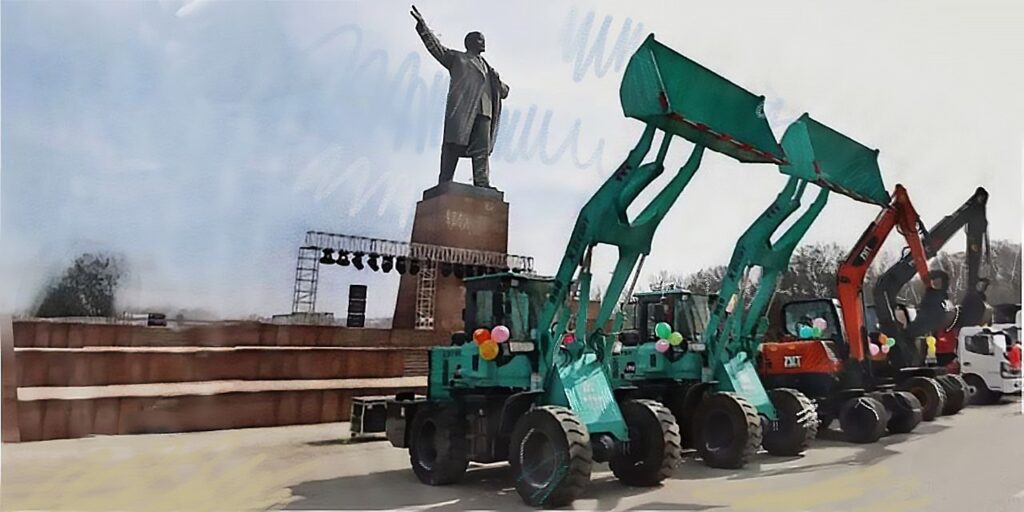
The recent removal of a towering 23-meter-tall monument to Vladimir Lenin in Osh, Kyrgyzstan, has ignited heated debate both domestically and abroad. While many are surprised the monument remained in place for more than three decades after the fall of the Soviet Union, its dismantling is part of a broader regional trend of de-Sovietization, a complex process involving the renaming of cities, removal of Soviet-era symbols, and the reassertion of national identity across Central Asia. A Symbol Removed, A Debate Ignited [caption id="attachment_32769" align="aligncenter" width="2560"] Lenin Monument in Osh, October 2024; image: TCA, Jonathan Campion[/caption] On June 7, Osh authorities dismantled what was once the tallest Lenin statue in Central Asia. Originally installed in 1975, the monument is to be relocated to a city park, according to the local government. Officials stressed the move was intended to improve the city’s architectural landscape, not to make a political statement, and have warned against "politicizing" the issue. Despite official reassurances, the move has sparked sharp reactions on social media and in the press, with Russian media outlets characterizing the relocation as an anti-Russian gesture. Generational divides have become apparent: younger residents tend to support the removal, while older citizens have expressed dismay over what they see as the erasure of history. “It’s a shame. It was more than a monument, it was part of our lives,” Elena, a local schoolteacher told The Times of Central Asia. “We joke that Lenin crossed the ‘red line’ and got demolished.” Irina Bayramukova, a 68-year-old public figure, called the decision a mistake. “The Lenin monument by Nikolai Tomsky was not only artistically significant, it represented an era. Removing it is like declaring war on those who identify with that past,” she told TCA. Kyrgyzstan, like other Central Asian republics, has been distancing itself from its Soviet legacy since gaining independence in 1991. One of the earliest symbolic moves was the renaming of the capital, once called Frunze after a Bolshevik military leader, back to Bishkek, a modified version of its pre-Soviet name. A Museum to Mikhail Frunze still stands in Bishkek, where the thatched-roof hut of his boyhood was purportedly transported brick by brick. A supporter of Stalin’s rival Zinoviev, when forced to undergo routine surgery by Uncle Joe in 1925, Frunze “mysteriously” died of chloroform anesthetic poisoning. Redefining History [caption id="attachment_32778" align="aligncenter" width="2560"] Lenin Monument in Bishkek; image: TCA, Stephen M. Bland[/caption] Originally erected in 1984 in the Central Square of Bishkek, a Lenin statue was relocated behind the State Historical Museum in 2003. As previously reported by TCA, earlier this year a debate on removing the monument altogether flared up. In 2022, the National Historical Museum of the Kyrgyz Republic in Bishkek finally reopened its doors after being closed in 2016 for renovations which were planned to take less than a year but ended up taking six years. Several government officials were charged with misappropriating funds designated for the renovations, with former Prime Minister Sapar Isakov sentenced to 18 years in prison. Reportedly, over...

Central Asian Glaciers Shrinking Irreversibly, Expert Warns

Glaciers in Central Asia are melting at an alarming rate with no signs of recovery, according to Tohir Majitov, head of the Uzbek public organization "Suvchi," in an interview with Kazinform. Majitov highlighted the escalating pressure on water supplies due to population growth and agricultural expansion across the region. "In 1991, Central Asia had nearly 6 million hectares of irrigated land. By 2024, this figure has grown to over 10 million hectares. The population has also increased from around 45 million to more than 80 million. Water supply for this growing population is now a serious issue," he explained. He noted that Uzbekistan and Kazakhstan heavily depend on the Syr Darya and Amu Darya rivers, which originate in the mountainous regions of Kyrgyzstan and Tajikistan. A critical challenge arises from the differing water needs: upstream countries store water during summer for hydropower generation in autumn and winter, while downstream nations like Kazakhstan and Uzbekistan require substantial water primarily during the summer growing season. Majitov issued a stark warning about the region's largest glacier, Tajikistan's Fedchenko Glacier, which has reportedly lost over 40% of its mass. "Between 1990 and 2005, the glacier shrank by 50 meters," he stated. "Its length is 77 kilometers, width 2.4 kilometers, and depth reaches one kilometer. Glaciers in Kyrgyzstan have also lost over 30% of their mass." To tackle these pressing water challenges, Majitov proposed the formation of a regional body. "We suggest creating an Aral Sea Committee to improve water management and ensure food security. It may take several years, but all Central Asian countries should take part," he urged. He believes that efficient water use could enable the region to expand irrigated land by 2-3 million hectares, potentially feeding up to 100 million people. Previously, The Times of Central Asia reported concerns from other experts on the region's water crisis. A fundamental conflict exists between upstream countries, like Kyrgyzstan and Tajikistan, which have water but need to release it in winter for electricity generation, and downstream countries, such as Uzbekistan and Turkmenistan, that require that water in summer for agricultural purposes. What was once primarily a technical concern has now evolved into a complex regional problem, exacerbated by climate change. Nations are increasingly constructing dams, engaging in disputes over water allocation, and experiencing a decline in mutual trust. The future stability of Central Asia may hinge on its capacity to effectively manage this escalating water crisis.

Dushanbe Proposed as Regional Glaciology Hub Amid Accelerating Glacier Melt

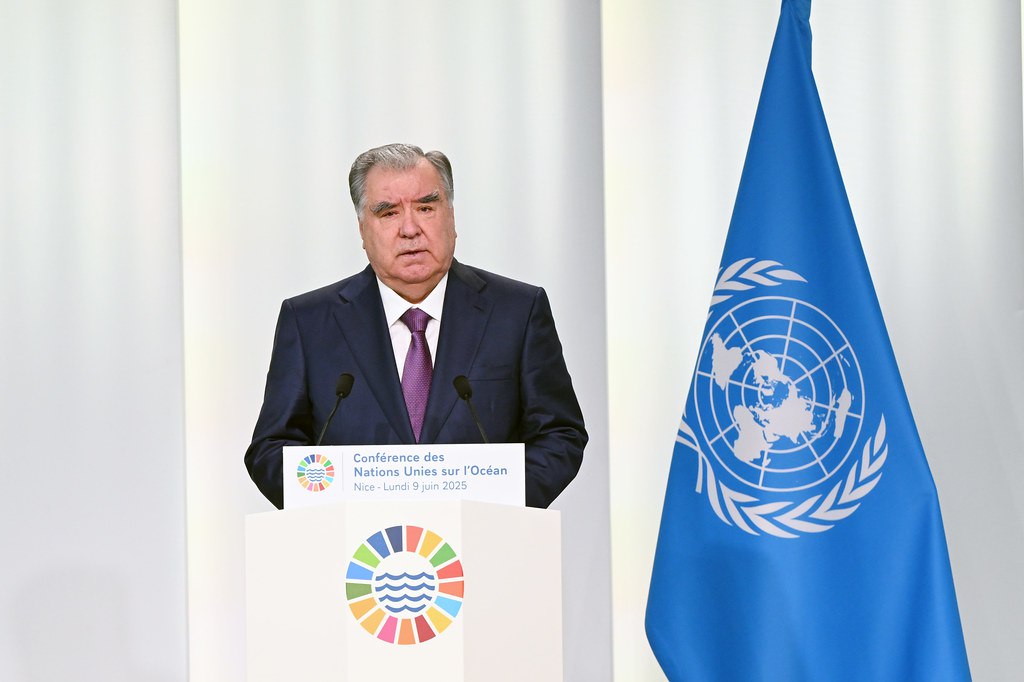
Tajikistan's President Emomali Rahmon, speaking in France on June 8 at the launch of the International Decade of Cryosphere Sciences (2025-2034), has proposed establishing a Regional Coordination Center for Glaciology in Dushanbe. The event was held as part of the Third UN Ocean Conference in Nice, which convened heads of state and government from 65 countries, UN Secretary-General António Guterres, and leaders of international organizations. Glaciology Center in the Heart of the Pamir Mountains Addressing the international community, Rahmon underscored Tajikistan's commitment to creating a glaciology center. "Given the importance of glaciers and in order to study the impact of climate change on them more accurately, we have decided, with the assistance of international partners, to establish a Regional Coordination Center for Glaciology in Dushanbe," he stated. He highlighted that Tajikistan is home to up to 60% of all glaciers in Central Asia, playing a pivotal role in the region's sustainable development. However, their rapid shrinkage poses a threat not only locally but globally. Rahmon warned that if current melting trends persist, up to a billion people could face negative consequences by 2050, particularly in coastal areas and on islands. Tajikistan: Initiator of the Climate Agenda Rahmon emphasised that Tajikistan had been a proactive advocate for water and climate issues on the global stage for two decades. He emphasized the broad international support for the joint initiative by Tajikistan and France to designate 2025-2034 as the "Decade of Action for Cryosphere Sciences." "Our initiatives in the field of water and climate issues have received the support of the international community and are being implemented through 14 resolutions of the UN General Assembly," Rahmon noted. He concluded by urging the international community to expand cooperation for cryosphere preservation and the development of scientific potential in this critical area. From Declarations to Coalitions Rahmon's speech followed the first International High-Level Conference on Glacier Protection held in late May. This forum attracted over 2,500 delegates from 80 countries, including scientists, heads of delegations, international organizations, and donor agencies. The conference's primary outcome was the signing of the Dushanbe Declaration, a document advocating for urgent action to protect glaciers and synchronize international efforts. Participants called for significant reductions in greenhouse gas emissions, a transition to sustainable production models, and the implementation of robust climate monitoring systems. An international coalition was also announced, poised to unite states, scientific institutions, environmental movements, and international organizations. Its mandate will include monitoring the declaration's implementation, facilitating the exchange of best practices, attracting investment, and developing climate change adaptation technologies.

Bulgarian Ports Eye Middle Corridor Expansion

Kazakhstan and Bulgaria are exploring the integration of Bulgaria's Black Sea ports of Burgas and Varna into the Trans-Caspian International Transport Corridor (TITC), a move that could significantly expand the reach of this crucial East-West trade route. The Trans-Caspian International Transport Route (TITR), also known as the "Middle Corridor," has been operational since 2017, connecting China, Kazakhstan, the Caspian Sea, Azerbaijan, Georgia, and ultimately, European countries. This multimodal corridor facilitates containerized cargo transport by rail and sea, primarily utilizing the Caspian Sea for maritime crossings. Spanning 11,000 kilometers, the route saw a substantial increase in cargo volume last year, reaching 4.5 million tons compared to 2.76 million tons the previous year. Astana anticipates further growth, projecting an annual freight traffic volume of 10 million tons on the TITR by 2028. This expansion is part of a broader strategy to broaden the Middle Corridor's geographical scope. The potential inclusion of Bulgarian ports was a key topic during Bulgarian President Rumen Radev's official visit to Kazakhstan. "Today, the Trans-Caspian International Transport Route has become one of the main international highways. We have agreed to consider the inclusion of the Bulgarian ports of Burgas and Varna in this corridor," stated Kazakh President Kassym-Jomart Tokayev, following talks with Radev.  The discussions culminated in a ceremony where heads of state exchanged signed bilateral documents, including a memorandum of understanding between the Ministry of Transport of Kazakhstan and the Ministry of Transport and Communications of Bulgaria, focusing on the development of the TITR. Radev expressed optimism about the deepened cooperation. "I am confident that the talks will give new impetus to our cooperation. The signed memorandum on the further development of the Trans-Caspian Corridor is a reflection of our aspirations. It is necessary to make the most of the strategic geographical position of Kazakhstan and Bulgaria on this route, which connects Asia with Europe," he said. Later, at the Kazakhstan-Bulgaria Business Forum, Tokayev reiterated the target of 10 million tons per year for the TITR's capacity, aiming for this to be achieved by 2028.  Previously The Times of Central Asia reported how, during the Astana International Forum, Kazakhstan's Deputy Foreign Minister Alibek Kuantyrov highlighted Kazakhstan's perception of the Trans-Caspian International Transport Route as a cornerstone of sustainable logistics across Eurasia.