Viewing results 1567 - 1572 of 3184
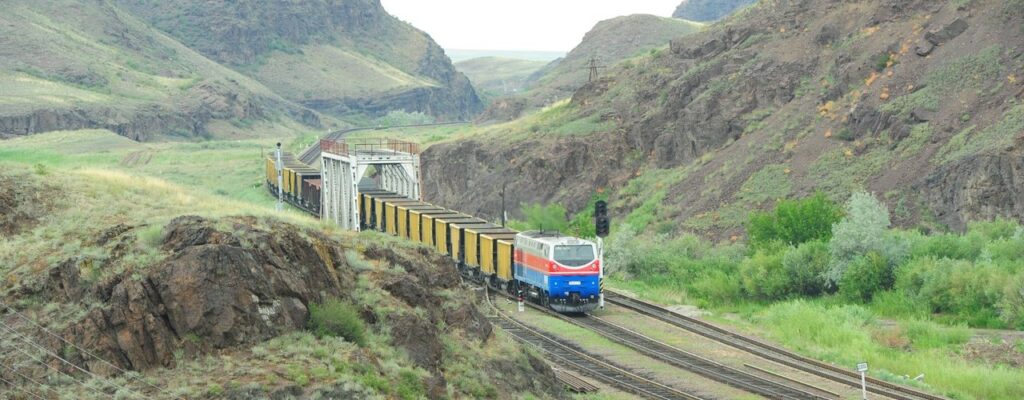
Kazakhstan’s national railways company Kazakhstan Temir Zholy (KTZ) has announced that the volume of container transportation through the country is growing rapidly. In the first seven months of this year, rail container transportation from China to Europe through Kazakhstan along the Trans-Caspian International Transport Route (TITR) grew 14-fold compared to the same period last year, The TITR is a multimodal transport corridor connecting China and Europe by bypassing Russia, also known as the Middle Corridor. To develop it, Kazakhstan Temir Zholy, together with other stakeholders, is working to increase transportation volumes, improve services, and speed up cargo delivery. To date, the transportation time from Altynkol railway station on the Kazakh-Chinese border to Absheron (Azerbaijan) has been reduced to 9 days, to Poti/Batumi (Georgia) to 12 days, and to Constanta (Romania) via Poti/Batumi to 20–22 days. In 2023, KTZ and the railway administrations of Azerbaijan and Georgia established the Middle Corridor Multimodal Ltd. Joint Venture to improve multimodal services along the route. The joint venture provides a 'one-stop shop' service and guarantees delivery times and costs. KTZ is developing Kazakh port infrastructure in the Caspian Sea with the involvement of large international logistics companies.
Tajikistan's Deputy Minister for Finance, Yusuf Majidi, has announced that the World Bank will consider financing the development of the Rogun hydroelectric power plant. According to him, the bank can allocate $650 million for this project in September this year. $250 million has been allocated as preferential loans; starting in 2025, the station's construction will be financed by other investments. Majidi specified that the construction of the hydroelectric power plant (HPP) is also financed by the Islamic Development Bank and Arab funds; according to preliminary data, this is about $550 million. When the Rogun HPP reaches full capacity, about 70% of the electricity produced will be exported to other Central Asian countries. According to the Eurasian Fund for Stabilization and Development (EFSD), financing the Rogun HPP is one of the main risks to Tajikistan’s budget and debt sustainability. The EFSD notes that a possible increase in the cost of hydropower construction could reduce funding for other critical infrastructure projects and social spending. Rogun is located 110km from Dushanbe on the Vakhsh River, and is the largest in the region. Its construction began in 1976, but it was destroyed after the collapse of the USSR. Later, Tajikistan continued work on the construction of hydroelectric power plants at its own expense and with the help of international funds and organizations, and so far, two of the six units with a capacity of 600 MW provided for in the project have been put into operation. The third is scheduled for 2025.
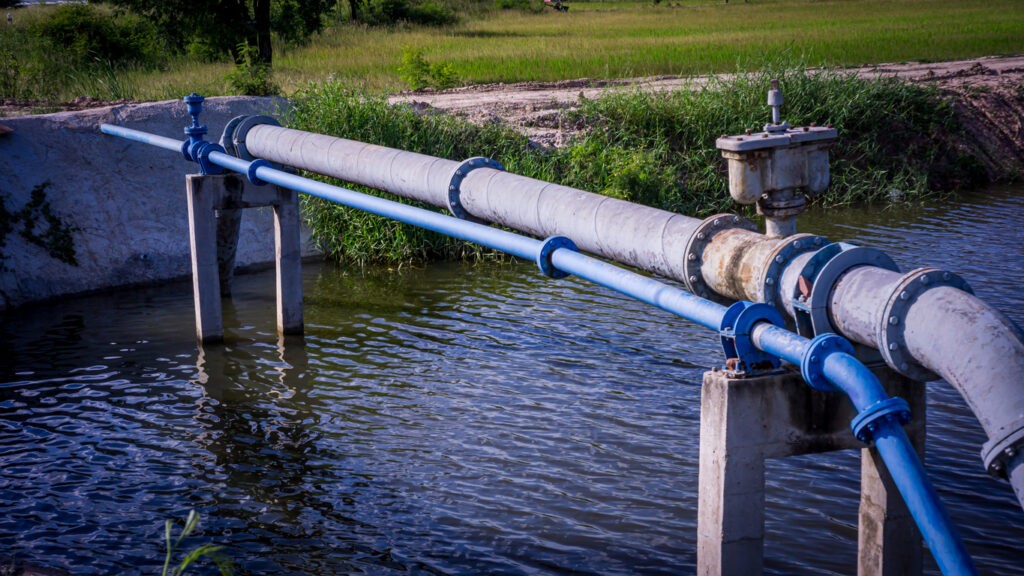
A new drip irrigation system that runs on solar power has been introduced in the Akkurgan district outside Uzbekistan's capital Tashkent. The irrigation system is being funded by the European Union, and is part of a project between the United Nations Development Programme (UNDP) and the Uzbek Ministry of Agriculture. Increasing water scarcity is a serious challenge in rural Uzbekistan. Many families rely on their backyard gardens to grow vegetables, and better irrigation will help rural communities to become more economically sustainable. The system includes a water pump that extracts water from a vertical well at a depth of 180 meters, supported by solar panels. The system irrigates 0.8 hectares of land, benefiting 10 households and saving nearly 60% of water compared to traditional irrigation methods. The excess electricity generated by the solar panels is sold to the State Electricity System, and the revenue is used to manage and operate the irrigation well and the drip irrigation network. Mr. Wim Riepma, Head of Cooperation of the European Union's Delegation to Uzbekistan, commented: "This solar-powered drip irrigation system not only addresses water scarcity but also paves the way for more sustainable agriculture in Uzbekistan. Most importantly, it directly benefits local families by increasing their access to electricity and water for irrigation, thus enhancing food security and incomes."
Kazinform has reported that following a meeting in Astana between Kazakh Minister of Water Resources and Irrigation, Nurzhan Nurjigitov, and Uzbek Minister of Water Management Shavkat Hamroev, Uzbekistan is to provide Kazakhstan with an additional 500 million cubic meters of water until the end of the irrigation season. Since April 1, Uzbekistan has supplied more than 4 billion cubic meters of water to Kazakhstan through the Syr Darya. It had been previously agreed that Uzbekistan would provide Kazakhstan with 3.7 billion cubic meters of water within six months but the Uzbek side fulfilled its obligation in just 4 months. The report states that the key goal was to fully satisfy the demand for irrigation water from farmers of Kazakhstan's southern regions and today, the Shardara Reservoir holds 1.5 billion cubic meters of water, almost 500 million more than last year. A total of 4 billion cubic meters of water entered the Shardara reservoir. Commenting on the success of the project, the official representative of the Ministry of Water Resources and Irrigation of Kazakhstan, Moldir Abdualieva stated, “Due to the preliminary agreement with our neighbors on the working order of the Toktogul and Bahri-Tajik reservoirs, water regularly flows to the Kazakh part of the Dostlik interstate canal. Now, 90 cubic meters of water per second comes to the country through this channel. This is enough to fully supply the farmers of the Turkestan region with irrigation water,”
The Shanghai Cooperation Organization (SCO) has instigated an Alliance of Currency Transactions to increase the share of settlements in national currencies—the Kazakh tenge, the Russian ruble, and the Chinese yuan—in mutual trade between SCO member states. The main goal of the initiative, launched in Qingdao based on the Demonstration Zone of Regional Trade and Economic Cooperation within the framework of the SCO Capital Park, is to reduce dependence on the US dollar and the euro in international settlements and in turn, strengthen the economic independence of the organization's member countries and increase the stability of their financial systems. In addition, the Alliance will help simplify currency transactions, accelerate cross-border payments, and create a more transparent and efficient financial infrastructure between the SCO member countries. The initiative reflects the general move towards strengthening economic cooperation within the organization, including China, Russia, Kazakhstan, Tajikistan, Kyrgyzstan, Uzbekistan, India, Pakistan, Iran, and Belarus. As previously reported, the SCO states are increasing the use of national currencies in mutual settlements. The creation of the Alliance was a step in the development of regional financial integration, and its launch underscores the growing interest of SCO countries in using their currencies in foreign economic activity.
The European Bank for Reconstruction and Development (EBRD) says it is making its first direct equity investment in the graphite and critical raw materials sector in Central Asia by acquiring a stake in Sarytogan Graphite Limited, an Australian Securities Exchange-listed company involved in the exploration of the Sarytogan graphite deposit in the Karaganda region of central Kazakhstan. The EBRD’s investment of AUD 5 million (€3 million), representing a 17.36% shareholding in the company, and will finance Sarytogan Graphite’s development program, including preparing a feasibility study and meeting its working capital needs. According to the EU's critical raw materials (CRM) classification, graphite is a CRM mineral with a wide range of applications. It is used for producing electric vehicle batteries, the electric power industry, and metallurgy. The Sarytogan graphite deposit is one of the largest known graphite deposits in the world, with the potential to become one of the main suppliers of natural graphite in the region and beyond. The project aligns with the EU-Kazakhstan strategic partnership on raw materials, batteries, and renewable hydrogen. According to the country's Ministry of Industry and Construction, Kazakhstan produces 19 of the 34 critical raw materials listed by the European Union. Kazakhstani manufacturers currently supply the European market with metal and chemical products, including beryllium, tantalum, titanium, phosphorus, and ammonium metavanadate. Kazakhstan is among the world’s ten largest copper producers. It has the potential to produce battery raw materials such as nickel, cobalt, manganese, and lithium, which are essential for producing electric vehicles.