• KGS/USD = 0.01144 0%
  • KZT/USD = 0.00211 0%
  • TJS/USD = 0.10515 0.48%
  • UZS/USD = 0.00008 0%
  • TMT/USD = 0.28530 0%
  • KGS/USD = 0.01144 0%
  • KZT/USD = 0.00211 0%
  • TJS/USD = 0.10515 0.48%
  • UZS/USD = 0.00008 0%
  • TMT/USD = 0.28530 0%
  • KGS/USD = 0.01144 0%
  • KZT/USD = 0.00211 0%
  • TJS/USD = 0.10515 0.48%
  • UZS/USD = 0.00008 0%
  • TMT/USD = 0.28530 0%
  • KGS/USD = 0.01144 0%
  • KZT/USD = 0.00211 0%
  • TJS/USD = 0.10515 0.48%
  • UZS/USD = 0.00008 0%
  • TMT/USD = 0.28530 0%
  • KGS/USD = 0.01144 0%
  • KZT/USD = 0.00211 0%
  • TJS/USD = 0.10515 0.48%
  • UZS/USD = 0.00008 0%
  • TMT/USD = 0.28530 0%
  • KGS/USD = 0.01144 0%
  • KZT/USD = 0.00211 0%
  • TJS/USD = 0.10515 0.48%
  • UZS/USD = 0.00008 0%
  • TMT/USD = 0.28530 0%
  • KGS/USD = 0.01144 0%
  • KZT/USD = 0.00211 0%
  • TJS/USD = 0.10515 0.48%
  • UZS/USD = 0.00008 0%
  • TMT/USD = 0.28530 0%
  • KGS/USD = 0.01144 0%
  • KZT/USD = 0.00211 0%
  • TJS/USD = 0.10515 0.48%
  • UZS/USD = 0.00008 0%
  • TMT/USD = 0.28530 0%

Viewing results 1765 - 1770 of 3276

Fugitive Oligarchs Ablyazov and Khrapunov Ordered to Return $32 Million to Kazakhstan by U.S. Court

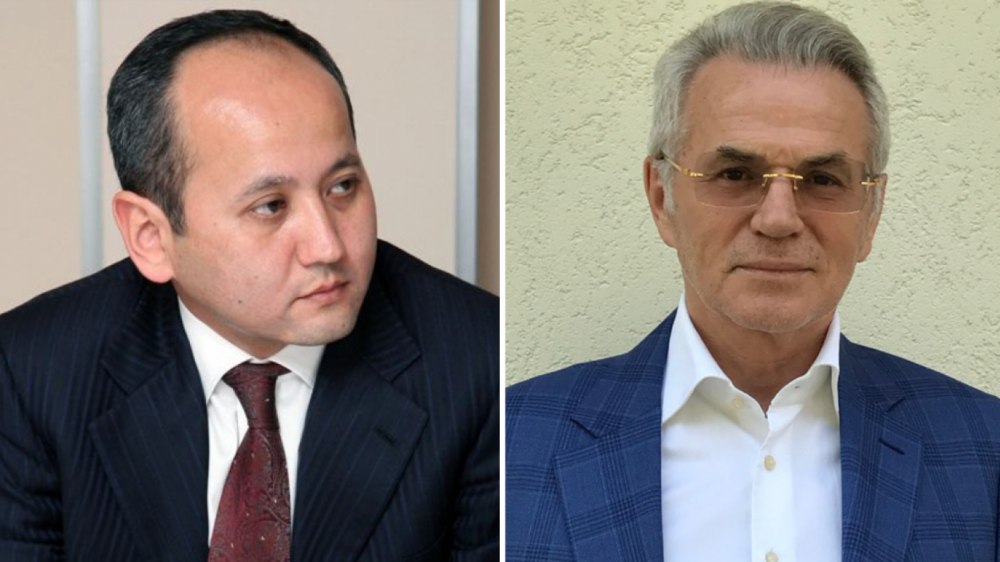
Kazakhstan has secured a victory in the United States against Felix Sater and his companies, which were involved in investing money stolen by Mukhtar Ablyazov from BTA Bank. The jury in the U.S. District Court for the Southern District of New York awarded over $32 million in favor of BTA and the city of Almaty. In addition, the Kazakh oligarch and former Mayor of Almaty and Minister of Emergency Situations, Viktor Khrapunov, was reported by BTA's press service to have caused multi-billion-dollar damages through his actions. After a three-week trial, the jury recognized BTA Bank and the city of Almaty as victims of Sater's unlawful activities, which included the misappropriation of property, unjust enrichment, and obtaining money fraudulently. The compensation awarded exceeded the requested amount, totaling more than $32 million including interest. The trial, which began on June 10, 2024, demonstrated that Mukhtar Ablyazov abused his position at BTA Bank by issuing fictitious loans worth billions of dollars, leading to the bank’s collapse. At the time, BTA was the third-largest bank in Kazakhstan. Ablyazov also privatized state land and sold it at undervalued prices to companies he controlled. In addition, the Khrapunov's fraudulent actions, meanwhile, caused over $300 million in damages to Almaty, leaving significant urban land undeveloped, whilst other assets were sold to the Khrapunovs shell companies for significantly less than their market value through fictitious tenders. Evidence presented in court showed that Ablyazov and Khrapunov combined their stolen funds, with Ilyas Khrapunov, Viktor’s son and Ablyazov’s son-in-law, accused of laundering a substantial part of these funds. In September 2018, a UK court fined Ilyas Khrapunov $500 million for helping Ablyazov breach an asset freezing order. The Bayrock Group, Inc., Global Habitat Solutions (both owned by Sater), and MeM Energy Partners LLC (owned by Mendel Mochkin) were found to have facilitated the laundering of the stolen money into the U.S. financial system. The jury determined that Sater and Mochkin knowingly laundered the funds stolen by Ablyazov and Khrapunov. Additionally, the jury, having been presented with comprehensive evidence of Ablyazov's fraud against BTA Bank, returned a unanimous verdict against his co-conspirators. For the first time, a U.S. jury also unanimously ruled in favor of the city of Almaty concerning fraud committed by Viktor Khrapunov. Sater was not the only defendant in the asset laundering case. Daniel Ridloff and RRMI-DR LLC were also ordered to return assets to BTA and the Almaty Akimat. Ferrari Holdings LLC, another defendant, is in default, but Almaty Akimat and the bank plan to seek a judgment against it. In Kazakhstan, in 2018 Mukhtar Ablyazov was sentenced in absentia to life imprisonment for organizing a murder and embezzling funds from depositors of BTA Bank. In the same year, Viktor Khrapunov and his wife, Leila Khrapunova, were also sentenced in absentia to 17 and 14 years in prison, respectively. Back in December 2022, the Southern District Court in New York ruled against Ablyazov and his associates in the amount of $218 million. In total, Ablyazov stands accused of...
New Report Analyses Eurasian Transport Network

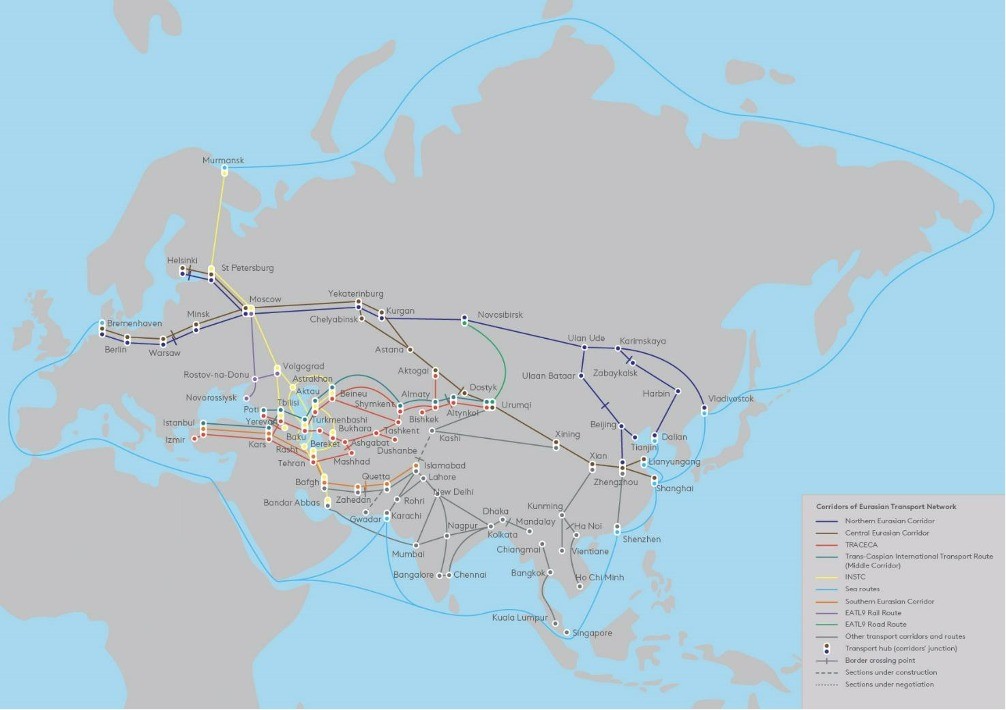
On 27 June, the Eurasian Development Bank (EDB) released a report titled “The Eurasian Transport Network”. The report introduces a new conceptual approach to future developments within the Eurasian Transport Network and outlines key projects and initiatives aimed at improving transport connectivity in Eurasia. The Eurasian Transport Network is a system of interconnected latitudinal and longitudinal international transport corridors and routes, facilitating intra- and trans-continental connectivity for Eurasian countries. It builds upon over 50,000 km of international east-west and north-south transport corridors, linking Asia, Europe, and the Middle East. The Eurasian Transport Network consists of five key international transport corridors: the Northern, Central and Southern Eurasian Corridors, TRACECA, and the International North-South Transport Corridor (INSTC), along with branch lines and regional routes. According to EDB analysts, in 2023, international freight traffic along these five corridors of the Eurasian Transport Network totaled 260 million tons, including 3.6 million 20-foot containers (TEU). Compared to 2013, the volume of international container traffic has more than tripled. The most dynamic growth has been driven by foreign trade and transit container transit with China. Since 2013, the number of container trains to and from China via the Eurasian Economic Union countries and Central Asia has increased by a factor of 200. The EDB introduced the concept of a Eurasian Transport Network in 2021, and this report presents its detailed framework. Three years ago, the EDB released a report titled “The International North–South Transport Corridor: Promoting Eurasia’s Intra- and Transcontinental Connectivity”, which estimated that connecting international transport corridors would yield a 40% increase in freight traffic. In 2024, this projection was fully confirmed by the dynamic development of the INSTC and its linkage to TRACECA. The advancement of the Eurasian Transport Network is paving the way for the establishment of a transport hub in Central Asia. The development of multimodal transport and transit corridors is the only viable solution for Central Asian countries due to the significant distances between trade partners. Establishing a transport hub will facilitate an increase in international traffic, including transit. The EDB projects that freight traffic along the three main corridors running through Central Asia will increase by 1.5 times to 95 million tons by 2030. Container traffic is expected to grow even more rapidly, by almost two-thirds, reaching 1.7 million TEU. Evgeny Vinokurov, EDB Chief Economist, underlines that “at present, transportation costs for landlocked countries are 1.4 times higher than for coastal states. Even during the time of the Silk Road, trade routes in Central Asia were predominantly latitudinal, in the east-west direction. Building new north-south transportation links is a historic opportunity for Central Asia. This is an opportunity to become the continent’s transport hub, unlock new production niches and improve conditions for foreign trade, especially with West and South Asia.” The EDB concludes that given the limited investment opportunities facing most developing countries in Eurasia, a key area of cooperation to develop transport links in Eurasia is boosting the number of projects attractive to international development banks and private investors. This includes projects implemented...

Will Kumtor’s ‘Tails’ Benefit or Harm Kyrgyzstan?

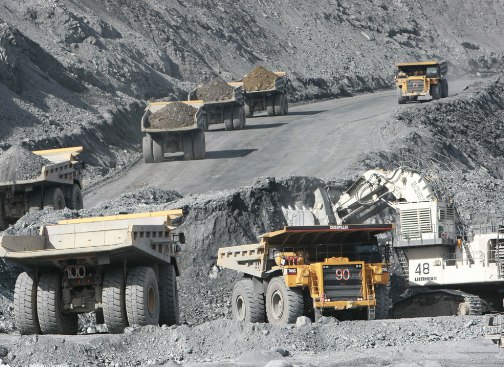
The Finnish company Metso is set to  develop a tailings pond at Kyrgyzstan's Kumtor goldmine but local environmentalists are sceptical, claiming that recycling the waste will bring more damage to the environment than economic benefits. "Tailings" are liquid and solid metal (pulp) remnants of ore processing and according to various estimates, Kumtor's tailings pond contains 70 to 130 tons of gold that could not be mined at the plant.  The remnants of precious metal with harmful waste are mothballed, making secondary mining extremely difficult. The Kyrgyz government however, believes that cooperation with the Finns could provide the state with an annual revenue of some $3.5 billion. Isakbek Torgoev, head of the geo-environmental monitoring laboratory at the Institute of Geomechanics and Subsoil Development of Kyrgyzstan and a candidate of technical sciences, told the Times of Central Asia that the Kumtor tailings pond, grandiose in volume, has over a hundred million tailings. "Throughout the entire phase of the mine -over 30 years - ores were taken from different parts of the Kumtor deposit. At times, ores containing 1.8 grams of gold per ton were dumped in the tailings pond. By comparison, at the Boruu gold mine in Mongolia, that amount of gold is contained in the mined rock, but here it is in the tailings. This is a lot," notes Torgoev. The scientific institute believes that dangerous chemical processes occur in the abandoned ores. "Frankly speaking, I am sceptical about such a development, given that very few successful examples exist worldwide. Especially at Kumtor, with its difficult climatic conditions and frigid winters. Theoretically, the work can be carried out, but practically, we'll see," commented the scientist. According to Torgoev, the price of gold may fall, and because of unprofitability, the Finnish company could refuse to process tailings. Moreover, the reclamation of tailings is a very complicated technological process. In addition to constructing water drains, a layer of a meter thick soil is required to cover them. Otherwise, the waste will go into the rivers and soil, harming the environment. The former owners of Kumtor, the Canadian company Centerra Gold, accumulated about $60 million for the reclamation of the tailings pond after the mine was depleted (tentatively in 2027). However, after the nationalization of the mine, the fate of these funds remains unknown. According to the Ministry of Emergency Situations of Kyrgyzstan, there are 92 burial sites for toxic and radioactive substances in the country. Of these, 23 tailings contain uranium elements, while the rest are buried with radioactive rock residues, heavy metals, and cyanide.

Turkmenistan Discusses TAPI Pipeline with Officials from UAE, Pakistan

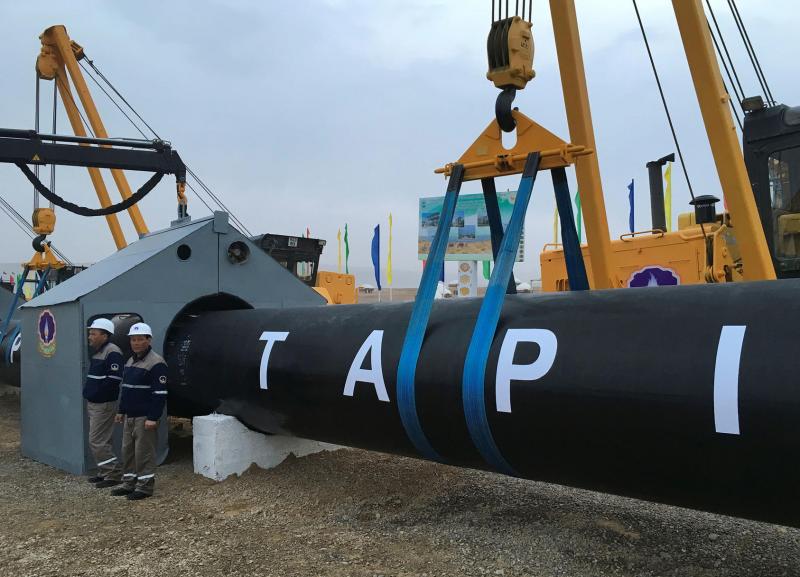
The Turkmenistan-UAE business forum was held in Turkmenistan on June 25. According to the portal Chronicles of Turkmenistan, the country has signed a memorandum of understanding with Abu Dhabi National Oil Company (ADNOC) on cooperation in developing the third stage of the Galkinish field, a potential primary supply source through the TAPI gas pipeline. This gas pipeline is essential for the country from an economic point of view, both at the national level and for transit countries and consumers. Turkmenistan's president Serdar Berdimuhamedov, and his father, the former president Gurbanguly Berdimuhamedov -- who is now the chairman of the country's People's Council -- discussed with Pakistan's minister for industries Rana Tanveer Hussain the construction of the TAPI (Turkmenistan-Afghanistan-Pakistan-India) gas pipeline project, and the TAP (Turkmenistan-Afghanistan-Pakistan) route. The discussions covered high-level visits between the two countries, trade and economic cooperation, transport communications, transit and trade collaboration, parliamentary cooperation, and people-to-people relations.

Kyrgyzstan to Construct Solar Plant with Chinese Partners

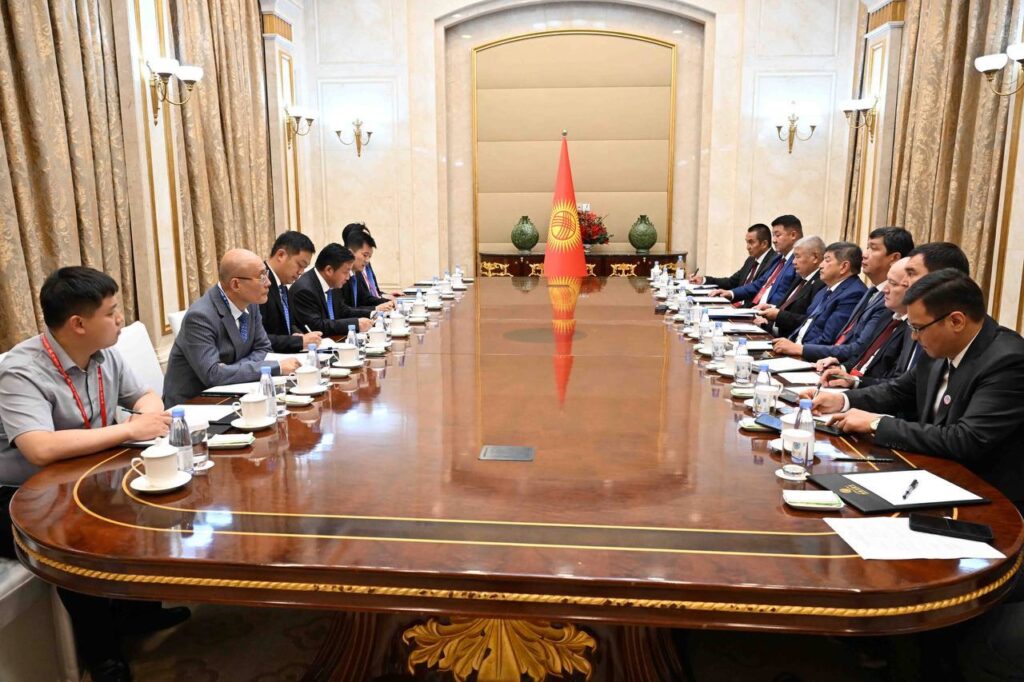
The Kyrgyz government's press service is reporting that Akylbek Japarov, the country's prime minister, met with the vice-chairman of China National Nuclear Corporation (CNNC), Lu Tezhong, and the president of Transformer Industrial Group Company Limited (TBEA), Zhang Xin, during his working trip to Urumqi, the capital of China's Xinjiang Uygur Autonomous Region. At the meeting, Japarov and Tezhong discussed issues in the energy sphere, particularly the construction of solar power plants, and the prospects for projects in other sectors of the economy. As a result of the meeting, Fortis KG LLP, Kyrgyzstan's national electricity network, and the cabinet of ministers' Green Energy Fund signed an investment project to construct a 400-megawatt solar power plant at the Kara-Talaa site in the Issyk-Kul region. Japarov and Zhang Xin discussed the modernization of the Bishkek CHPP, the construction of the Datka-Kemin high-voltage transmission line and substation, and projects to improve the power grids of the southern regions of Kyrgyzstan. Japarov emphasized the importance of the projects implemented by TBEA for the country, and invited the company to participate in developing renewable energy projects in Kyrgyzstan. One of the areas of cooperation is the introduction of technologies for charging electric vehicles and installing relevant services and devices.

Tokayev Announces Referendum on New Power Plant

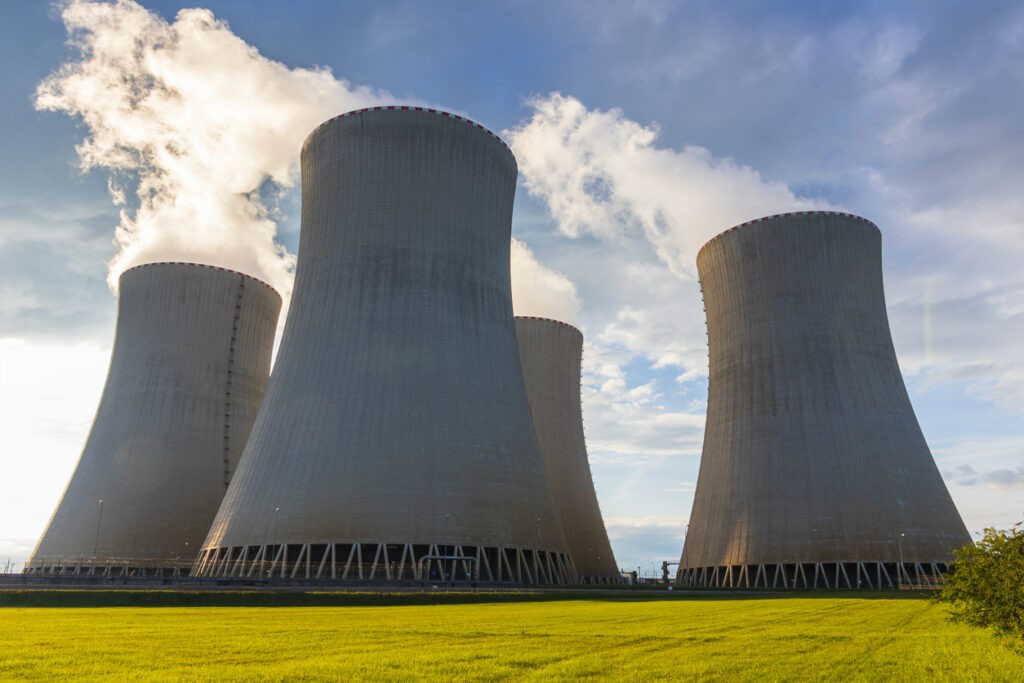
Kazakhstan's President Kassym-Jomart Tokayev has announced a referendum on constructing a nuclear power plant. The popular vote will be held in the fall of this year. "You know that economic development is impossible without a stable energy supply. Therefore, I was tasked to work on constructing a nuclear power plant. A wide discussion is underway, and different points of view are being expressed. Mass media should also take an active part in this process," Tokayev said during a speech at a ceremony to honor journalists. He noted that Kazakhstan has excellent opportunities to develop nuclear energy. "It is important to use them correctly and effectively. The people will decide on this issue, and the referendum will be held this fall. The government will determine the exact date," Tokayev said. Kazakhstan's intentions to build a nuclear power plant have been discussed for years. The Ulken settlement, located on the shore of Lake Balkhash, is tentatively chosen as the site.