• KGS/USD = 0.01144 0%
  • KZT/USD = 0.00207 0%
  • TJS/USD = 0.10443 0.19%
  • UZS/USD = 0.00008 0%
  • TMT/USD = 0.28490 0%
  • KGS/USD = 0.01144 0%
  • KZT/USD = 0.00207 0%
  • TJS/USD = 0.10443 0.19%
  • UZS/USD = 0.00008 0%
  • TMT/USD = 0.28490 0%
  • KGS/USD = 0.01144 0%
  • KZT/USD = 0.00207 0%
  • TJS/USD = 0.10443 0.19%
  • UZS/USD = 0.00008 0%
  • TMT/USD = 0.28490 0%
  • KGS/USD = 0.01144 0%
  • KZT/USD = 0.00207 0%
  • TJS/USD = 0.10443 0.19%
  • UZS/USD = 0.00008 0%
  • TMT/USD = 0.28490 0%
  • KGS/USD = 0.01144 0%
  • KZT/USD = 0.00207 0%
  • TJS/USD = 0.10443 0.19%
  • UZS/USD = 0.00008 0%
  • TMT/USD = 0.28490 0%
  • KGS/USD = 0.01144 0%
  • KZT/USD = 0.00207 0%
  • TJS/USD = 0.10443 0.19%
  • UZS/USD = 0.00008 0%
  • TMT/USD = 0.28490 0%
  • KGS/USD = 0.01144 0%
  • KZT/USD = 0.00207 0%
  • TJS/USD = 0.10443 0.19%
  • UZS/USD = 0.00008 0%
  • TMT/USD = 0.28490 0%
  • KGS/USD = 0.01144 0%
  • KZT/USD = 0.00207 0%
  • TJS/USD = 0.10443 0.19%
  • UZS/USD = 0.00008 0%
  • TMT/USD = 0.28490 0%

Viewing results 1909 - 1914 of 3106

Kazakhstan and Kyrgyzstan Enhance Allied Relations

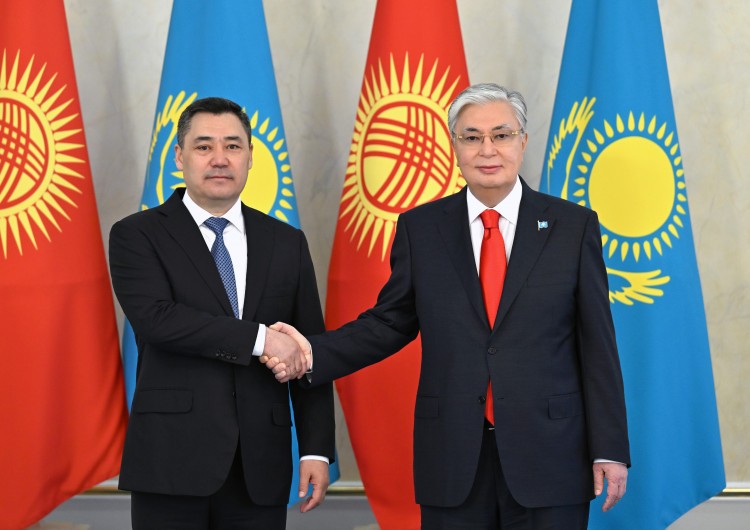
On April 19 Astana hosted the sixth meeting of the Supreme Interstate Council of Kazakhstan and Kyrgyzstan. Chaired by Kazakh President Kassym-Jomart Tokayev and Kyrgyz President Sadyr Japarov, discussions focused on the development of bilateral cooperation in economy, trade, investment, and agriculture, in addition to joint projects regarding transport, water use and energy resources. The two leaders then signed an Agreement on Deepening and Expanding Allied Relations, aimed at providing a new impetus to the development of Kazakh-Kyrgyz relations. During the conference, Kyrgyz President Japarov stated, “Kazakhstan is our close neighbour, a fraternal country and one of our main trading partners. Kazakhstan is a priority in our foreign policy. There are no political or regional differences between our countries.” In support, President Tokayev expressed his wish for there to be no unresolved issues between the two neighbouring countries and drew particular attention to the need to strengthen trade and economic ties. Kazakhstan is currently one of Kyrgyzstan’s key partners in trade and investment. Last year, mutual trade turnover reached $1.5 billion and during their talks, the leaders confirmed their intention to increase that figure to $2 billion. The parties also signed an Agreement on Mutual Protection of Investments. Referencing measures to expand the volume of goods transported across the Kazakh-Kyrgyz border and improvements in customs clearance, Tokayev stated, “We have started modernizing the border checkpoints at Karasu, Besagash, Aukhatty, Sartob, Aisha Bibi, Sypatay Batyr, and Kegen. Each will be equipped with digital technologies, with work expected to be completed by 2028.” President Japarov, in turn, announced that an agreement had been reached to resume the operation of the Kichi-Kapka and Kamyshanovka checkpoints to help increase bilateral trade and relieve congestion. Turning to the importance of interaction in the water and energy sector, the Kazakh president said, “In recent years, the urgency of efficient and equitable use of transboundary water resources has increased. We shall continue our coordinated work and have agreed to soon give approval to a schedule for interstate water management structures and implement it in a timely manner. Kazakhstan is ready to fulfil all obligations and jointly implement important projects.”
Kazakh, Chinese and Russian Companies Unite on Polyethylene Production Plant

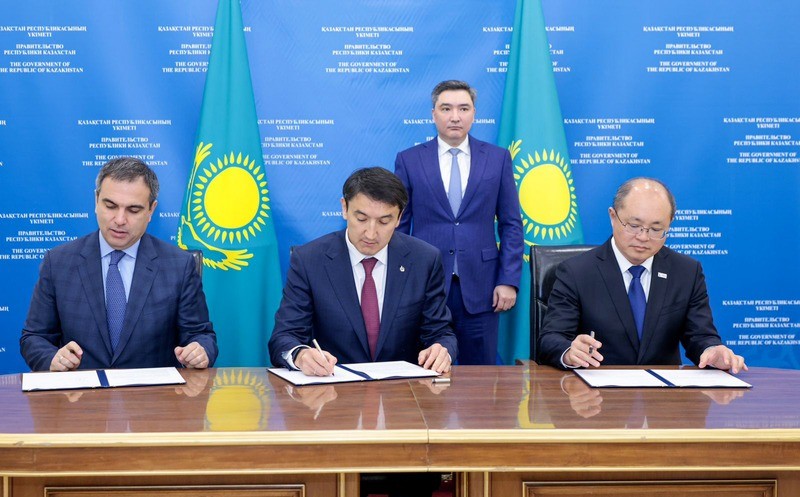
On April 19, a meeting was held between Magzum Mirzagaliyev, Chairman of the Board of KazMunayGas, Zhao Dong, President of the China Petrochemical Corporation (SINOPEC), and Mikhail Karisalov, Chairman of the Board of Russia’s SIBUR LLC. In the presence of the Prime Minister of Kazakhstan Olzhas Bektenov, the parties signed a tripartite protocol officially finalizing SINOPEC's entry into the joint construction of the first integrated gas chemical complex for polyethylene production in Kazakhstan’s Atyrau region. Costing around $7.7 billion, comprising investments of 40%, from KazMunayGas, 30% from SINOPEC 30%, and 30% from SIBUR, the plant will have the capacity to manufacture 1.25 million tons of polyethylene per year, equivalent to 1% of that produced globally. Speaking at the event, Bektenov emphasized the importance of the project due to its focus on the production of high value-added products. According to a report issued by his press office, a gas separation complex (GSC) will be built in Tengiz to supply ethane via pipeline to Karabatan in the Atyrau region to enable the new plant to produce 22 grades of polyethylene using Chevron, Phillips and Univation’s. licensed technology. The use of polyethylene is expansive ranging from medicines, prosthetics and syringes, to plastic wear-resistant pipes, construction materials, car parts, bulletproof vests and clothing for astronauts. It is also commonly employed in the food industry. Scheduled for completion by 2029, the plant’s target markets include Kazakhstan, CIS countries, China, Turkey, and Europe.

Chinese Investors Plan to Build Solar Power Plant in Tashkent Region

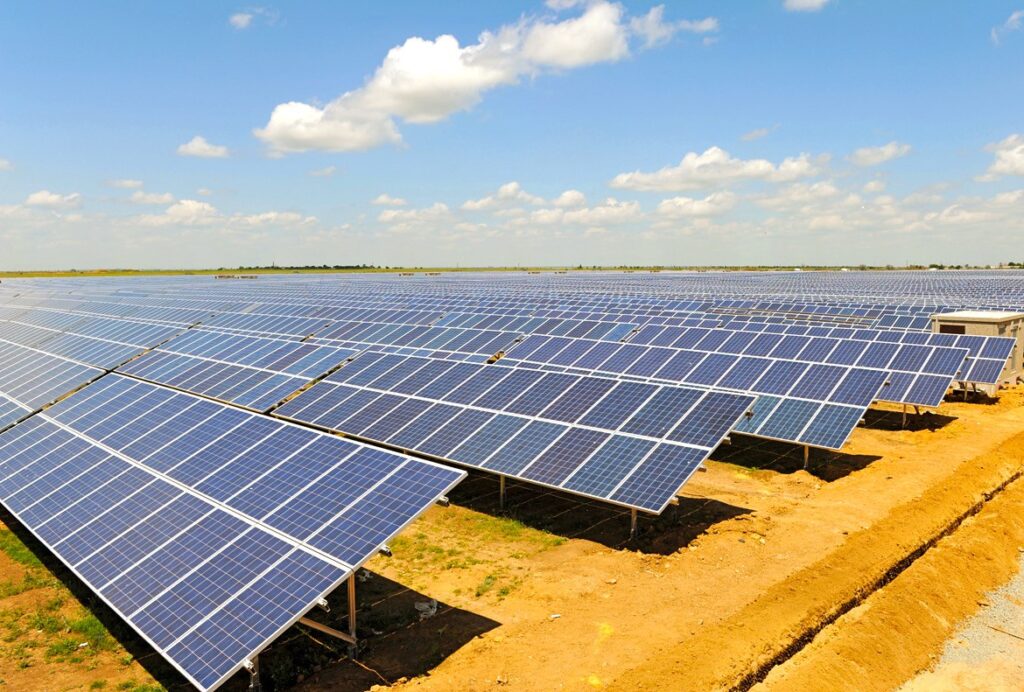
Chinese investors have agreed to implement more major projects in Uzbekistan, according to statements made following the visit of a trade delegation from China to Uzbekistan's Tashkent region. Chinese businesses intend to invest $2 billion in the construction of a solar power plant in Ahangaran, $25 million in providing food for employees of social facilities, and $20 million in the construction of a diagnostic center. Also, Chinese investors are ready to invest $90 million in projects focused on the production of pharmaceutical products, metal structures, artificial fiber and threads. Earlier, Uzbekhydroenergo and China Southern Power Grid International agreed on joint construction of a 600 MW pumped storage hydropower (PSH) called Verkhny Pskem. The cost of the project is estimated at $1 billion. The first solar power plant in Uzbekistan was established with the assistance of the World Bank Group, Abu Dhabi Future Energy Company (Masdar), the Asian Development Bank and the Government of Uzbekistan. The station, with a capacity of 100 megawatts, became the country's first large-scale renewable energy facility. According to Uzbekistan's Ministry of Energy, the country plans to build about 25 large-scale solar power plants in the next 10 years.

Poor-Quality Gasoline Refused by Taliban Doesn’t Belong to Uzbekistan

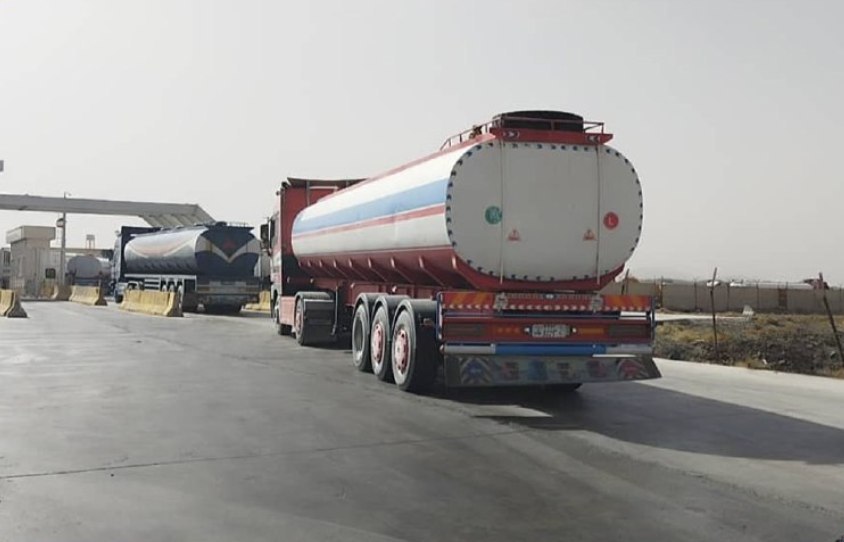
The Customs Committee of Uzbekistan denied that gasoline returned by the Taliban due to its poor quality in fact belongs to Uzbekistan, according to a post on the committee's Telegram channel. The Times of Central Asia has reported that the Taliban returned 120,000 liters of gasoline imported via the Hayraton border point to Uzbekistan due to its poor quality. It has been reported that the returned oil products didn't originate in Uzbekistan. On the contrary, 120 tons of gasoline loaded in two tanker trucks were sent to Afghanistan from Russia and moved through the territory of Uzbekistan only in transit mode. On February 7, these tankers left for Afghanistan through the Ayritom station in Surkhandarya, Uzbekistan. These oil products returned by Afghanistan entered Uzbekistan on April 6 through the Ayritom station. Also, the Customs Committee asked certain mass media operating in the country not to distribute unverified, one-sided, unconfirmed information. “At this point, we ask the mass media to study carefully before disseminating such information, taking into account the friendly relations between the two countries,” the Customs Committee report said.

USAID Launches $18 Million Program to Boost Economic Growth in Tajikistan

On 18 April, the United States Agency for International Development (USAID) launched a new initiative to support long-term economic opportunities in Tajikistan. Running for five years at a cost of $18 million, Employment and Enterprise Development Activity (EEDA) will partner local firms to improve productivity in the fields of textiles, food processing and IT through the adoption of innovative, green technologies, increased investment, and market linkages. According to a report from the U.S. Embassy in Tajikistan, the project will create 5,000 permanent jobs, assist 200 business start-ups in accessing finance, and leverage $10 million in private sector investment. In his address at the launch, USAID Tajikistan Mission Director Peter Riley stated, “It is crucial to foster innovation, drive economic growth, and create sustainable employment opportunities within the public and private entities. These partnerships underscore the shared goal of advancing Tajikistan’s economic landscape and ensuring prosperity for all stakeholders.”

Tajikistan and Uzbekistan Sign Allied Relations Treaty

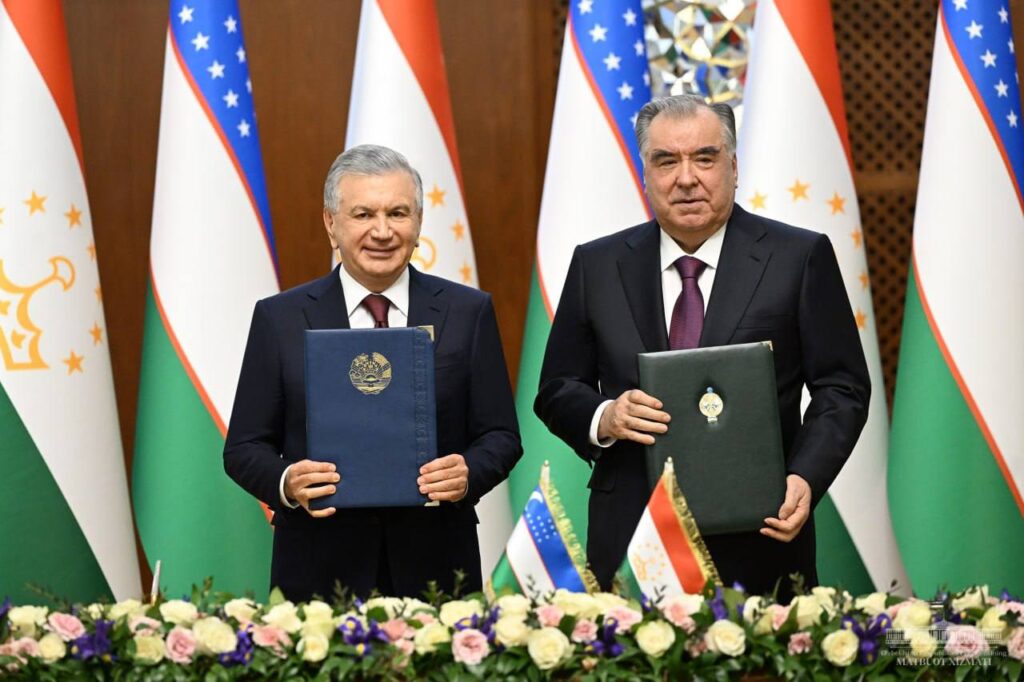
On April 18, Shavkat Mirziyoyev, President of Uzbekistan met Emomali Rahmon, President of Tajikistan in Dushanbe, where the two leaders signed a Treaty on Allied Relations between their countries. Referring to Tajikistan as Uzbekistan’s closest, most reliable, and time-tested strategic partner, Mirziyoyev announced, “The fraternal Uzbek and Tajik peoples are inextricably linked by strong bonds of centuries-old friendship. We are brought together by common history, cultural and spiritual values, traditions, and customs.” He went on to emphasize the enormous significance of the Treaty on Allied Relations saying, “With this step, we confirmed our strong mutual commitment to an irreversible course towards deepening the multifaceted Uzbek-Tajik strategic partnership and alliance. Without any exaggeration, this important document will mark a new historical milestone in bilateral relations.” Adding that the Treaty takes Tajik-Uzbek relations to a qualitatively new level, President Rahmon stated, “This document will also become an important factor in strengthening peace and stability in our region – Central Asia” On the eve of Mirziyoyev’s visit, a Tajik-Uzbek business forum resulted in a solid portfolio of new cooperation projects and trade contracts in mechanical engineering, electrical engineering, energy, mining, agricultural, textile and pharmaceuticals industries. During the Tajik-Uzbek talks it was reported that in recent years, bilateral trade turnover has increased 40-fold and the number of joint ventures has grown 15-fold. Tajikistan and Uzbekistan have now raised the bar by setting a target to increase trade turnover to $2 billion by expanding the exchange of supplies and launching cross-border trade zones.