• KGS/USD = 0.01144 0%
  • KZT/USD = 0.00218 0%
  • TJS/USD = 0.10610 -0.09%
  • UZS/USD = 0.00008 0%
  • TMT/USD = 0.28530 0%
  • KGS/USD = 0.01144 0%
  • KZT/USD = 0.00218 0%
  • TJS/USD = 0.10610 -0.09%
  • UZS/USD = 0.00008 0%
  • TMT/USD = 0.28530 0%
  • KGS/USD = 0.01144 0%
  • KZT/USD = 0.00218 0%
  • TJS/USD = 0.10610 -0.09%
  • UZS/USD = 0.00008 0%
  • TMT/USD = 0.28530 0%
  • KGS/USD = 0.01144 0%
  • KZT/USD = 0.00218 0%
  • TJS/USD = 0.10610 -0.09%
  • UZS/USD = 0.00008 0%
  • TMT/USD = 0.28530 0%
  • KGS/USD = 0.01144 0%
  • KZT/USD = 0.00218 0%
  • TJS/USD = 0.10610 -0.09%
  • UZS/USD = 0.00008 0%
  • TMT/USD = 0.28530 0%
  • KGS/USD = 0.01144 0%
  • KZT/USD = 0.00218 0%
  • TJS/USD = 0.10610 -0.09%
  • UZS/USD = 0.00008 0%
  • TMT/USD = 0.28530 0%
  • KGS/USD = 0.01144 0%
  • KZT/USD = 0.00218 0%
  • TJS/USD = 0.10610 -0.09%
  • UZS/USD = 0.00008 0%
  • TMT/USD = 0.28530 0%
  • KGS/USD = 0.01144 0%
  • KZT/USD = 0.00218 0%
  • TJS/USD = 0.10610 -0.09%
  • UZS/USD = 0.00008 0%
  • TMT/USD = 0.28530 0%

Viewing results 1915 - 1920 of 3407

The Middle Corridor is Being Funded Faster than Expected

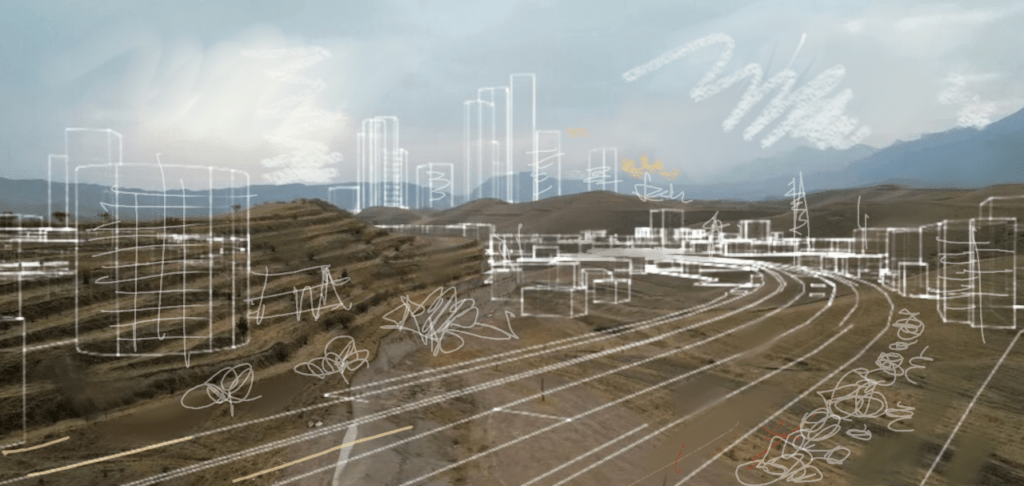
According to Samuel Doveri Vesterbye, director of the independent think-tank, European Neighbourhood Council (ENC), a small group of high-ranking cabinet officials, ambassadors and other diplomats met in a closed-door round-table on May 15, representing the EU, Türkiye and countries in the South Caucasus and Central Asia. The meeting, organized by Turkish organizations International Transporters Association (UND) and the Turkish Industry and Business Association (TUSIAD), focused on the synergy between the EU's Global Gateway initiative and the projects of the Trans-Caspian International Trade Route (TITR). The fact of the meeting taking place has been confirmed by Türkiye’s Permanent Delegate to the EU. Doveri Vesterbye writes that the meeting "consisted of less than 30 individuals mostly linked to diplomacy, transport, logistics, business, critical infrastructure security, policy-making and supply chains" and "brought together four different Directorate Generals (DGs) and more than 10 nationalities of Director-and-Ambassador level." Significantly, also according to Doveri Vesterbye, the development of high-level coordination committees is under way. The meeting’s assessment that the TITR is being funded faster than expected is an extremely positive development. Dr. S. Frederick Starr, a well-known American expert and a Distinguished Fellow for Eurasia at the American Foreign Policy Council, told The Times of Central Asia that "the activation and coordination of both European and Turkish institutions is essential not only for the financing and construction of this mega-project, but also for its successful management thereafter." This is a very stabilizing development for international commerce. As other corridors are increasingly volatile, it would help to insulate trade between China and Europe from supply-chain shocks. It will also benefit the participating states themselves. Starr explained that the continuing European and Turkish involvement in building out the TITR "will help the transit states of Central Asia and the [South] Caucasus to balance their relations with China and Europe and will thereby undergird their sovereignties. Such balance creates what is literally a 'win-win-win' situation." According to a mid-2023 report, prepared jointly by the EBRD and the EU Commission, an estimated €18.5 billion is required in infrastructure investments in order to improve Central Asia's transport connectivity. Potential growth in transit container traffic by 2040 could be over 40-fold, with significant spill-over effects on education, tech hubs, business and middle-class development. At the same time, the TITR has been reconceptualized as a driver of regional trade and economic growth along the entire Europe–Türkiye–South Caucasus–Central Asia trajectory, with special attention given to the latter two regions. The EU Commission and the EBRD have already funded €10.5 billion in Central Asia via loans and grant investments promised only a few months ago, in January this year, at the Global Gateway Investment Forum in Brussels. This pace suggests significant commitment by such large bureaucratic organizations, and it augurs well for the unlocking of funds from the European Investment Bank (EIB) for investment in Turkey. Doveri Vesterbye writes that the heads of EU member-state missions in Brussels (COREPER) will work to synchronize EIB investments, with special attention on reforming the Customs Union, in order...
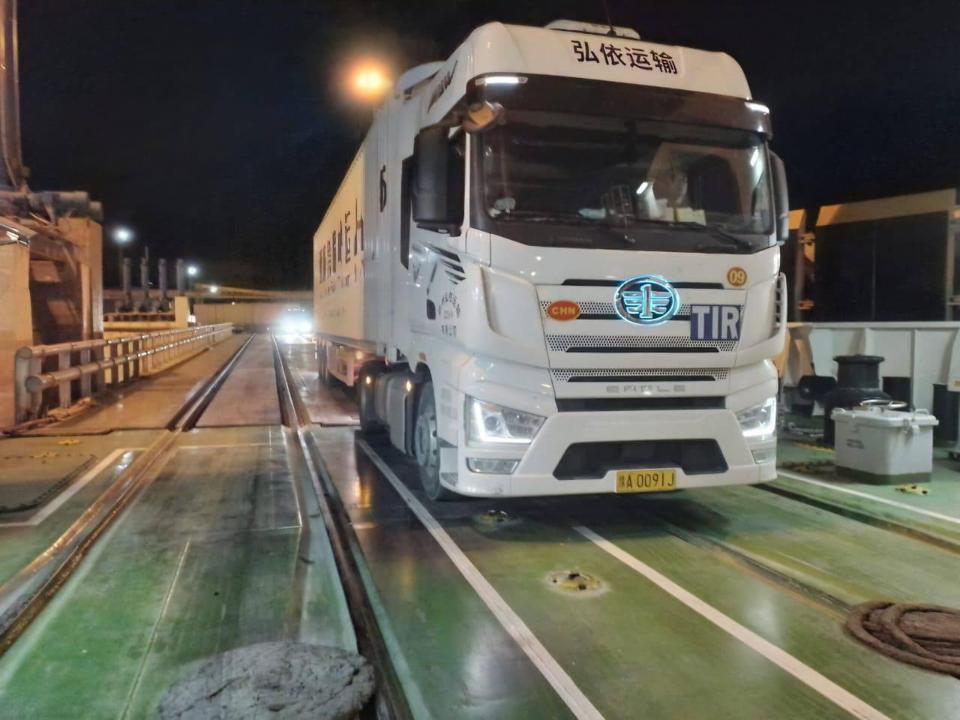
Test Run of Trans-Caspian Route from China to Europe via Kazakhstan

At a meeting of the Kazakh-Chinese commission on road transportation on 24 May in Aktau, Kazakhstan’s Ministry of Transport reported on a test  run of the transit of goods along the China-Kazakhstan-Azerbaijan-Georgia route through the seaports of Kuryk and Baku across the Caspian Sea. On 23 May, the first three Chinese trucks, weighing 80 tons, travelled from Urumqi through Kazakhstan to the city of Aktau’s Kuryk port and after being loaded onto a ferry, continued their journey to Azerbaijan, Georgia, and Europe. Praising the agreement with China on enhancing road transportation signed last year, Ali Altai, Chairman of the Committee for Road Transport and Transport Control at the Ministry of Transport of Kazakhstan, commented: “For the first time in history, vehicles from both countries can travel directly to all our major trading cities and transit through their territories. It currently takes up to 52 days for hundreds of millions of tons of cargo to be shipped by sea from China to Western countries, and up to 22 days to transport smaller volumes by rail. Road transport can reduce the delivery time to 12 days, on a ‘door to door’ basis without intermediate loading/unloading.”

Kyrgyz Banks Urged to Unite and Create Single ATM Network

The chairman of the Cabinet of Ministers of Kyrgyzstan, Akylbek Japarov, has urged the consolidation of the nation's ATMs into one network in a speech at the Bishkek International Financial Forum, stating that the government has been unable to reduce commissions on transfers through banks for two years. 24.kg reports. "This problem has always been there, and it has hindered us. But today, when we are working on the transfer of most payments on a cashless basis, you cannot expect a passive position from us. I have addressed both the National Bank and the Ministry of Economy several times and entrusted the issue to the Ministry of Economy. Therefore, it's probably time for us to study and adopt the experience of other countries on legislative regulation of fee collection for inter-bank transfers," said Japarov. The Cabinet of Ministers believes that banks should stop spending a lot of money on installing ATMs as this wastes time and resources, and proposes that banks unite and create a single ATM structure. Japarov emphasized the development of digital payment technologies and increasing the share of non-cash payments as essential growth pillars, noting that work is being done in two directions to implement the digital concept: choosing the right technological solution and harmonizing legislative acts to introduce the legal status of the digital system. "The introduction of the digital som contributes to the country's economic development by providing a more efficient payment system and stimulating innovation in financial technology. We are pursuing the goal of increasing innovation capacity in the banking sector. Realizing the possibility of protected and secure information exchange between the banking sector participants will allow the development of new products and services and increase their availability and integration," said Zhaparov.

Turkmen Gas to Europe Mooted Again

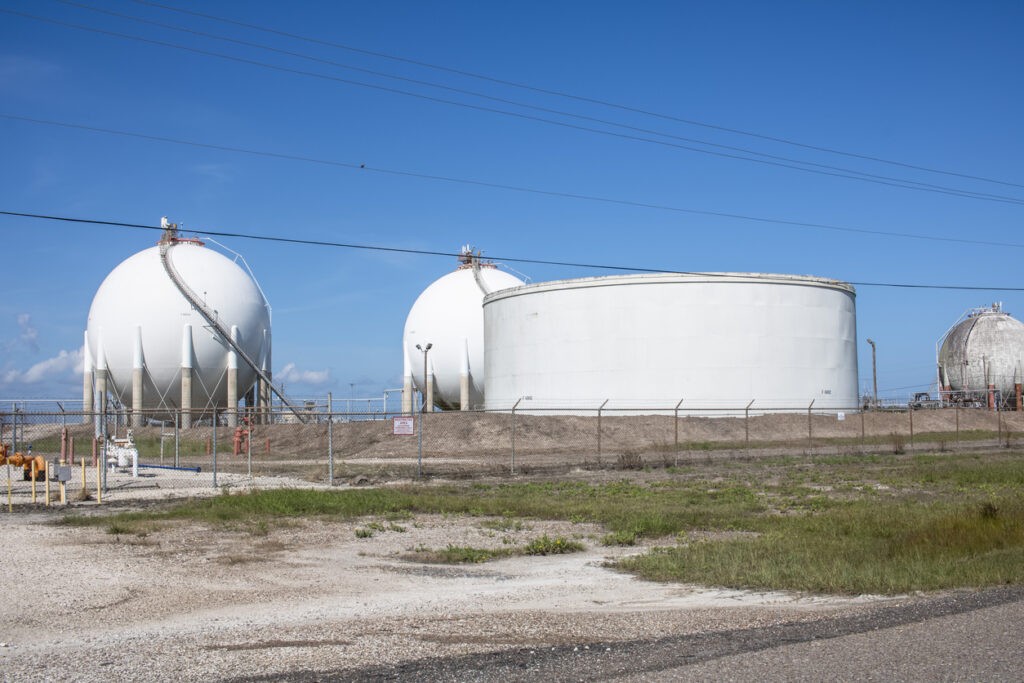
Turkmenistan and Pakistan intend to independently finance the construction of the TAPI gas pipeline (Turkmenistan-Afghanistan-Pakistan-India) to transport Turkmen gas to Europe, according to a statement made by Pakistani Minister, Musadiq Malik, who said the decision was driven by the international community's reluctance to recognize the Afghan government, which has stalled foreign funding. "Turkmenistan, rich in gas reserves and currently only selling to China, has considered exporting its gas to Europe via an LNG train," Malik was quoted as saying by the Profit portal. The minister also talked about the idea of exporting Turkmen gas to the EU via Pakistan. According to this plan, the gas would be piped to Pakistan, and then transported to Europe by rail. According to previous agreements, the $10 billion TAPI gas pipeline project was to be 30% financed ($3 billion) by the participants, and 70% ($7 billion) by loans from international financial institutions. Of the 30% to be allocated by the participating countries, 85% ($2.55 billion) was from to Turkmenistan, and the other 5% ($150 million each) from Afghanistan, Pakistan and India.

Kazakh PM Meets With German Rhenus Group to Discuss Middle Corridor

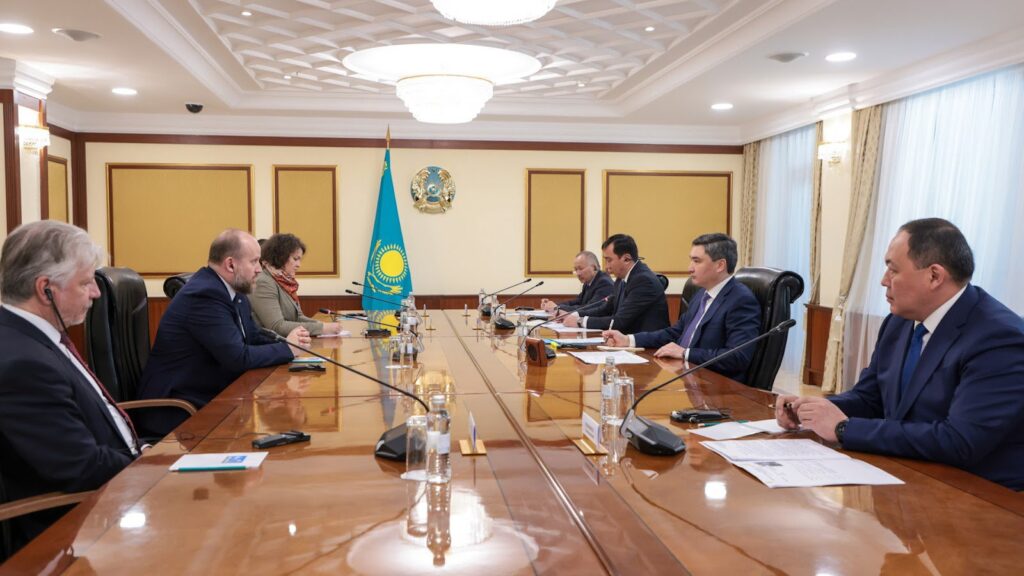
Cooperation in the transport and logistics sectors were discussed at a recent meeting between prime minister of Kazakhstan Olzhas Bektenov and the chairman of Rhenus Group Tobias Bartz. Rhenus Group is one of the 25 largest logistics companies in the world, and has a network of 70 terminals in Europe, as well as 22 container types. At the meeting, the parties considered the current projects and discussed the prospects of the creation of new Kazakh-German enterprises to increase the transit capacity of Kazakhstan through the modernization of warehousing infrastructure and the development of railway transportation. Tobias Bartz noted Kazakhstan's increasing role in global logistics and expressed interest in the creation of new territories with the involvement of Kazakh companies to increase terminal capacity. This will connect the supply chain of Europe with Central Asia. Olzhas Bektenov emphasized the readiness to work openly with investors to fully disclose the transport logistics and transit potential. He added: "The Government of Kazakhstan intends to maximize the transport and logistics potential of the country. We are open to cooperation in the realization of joint investment projects. For our part, we guarantee a stable and predictable investment climate with the creation of favorable conditions for business." Bektenov also noted that major transcontinental transportation corridors -- the shortest routes from Europe to China and Southeast Asia -- pass through the territory of Kazakhstan. Kazakhstan is actively working with Azerbaijan and Georgia to reduce the time of passage of goods along the Trans-Caspian international transportation route. Over the year, the total transit time along the Middle Corridor has almost halved.

Central Asia’s Combined ‘Army of Turan’: Could a Hypothesis Become a Reality?

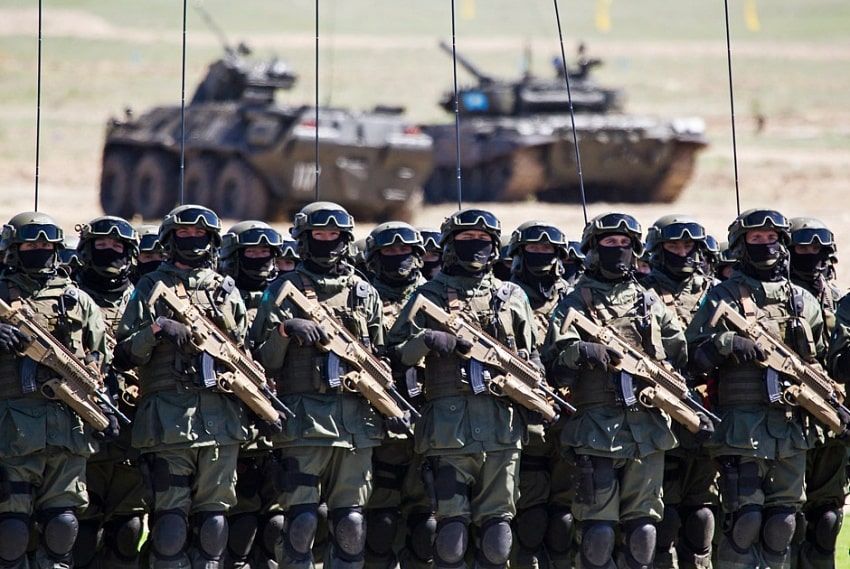
Kazakhstan will host the military exercise, "Birlestik-2024" in July of this year. Notably, this became known from the press service of the Ministry of Defense of Azerbaijan. The exercises will be jointly held by the Armed Forces of Azerbaijan, Kazakhstan, Kyrgyzstan, Tajikistan, and Uzbekistan. It is a convenient occasion to refresh the topic of the 'Army of Turan', which is periodically raised by experts both in Central Asia and neighboring countries. The Army of Turan is a hypothetical military bloc of Turkic-speaking countries. Its ideas have become relevant in the context of global geopolitical turbulence.   I hear the thunder of cannons... Most military analysts consider Azerbaijan to be Turkey's proxy in the South Caucasus. In general, Baku's rapprochement with the capitals of Turkic states (plus Dushanbe) meets Ankara's interests in creating a unified cultural and economic space: Turan. However, does the integration of Turkic states mean that they will eventually be able to create a NATO-style security pact in Central Asia? Such initiatives have resumed with renewed vigor after the end of the Azerbaijani-Armenian conflict, during which Turkey has shown the capability of its weapons. Indeed, in 2022, against the backdrop of the Russian invasion of Ukraine, Kazakhstan - the only country of the participants to share a land border with the Russian Federation - pondered how to protect itself from further expansion of the northern empire's borders. But in the run-up to the summer of 2024, fears have mostly subsided. Many were sobered by the obvious fact that loud declarations of assistance from strong states at best mean the delivery of obsolete weapons, but no more. At worst, your offender will be censured from high podiums, and you will be sympathized with. For example, Turkey, the most likely to defend Central Asia from outsider aggression, did not risk helping the Palestinians, its brothers in faith, and got away with accusing Israel of fascism. So, the 'Army of Turan' exists in the heads of fantasists and pan-Turkics, but in reality, something ordinary is going on — the arms trade. Let's see what the armies of the Central Asian republics are armed with, excluding Turkmenistan, which has declared neutrality.   Tajikistan and Kyrgyzstan The most troublesome neighbors in the region have not been able to complete their border delimitation process. As a result, quarrels periodically erupt, in which border guards from both sides intervene, staging mini-warfare. The cause of discord is usually the same: water. The Tajik and Kyrgyz militaries gain some combat experience in these micro-quarrels. Despite or based on this experience, Dushanbe relies on agreements with other countries -- Russia, China, India, Iran, and CSTO partners -- for its defense capability. Tajikistan's armed forces number only 9,000 men. They have 38 tanks (T-62 and T-72 modifications), 114 armored vehicles (APCs, BMPs, BRDMs), 40 artillery systems, and several short- and medium-range air defense units. The Air Force has four Czechoslovakian L-39 Albatross, combat trainers. Kyrgyzstan does not have much more power in the number of its troops, at around...