• KGS/USD = 0.01144 0%
  • KZT/USD = 0.00208 0%
  • TJS/USD = 0.10482 0.48%
  • UZS/USD = 0.00008 0%
  • TMT/USD = 0.28490 0%
  • KGS/USD = 0.01144 0%
  • KZT/USD = 0.00208 0%
  • TJS/USD = 0.10482 0.48%
  • UZS/USD = 0.00008 0%
  • TMT/USD = 0.28490 0%
  • KGS/USD = 0.01144 0%
  • KZT/USD = 0.00208 0%
  • TJS/USD = 0.10482 0.48%
  • UZS/USD = 0.00008 0%
  • TMT/USD = 0.28490 0%
  • KGS/USD = 0.01144 0%
  • KZT/USD = 0.00208 0%
  • TJS/USD = 0.10482 0.48%
  • UZS/USD = 0.00008 0%
  • TMT/USD = 0.28490 0%
  • KGS/USD = 0.01144 0%
  • KZT/USD = 0.00208 0%
  • TJS/USD = 0.10482 0.48%
  • UZS/USD = 0.00008 0%
  • TMT/USD = 0.28490 0%
  • KGS/USD = 0.01144 0%
  • KZT/USD = 0.00208 0%
  • TJS/USD = 0.10482 0.48%
  • UZS/USD = 0.00008 0%
  • TMT/USD = 0.28490 0%
  • KGS/USD = 0.01144 0%
  • KZT/USD = 0.00208 0%
  • TJS/USD = 0.10482 0.48%
  • UZS/USD = 0.00008 0%
  • TMT/USD = 0.28490 0%
  • KGS/USD = 0.01144 0%
  • KZT/USD = 0.00208 0%
  • TJS/USD = 0.10482 0.48%
  • UZS/USD = 0.00008 0%
  • TMT/USD = 0.28490 0%

Viewing results 1915 - 1920 of 3086

Uzbekistan Considers Hosting Relocated Ukrainian Enterprises

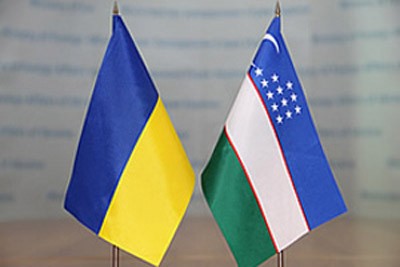
Representatives of Uzbek and Ukrainian businesses have discussed the relocation of certain Ukrainian production enterprises to Uzbekistan. The meeting was held in Kyiv as part of a business council established in 2021. Heads of state bodies and businessmen -- including the founder of the korzinka.uz supermarket chain and co-founder of Newmax Technologies, Zafar Hashimov -- participated in the meeting to offer their perspectives on Ukrainian-Uzbek economic ties. Since the beginning of Russia's attack on Ukraine in February 2022 the countries' bilateral trade turnover has significantly decreased -- in 2023 it amounted to $320 million, down from $747 million in 2021. One of the issues discussed was the customs value of textile products exported from Uzbekistan to Ukraine. An important aspect of the discussion were proposals to transfer to Uzbekistan some Ukrainian production enterprises affected by military actions -- as well as to expand cooperation in the creative economy. Several Ukrainian investment projects are already being implemented in Uzbekistan. The pharmaceutical company Yuria-Pharm acquired the Reka-Myod enterprise in 2023. Another pharmaceutical company, Lekhim, entered the Uzbek market in 2021 and built a large production complex that opened in 2023.
Kazakhstan Seeks Investment from South Korea

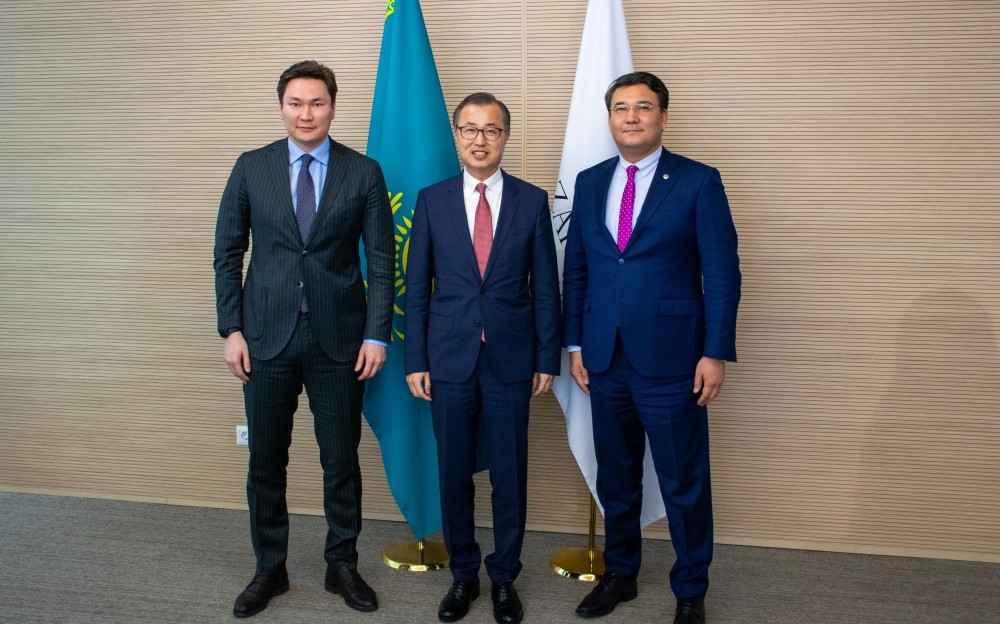
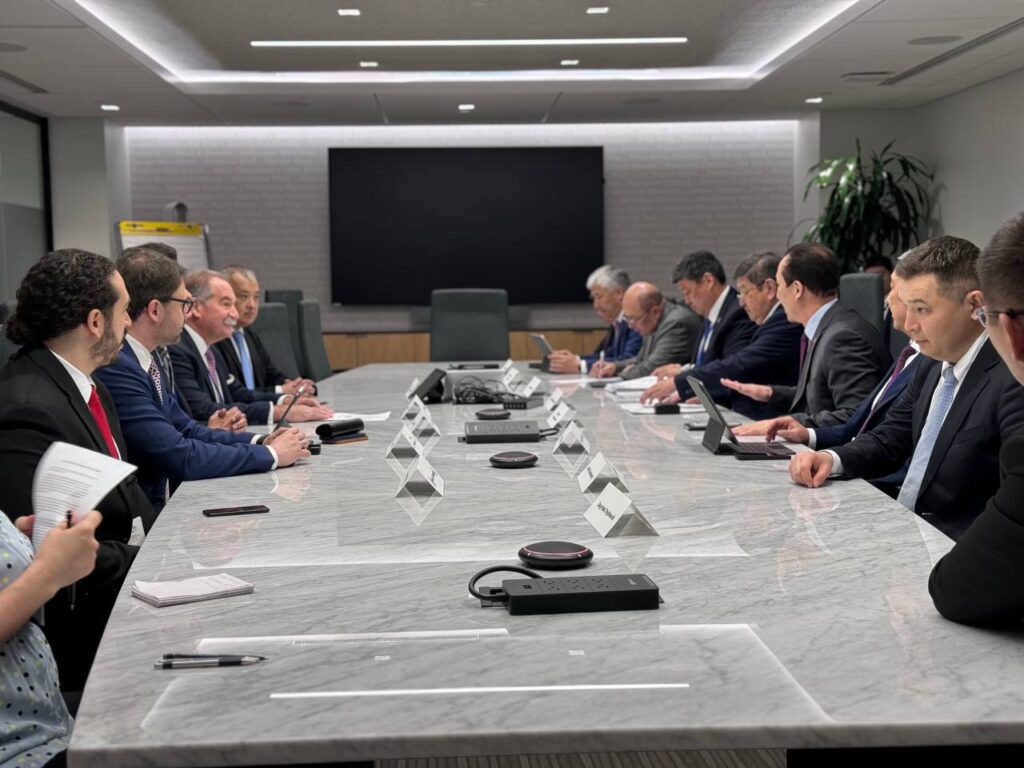
Over the past ten years, South Korea's investments in Kazakhstan's economy have exceeded $6.8 billion and several joint Kazakh-Korean projects with investments of about $1 billion are currently under implementation. The potential to increase and diversify bilateral trade and expand investment cooperation was the focus of a meeting on 16 April between Gabidulla Ospankulov, Chairman of the Investment Committee of the Ministry of Foreign Affairs of Kazakhstan, Yerzhan Yelekeyev, Chairman of the Management Board of National Company Kazakh Invest, and Joe Tae-Ik, Ambassador of the Republic of Korea to Kazakhstan. During the meeting, Ospankulov spoke of the large number of Korean companies working in Kazakhstan and emphasizing that developing economic and investment relations with South Korea is a priority, pledged comprehensive support to companies implementing projects in the country. Kazakh Invest’s Yelekeyev gave thanks to Korean car brands for their input into the Kazakhstan’s successful development of the domestic automotive industry and reported on the high potential for strengthening partnerships in tourism, energy, and petrochemistry. Looking ahead, he stated, “South Korean entrepreneurs work in an export-oriented economy and create competitive, innovative products. We want to adopt this expertise and technology in developing priority sectors in Kazakhstan. In this regard, we are ready to provide a full range of support services, including an existing package of preferences." In return, Ambassador Joe Tae-Ik confirmed his intention to assist in implementing new joint investment projects.

Kyrgyz PM Japarov In U.S. For Talks With Energy Investors

Kyrgyzstan's prime minister Akylbek Japarov is in the United States this week, and will meet with potential investors as Kyrgyzstan looks to grow its energy sector. Japarov will meet with the heads of the World Bank, International Monetary Fund, the U.S. Agency for International Development (USAID), the U.S.-Kyrgyz Chamber of Commerce, Asian Infrastructure Investment Bank, Asian Development Bank and the European Investment Bank. He will also meet with representatives of leading tech corporations, according to the Kyrgyz government's press service. Kyrgyzstan's largest energy project is the construction of a hydroelectric power plant on the Naryn River, for which the World Bank has allocated a soft loan of $5 million for a feasibility study. Kyrgyz authorities are also negotiating a $500 million loan to construct the hydropower plant. In total, according to current estimates, the project will cost about $5 billion. The Times of Central Asia has previously reported that the Kyrgyz Chamber of Commerce and Industry intends to open representative offices in the U.S.

Taliban Returns 120,000 Liters of Uzbek Oil Products Over Low-Quality

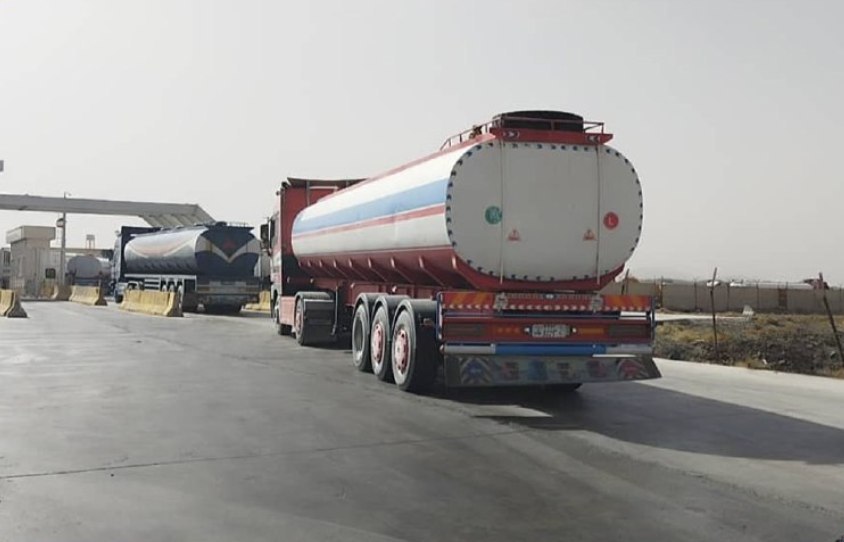
The National Department of Standards of Afghanistan has reported that it returned two tanker trucks worth of oil products with a volume of 120,000 liters from the port of Hairatan back to Uzbekistan. According to Radio Television of Afghanistan (RTA) English, the reason for this was the low quality of the imported refined products. Furthermore, the National Administration of Standards sent back another 19 oil tankers from Sheikh Abu Nasr Farahi Port to Iran over their low-quality. The standards board once again asked Afghan businessmen to prevent the import of low-quality goods into the country. In January of this year, it was reported that the Taliban returned more than 62 tons of low-quality oil to Uzbekistan through the Hairatan border point. In response to this, Uzbekneftgaz Chairman Bahadir Sidikov said the report was misinterpreted, and that the oil products returned by the Taliban was of high quality. Sidikov stated that the product was returned not because of its low quality, but because its standard isn't available in Afghanistan. "This new product was supposed to enter the Afghan market. Unfortunately, the first batch was sent back. But it’s a process. It will not be easy to enter every market. To prove the quality of this product, we sold 1,000 tons of the same diesel to Estonia last month. They received it as a “premium” and ordered 10,000 tons [more]. Currently, we are producing 10,000 tons of [oil] products. In addition, there are inter-governmental agreements," commented Sidikov at that time.

Uzbekistan Aims to Become One of World’s Largest Producers of Olefins

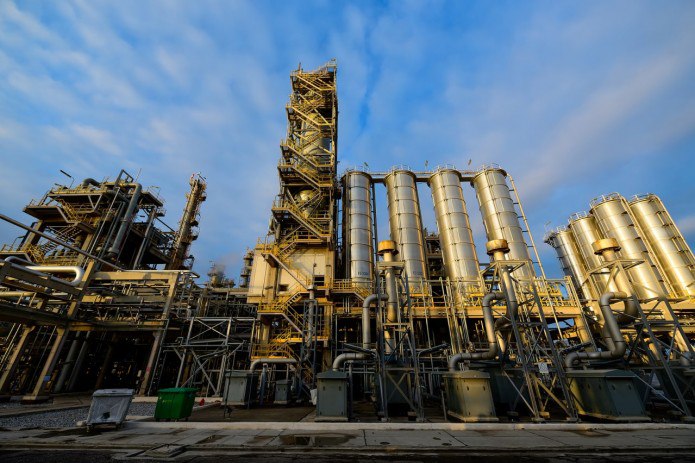
Uzbekistan's largest private oil and gas company, Sanoat Energetika Guruhi (Saneg) will build a gas chemical plant to produce olefins from methanol. The work will be done in partnership with the Chinese state-owned energy giant, Sinopec. The complex will utilize natural gas from the Mubarek fields. Olefins are raw petrochemical materials used for a range of polymer products, such as plastics and films. The $3.3 billion plant will be able to process 1.3 billion cubic meters of natural gas by 2026. About 44% of the production will be exported, mainly to China and Turkey. In addition, the project will make it possible to produce value-added products from natural gas rather than simply burning it for energy or exporting it. The construction of the complex will also stimulate the development of related industries. The Karakul free economic zone in the southeastern Bukhara region will house plants producing textiles, carpets, footwear, plastic pipes and fittings, and other polymer products. "Uzbekistan's gas-chemical complex plans to produce 300,000 tons of polyethylene terephthalate annually, 350,000 tons of polypropylene, and other materials. This is expected to reduce the country's imports of polymers by $500 million a year and attract $350 million a year from their exports," said Bakhodyr Khafizov, director of the Karakul free economic zone. Saneg representatives said that, according to a marketing study, annual polymer consumption in Uzbekistan is now 5.5 kilograms per capita, far below that of other developing economy peers. For example, that figure in Turkey is 23 kilograms, meaning that the Uzbek domestic market shows significant room for expansion. However, there may be problems with exporting polymers abroad, as Uzbekistan has no direct access to the sea. In this regard, production will require additional investments taking into account overland logistics.

Kazakhstan and Armenia Negotiate on Trade and Transport Cooperation

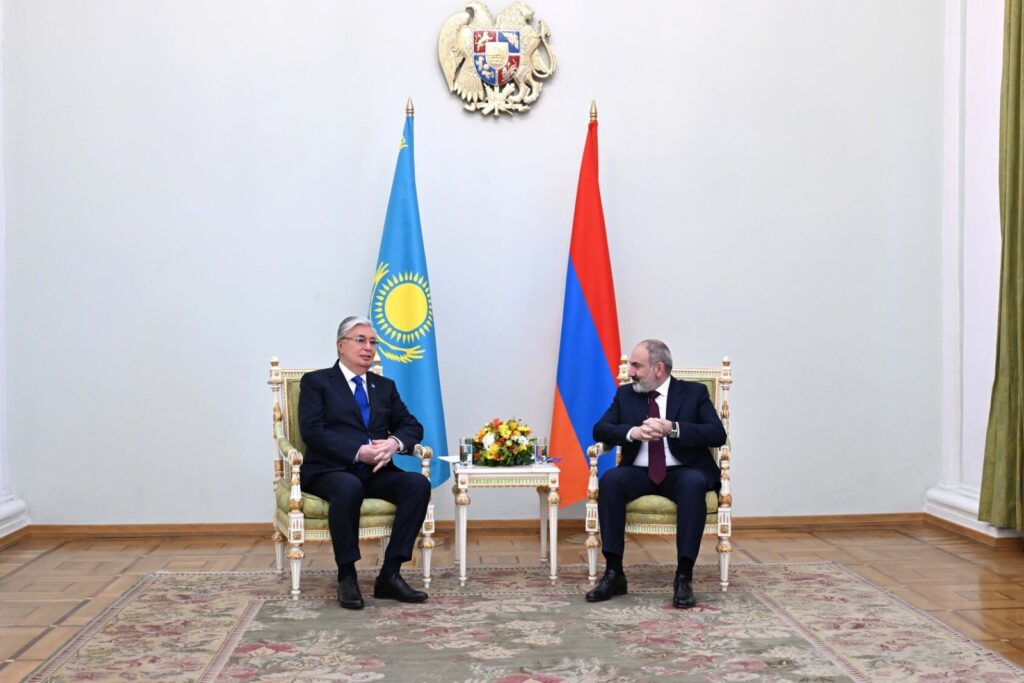
Following negotiations on 15 April in Yerevan, with Armenian Prime Minister Nikol Pashinyan, Kazakh President Kassym-Jomart Tokayev stated that with regard to furthering cooperation, the countries enjoy “unshakable friendship and mutual support.” With reference to developing a more comprehensive partnership, he cited their common goals as expanding and activating bilateral ties, and strengthening regional and international security. Negotiations also focused on enhancing cooperation in economic and investment and the Kazakh president reported, “We - both agreed - that it is necessary to look for new directions that will give impetus to the growth of trade turnover. Kazakhstan is ready to increase its exports to Armenia to $350 million.” Tokayev stressed that development of the transport and logistics sector is key to strengthening Kazakh-Armenian cooperation and hailed Armenia’s readiness to restore transit communications in the South Caucasus under the ‘Crossroads of Peace’ initiative. Aimed at developing communications between Armenia, Turkey, Azerbaijan, and Iran, the Armenian-proposed initiative includes renovating, building, and operating roads, railways, pipelines, cables, and electricity lines. In addition, the Kazakh president welcomed proposals for the operation of direct flights between the countries’ capitals and other cities. Pashinyan likewise emphasized the significant headway made during the negotiations, saying, “We have identified further prospects for strengthening our cooperation, including - transport and logistics. We agree that despite the constant growth in trade turnover, there is still unrealized potential for the development of trade and economic cooperation.”