• KGS/USD = 0.01144 0%
  • KZT/USD = 0.00215 0%
  • TJS/USD = 0.10599 -0.28%
  • UZS/USD = 0.00008 0%
  • TMT/USD = 0.28571 0%
  • KGS/USD = 0.01144 0%
  • KZT/USD = 0.00215 0%
  • TJS/USD = 0.10599 -0.28%
  • UZS/USD = 0.00008 0%
  • TMT/USD = 0.28571 0%
  • KGS/USD = 0.01144 0%
  • KZT/USD = 0.00215 0%
  • TJS/USD = 0.10599 -0.28%
  • UZS/USD = 0.00008 0%
  • TMT/USD = 0.28571 0%
  • KGS/USD = 0.01144 0%
  • KZT/USD = 0.00215 0%
  • TJS/USD = 0.10599 -0.28%
  • UZS/USD = 0.00008 0%
  • TMT/USD = 0.28571 0%
  • KGS/USD = 0.01144 0%
  • KZT/USD = 0.00215 0%
  • TJS/USD = 0.10599 -0.28%
  • UZS/USD = 0.00008 0%
  • TMT/USD = 0.28571 0%
  • KGS/USD = 0.01144 0%
  • KZT/USD = 0.00215 0%
  • TJS/USD = 0.10599 -0.28%
  • UZS/USD = 0.00008 0%
  • TMT/USD = 0.28571 0%
  • KGS/USD = 0.01144 0%
  • KZT/USD = 0.00215 0%
  • TJS/USD = 0.10599 -0.28%
  • UZS/USD = 0.00008 0%
  • TMT/USD = 0.28571 0%
  • KGS/USD = 0.01144 0%
  • KZT/USD = 0.00215 0%
  • TJS/USD = 0.10599 -0.28%
  • UZS/USD = 0.00008 0%
  • TMT/USD = 0.28571 0%

Viewing results 1909 - 1914 of 3398

Uzbekistan Interested in Afghan Oil and Gas

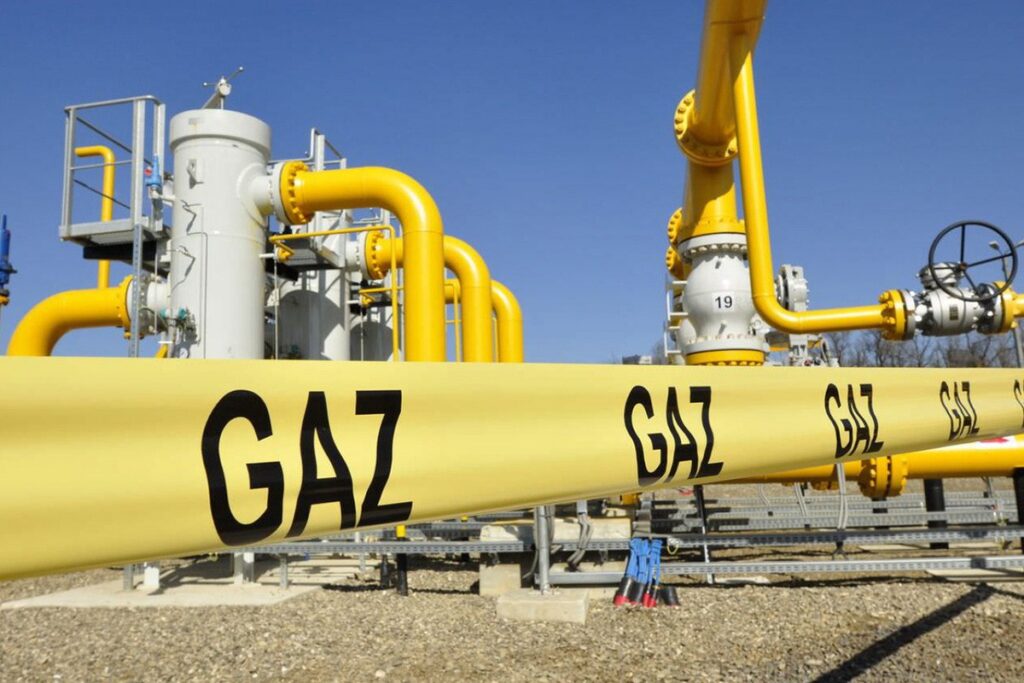
TOLOnews reports that Russian and Uzbek companies have expressed their intention to develop oil and gas fields in Afghanistan, whilst the interest of other Central Asian countries in this field is also growing. "Recently, we had meetings with Uzbek companies," Homayoon Afghan, spokesperson for the Ministry of Mines and Petroleum said. "The Ministry has announced several oil and gas sites to attract investment, including the Herat oil and gas fields.” Plans for the exploration and extraction of oil, gas and other minerals became one of the main topics discussed during the visit of the delegation of Uzbekistan to Kabul. At that time, it was reported that Uzbekistan wanted to buy more than 1 million tons of coal from Afghanistan. Also, on May 21 of this year, Uzbekistan sent humanitarian aid to the people affected by floods in Afghanistan. This aid included 48 tons of flour, 22 tons of rice, 100,000 canned goods and 44 tons of pasta products, 96 water storage tanks of 1,000 liters, etc. The UN World Food Program has reported that more than 300 people have died and 1,000 homes have been destroyed in floods caused by heavy seasonal rains in Afghanistan.

First Uzbek to Receive Doctoral Degree from Harvard Business School

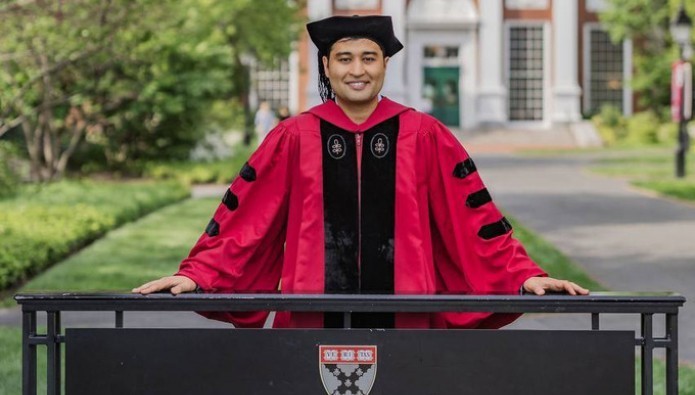
Economist Botir Kobilov has become the first Uzbek to receive a doctoral degree from Harvard Business School (part of Harvard University)  reported Gazeta.uz. The topic of his doctoral dissertation was "The Role of Information and Data in the Financial Market and Economy". According to an earlier report, Kobilov worked as a doctoral student and researcher in empirical law and finance in the corporate governance program of Harvard Law School. Prior to enrolling at Harvard, he attained a master's degree in economics from Duke University in the United States and a bachelor's degree from the Singapore Institute of Management Development in Tashkent. In his early career, he worked as a leading economist at the Central Bank of Uzbekistan. His key areas of interest include the impact of new technologies and new sources of information on financial reporting, law enforcement, compliance, investor communication and decision-making. Botir Kobilov now plans to pursue a faculty position at Texas State University.

Kazakhstani Movies No Longer Playing Just a Supporting Role

Until recently, the idea of Kazakhstani movies grossing a billion tenge ($2.5m) was a pipe dream. But in the last two years several films have earned this amount. The number of films being co-produced with world-leading studios is growing. However, domestic cinema still struggles to overcome funding and content quality problems. At the end of last year, the romantic comedy Taptym au seni (I Found You) earned more than a billion tenge in just 10 days of screenings. But the real shock came later, when the box office receipts of the suspense film Dastur (Tradition) exceeded a billion tenge after only a week of distribution. In one weekend alone it significantly outperformed Hollywood's Aquaman. In just the second half of last year, Kazakhstani films at the domestic box office earned over $14 million. One of the highest-grossing films was Kazakhstani Business in India, directed by Nurlan Koyanbayev. The film grossed over 1.25 billion tenge, and it was followed by Maghan Nazar Audar (Look at Me). The top ten includes Zhaidarman (Cordial), Zhynim Sol (My Gene) and Azhyrasam (Divorced). Domestic films now account for 30% of total box office receipts in Kazakhstan. Domestic analysts are confident that in the near future Kazakhstani cinema will overtake Uzbekistan to become the leader in Central Asia. In addition to the national Kazakhfilm studio and private studios, production is being driven forward by the State Center for Support of National Cinema. The Center allocates grants to industry figures on a competitive basis, and although there are heated discussions around the terms of the competition and the awardees, state support has a significant impact on the release of films. As for the subject matter, comedies are usually the leaders at the box office. They are often devoted to crime, drug trafficking, fraud, dishonest business, and corruption. Romance and historical figure movies remain popular as well. There is also a growing trend of condemning violence against women in the industry. Dastur, for example, tells the story of a rape victim who violently avenges not only the offender but also his neighbors, with whose tacit consent her life and dignity were devalued. Some sources are speculating that there will soon be a film adaptation of the story of the murder of Saltanat Nukenova by former minister Kuandyk Bishimbayev, which has attracted worldwide attention. A decline in the popularity of western and Russian films, which have led the box office in past decades, is also helping the growth of domestic movies. The share of international projects in the Kazakhstani film industry is growing. In March, the series Assassins Beginning, produced in Egypt, showed spectacular locations across Kazakhstan, including Charyn Canyon and Kolsai Lakes. In January Kazakhstan and Nigeria's 'Nollywood' joined forces for the first time to create a movie called Adam Bol. The film will be shown in both countries, with Nigeria steadily taking over movie markets in Africa and Asia. Joint production helps to not only create jobs in the film industry, but to support businesses as well....

The Middle Corridor is Being Funded Faster than Expected

According to Samuel Doveri Vesterbye, director of the independent think-tank, European Neighbourhood Council (ENC), a small group of high-ranking cabinet officials, ambassadors and other diplomats met in a closed-door round-table on May 15, representing the EU, Türkiye and countries in the South Caucasus and Central Asia. The meeting, organized by Turkish organizations International Transporters Association (UND) and the Turkish Industry and Business Association (TUSIAD), focused on the synergy between the EU's Global Gateway initiative and the projects of the Trans-Caspian International Trade Route (TITR). The fact of the meeting taking place has been confirmed by Türkiye’s Permanent Delegate to the EU. Doveri Vesterbye writes that the meeting "consisted of less than 30 individuals mostly linked to diplomacy, transport, logistics, business, critical infrastructure security, policy-making and supply chains" and "brought together four different Directorate Generals (DGs) and more than 10 nationalities of Director-and-Ambassador level." Significantly, also according to Doveri Vesterbye, the development of high-level coordination committees is under way. The meeting’s assessment that the TITR is being funded faster than expected is an extremely positive development. Dr. S. Frederick Starr, a well-known American expert and a Distinguished Fellow for Eurasia at the American Foreign Policy Council, told The Times of Central Asia that "the activation and coordination of both European and Turkish institutions is essential not only for the financing and construction of this mega-project, but also for its successful management thereafter." This is a very stabilizing development for international commerce. As other corridors are increasingly volatile, it would help to insulate trade between China and Europe from supply-chain shocks. It will also benefit the participating states themselves. Starr explained that the continuing European and Turkish involvement in building out the TITR "will help the transit states of Central Asia and the [South] Caucasus to balance their relations with China and Europe and will thereby undergird their sovereignties. Such balance creates what is literally a 'win-win-win' situation." According to a mid-2023 report, prepared jointly by the EBRD and the EU Commission, an estimated €18.5 billion is required in infrastructure investments in order to improve Central Asia's transport connectivity. Potential growth in transit container traffic by 2040 could be over 40-fold, with significant spill-over effects on education, tech hubs, business and middle-class development. At the same time, the TITR has been reconceptualized as a driver of regional trade and economic growth along the entire Europe–Türkiye–South Caucasus–Central Asia trajectory, with special attention given to the latter two regions. The EU Commission and the EBRD have already funded €10.5 billion in Central Asia via loans and grant investments promised only a few months ago, in January this year, at the Global Gateway Investment Forum in Brussels. This pace suggests significant commitment by such large bureaucratic organizations, and it augurs well for the unlocking of funds from the European Investment Bank (EIB) for investment in Turkey. Doveri Vesterbye writes that the heads of EU member-state missions in Brussels (COREPER) will work to synchronize EIB investments, with special attention on reforming the Customs Union, in order...

Test Run of Trans-Caspian Route from China to Europe via Kazakhstan

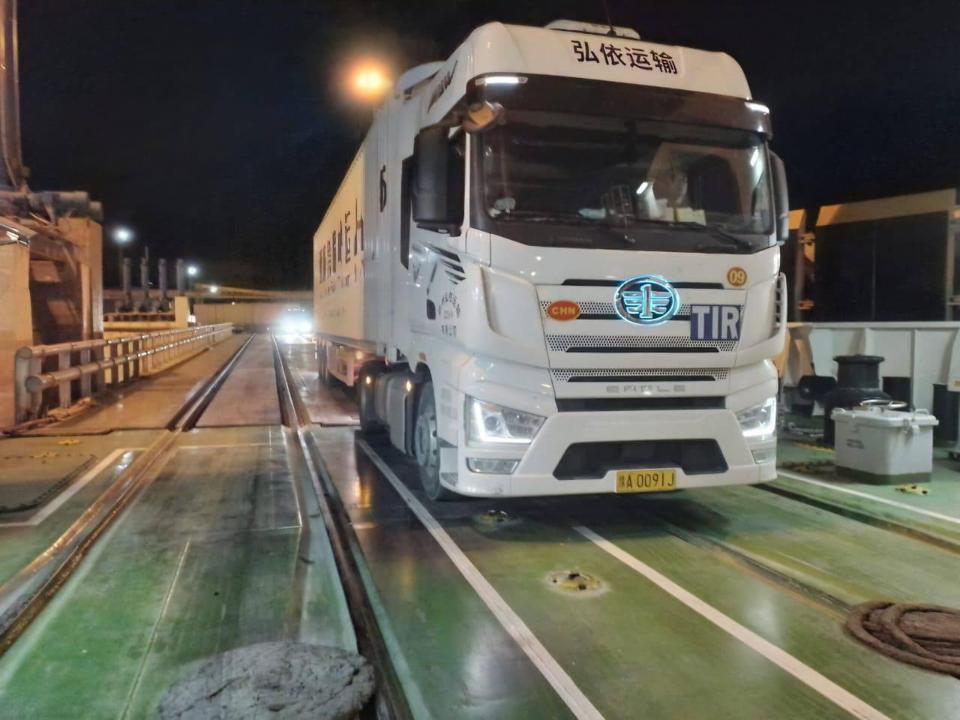
At a meeting of the Kazakh-Chinese commission on road transportation on 24 May in Aktau, Kazakhstan’s Ministry of Transport reported on a test  run of the transit of goods along the China-Kazakhstan-Azerbaijan-Georgia route through the seaports of Kuryk and Baku across the Caspian Sea. On 23 May, the first three Chinese trucks, weighing 80 tons, travelled from Urumqi through Kazakhstan to the city of Aktau’s Kuryk port and after being loaded onto a ferry, continued their journey to Azerbaijan, Georgia, and Europe. Praising the agreement with China on enhancing road transportation signed last year, Ali Altai, Chairman of the Committee for Road Transport and Transport Control at the Ministry of Transport of Kazakhstan, commented: “For the first time in history, vehicles from both countries can travel directly to all our major trading cities and transit through their territories. It currently takes up to 52 days for hundreds of millions of tons of cargo to be shipped by sea from China to Western countries, and up to 22 days to transport smaller volumes by rail. Road transport can reduce the delivery time to 12 days, on a ‘door to door’ basis without intermediate loading/unloading.”

Kyrgyz Banks Urged to Unite and Create Single ATM Network

The chairman of the Cabinet of Ministers of Kyrgyzstan, Akylbek Japarov, has urged the consolidation of the nation's ATMs into one network in a speech at the Bishkek International Financial Forum, stating that the government has been unable to reduce commissions on transfers through banks for two years. 24.kg reports. "This problem has always been there, and it has hindered us. But today, when we are working on the transfer of most payments on a cashless basis, you cannot expect a passive position from us. I have addressed both the National Bank and the Ministry of Economy several times and entrusted the issue to the Ministry of Economy. Therefore, it's probably time for us to study and adopt the experience of other countries on legislative regulation of fee collection for inter-bank transfers," said Japarov. The Cabinet of Ministers believes that banks should stop spending a lot of money on installing ATMs as this wastes time and resources, and proposes that banks unite and create a single ATM structure. Japarov emphasized the development of digital payment technologies and increasing the share of non-cash payments as essential growth pillars, noting that work is being done in two directions to implement the digital concept: choosing the right technological solution and harmonizing legislative acts to introduce the legal status of the digital system. "The introduction of the digital som contributes to the country's economic development by providing a more efficient payment system and stimulating innovation in financial technology. We are pursuing the goal of increasing innovation capacity in the banking sector. Realizing the possibility of protected and secure information exchange between the banking sector participants will allow the development of new products and services and increase their availability and integration," said Zhaparov.