• KGS/USD = 0.01143 0%
  • KZT/USD = 0.00205 0%
  • TJS/USD = 0.10433 0%
  • UZS/USD = 0.00008 0%
  • TMT/USD = 0.28577 0%
  • KGS/USD = 0.01143 0%
  • KZT/USD = 0.00205 0%
  • TJS/USD = 0.10433 0%
  • UZS/USD = 0.00008 0%
  • TMT/USD = 0.28577 0%
  • KGS/USD = 0.01143 0%
  • KZT/USD = 0.00205 0%
  • TJS/USD = 0.10433 0%
  • UZS/USD = 0.00008 0%
  • TMT/USD = 0.28577 0%
  • KGS/USD = 0.01143 0%
  • KZT/USD = 0.00205 0%
  • TJS/USD = 0.10433 0%
  • UZS/USD = 0.00008 0%
  • TMT/USD = 0.28577 0%
  • KGS/USD = 0.01143 0%
  • KZT/USD = 0.00205 0%
  • TJS/USD = 0.10433 0%
  • UZS/USD = 0.00008 0%
  • TMT/USD = 0.28577 0%
  • KGS/USD = 0.01143 0%
  • KZT/USD = 0.00205 0%
  • TJS/USD = 0.10433 0%
  • UZS/USD = 0.00008 0%
  • TMT/USD = 0.28577 0%
  • KGS/USD = 0.01143 0%
  • KZT/USD = 0.00205 0%
  • TJS/USD = 0.10433 0%
  • UZS/USD = 0.00008 0%
  • TMT/USD = 0.28577 0%
  • KGS/USD = 0.01143 0%
  • KZT/USD = 0.00205 0%
  • TJS/USD = 0.10433 0%
  • UZS/USD = 0.00008 0%
  • TMT/USD = 0.28577 0%

Viewing results 355 - 360 of 3014

Kazakhstan to Maintain Grain Exports in 2025 to 2026 Season

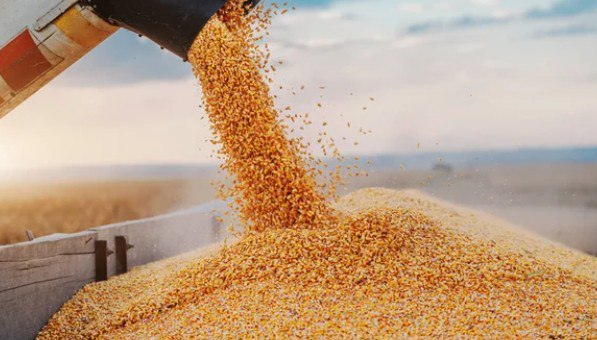
Kazakhstan plans to maintain grain exports above 12 million tons in the 2025–2026 marketing season, Deputy Minister of Agriculture Azat Sultanov said at a recent briefing. Grain exports for the current 2024–2025 season reached a record 13.4 million tons, according to Sultanov. “Taking into account this year’s harvest, we forecast that next year’s exports will not fall below last year’s level, that is, more than 12 million tons,” he said. To date, 15.6 million hectares, 88.6% of the total planted area, have been harvested, yielding an average of 16.9 centners per hectare and producing 26.6 million tons of grain. This output will fully meet domestic needs for food, fodder, and seeds, while reinforcing Kazakhstan’s position in its traditional export markets. Wheat has been harvested from 12 million hectares, 99% of the cultivated area, at a yield of 16.5 centners per hectare, resulting in approximately 20 million tons. Barley and oats produced 2.4 million tons, and corn yielded 852,000 tons. Sultanov also noted that Kazakhstan has re-entered several previously lost markets, including Kyrgyzstan, Azerbaijan, and Armenia, where demand for Kazakh wheat is on the rise. As previously reported by The Times of Central Asia, Kyrgyzstan has increased its imports of Kazakh wheat eightfold. Licensed grain receiving enterprises have already received 6.7 million tons from the new harvest, twice the volume recorded at the same time last year. As part of efforts to diversify crop production, special attention has been given to legumes and oilseeds. This year’s legume harvest reached 1 million tons, and the country expects a record oilseed yield of about 4 million tons, of which 3.3 million tons have already been collected. Potatoes have been harvested from 99 percent of the planted area, totaling 130,000 hectares and producing 2.9 million tons. Sultanov said this volume should prevent the shortages and price surges experienced earlier this year. The vegetable harvest totaled 3.9 million tons, while melon crops reached 2.6 million tons.
Kyrgyzstan Expands Mineral Reserves Amid New Exploration Drive

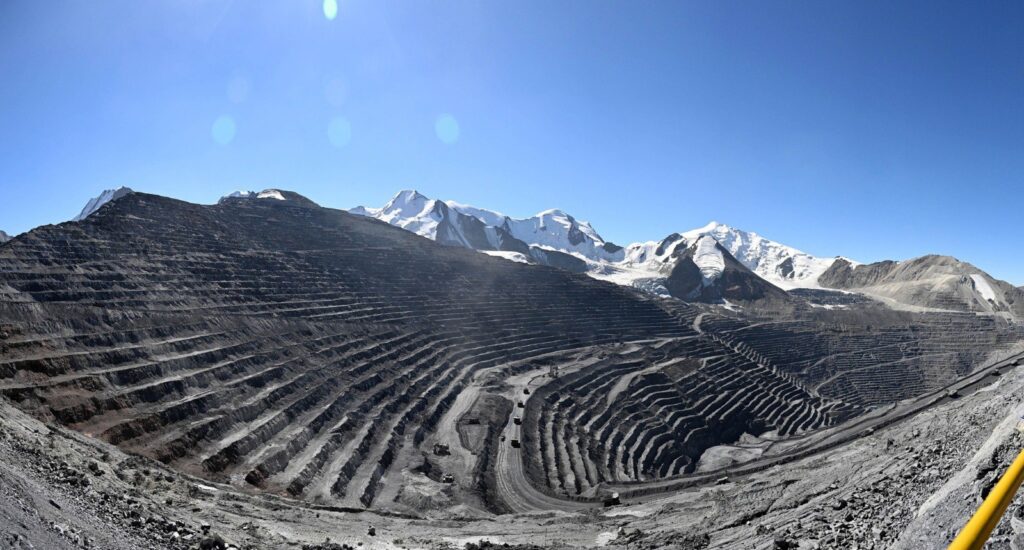
Kyrgyzstan now boasts over 1,000 deposits of 51 different types of minerals, including precious, base, and rare earth metals, as well as coal and hydrocarbons, according to the Ministry of Natural Resources, Ecology, and Technical Supervision. Among the most prominent is the Kumtor gold mine, situated at an altitude of 4,000 meters in the Issyk-Kul region. Kumtor ranks among the world’s ten largest gold deposits and remains a cornerstone of the national mining sector. Approximately 400 deposits across the country are currently under development or active exploration, while operations at around 600 sites have been suspended pending reserve reassessments and upgrades to mining technologies. The mining sector is considered a strategic priority for Kyrgyzstan’s economy. After years of limited geological activity, the government allocated 1 billion soms in 2024 to Kyrgyzgeology for equipment modernization and intensified exploration of polymetals and rare earth elements. Between January and September 2025, the industry recorded stable growth in both output and reserves. As of January 1, 2025, Kyrgyzstan’s confirmed reserves included 973 tons of gold, 1,100 tons of silver, and 960,400 tons of copper, along with significant quantities of other minerals. Recent exploration efforts yielded an additional 5.8 tons of gold, 3.7 tons of silver, and substantial volumes of non-ferrous metals, coal, and construction materials. In the first nine months of 2025, Kyrgyzstan produced 17 tons of gold, 198,000 tons of oil, 18.9 million cubic meters of gas, and 2.3 million tons of coal. To support industry growth, the government conducted 26 auctions for subsoil use rights, generating $1.6 million in revenue. As of September 2025, a total of 2,005 mining licenses had been issued, including 103 granted to state-owned enterprises.

Uzbekistan Expands Nuclear Energy Cooperation with Italy’s Ansaldo Energia

Uzbekistan and Italy are deepening their cooperation in the field of nuclear energy, according to a statement from the press service of the Uzatom Agency. A delegation led by Uzatom Director Azim Akhmedkhadjaev has just returned from a working visit to Genoa, Italy, where talks focused on advancing Uzbekistan’s first nuclear power plant project. The visit included meetings with representatives of the regional government, the Genoa Chamber of Commerce, leading universities, and major Italian energy firms. A key session was held with Ansaldo Energia and its nuclear subsidiary, Ansaldo Nucleare, one of Europe’s leading providers of power generation technologies. Discussions focused on integrating Italian technical solutions into Uzbekistan’s planned nuclear facility, with particular emphasis on adapting auxiliary systems to local climatic and geological conditions. The Italian side shared its experience in safety system design, nuclear software development, and fuel management, expertise gained through projects in China, Belgium, Slovenia, Hungary, and Ukraine. Both sides explored the potential role of Italian companies as technical consultants during construction, ensuring the project aligns with international safety standards. Cooperation in radioactive waste management and deployment of advanced Italian fuel-handling technologies was also discussed. Italy also expressed readiness to support Uzbekistan in developing a national regulatory framework for nuclear energy and licensing procedures. Further, the two parties considered launching joint research and engineering initiatives to train Uzbek nuclear specialists, part of a broader effort to build local capacity and ensure the safe, long-term operation of the country’s future nuclear infrastructure. The talks come as Uzbekistan diversifies its energy portfolio. Energy Minister Jurabek Mirzamahmudov recently announced that Saudi-based Pemco will begin constructing a 200-megawatt gas-piston power plant in Samarkand. Meanwhile, Uzbekistan continues to expand its solar and wind capacity through ongoing projects with ACWA Power.

Iran to Retain Control of Sangtuda-2 Hydropower Plant in Tajikistan Until 2032

Tajikistan and Iran have agreed to extend the repayment period for Iran’s investment in the Sangtuda-2 hydroelectric power plant by six years and four months. The extension will allow the Iranian side to recover its investment, after which full ownership of the facility will transfer to the Tajik government. The amendments to the electricity purchase agreement between Tajikistan’s state-owned power utility Barki Tochik and Iran’s Sangtuda Sangob company were ratified by the lower house of Tajikistan’s parliament in early October. The revised agreement was originally signed on May 29, 2025, in Dushanbe, following high-level negotiations between the two countries. Under the initial agreement, Iran was to recover its investment by August 2026, after which the hydropower plant would become Tajik state property. However, under the new terms, Iranian management of the plant will continue until the end of 2032. The total construction cost of the Sangtuda-2 hydroelectric plant was $256 million. Of this, the Iranian government contributed $180 million, Sangob invested $36 million, and the Tajik government provided $40 million. According to Tajikistan’s Ministry of Energy and Water Resources, between the plant’s launch in 2012 and the end of 2023, Barki Tochik purchased 8.9 billion kilowatt-hours of electricity worth $451.5 million. However, the power plant itself received only $122.5 million, roughly 27% of the total value. As a result, Tajikistan’s outstanding debt to Sangtuda-2 reached $329 million. Under the new agreement, this debt will be fully written off. In return, Dushanbe has committed to a new payment schedule over the next six years and four months. After this period, control of the plant will transfer to Barki Tochik. Sangtuda-2 is among the largest joint energy projects between Tajikistan and Iran. Construction began in 2006, with the first hydroelectric unit launched in September 2011 and the second in 2014. The plant is located in the Danghara district of the Khatlon region, on the Vakhsh River. It is the fifth stage of the Vakhsh cascade of hydroelectric stations.

Is TAPI Just ‘TA’ for Now?

The idea for the 1,800-kilometer Turkmenistan-Afghanistan-Pakistan-India (TAPI) natural gas pipeline project has been around for 30 years. There has not been much progress in building the pipeline during those decades. The chances of seeing TAPI realized seem far away at the moment, considering Pakistan and India were involved in fighting in May of this year, and in October, there were battles along the Pakistan-Afghanistan border. However, Turkmenistan and Afghanistan are still interested in TAPI, and top officials from those two countries just met along the border to inaugurate a new section of the pipeline, and it looks like, for now, these two countries are enough. Another Ceremony Gurbanguly Berdimuhamedov, the chairman of Turkmenistan’s Halk Maslahaty (People’s Council), went to the Turkmen-Afghan border on October 20 to meet with Afghanistan’s Deputy Prime Minister for Economic Affairs, Mullah Abdul Ghani Baradar, for an event inaugurating a new section of TAPI. The ceremony for the Serhetabat-Herat section of TAPI took place just inside Afghanistan, not far from where top officials from the four countries involved, including Berdimuhamedov, gathered in February 2018 to launch construction of the Afghan section of TAPI. Berdimuhamedov made his only previous visit to Afghanistan during that ceremony, when he, the Afghan president, Pakistani prime minister, and Indian minister for state and external affairs, briefly flew to Herat to continue celebrations marking the launch. The location of the October 20 inauguration was also not far from the Islim Chesme border crossing, where Berdimuhamedov met with Afghan officials in September 2024 to again launch construction of the Afghan section of TAPI. Baradar and Berdimuhamedov spoke about the project’s importance in fostering greater regional cooperation, the economic benefits of which include creating jobs and providing energy to areas that greatly need it. Similar remarks were made by Berdimuhamedov and others at previous TAPI launches. Work did finally start after the 2024 launch. Afghanistan’s Tolo News reported that according to the country’s Ministry of Mines and Petroleum, 14 kilometers of the pipe have been laid, and 70 more kilometers of the route are set for pipeline installation. Turkmen state media always refers to Berdimuhamedov as “Arkadag,” which means “protector” in the Turkmen language. According to Turkmen state media, the Serhetabat-Herat section of the pipeline is called “Arkadagyn Ak Yoly,” or “Arkadag’s White Road.” Tolo News also reported that, “Recently, a large quantity of gas transmission pipes was imported from Turkmenistan into Afghanistan.“ It appears the Serhetabat-Herat section of TAPI is making progress, but it could be years before the pipeline goes any farther. A More Modest Goal For nearly the entire history of the TAPI project, the major obstacle to actually building the pipeline was the security problem inside Afghanistan. That problem is not over, but it is significantly reduced now that the Taliban are again imposing brutal control over the country. Military conflicts in recent months between Pakistan and both the other partners in the TAPI project shine a spotlight on another problem that has always raised questions about the viability of...

Trade in Central Asia: China Deepens Influence, Europe Expands Presence, Region Seeks New Markets

Central Asia remains a theater of active economic competition, with countries in the region striving to diversify external partnerships and reduce dependence on traditional power centers, Russia and China. While both continue to dominate foreign trade, Kazakhstan, Uzbekistan, Kyrgyzstan, and Tajikistan are increasingly exploring new directions. The region’s evolving trade dynamics reflect each country's economic characteristics. Kazakhstan is driven by energy and metals exports, Uzbekistan by manufacturing and resource processing, while Kyrgyzstan and Tajikistan rely heavily on remittances and raw material exports. Amid global shifts and intensified competition for markets, Central Asian states are gradually shaping more multipolar trade strategies, opening up new routes and partnerships. Turkmenistan is excluded from this analysis due to the opacity of its national statistics. Kazakhstan As Central Asia’s largest economy, Kazakhstan relies heavily on natural resource extraction. Its main exports include oil, gas, metals, coal, grain, and agricultural products. Imports consist primarily of machinery, chemicals, vehicles, and consumer goods. Key export partners include Italy (21.6%), China (18.6%), Russia (10.2%), the Netherlands (7.4%), Turkey (4.7%), and Uzbekistan (4.3%). On the import side, China (29%) and Russia (28.8%) dominate, followed by Germany (4.8%), South Korea (3.7%), the United States (3.6%), and Turkey (2.5%). Kazakhstan has maintained a positive trade balance, buoyed by consistent demand for raw materials. In January-July 2025, the country’s foreign trade turnover totaled $78.18 billion, down 2.6% from the same period in 2024. Exports declined by 6.4% to $43.58 billion, while imports rose by 2.6% to $34.6 billion. Uzbekistan Uzbekistan's economy is focused on agriculture, textiles, natural resources, and manufacturing. Major exports include textiles, gold, gas, automobiles, cotton, and fruit. Imports are led by machinery, equipment, chemicals, and petroleum products. In the first half of 2025, foreign trade turnover reached $44.4 billion, up 19.9% year-on-year. Exports rose 34.9% to $20.1 billion, while imports increased 9.9% to $24.29 billion, leaving a trade deficit of $4.18 billion. Uzbekistan trades with 197 countries. Its largest trade partners are China (18.2%), Russia (16.1%), Kazakhstan (5.9%), Turkey (3.6%), and South Korea (2.2%). Export destinations include Russia (12.3%), China (5.5%), Kazakhstan (4.0%), Afghanistan (3.7%), Turkey (3.0%), France (2.6%), the UAE (1.8%), Kyrgyzstan (1.6%), Tajikistan (1.4%), and Pakistan (1.2%). Imports mainly come from China (28.7%), Russia (19.3%), Kazakhstan (7.6%), Turkey (4.1%), South Korea (3.9%), Germany (2.8%), and India (2.6%). Kyrgyzstan Kyrgyzstan, with limited natural resources, is heavily dependent on foreign trade. Its economy is rooted in agriculture, mining, and textiles. Key exports include gold and agricultural products, while imports are dominated by machinery, vehicles, petroleum products, and chemicals. From January to June 2025, foreign trade turnover fell 12.4% year-on-year to $6.99 billion. Exports made up only 15% of total trade, underscoring a continued trade deficit. Main partners remain Kazakhstan, Russia, and China. Tajikistan Tajikistan’s economy is centered on agriculture, hydropower, textiles, and mining. In January-August 2025, foreign trade turnover rose 16.8% year-on-year to $6.73 billion. Exports totaled $1.63 billion, while imports reached $5.1 billion, more than triple the export volume. Main exports are aluminum, textiles, agricultural goods, and minerals; imports...