• KGS/USD = 0.01144 0%
  • KZT/USD = 0.00216 0%
  • TJS/USD = 0.10663 0%
  • UZS/USD = 0.00008 0%
  • TMT/USD = 0.28530 0%
  • KGS/USD = 0.01144 0%
  • KZT/USD = 0.00216 0%
  • TJS/USD = 0.10663 0%
  • UZS/USD = 0.00008 0%
  • TMT/USD = 0.28530 0%
  • KGS/USD = 0.01144 0%
  • KZT/USD = 0.00216 0%
  • TJS/USD = 0.10663 0%
  • UZS/USD = 0.00008 0%
  • TMT/USD = 0.28530 0%
  • KGS/USD = 0.01144 0%
  • KZT/USD = 0.00216 0%
  • TJS/USD = 0.10663 0%
  • UZS/USD = 0.00008 0%
  • TMT/USD = 0.28530 0%
  • KGS/USD = 0.01144 0%
  • KZT/USD = 0.00216 0%
  • TJS/USD = 0.10663 0%
  • UZS/USD = 0.00008 0%
  • TMT/USD = 0.28530 0%
  • KGS/USD = 0.01144 0%
  • KZT/USD = 0.00216 0%
  • TJS/USD = 0.10663 0%
  • UZS/USD = 0.00008 0%
  • TMT/USD = 0.28530 0%
  • KGS/USD = 0.01144 0%
  • KZT/USD = 0.00216 0%
  • TJS/USD = 0.10663 0%
  • UZS/USD = 0.00008 0%
  • TMT/USD = 0.28530 0%
  • KGS/USD = 0.01144 0%
  • KZT/USD = 0.00216 0%
  • TJS/USD = 0.10663 0%
  • UZS/USD = 0.00008 0%
  • TMT/USD = 0.28530 0%

Viewing results 361 - 366 of 3425

Kazakhmys Announces Shareholder Transition Amid Strategic Industry Shift

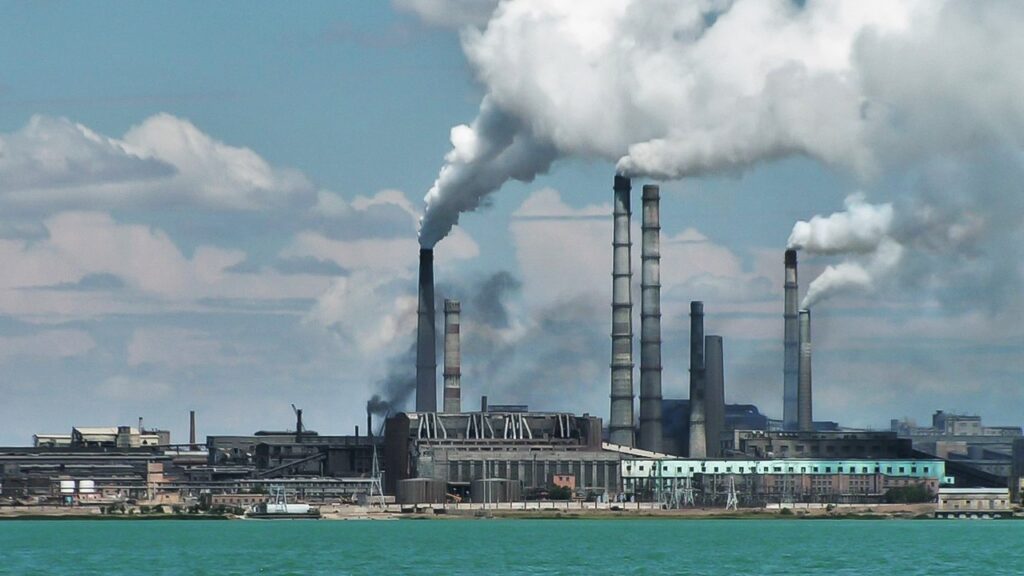
Kazakhstan’s Kazakhmys Corporation has announced the signing of a framework agreement initiating the transfer of ownership to a new shareholder, according to a statement from the company’s press service. The agreement was reached jointly by Kazakhmys President Vladimir Kim and Chairman of the Board of Directors Eduard Ogai. It sets in motion the procedures for a share transfer, with a formal purchase and sale agreement to follow once all obligations are fulfilled in accordance with legal requirements. The corporation emphasized that the process will be conducted in strict compliance with the law. In Kazakhstan’s mining and metallurgical sector, such transactions require authorization from the Ministry of Industry and Construction as well as the Agency for the Protection and Development of Competition. Kazakhmys also confirmed that notification procedures for partners, creditors, minority shareholders, and other stakeholders have begun. “According to the signed document, the upcoming change of shareholder will not affect production or operations. All contractual obligations and employee social guarantees will remain intact, and job stability will be fully maintained. Kazakhmys will continue to operate normally, with current and planned projects implemented in line with its strategic roadmap,” the company stated. This announcement follows reports that Kazakh businessmen Shakhmurat Mutalip and Nurlan Artikbayev are in talks to acquire stakes in two of the country’s largest industrial players, KazZinc and Kazakhmys. Mutalip, who owns Integra Construction KZ, has reportedly been offered a 70% stake in KazZinc by Glencore. Artikbayev, majority shareholder of Qazaq Stroy, is negotiating a stake in Kazakhmys. Both entrepreneurs recently met with President Kassym-Jomart Tokayev to discuss the role of private business in infrastructure development. Artikbayev, ranked 44th on the Forbes Kazakhstan 2025 list, met with the president on November 4, followed by Mutalip on November 21. Analysts view the potential transactions as part of a broader effort to consolidate domestic control over Kazakhstan’s strategic industrial assets.

EDB Establishes Investment Bridge Between Gulf Capital and Central Asian Projects

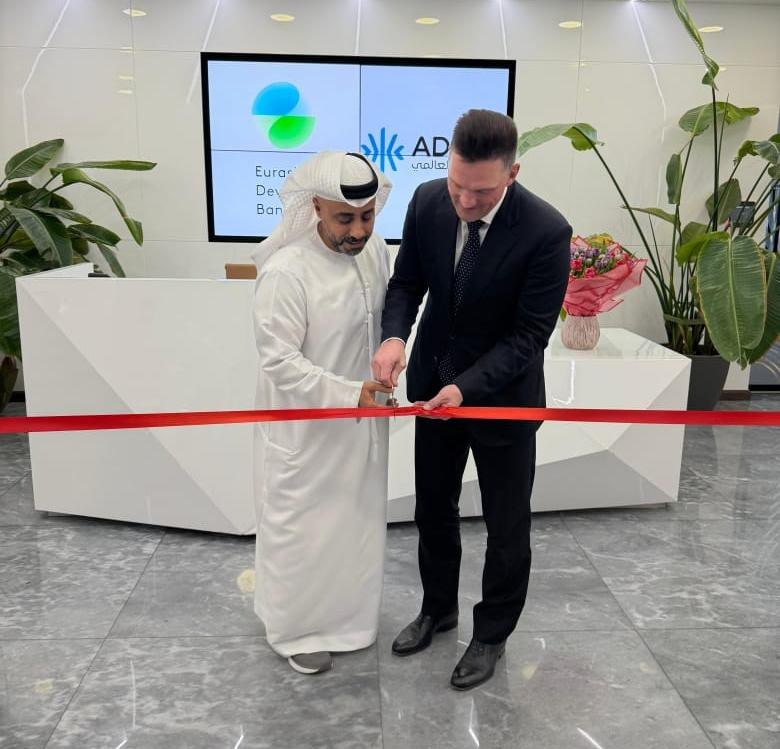
The Eurasian Development Bank (EDB), headquartered in Almaty, has opened a representative office in Abu Dhabi Global Market (ADGM), the United Arab Emirates’ international financial center, marking a strategic move to connect Gulf Cooperation Council (GCC) investors with high-potential projects across Central Asia. According to the Bank, the new platform will offer GCC investors structured investment opportunities backed by EDB analytics, regional expertise, and strong ties with the governments of its member states, Armenia, Belarus, Kazakhstan, Kyrgyzstan, Russia, Tajikistan, and Uzbekistan. Through this initiative, investors will gain access to infrastructure and sustainable development projects with optimized risk-return profiles. At the launch ceremony, EDB Management Board Chairman Nikolai Podguzov underscored the strategic significance of the move. “We are creating an ‘investment highway’ between Gulf capital and opportunities in Central Asia. Our new office in Abu Dhabi reinforces our role as a regional bridge, combining local knowledge with tailored financial instruments. Investors gain access to proven projects with favorable risk-return dynamics, while Central Asian economies unlock new development funding.” A centerpiece of the new platform is a specialized credit fund dedicated to financing infrastructure development in Central Asia. Registered under ADGM jurisdiction, the fund will focus on debt financing for EDB’s infrastructure portfolio. The Bank highlighted ADGM’s regulatory advantages, noting that the fund will offer Middle Eastern and global investors a secure and efficient entry point into the region’s development landscape. EDB will serve as both a structuring partner and co-investor, providing access to a diversified project pipeline. Priority Sectors for Investment Transport and Logistics: The development of the North-South Corridor could boost transit volumes through Central Asia by up to 40%, significantly reducing shipping distances between the Gulf and key Eurasian markets. Water Sector and Agribusiness: The irrigation equipment market in Central Asia is valued at approximately $426 million annually, while the broader water supply sector is worth up to $2 billion. Renewable Energy: The sector continues to attract major players such as the UAE’s Masdar, which has established a growing footprint across Central Asia. Strengthening Gulf-Central Asia Economic Ties In recent years, the Gulf states have become major trading partners and investors in Central Asia. According to EDB data, trade between the Gulf and Central Asia reached $3.3 billion in 2024, a 4.2-fold increase since 2020. Imports from the Gulf made up 80% of the total trade turnover. Top Central Asian trading partners with the Gulf in 2024 were: Turkmenistan - $2 billion (61%) Uzbekistan - $740 million (23%) Kazakhstan - $302 million (9%) The highest trade growth rates were recorded in: Turkmenistan - up 9.9 times Kyrgyzstan - up 9.5 times Uzbekistan - up 8.1 times The UAE accounted for 97% of all Gulf-Central Asia trade. For Turkmenistan, Gulf trade represented around 10% of total foreign commerce, while Kyrgyzstan’s share stood at approximately 1%, with even lower figures across other regional states. The EDB projects continued growth in trade, citing an unrealized potential of $4.9 billion, including $4.4 billion in potential Gulf exports (motor vehicles, electronics, jewelry) and $500...

Kazakhstan Deepens Its Critical Minerals Push

Kazakhstan is pushing a new phase of geological exploration, and the early results suggest that the country’s critical minerals profile is deepening. The Ministry of Industry and Construction says the area of mapped and studied subsoil will rise from about 2.1 to 2.2 million square kilometers by 2026. Exploration work completed in 2024 across eleven sites has produced new resource forecasts in Abai, East Kazakhstan, Karaganda, and Kostanay. The distribution matters as much as the tonnages: rare earths and other strategic metals appear across multiple regions, while gold prospects stand out in Kostanay. Five deposits have been added to the national register, alongside newly booked reserves of gold, copper, manganese, and phosphorites. Kazakhstan’s mineral importance was already widely recognized; this round of findings measurably strengthens that judgment. Four Regions Drive a Wider Metal Mix The most recent round of results from the national survey program is notable for the geographic spread and metals mix. The 2024 work across eleven sites also produced new forecasts of precious, rare, and strategic metals in Abai, East Kazakhstan, Karaganda, and Kostanay, according to the Ministry of Industry and Construction. In the Abai Region, geologists have outlined forecast resources of about 3,200 tonnes of beryllium, 1,100 tonnes of yttrium, and 200 tonnes of niobium. The mix points to advanced-manufacturing relevance, not a single-commodity profile. East Kazakhstan adds a second, larger beryllium signal, with newly identified deposits estimated at roughly 20,600 tonnes of beryllium and 600 tonnes of tungsten. That pairing reinforces an emerging pattern in which the northeast and east of the country are presenting not just rare-earth potential but a broader suite of strategic inputs. The largest rare-earth figures in this announcement sit in the Karaganda Region. Early estimates there indicate roughly 935,400 tonnes of lanthanoids, alongside prospective resources of copper, yttrium, gallium, and molybdenum. This is consistent with the earlier 2025 reporting that has repeatedly placed central Kazakhstan at the center of the country’s renewed rare-earth narrative. Kostanay Region stands out on the precious metals side. Forecast gold resources there are reported at about 17,500 tonnes, with prospective copper resources also identified. The December update also marks formal follow-through: five new deposits have been added to the national register, with newly booked reserves that include 98 tonnes of gold, 36,000 tonnes of copper, 11 million tons of manganese, and more than 1.3 million tonnes of phosphorites. Taken together, these regionally distributed findings give added empirical weight to a view already present in earlier coverage: Kazakhstan’s mineral importance was established; the survey now suggests a widening and deepening strategic profile rather than a single episodic discovery. Kazakhstan Treats Geological Knowledge as Policy The December 8 update also fits a pattern visible through 2025: the state is treating geological knowledge as a policy tool. Earlier this year, the Geology Committee described plans to expand subsurface study coverage by early 2026, while late-2025 government reporting reiterated the 2.2 million square kilometer objective as a presidential instruction tied to industrial priorities. What separates the current cycle from...

Devaluation in Kazakhstan: Grim Forecast or Financial Strategy?

Expectations of a potential devaluation of Kazakhstan's national currency, the tenge, are gaining momentum in the country, despite its recent strengthening against the dollar. While the government projects stability, some financial players and experts openly support a weaker tenge. But are these fears grounded in economic reality, or do particular interests drive them? Kazakhstan’s currency is particularly sensitive to global market shifts because around half of the country’s export revenues come from oil and other raw materials. When commodity prices fall or external demand weakens, pressure on the tenge increases. The currency is also affected by high import dependence: many consumer goods, industrial inputs, and food products are priced in foreign currencies, making the economy highly responsive to exchange-rate movements. One of the most vocal proponents of a free-floating tenge is economist Aidarkhan Kusainov, a former adviser to the head of the National Bank. A long-time advocate for a free-floating tenge, Kusainov maintains that the currency remains overvalued. In 2021, he predicted the exchange rate would reach 500 tenge to the $1. As of now, the rate hovers around 510. Kusainov has recently gained broader attention following his criticism of rising taxes and utility tariffs during an appearance on a YouTube podcast hosted by Senate Speaker Maulen Ashimbayev. “Today, the singer of devaluation, a well-known but unpopular economist, woke up as a competent people’s professional (judging by the comments),” Kusainov wrote, replete with smiling emojis in assessing his newfound popularity on his Telegram channel. His prediction of a $1-to-1,000-tenge exchange rate has indeed gone viral. “If our National Fund runs out today, the exchange rate will instantly soar above 1,000. As soon as we stop injecting petrodollars and transfers into the economy, the tenge will drop to 800–900, and then quickly weaken to beyond 1,000. I've always advocated for these measures," he said in an interview with Ulysmedia. These debates are unfolding against a backdrop of persistent inflationary pressure. Although headline inflation has moderated from its earlier peaks, price growth in consumer-credit-driven segments remains elevated. Any significant weakening of the tenge would likely feed directly into consumer prices, especially for imported goods, which still account for a large share of household consumption. Kusainov's projection is not shared by the majority of analysts, however, who see such a scenario occurring only under the weight of severe external shocks. In contrast, the National Bank’s forecasts remain more conservative. According to analysts surveyed by the Central Bank in November 2025, the exchange rate is expected to reach 525.8 tenge by the end of 2025. For 2026 and 2027, the tenge is projected to weaken gradually to 548.2 and 565, respectively. Economist Serik Kozybaev, among others, rejects the idea of a sharp devaluation. He has attributed the tenge’s recent strength to currency interventions by the National Bank: “There are no serious reasons for such a significant weakening. On the contrary, over the past month, the exchange rate improved from 540 to 518 due to announced interventions. I expect this trend to continue, possibly bringing...

Kyrgyzstan Reports Strong Economic Growth and Budget Surplus

Kyrgyzstan's consolidated budget for 2025 is expected to exceed $12.5 billion, marking the first time it will cross the historic threshold of one trillion soms. The announcement was made by Chairman of the Cabinet of Ministers Adylbek Kasymaliev during a government meeting on December 8. Kasymaliev stated that while the 2025 state budget was initially approved at the equivalent of $8 billion, it had expanded by $4.3 billion by year-end, leaving the country with a budget surplus of more than $110 million. According to the Statistics Department of the Eurasian Economic Commission, Kyrgyzstan was the only member of the Eurasian Economic Union (EAEU) to post a budget surplus in the first nine months of 2025. The surplus totaled $1 billion, with revenues reaching $4.9 billion and expenditures at $3.9 billion. By comparison, the surplus in the same period of 2024 was $0.5 billion. Citing International Monetary Fund data, Kasymaliev noted that Kyrgyzstan ranked among the top three countries globally in terms of real GDP growth in 2024. The national economy grew by 10% in the first ten months of 2025, with all major sectors showing expansion. The construction sector led with a remarkable 42.8% growth rate. GDP per capita for 2025, initially projected at $2,616, is now expected to reach $2,770 by the end of the year. Kyrgyzstan’s international reserves also saw a significant increase. As of the end of October 2025, reserves stood at $7.955 billion, up by $3.02 billion compared to October 2024, according to the National Bank. The National Statistics Committee earlier reported that Kyrgyzstan’s GDP grew by 11.5% in 2024. Services accounted for the largest share of GDP at 52.3%, followed by goods-producing industries at 33.3%, industry at 17%, construction at 7.7%, and agriculture at 8.6%. The Eurasian Development Bank (EDB) forecasts record-high economic growth for Kyrgyzstan in 2025, driven by robust investment activity. From January to October, fixed capital investment rose by 18.9%, with state budget funds and company resources accounting for 31% and 23% of that total, respectively.

Uzbekistan’s External Debt Reaches $43.97 Billion

Uzbekistan’s external debt reached 43.97 billion dollars as of October 1, according to data released by the Ministry of Economy and Finance. The increase of 473 million dollars over the previous quarter reflects a slowdown in borrowing, even as the government continues to rely on foreign funding to sustain public spending and major infrastructure projects. The country’s largest creditor remains the World Bank, which has extended 8 billion dollars in loans. This is followed by the Asian Development Bank with 7.5 billion dollars and international investors who hold 5.8 billion dollars in Eurobonds. Loans from Chinese financial institutions total 3.7 billion dollars, while Japanese lenders account for 3.1 billion dollars. Additional borrowing includes 1.7 billion dollars from the Asian Infrastructure Investment Bank and 1.2 billion dollars from France. Multilateral lenders such as the Islamic Development Bank also contribute to the total, along with a group of smaller international creditors that collectively account for 2.5 billion dollars. Debt denominated in U.S. dollars comprises 63% of Uzbekistan’s total external debt, while 12% is in Uzbek som, 8% in euros, and 6% in Japanese yen. The remainder is held in Special Drawing Rights and other currencies. In a related development, RIA Novosti, citing World Bank figures, reported that Uzbekistan increased its debt to Russia by 39 million dollars in 2024. This small rise came amid a broader trend across 38 countries whose combined debt to Russia grew to 33.1 billion dollars last year, the highest level since 1998.