• KGS/USD = 0.01144 0%
  • KZT/USD = 0.00212 0%
  • TJS/USD = 0.10456 0.19%
  • UZS/USD = 0.00008 0%
  • TMT/USD = 0.28490 0%
  • KGS/USD = 0.01144 0%
  • KZT/USD = 0.00212 0%
  • TJS/USD = 0.10456 0.19%
  • UZS/USD = 0.00008 0%
  • TMT/USD = 0.28490 0%
  • KGS/USD = 0.01144 0%
  • KZT/USD = 0.00212 0%
  • TJS/USD = 0.10456 0.19%
  • UZS/USD = 0.00008 0%
  • TMT/USD = 0.28490 0%
  • KGS/USD = 0.01144 0%
  • KZT/USD = 0.00212 0%
  • TJS/USD = 0.10456 0.19%
  • UZS/USD = 0.00008 0%
  • TMT/USD = 0.28490 0%
  • KGS/USD = 0.01144 0%
  • KZT/USD = 0.00212 0%
  • TJS/USD = 0.10456 0.19%
  • UZS/USD = 0.00008 0%
  • TMT/USD = 0.28490 0%
  • KGS/USD = 0.01144 0%
  • KZT/USD = 0.00212 0%
  • TJS/USD = 0.10456 0.19%
  • UZS/USD = 0.00008 0%
  • TMT/USD = 0.28490 0%
  • KGS/USD = 0.01144 0%
  • KZT/USD = 0.00212 0%
  • TJS/USD = 0.10456 0.19%
  • UZS/USD = 0.00008 0%
  • TMT/USD = 0.28490 0%
  • KGS/USD = 0.01144 0%
  • KZT/USD = 0.00212 0%
  • TJS/USD = 0.10456 0.19%
  • UZS/USD = 0.00008 0%
  • TMT/USD = 0.28490 0%

Viewing results 337 - 342 of 870

France to Help Kazakhstan Preserve Lake Balkhash

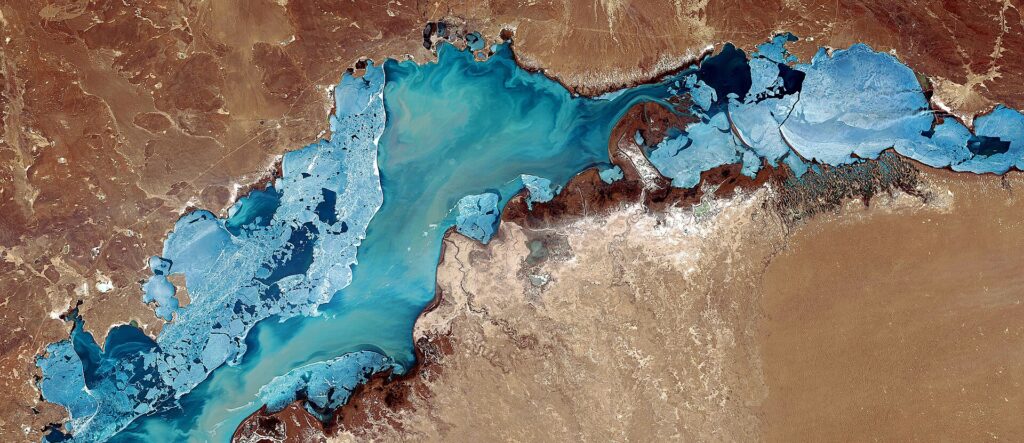
Kazakhstan’s Ministry of Water Resources and Irrigation, the French Development Agency (AFD), and the French Geological Survey (BRGM, Bureau de Recherches Géologiques et Minières) have signed a cooperation agreement to preserve Lake Balkhash. The agreement was formalized on December 4 at the One Water Summit in Saudi Arabia, attended by Kazakhstan President Kassym-Jomart Tokayev and French President Emmanuel Macron. Located 175 miles northwest of Almaty, Kazakhstan’s largest city, Lake Balkhash is the world’s fifteenth-largest lake. Under the agreement, the French side will allocate a grant of 1.35 million €uros to Kazakhstan’s Ministry of Water Resources and Irrigation to develop sustainable water management for the lake. The project includes a comprehensive study of the Lake Balkhash basin to create a long-term preservation plan through 2040. Minister of Water Resources and Irrigation, Nurzhan Nurzhigitov explained, "The trilateral agreement with AFD and BRGM is aimed at studying and sustainably managing water in the Lake Balkhash basin. The document provides for measuring and analyzing the state of water, modeling climate and anthropogenic influences, and forecasting the water balance until 2040. One of the goals of the project is to optimize the operating mode of the Kapchagay Reservoir to stabilize the level of Lake Balkhash. Based on the results of the study, measures will be taken to clean the rivers [feeding Balkhash], prevent soil degradation and water pollution, develop fisheries and ecotourism, and create a regulatory framework for the protection of the lake." At the summit, Kazakhstan’s Special Representative for International Environmental Cooperation, Zulfiya Suleimenova, announced that Kazakhmys Corporation, one of the country’s leading private companies, will contribute $5 million to preserve the ecosystem of Lake Balkhash and adjacent wetlands. In November, The Times of Central Asia reported that 13.5 billion cubic meters of water had been sent to Lake Balkhash via the Ili River from the Kapchagay Reservoir in 2024, raising the lake’s average water level to 341.6 meters above sea level. The Ili River, which originates in China, provides about 70% of Lake Balkhash’s water. Earlier in May, reports indicated that Balkhash’s water level had risen by 23 centimeters since the start of the year, largely due to increased rainfall and snow-melt floods during spring. Additionally, Kazakhstan and China have begun negotiations on the joint management of trans-boundary rivers, including the Ili. As previously reported by The Times of Central Asia, a key focus for Kazakhstan in these talks is to maintain optimal water levels in Lake Balkhash.
Kazakhstan and World Bank Partner on Water Conservation at One Water Summit

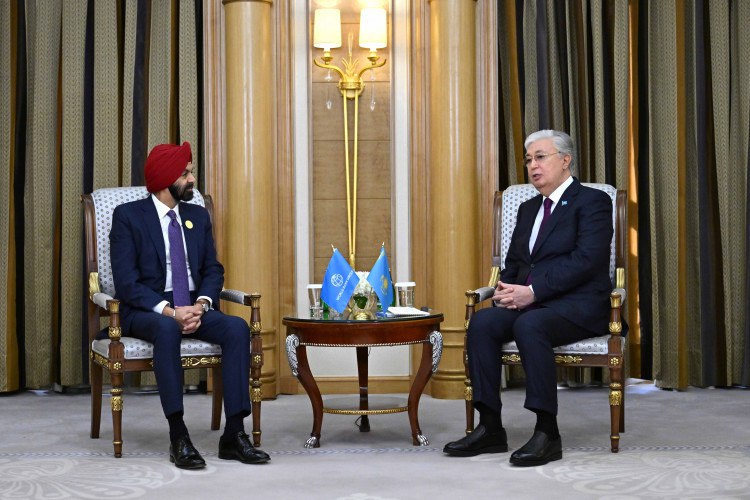
A memorandum of understanding has been signed to enhance water resource management and environmental conditions, including in the North Aral Sea and its surrounding basin, between Kazakhstan’s Ministry of Water Resources and Irrigation and the World Bank. As climate change continues to significantly impact water resources in Central Asia, exacerbating water scarcity and management challenges, this agreement underscores a shared commitment to ensuring sustainable and equitable water resource management for future generations. The memorandum was formalized following a meeting between Kazakhstan’s President Kassym-Jomart Tokayev and World Bank Group President Ajay Banga during the One Water Summit in Riyadh, Saudi Arabia, on December 3. Co-organized by French President Emmanuel Macron, Tokayev, and World Bank Group President Banga, in partnership with Saudi Arabia’s Crown Prince and Prime Minister Mohammed bin Salman, the summit sought to accelerate progress toward Sustainable Development Goal 6 (clean water and sanitation) and discuss innovative solutions ahead of the 2026 UN Water Conference. During the summit, Tokayev stressed the importance of bolstering reservoir capacity, preserving glaciers, and adopting advanced irrigation systems to secure stable water access. Tokayev proposed creating a global partnership to unite research centers focused on glacier preservation. “Glaciers are integral to the global water cycle, sustaining rivers and lakes that supply water to nearly two billion people worldwide. Collaborative research and unified policies are essential to mitigate glacier loss and support water management strategies in vulnerable regions,” he said. He warned that water scarcity poses risks to food security, energy production, and industrial growth, adding that investments in water-efficient agriculture and renewable energy can enhance economic resilience while alleviating environmental pressures. “Water knows no borders; it binds communities and ecosystems,” Tokayev remarked. As Chair of the International Fund for Saving the Aral Sea, he emphasized Kazakhstan’s commitment to fostering regional cooperation and joint action. “It is vital for countries at the forefront of combating climate change to strengthen dialogue, build international partnerships, and pool resources to implement water projects. Kazakhstan is proud to join the One Water Vision coalition, uniting stakeholders to address the global water crisis and promote integrated water resource management. As part of these efforts, with United Nations support, Kazakhstan will host a Regional Climate Conference in 2026,” Tokayev concluded.

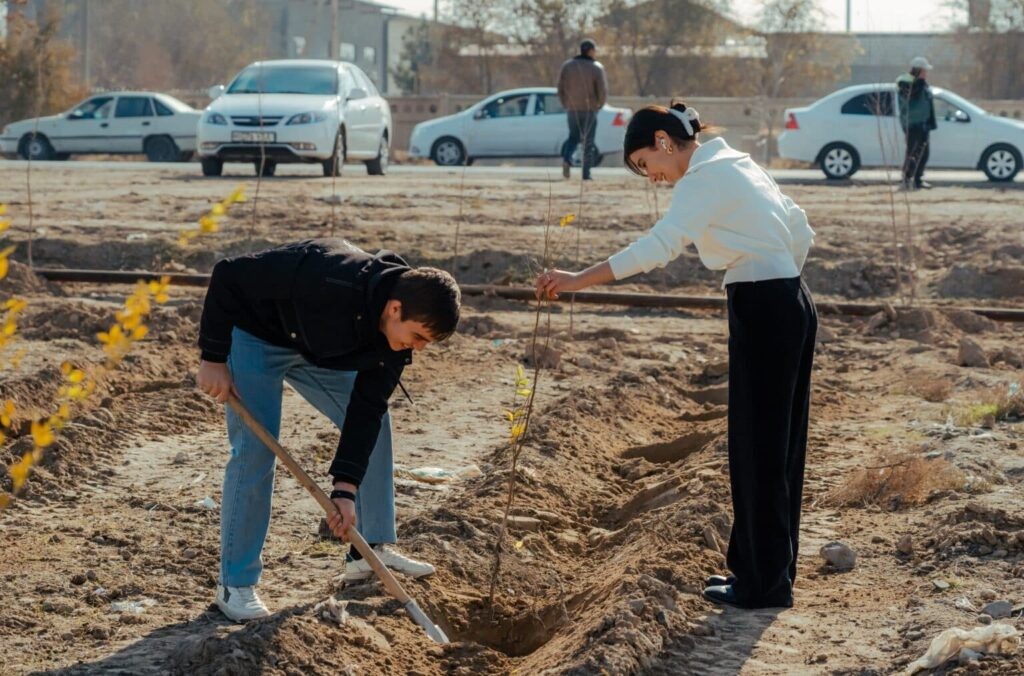
One Billion Points for Planting Trees: Payme Users Helping Green Navoi

By allowing users to donate their accumulated points to good causes, the Payme app, part of the Payme Mahalla, has, since its launch in December 2022, funded projects for schools in Uzbekistan and Karakalpakstan, including the purchase of computers, sports equipment and stationery. Users of the Payme payment service have collected a billion points to support the project to turn Navoi green, a scheme initiated by ecoactivist and blogger Mutabar Khushvaktova (urikguli). Thanks to this action, more than a thousand trees were planted on the territory of Navoiazot JSC in November alone. The project began in October, when Khushvaktova announced a fundraiser for tree planting on her blog. Initially, the collection progressed slowly, but since Payme connected its users through the Mahalla loyalty program, in just a few days the required amount was raised, confirming that thousands of people are willing to support environmental initiatives. The trees were planted under the guidance of biologists and soil scientists. Garden elms, ideally suited to the climatic conditions of the region, were selected for the project. The site for planting was coordinated with the local authorities, with Navoiazot JSC taking care of the trees.

Justice for Veterans: U.S. Acknowledges Cancer Cases Tied to Service at Uzbekistan’s K2 Base

Thousands of American veterans who served at Uzbekistan’s K2 airbase have reported rare cancers and diseases - but only now, more than two decades later, is the U.S. government taking steps to address their dire situation. The U.S. Department of Veterans Affairs (VA) has announced plans to include bladder, urinary tract, and genitourinary cancers as conditions presumed to be linked to service at Uzbekistan’s Karshi-Khanabad airbase, known as K2. In 2001, the U.S. military moved into K2, a former Soviet airbase, to support a series of operations named “Enduring Freedom” which were purportedly aimed at tackling terrorism and Al-Qaeda in the wake of 9/11. However, in addition to the threat of terrorism, the troops faced another danger: the toxic environment. Reports from the base describe exposure to chemicals and radioactive materials. Soldiers recalled an underground “black bubble,” glowing lakes, and a chemical odor lingering in the air. [caption id="attachment_26149" align="aligncenter" width="634"] Image: Stronghold Freedom Foundation[/caption] The Karshi-Khanabad airbase was heavily used by the Soviet military during its operations in Afghanistan from 1979 to 1989, when it served as a site for producing, storing, and testing various weapons, including chemical weapons. The base also stored fuel, solvents, and other harmful substances. Additionally, it became a dumping ground for toxic waste, asbestos, enriched uranium, and other hazardous materials. Spills of these substances were frequent, leaving lasting environmental damage. Before the U.S. occupied K2, the destruction of Soviet-era missiles left some soil contaminated with low-level radioactive depleted uranium. The destruction of Soviet missiles was part of disarmament obligations under the 1987 Intermediate-Range Nuclear Forces (INF) Treaty. A 2001 survey found traces that could be harmful if inhaled, and a 2002 assessment confirmed small amounts of uranium, identified as non-U.S. depleted uranium, outside Camp Stronghold Freedom’s perimeter. The affected area was covered with clean soil, fenced off, and marked as off-limits in November 2001. Furthermore, approximately 392 chemical compounds were found at the K2 Air Base. Thousands of military personnel who served in K2 suffered from severe illnesses, including rare forms of cancer, associated with their time at the base. However, over the years, the U.S. government and the VA have delayed recognition of the link between service in K2 and these health issues, leaving many veterans without adequate support. [caption id="attachment_26150" align="aligncenter" width="1140"] Image: Stronghold Freedom Foundation[/caption] According to the Stronghold Freedom Foundation, K2 veterans are 500% more likely to get cancer than other veterans - 75% of U.S. service members deployed to Uzbekistan alone have developed at least one type of K2-related illness. On November 11, President Joe Biden announced an expansion of the PACT Act (Promise to Address Comprehensive Toxics Act), a law he signed in August 2022 to improve healthcare for veterans exposed to toxins. President Biden stated that the act has already helped over a million veterans and their families access benefits. Under new efforts, the VA will add bladder cancer, ureter cancer, multiple myeloma, and certain types of leukemia to the list of presumptive conditions. This expansion applies...

Choking on Smog: Kazakhstan’s Ust-Kamenogorsk forced to suspend in-person schooling amid rising air pollution

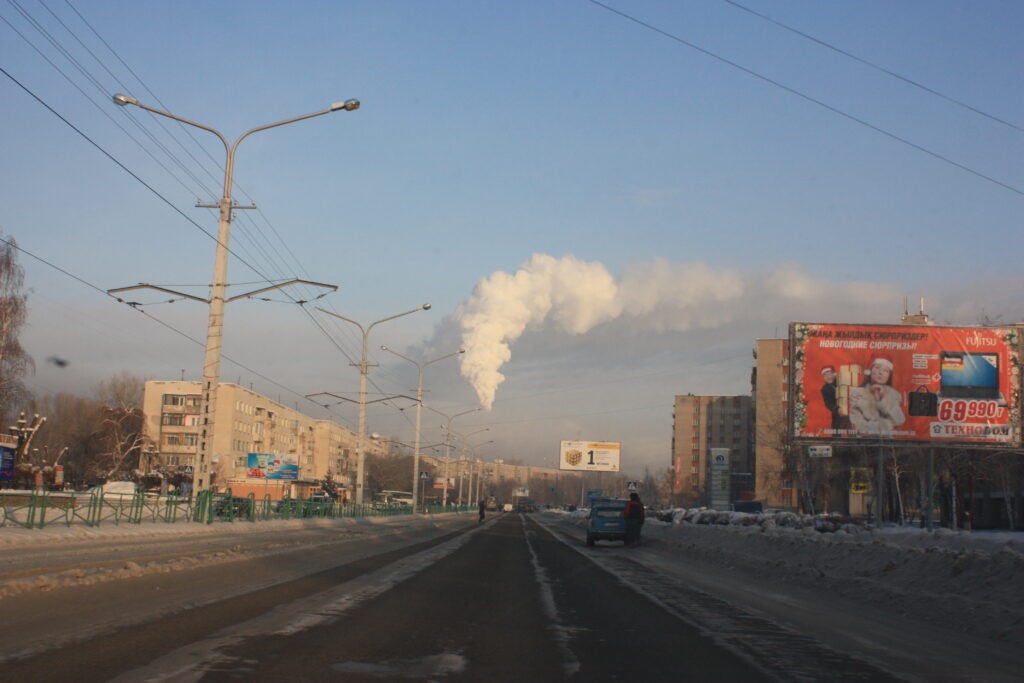
The city of Ust-Kamenogorsk in eastern Kazakhstan has once again found itself at the center of an environmental scandal, with polluted air and unfavorable weather conditions causing deteriorating health among its citizens and forcing schoolchildren to move to distance learning. Smog in the city: complaints and consequences In the last week of November, unfavorable weather conditions hit Ust-Kamenogorsk, aggravating the problem of air pollution. Citizens complained of worsening health: headaches, nausea, vomiting, coughing, and fever. Children, who have to breathe polluted air on their way to school, are particularly affected. Parents have repeatedly expressed their outrage, demanding action. In response to the latest complaints, the authorities transitioned some 53,000 of the city's schoolchildren to distance learning on November 28-29. This marked the first time in the city's history that education was suspended due to the environmental situation. Weather forecasters say that the unfavorable weather conditions will continue until at least the end of November. This means that Ust-Kamenogorsk residents will continue to suffer from smog, and children will probably remain in distance learning. Environmentalists weigh in Azamat Tauyrbekov, head of the Department of Ecology for the East Kazakh region, said that environmental agencies are working hard these days, conducting air measurements throughout the city. However, inspections of enterprises are complicated by bureaucratic procedures: access to production facilities requires an official application with evidence of violation. On November 28, joint inspections took place at two large enterprises in the region: Kazzinc and an oil extraction plant. So far, the results of the inspections have not been published, but activists and citizens continue to insist on the need for more transparent controls over emissions. Citizen frustration boils over Residents of Ust-Kamenogorsk are discussing the air pollution situation on social networks, sharing their complaints and worries. In comments on the Instagram platform one can see messages such as: - "It is impossible to breathe, even at home." - "My head hurts, I feel weak, feverish, have a sore throat, watery eyes, stuffy nose." - "How is it possible to poison almost 400,000 people? We pay taxes to be destroyed?" - "There is a taste of metal and acid in my mouth." Despite the fact that the problem has become a reason for creating memes and jokes about smog, reactions such as these reveal the deep dissatisfaction and anxiety of the city's residents. People are starting to openly demand that authorities strengthen control over emissions from enterprises and take real measures to improve the environmental situation in the city.

Kyrgyzstan Tackles Decreasing Water Levels in Lake Issyk-Kul

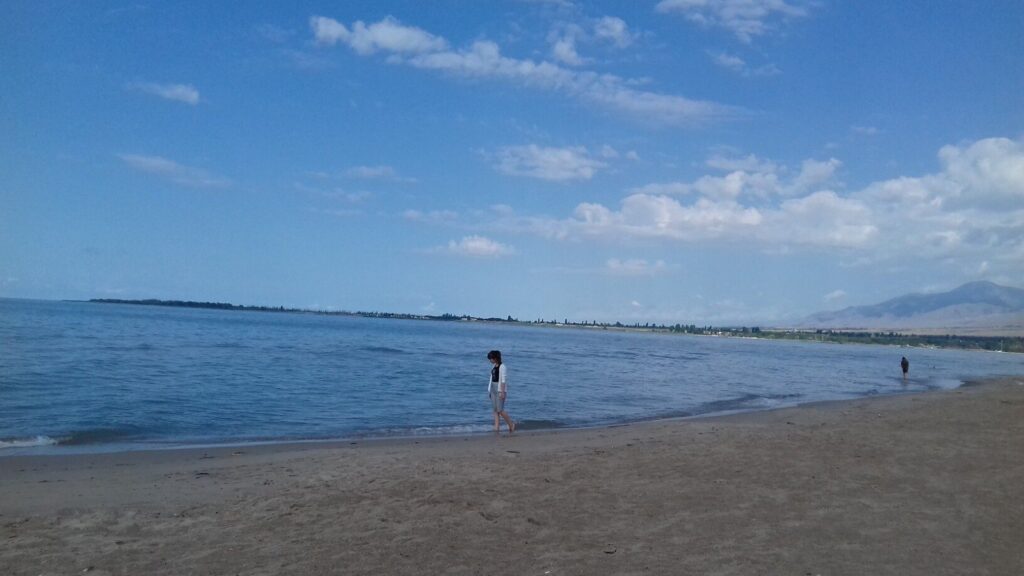
Kyrgyzstan’s Ministry of Water Resources, Agriculture, and Processing Industry, with support from the World Bank, hosted a National Water Forum on November 29 to address the country’s water resource challenges. The forum focused on the impacts of climate change and strategies to preserve Lake Issyk-Kul, the country’s largest lake and a key tourist destination. Lake Issyk-Kul is under significant threat due to climate change, overuse of natural resources, and ecosystem degradation. The most urgent issue is the declining water level, largely caused by the diversion of water from rivers that feed the lake. These rivers are heavily utilized for local irrigation and redirected to support agricultural needs in downstream Central Asian countries. Government Action Plan At the forum, Bakyt Torobaev, Kyrgyzstan’s Deputy Chairman of the Cabinet of Ministers and Minister of Water Resources, Agriculture, and Processing Industry, urged collective action to safeguard Issyk-Kul. “Climate change, growing water shortages, preserving the unique ecosystem of Issyk-Kul – all this requires us to make urgent and coordinated decisions,” Torobaev stated. To address the issue, the Kyrgyz government has committed $392 million to stabilize the lake’s water level. Key measures include: • Allocating $200 million to implement modern water-saving irrigation technologies on 100,000 hectares of farmland in the Issyk-Kul region. This initiative aims to reduce water losses and redirect water from local rivers back to the lake. • Modernizing existing irrigation systems. • Installing 2,200 automatic sensors to monitor and control water consumption. These efforts are expected to redirect up to 200 million cubic meters of water to Lake Issyk-Kul. Regional Cooperation Torobaev highlighted Kyrgyzstan’s critical role in Central Asia’s water policy. “Kyrgyzstan plays a central role in Central Asia's water policy, providing water and energy to neighboring countries. To maintain stability in the region, it is necessary to develop effective management of our waters, modernize infrastructure, and strengthen international cooperation,” he said. He stressed that water should unite the region rather than divide it, emphasizing the need for cooperation based on mutual respect, equality, and recognition of each country’s role. Torobaev also pointed to the joint construction of the Kambarata-1 hydropower plant by Kyrgyzstan, Uzbekistan, and Kazakhstan as an example of regional collaboration. This project aims to address shared water and energy challenges, paving the way for further cooperative initiatives in Central Asia.