• KGS/USD = 0.01144 0%
  • KZT/USD = 0.00215 0%
  • TJS/USD = 0.10680 0.19%
  • UZS/USD = 0.00008 0%
  • TMT/USD = 0.28530 0%
  • KGS/USD = 0.01144 0%
  • KZT/USD = 0.00215 0%
  • TJS/USD = 0.10680 0.19%
  • UZS/USD = 0.00008 0%
  • TMT/USD = 0.28530 0%
  • KGS/USD = 0.01144 0%
  • KZT/USD = 0.00215 0%
  • TJS/USD = 0.10680 0.19%
  • UZS/USD = 0.00008 0%
  • TMT/USD = 0.28530 0%
  • KGS/USD = 0.01144 0%
  • KZT/USD = 0.00215 0%
  • TJS/USD = 0.10680 0.19%
  • UZS/USD = 0.00008 0%
  • TMT/USD = 0.28530 0%
  • KGS/USD = 0.01144 0%
  • KZT/USD = 0.00215 0%
  • TJS/USD = 0.10680 0.19%
  • UZS/USD = 0.00008 0%
  • TMT/USD = 0.28530 0%
  • KGS/USD = 0.01144 0%
  • KZT/USD = 0.00215 0%
  • TJS/USD = 0.10680 0.19%
  • UZS/USD = 0.00008 0%
  • TMT/USD = 0.28530 0%
  • KGS/USD = 0.01144 0%
  • KZT/USD = 0.00215 0%
  • TJS/USD = 0.10680 0.19%
  • UZS/USD = 0.00008 0%
  • TMT/USD = 0.28530 0%
  • KGS/USD = 0.01144 0%
  • KZT/USD = 0.00215 0%
  • TJS/USD = 0.10680 0.19%
  • UZS/USD = 0.00008 0%
  • TMT/USD = 0.28530 0%

Viewing results 553 - 558 of 943

Production Decrease and Import Increase in Energy Resources in Uzbekistan

According to the Statistics Agency of Uzbekistan, in January-February 2024, imports of natural gas increased 95-fold at a cost of $166.7 million. In the same period, Uzbekistan also increased its imports of oil by 5.3% costing $302.9 million and coal by 43.6% costing $42 million. Imports of electricity doubled, costing $36.4 million. In the first two months of 2024, natural gas production in Uzbekistan amounted to 7.7 billion cubic meters; a decrease of 454 million cubic meters compared to early 2023. Oil production decreased by 8.8 thousand tons to 118.5 thousand tons, and coal production decreased by 23 thousand tons to 659 thousand tons.

Russian Atomic Energy Company to Build Renewable Energy Facilities in Kyrgyzstan

On March 26th, at the 13th ATOMEXPO 2024 International Forum in Sochi, Russia, Kyrgyzstan’s Ministry of Energy and Russia’s State Atomic Energy Corporation Rosatom announced joint investment in the construction of renewable energy facilities in Kyrgyzstan with a capacity of up to 1 GW. The agreement was signed by Grigory Nazarov, General Director of the Wind Energy Division of Rosatom; Talaibek Baigaziev, Deputy Minister of Energy of the Kyrgyz Republic, and Dmitry Konstantinov General Director of Rosatom’s office in Kyrgyzstan. According to Rosatom, the first stage of the project will involve the implementation of a pilot project for the construction of a wind power plant with a capacity of 100 MW in Kyrgyzstan’s Issyk-Kul region. The Russian company has already installed a mast for wind measurement and is undertaking surveys on the location of wind farms. The second stage will include the development of additional sites for renewable energy facilities with a total capacity of up to 900 MW.

Automatic Air Pollution Monitoring Stations Installed Across Uzbekistan

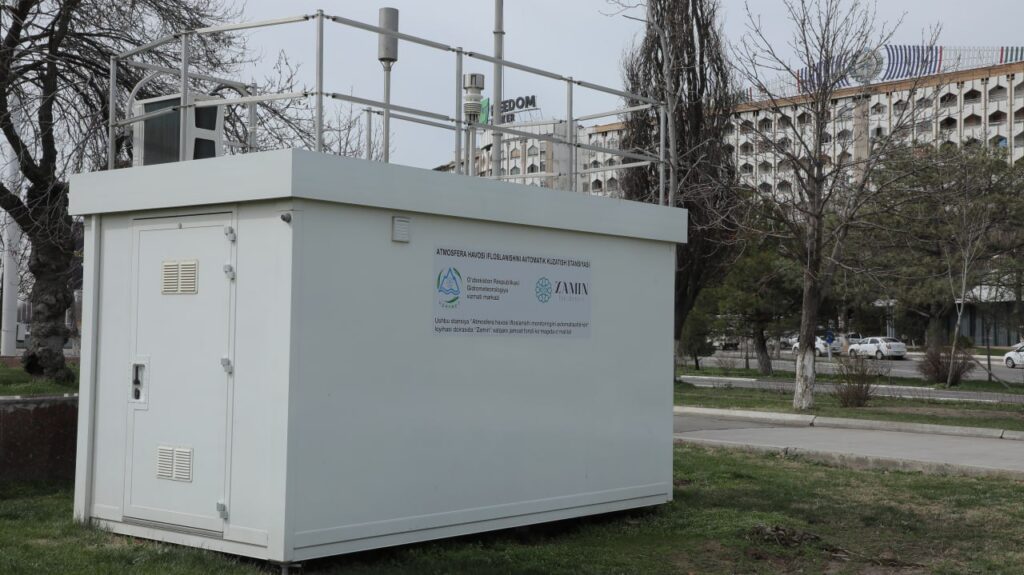
Uzbekistan’s meteorological agency Uzhydromet in collaboration with the Zamin International Public Foundation, is to implement additional automation of monitoring of atmospheric air pollution. During the first stage of the project in 2021, two German-made automatic air pollution monitoring stations were installed in Tashkent. In 2023, as part of the second stage, automatic stations went into operation in the cities of Gulistan, Jizzakh, Samarkand, Urgench, Nukus, and Termez. This year, further stations have been installed in Andijan, Namangan, Fergana, Navoi, Bukhara, Karshi, Nurafshan, and Tashkent. On March 24th, The Uzbek Ministry of Ecology, Environmental Protection and Climate Change reported on a press tour organized by Uzhydromet and the Zamin Foundation of the new automatic air pollution monitoring station in Tashkent. The station registers such pollutants as fine dispersed particles PM10 and PM2.5, sulfur dioxide, nitrogen dioxide, nitrogen oxide, carbon monoxide, ammonia, and ozone. At the event, Khurshid Tashpolatov, head of department at Uzhydromet, stated, “The station works online and transmits data on air quality within a radius of 5 km to the server every 10 minutes, every hour. Information on atmospheric air pollution is received by Uzhydromet, compiled into a single database, and published on the public platform monitoring.meteo.uz.” Air monitoring data is published by Uzhydromet on social networks at 9:00 am and 18:00 pm daily.

Dushanbe, Tashkent Are Worst Central Asian Cities for Air Quality

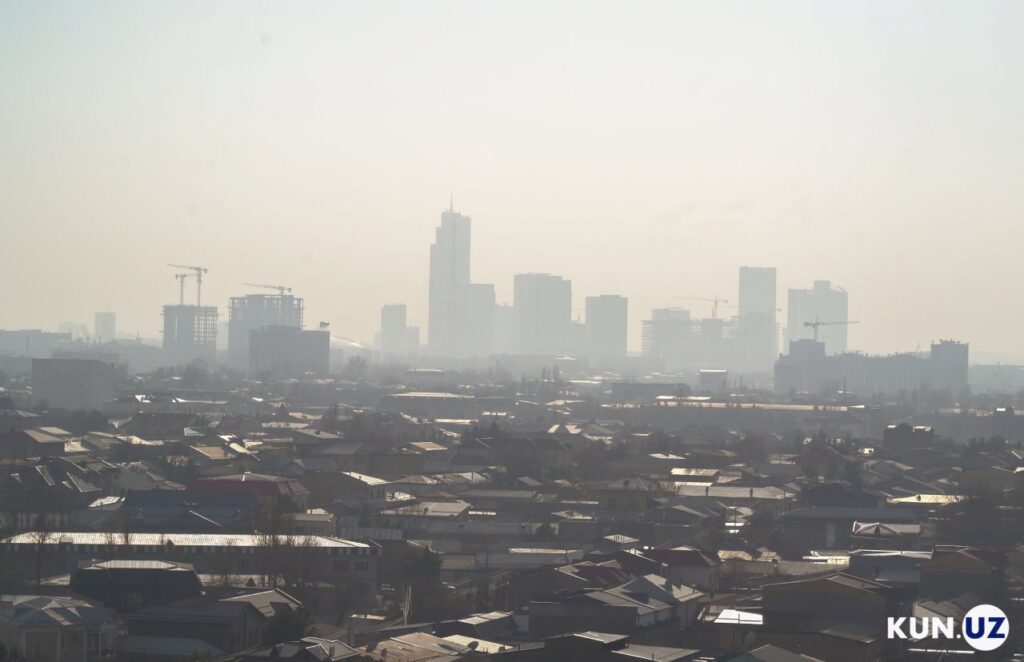
According to the latest ranking of the world capitals with the dirtiest air, published by the Swiss technology company IQAir, Dushanbe in Tajikistan came in fourth-worst, and Uzbekistan's capital Tashkent took 22nd place. According to IQAir's data, the average annual concentration of PM2.5 particles in amounted to 28.6 µg/m3, which is 5-7 times higher than World Health Organization (WHO) recommendations. The ranking was 'led' by India's capital New Delhi, followed by Dhaka (Bangladesh), Ouagadougou (Burkina Faso), Dushanbe (Tajikistan) and Baghdad (Iraq). In 2023 only 10 countries had air quality that met WHO recommendations. The cleanest air was in the capitals of Puerto Rico, New Zealand, Australia, Iceland, Bermuda, Estonia and Finland. Recently, Tashkent launched Air Tashkent, an open-source data platform for air quality monitoring. It was developed by the Department of Digital Development under the capital's hokimiyat (local administration), together with a group of national scientists called Amudario. The platform displays data from 10 stations which are updated hourly. Statistics for the last seven days are also available. To combat harmful vehicle emissions in the Uzbek capital, officials have opened a diagnostic center. The center will check the amount of harmful emissions in the car's exhaust, and according to those results, will put a sticker containing an RFID chip on the windshield in either red, yellow or green colors. That fits into a plan to divide Tashkent into ecological zones -- and will restrict entry of vehicles that don't comply with that zone 's specific sticker. Fines collected from those drivers will be used to fund ecological remediation. The government of Uzbekistan has recently taken active measures to combat air pollution. Among the most significant are the capital's gradual transition to electric transport, like city buses, the installation of exhaust filters at industrial enterprises, the gradual phase-out of AI-80 gasoline by 2026, and the construction of green power plants. According to the CEO of IQAir's North American division, Gloria Delphine Hammes, PM2.5 particles "kill more people than any other pollutant that exists." The main means of production of PM2.5 particles is the burning of fossil fuels such as coal, oil and gas. Those particles, in turn, are responsible for the premature deaths of more than four million people worldwide each year. A separate analysis by a researcher at the Max Planck Institute for Chemistry in Germany found that fossil fuels are responsible for 65% of those deaths. In addition, the danger of these particles is that once they appear in one place, they can be carried by the wind for hundreds of thousands of kilometers in numerous directions, harming large numbers of people in other geographical regions.

FAO to Improve Soil Health In Uzbekistan

Earlier this month, The Food and Agriculture Organization of the United Nations (FAO) and its Global Soil Partnership (GSP), in collaboration with the Ministry of Agriculture of Uzbekistan, held a seminar in Tashkent on the ‘Recarbonization of Agricultural Soils’ (RECSOIL). The meeting concluded with unanimous approval of the development of an action plan for the development of the initiative in Uzbekistan. RECSOIL will be implemented in collaboration with two other FAO projects in Uzbekistan funded by the Global Environment Facility (GEF): ‘Integrated Natural Resources Management in Drought-Prone and Salt-Affected Agricultural Production Landscapes in Central Asia and Turkey’ and ‘Sustainable Forest and Rangelands Management in the Dryland Ecosystems of Uzbekistan.’ In recent years, both projects have proven effective in supporting agricultural development in drought-prone regions of Uzbekistan through the use of advanced resource-saving methods, and continue to increase farmers’ incomes through the contribution of technical equipment to farms, and by maintaining land degradation neutrality. The initiative addresses challenges related to climate change by promoting sustainable soil management (SSM) and by enhancing its health, make soil more productive and shock resilient. Aimed at maintaining and increasing carbon stocks to boost soil health which in turn, will secure and increase production and income, SSM practices include using cover crops, crop rotation and agroforestry. The new scheme to tackle both carbon sequestration and mitigation of greenhouse gases (GHG) emissions, will be piloted through the provision of training for farmers and financial compensation to support their adoption of SSM practices. RECSOIL also provides robust methods to monitor and assess both soil health and levels of GHG emissions reduced through the project.

EBRD Finances Wastewater Treatment Plant in Kazakhstan

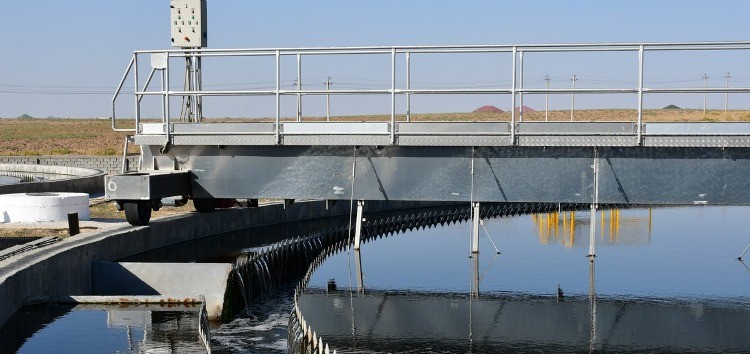
The European Bank for Reconstruction and Development (EBRD) has announced its commitment to financing the construction of a new wastewater treatment plant and associated infrastructure in Aktobe. The initiative is aimed to address pressing water treatment and environmental issues in Kazakhstan’s fourth-largest city. The EBRD is extending a sovereign loan of up to KZT 47.4 billion (€ 96.4 million) to state-owned JSC Aqtobe Su-Energy Group, a company responsible for centralized water supply, wastewater treatment and district heating in the city. The loan by the EBRD, its largest to date for any municipal project in Central Asia, will also finance the construction of a sludge treatment facility with a biogas-fuelled power generation unit. The new treatment plant will replace the current facility which commissioned in 1984, is now obsolete. With capacity to process up to 100,000 cubic metres of contaminated water per day, it will satisfy the needs of Aktobe’s population of 600,000. The proposed sludge treatment facility, which includes a waste-to-energy unit for the production of green energy to partially cover the area’s electricity consumption, will eliminate odour-related problems, and help reduce annual greenhouse gas emissions by 23,000 tons of CO2 equivalent. It is anticipated that once in operation, the plant will provide a model for replication across Kazakhstan where almost a third of cities are currently without effective wastewater treatment facilities