• KGS/USD = 0.01143 0%
  • KZT/USD = 0.00216 0%
  • TJS/USD = 0.10633 -0.28%
  • UZS/USD = 0.00008 0%
  • TMT/USD = 0.28571 0%
  • KGS/USD = 0.01143 0%
  • KZT/USD = 0.00216 0%
  • TJS/USD = 0.10633 -0.28%
  • UZS/USD = 0.00008 0%
  • TMT/USD = 0.28571 0%
  • KGS/USD = 0.01143 0%
  • KZT/USD = 0.00216 0%
  • TJS/USD = 0.10633 -0.28%
  • UZS/USD = 0.00008 0%
  • TMT/USD = 0.28571 0%
  • KGS/USD = 0.01143 0%
  • KZT/USD = 0.00216 0%
  • TJS/USD = 0.10633 -0.28%
  • UZS/USD = 0.00008 0%
  • TMT/USD = 0.28571 0%
  • KGS/USD = 0.01143 0%
  • KZT/USD = 0.00216 0%
  • TJS/USD = 0.10633 -0.28%
  • UZS/USD = 0.00008 0%
  • TMT/USD = 0.28571 0%
  • KGS/USD = 0.01143 0%
  • KZT/USD = 0.00216 0%
  • TJS/USD = 0.10633 -0.28%
  • UZS/USD = 0.00008 0%
  • TMT/USD = 0.28571 0%
  • KGS/USD = 0.01143 0%
  • KZT/USD = 0.00216 0%
  • TJS/USD = 0.10633 -0.28%
  • UZS/USD = 0.00008 0%
  • TMT/USD = 0.28571 0%
  • KGS/USD = 0.01143 0%
  • KZT/USD = 0.00216 0%
  • TJS/USD = 0.10633 -0.28%
  • UZS/USD = 0.00008 0%
  • TMT/USD = 0.28571 0%

Viewing results 559 - 564 of 940

Kazakhstan, Uzbekistan Agree to Improve Ecology of Aral Sea Basin 

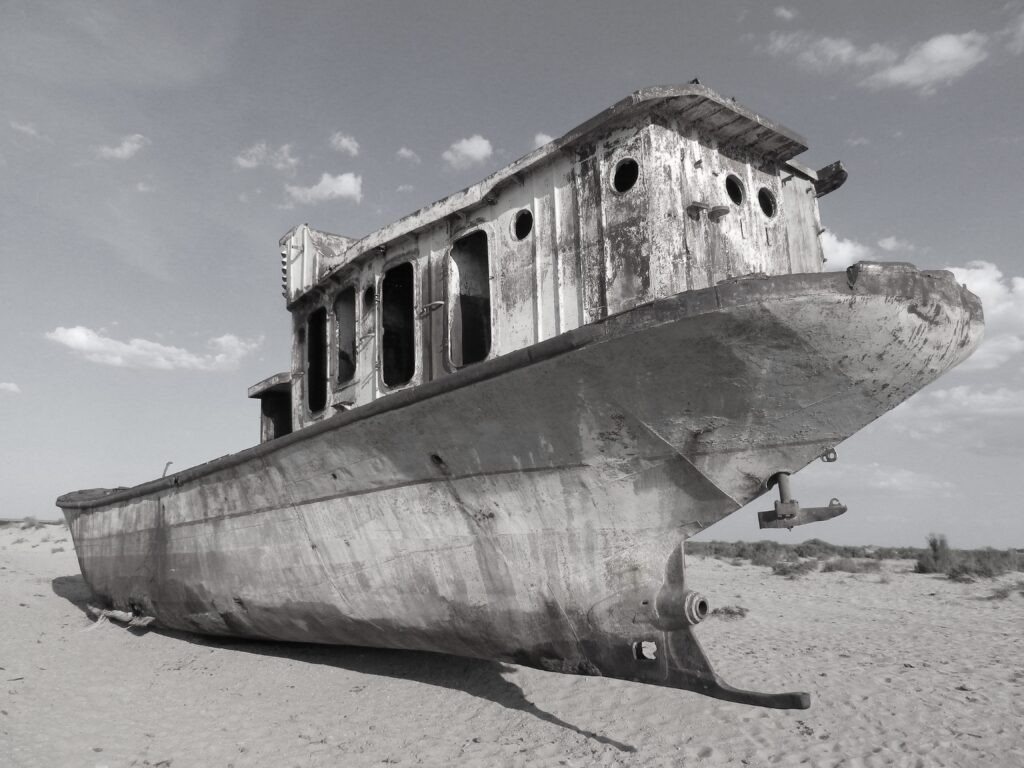
Kazakhstan and Uzbekistan will jointly improve the ecological situation in the Aral Sea basin, according to members of the Mazhilis of the Parliament of Kazakhstan. At a plenary session they adopted the corresponding bill on ratification of the agreement between the Government of the Republic of Kazakhstan and the Government of the Republic of Uzbekistan on cooperation in the field of ecology and environmental protection.   The document states that cooperation between the countries will be carried out in several areas. The most important is the prevention and control of pollution affecting the air and water of the Aral Sea, as well as the Amu Darya and Syr Darya rivers. Also included are the management of solid domestic waste and the preservation of biological diversity. In addition, Kazakhstan and Uzbekistan will jointly carry out measures to improve the ecological situation and environmental monitoring in the Aral Sea basin. The agreement between the countries also implies the creation of joint educational institutions, training of personnel, and the commitment that both states will do everything necessary to avoid environmentally harmful emergencies.   Parliamentarians report that in order to comply with this agreement, Kazakhstan and Uzbekistan will create a special commission that will monitor the implementation of the bilateral agreement.

World Bank Group Landmark Visit to Central Asia

The World Bank Group Board of Executive Directors has concluded a landmark visit to Kazakhstan, Kyrgyzstan, and Tajikistan. The Board reported that it had welcomed the opportunity to observe first-hand, Central Asian developments in tackling climate change within the prism of the water-energy nexus, the private sector’s growing address of green issues, and gender equality. Ten executive directors met with high-ranking officials and local stakeholders to discuss ongoing and future support provided by the International Development Association (IDA) to Kyrgyzstan and Tajikistan, and in Kazakhstan, focused on the World Bank Central Asia regional program. In Kyrgyzstan, the delegation attended a meeting with President Sadyr Japarov, Akylbek Japarov the Cabinet of Ministers chairman, and other officials. Visits were made to World Bank-funded project sites for water and sanitation, education, and disaster risk management, as well as a MIGA-guaranteed smart farm of hydroponic greenhouses and IFC agri-food processing projects. In addition to discussions with Tajikistan’s president Emomali Rahmon and his cabinet, the delegation toured the Rogun hydropower plant site and World Bank-financed projects on early childhood development and the improvement of health services. A meeting also took place with IFC investment beneficiaries in Dushanbe. The visit to Kazakhstan, included a World Bank-financed oncology centre, and a tour of the Almaty Airport, an IFC project site. The World Bank Group's key objectives in Central Asia are fostering robust recovery from recent crises, enhancing climate resilience, creating jobs, and protecting the countries’ most vulnerable populations. Dominique Favre, the World Bank’s Executive Director for Switzerland, who also represents the constituencies of Azerbaijan, Kazakhstan, the Kyrgyz Republic, Poland, Serbia, Tajikistan, Turkmenistan, and Uzbekistan, praised the regions’ progress and reiterated the company's commitment to helping Central Asian countries tackle ongoing challenges, particularly concerning water, energy, and agriculture.

The Price of Liquefied Petroleum Gas Falls Below Production Costs in Kazakhstan

In a report on March 5th, Almasadam Satkaliev, Kazakhstan’s Minister of Energy, stated that in 2023 consumption of liquefied petroleum gas (LPG) by the country’s domestic market rose to 2.2 million tons; an increase of 400 thousand tons (or 28%) compared to 2022. Cheaper than gasoline, LPG is understandably the fuel of choice for vehicle owners and a sharp hike in the cost of LPG was met with nationwide objection. Mass protests staged in the western Kazakh town of Zhanaozen in January 2022 soon spread across the country and turned violent in the cities of Almaty and Astana. According to the energy minister, the current maximum wholesale price for LPG established by the state is lower than its production cost. While production varies from 60 thousand to 70 thousand tenge per ton, the wholesale price for manufacturing plants is set at 40,320 tenge/ton excluding VAT. “Due to the unprofitability of liquefied petroleum gas production, manufacturers are running at a loss and are unable to invest in either the maintenance or modernization of their plants,” stated the minister. The price of LPG in Kazakhstan, between 54-86 tenge per litre depending on the region, is the lowest among former Soviet states. For comparison the price per litre in Russia is equivalent to 165 tenge; in Kyrgyzstan, 159 tenge; in Azerbaijan, 171 tenge, and in Tajikistan, 273 tenge. To meet the immediate demands of the country's vehicle owners, a formal agreement has been made between the Ministry of Energy and Tengizchevroil for the monthly supply of 20 thousand tons of LPG. The national company QazaqGaz and shareholders of the North Caspian project are also poised to sign an agreement for the supply of up to 700 tons of LPG per annum from the Kashagan oilfield by the end of this year.

Kazakhstan to Build New Power Generation Facilities

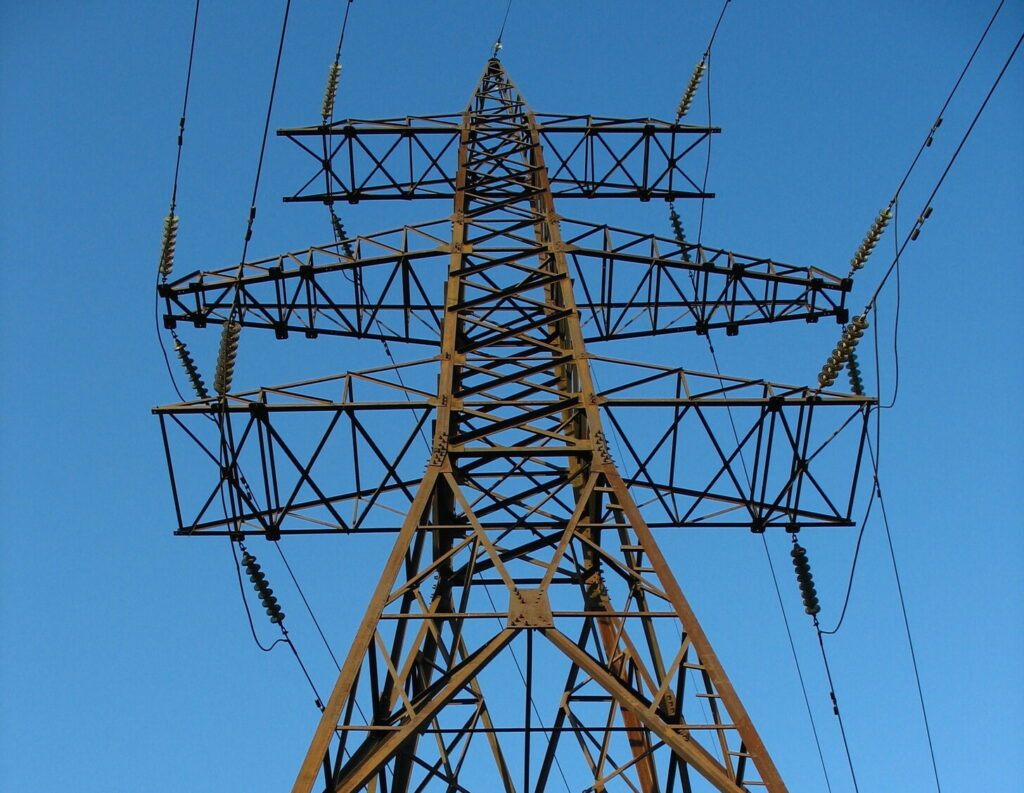
To ensure Kazakhstan’s energy security and increase its export potential, the Ministry of Energy has adopted a development plan for the country’s electrical power industry. On March 5th, the Minister of Energy, Almasadam Satkaliev reported that under the new plan, scheduled to run until 2035, existing power generating facilities are to be modernized alongside the commission of new facilities with a total capacity of 26 GW. In the southern regions of Kazakhstan, gas, and steam generation projects with an installed capacity of about 2.3 GW are due for completion in 2025-2026. The projects comprise combined cycle gas turbines in Turkestan and Kyzylorda with a capacity of 926.5 MW and 240 MW, as well as combined cycle power generation units at two heating plants in Almaty with a capacity of 544 MW and 557 MW. Another combined cycle power plant with a capacity of 1.1 GW will be constructed in the Kyzylorda region. The plans also include new gas and coal-fired power generation projects in Kazakhstan with a total capacity of 6.7 GW and the conclusion of an agreement with Russia for the construction of coal-fired thermal power plants in the cities of Kokshetau, Semey, and Ust-Kamenogorsk. To achieve a 15% share of electricity generation by renewable energy sources by 2030, annual auctions will be held for a total capacity of over 6 GW (1,270 MW in 2024). Renewable energy projects with a total capacity of 3 GW are currently progressing in collaboration with Total Energies (France), Acwa Power (Saudi Arabia), and Masdar (UAE). Eleven renewable energy facilities with a total capacity of 259 MW are to be commissioned this year. Last month, Energy Minister Satkaliev reported that in 2023, Kazakhstan consumed 115 billion kWh of electrical energy, compared with 112.9 billion kWh in 2022, and produced 112.8 billion kWh, the same amount as in 2022. Last year Kazakhstan imported 3.4 billion kWh, and exported 1.4 billion kWh. In 2024, the country plans to generate 115 billion kWh. Last year, the volume of electricity generated by renewable energy facilities amounted to 6.675 billion kWh, including 3.8 billion kWh from wind power plants, 1.8 billion kWh from solar plants, and 993.8 million kWh from hydropower plants. The generation of electricity from renewable sources in 2023 thus amounted to just 5.9% of the country’s total. Looking to a greener future, Kazakhstan’s new goal is to achieve a 15% share of renewable energy sources in power generation by 2030, and a 50% share by 2050.

Centre for Environmental Diagnostics of Vehicles Opens in Tashkent

On March 5th, Uzbekistan’s President Shavkat Mirziyoyev visited a new centre for environmental diagnostics of motor vehicles in Tashkent. Environmental issues have become a major concern in Uzbek’s capital city, especially air pollution caused by harmful emissions from traffic. In a measure to stall the sharp increase in air pollution, the centre first assesses the level of harmful substances emitted by motor vehicles and depending on results, attaches color-coded stickers with chips to vehicles’ windshields. Plans are in place to divide the city's territory into several ecological zones. Entry will be limited in accordance with the level of pollutants emitted by vehicles, identified by their red, yellow, or green stickers. Drivers of vehicles that violate the rules will be automatically fined and the resulting revenue, invested in incentives to further improve the environment. The government plans to expand the initiative by installing some 100 automatic air monitoring stations and creating 84 registration and diagnostic centres for vehicles across the country. In a move towards tackling air pollution, the government will also encourage the purchase of greener, electric vehicles by reducing the fee for state license plates.

Plastic Bags, Utensils to Be Met With Fines in Kyrgyzstan’s Issyk-Kul Basin

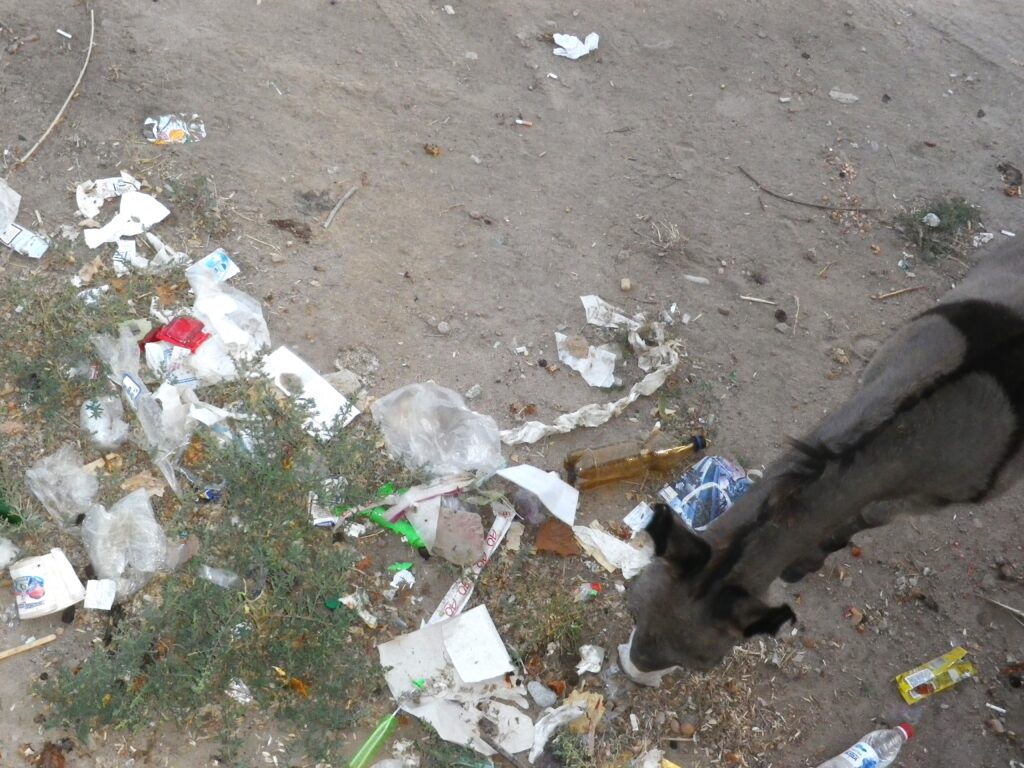
A law imposing fines on the import and sale of plastic bags and utensils is aimed at reducing the harmful effects of polymeric materials on health and the environment in the Kyrgyz Republic, according to the press service of the Ministry of Natural Resources, Ecology and Technical Supervision of Kyrgyzstan. The ban will take effect in the resort and recreational area of Issyk-Kul, as well as in reserves and natural parks of Kyrgyzstan. The ban was signed by President Japarov last year, since when deputies and the Ministry of Natural Resources of have been working on finalizing its details. One sticking point is that the authorities still can't decide whether to ban all plastic or to make an exception for some products. Shashlyk vendor, Issyk-Kul; Photo: TCA "The list of plastic products banned for circulation includes all kinds of disposable plastic utensils, disposable plastic packaging for food, plastic bottles, disposable plastic packaging for eggs, plastic coffee capsules, [and plastic] bags for food," the law states. But, as the Ministry of Natural Resources notes, the law is still being amended and there is a lack of clarity. Meanwhile, food vendors in the Issyk-Kul region say that not all citizens are ready to give up plastic bags and bottles. Therefore, while large stores in Issyk-Kul have stopped selling disposable tableware and replaced them with paper products and Tetra Pak substitutes, the law is poorly enforced in markets and smaller outlets. Lake Issyk-Kul; Photo: TCA According to the Ministry of Natural Resources, Ecology and Technical Supervision, the Supervision Service has not imposed a single fine so far, with only warnings being issued. However, they say that as soon as all of the controversial issues have considered, sellers and producers will be fined. So far, the law applies only to sellers and manufacturers of plastic products. Private individuals can use bags, bottles and disposable tableware. In January of this year, the Issyk-Kul Region became the first in the country where a ban on the circulation of plastic was introduced. From 2027, the law will be expanded to ban the use of plastic containers throughout the country. Businesses are not satisfied, however, complaining that their opinion was not taken into account in drafting the law. In their opinion, it would have been better to prescribe economic incentives for businesses. Currently, they argue, all soft drinks and vegetable oils are bottled in plastic bottles, and it's difficult to find replacements for them. In addition, Kyrgyzstan does not yet have large production facilities for alternative containers such as paperboard-and-foil Tetra Paks or glass bottles. Most plastic goods are imported into Kyrgyzstan from abroad, mainly from countries which are not planning to give up disposable plastic containers and are only increasing their production. Meanwhile, Kyrgyzstan's environmentalists have long been sounding the alarm. The biggest danger to the country's ecology is plastic bottles and cellophane bags, which can be scattered by the wind over a large area. For example, the problem of toxic plastic pollution is particularly acute in...