• KGS/USD = 0.01144 0%
  • KZT/USD = 0.00204 0%
  • TJS/USD = 0.10398 0%
  • UZS/USD = 0.00008 0%
  • TMT/USD = 0.28490 0%
  • KGS/USD = 0.01144 0%
  • KZT/USD = 0.00204 0%
  • TJS/USD = 0.10398 0%
  • UZS/USD = 0.00008 0%
  • TMT/USD = 0.28490 0%
  • KGS/USD = 0.01144 0%
  • KZT/USD = 0.00204 0%
  • TJS/USD = 0.10398 0%
  • UZS/USD = 0.00008 0%
  • TMT/USD = 0.28490 0%
  • KGS/USD = 0.01144 0%
  • KZT/USD = 0.00204 0%
  • TJS/USD = 0.10398 0%
  • UZS/USD = 0.00008 0%
  • TMT/USD = 0.28490 0%
  • KGS/USD = 0.01144 0%
  • KZT/USD = 0.00204 0%
  • TJS/USD = 0.10398 0%
  • UZS/USD = 0.00008 0%
  • TMT/USD = 0.28490 0%
  • KGS/USD = 0.01144 0%
  • KZT/USD = 0.00204 0%
  • TJS/USD = 0.10398 0%
  • UZS/USD = 0.00008 0%
  • TMT/USD = 0.28490 0%
  • KGS/USD = 0.01144 0%
  • KZT/USD = 0.00204 0%
  • TJS/USD = 0.10398 0%
  • UZS/USD = 0.00008 0%
  • TMT/USD = 0.28490 0%
  • KGS/USD = 0.01144 0%
  • KZT/USD = 0.00204 0%
  • TJS/USD = 0.10398 0%
  • UZS/USD = 0.00008 0%
  • TMT/USD = 0.28490 0%

Viewing results 559 - 564 of 831

Residents of Central Kazakhstan Village Arrested For Trying To Halt Saiga Killings

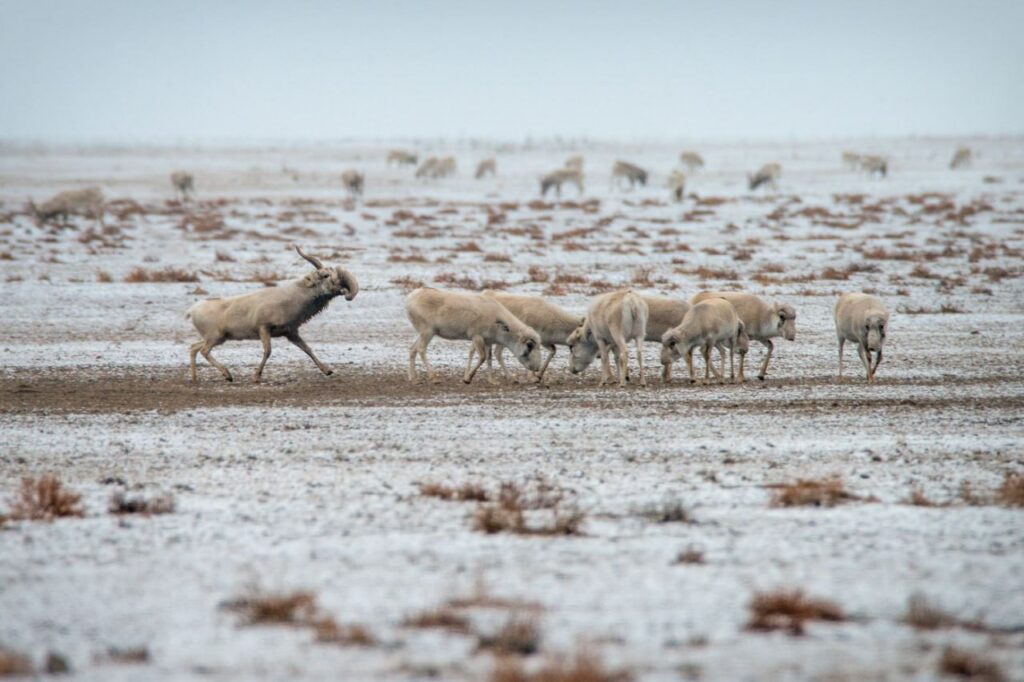
The shooting of saiga antelopes has resumed in Kazakhstan, which has angered many in the country, including residents of a village in the central Ulytau region, Kyzylzhar. According to the Interior Ministry, on January 10 a group of Kyzylzhar residents deliberately prevented hunters from a company called Okhotzooprom from shooting the saigas. The persons were arrested and are currently in custody. According to local ecologist Almasbek Sadyrbayev, the female saigas were carrying calves.   The local authorities have pointed out that the saiga shootings were carried out lawfully, and that the villagers used physical force against Okhotzooprom staff. Andrei Kim, deputy chairman of the Ministry of Ecology’s forestry and wildlife committee, confirmed at a press conference that the moratorium on saiga shooting in Kazakhstan, in force until 2024, will not be extended. However, saigas have been introduced to western Kazakhstan as part of a program to regulate their population. Commercial hunting will continue until February 29.

UNDP Supports Sustainable Development of Caspian Region

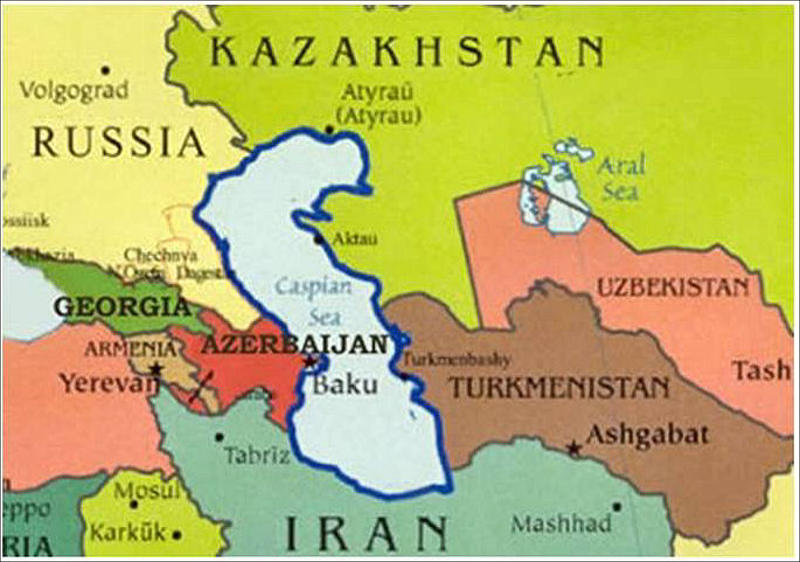
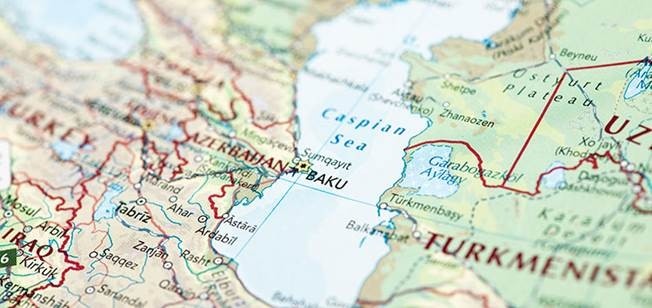
A roundtable discussion on Central Asia’s cooperation with the European Union was held on February 2nd at the United Nations Development Programme (UNDP) Office in Brussels, Belgium. The event brought together representatives from UNDP, the European Commission, and ambassadors of Central Asian countries to the EU.  The participants discussed ways to boost sustainable economic growth in the region by creating partnerships to ensure a steady supply of critical raw materials, and enhancing the efficiency of the Trans-Caspian Corridor, also known as the Middle Corridor. The participants also emphasized the importance of supporting the transition of Central Asian economies towards environmentally friendly and sustainable systems, in line with their climate commitments on emissions. Katarzyna Wawiernia, the UNDP resident representative in Kazakhstan, emphasized the significance of the Trans-Caspian Corridor and the sustainable development of the Caspian region overall. “We recommend adopting a sustainable landscape management approach for the future development of the Caspian region. In this regard, UNDP, in partnership with the Government of Kazakhstan, is planning a large-scale initiative to promote an integrated ecosystem-based approach to conserve key species and habitats of the Caspian Sea and ensure sustainable economic development for local communities. Throughout its history, the Caspian Sea has been a significant source of biological resources. They make up a single ecosystem that requires strong protection from natural and people-made factors,” Ms Wawiernia said. 

Earthquakes Rekindle Fears Over Lake Sarez

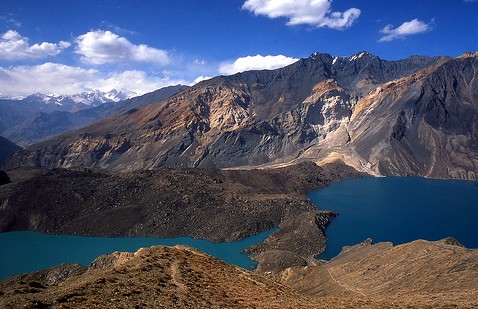
On the evening of January 30th, an earthquake struck in the Gorno-Badakhshan Autonomous Province on the border between Tajikistan and Xinjiang. Though this instance only had a magnitude of 4.4, it comes in the wake of the magnitude 7 quake which pounded the China-Kyrgyzstan border on January 23rd, shaking buildings in Almaty. As recently as February 2023, a series of earthquakes, the largest measuring 6.8, hit forty miles west of Murgab on the border between Tajikistan and China’s Xinjiang province. This was the eighteenth such instance measuring 6.5 or more over the course of the last century, and serves to focus attention on extremely remote Lake Sarez in Tajikistan. [/vc_column_text][vc_single_image image="14212" img_size="full" el_class="scond-image" parallax_scroll="no" woodmart_inline="no"][vc_column_text woodmart_inline="no" text_larger="no"]Plan of Lake Sarez and the Usoi Dam, 1913 At five-hundred-meters deep and 47 miles long, mountainous Lake Sarez contains more than 3.85 cubic miles of water. It was formed in 1911, when a 2.2 billion cubic meter landslide caused by an earthquake with an estimated magnitude of 6.5-7.0 blocked the Bartang River’s path. The sound of the quake was recorded over 2,350 miles away at the Pulkovo seismic station near St. Petersburg. Thus, the tallest natural dam in the world, the three-mile long, 567-meter high Usoi Dam was formed, whilst the villages of Usoi and Sarez were buried beneath the landslide and the lake, respectively, killing 302 people. According to the two survivors, the dust clouds cleared only after some days to reveal a mountain where the village of Usoi used to stand. The lake has been a potential disaster waiting to happen ever since. In 1968, a landslide caused two-meter-tall waves to rock the lake, and with glacial melting causing water levels to rise by eight inches a year, pressure on the natural dam is building. As early as the 1970s, plans were hatched to harness the lake as a hydroelectric power station, but technical issues and its far-flung location saw the scheme come to nothing. In 2018, a deal was signed with Hong Kong-based Heaven Springs Harvest Group to sell the lake’s “blue gold” as drinking water, but inaccessibility again largely scuppered the project.[/vc_column_text][vc_single_image image="13414" img_size="full" el_class="scond-image" parallax_scroll="no" woodmart_inline="no"][vc_column_text woodmart_inline="no" text_larger="no"]Murgab Bazaar, Gorno-Badakhshan - Photo: Times of Central Asia Back in 1997, a gathering of experts in Dushanbe concluded that the Usoi Dam was unstable. Their findings suggested that a powerful earthquake could precipitate a collapse of the dam. However, a study conducted by the World Bank in 2004 contradicted these conclusions, arguing that the dam was, in fact, stable. Nevertheless, the main threat identified was not the dam's general stability but a specific geological feature - a partially detached mass of rock, approximately 0.72 cubic miles in size. There are concerns that this precarious massive rock formation could detach and plunge into the lake. This event could trigger a catastrophic flood, and, as such, while the dam itself may be stable, the potential for disaster still looms large. In this earthquake-prone environment, were the dam to be breached a tidal...

Waiting for Cubs: How Almaty Zoo is Helping Save the Amur Tiger Population

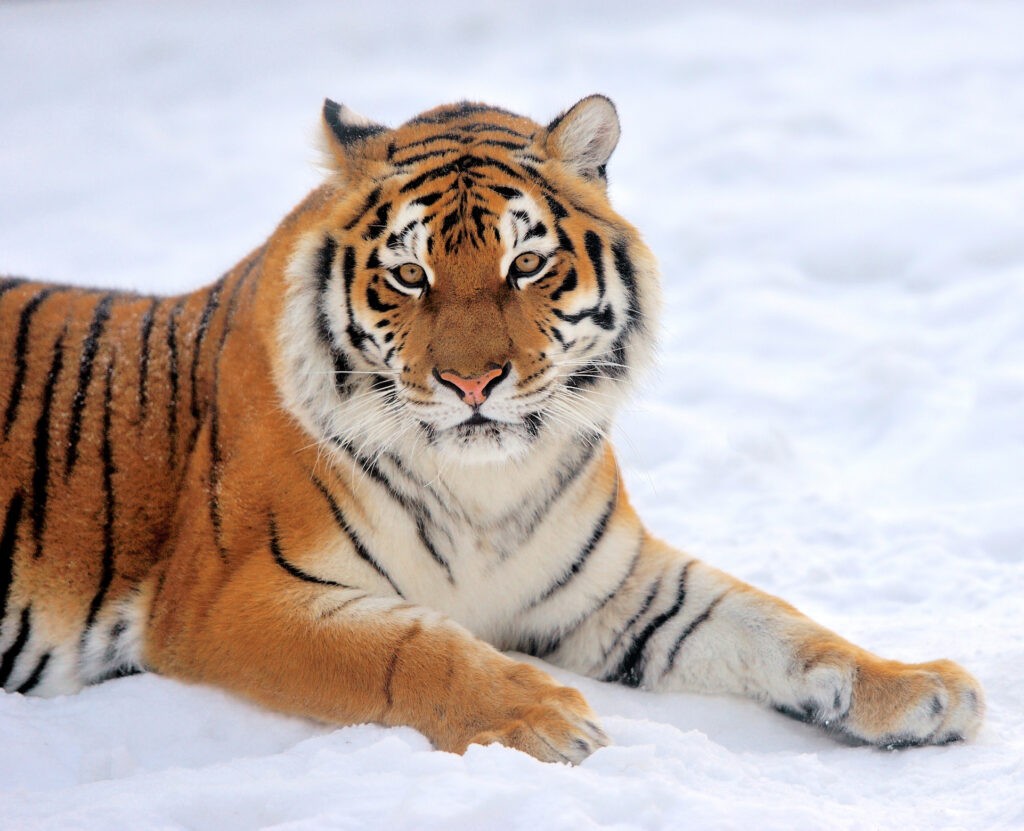
Almaty Zoo is helping to replenish the Amur tiger population under an international conservation program. The Amur tiger population is still declining, and the main challenge for scientific foundations from different countries is breeding new cubs. Almost 400 species of animals live at the Almaty Zoo. Among them are llamas, chimpanzees, hippopotamus and tigers, with the latter comprising a family of nine individuals. The clan is headed by 13-year-old Urman, who arrived in Kazakhstan at one-year-old from the Perm Zoo in Russia by way of an international conservation program. "The main objective of the program is to preserve the genetic diversity of animals in the northern part of Eurasia and their reproduction, including in captivity. That's why we carefully searched for a mate for Urman, and not so long ago we managed to bring in a tigress, Tasha, from Moscow," said Akzhami Rakhimova of the Almaty Zoo. Now, staff are carefully monitoring the pair's behavior and diet so they can give reproduce. The last time tiger cubs were born at the zoo was three years ago. They were given the names Aya, Zoya, Maya, and Sherkhan. Zookeepers celebrate the birthdays of their charges, and very soon the birthday of Bentley, who arrived from the circus in Astana, is coming up. He will be five-years-old, and since he's already reached puberty, he'll soon need a mate. The staff note that the zoo is home for these animals which don't know life beyond captivity, as they either came from the circus or were born here. The tigers are quite accustomed to the attention of visitors and to eating on schedule.

Uzbekistan’s “Plant 100 Saplings” Initiative: A Green Response to Illegal Tree-Felling

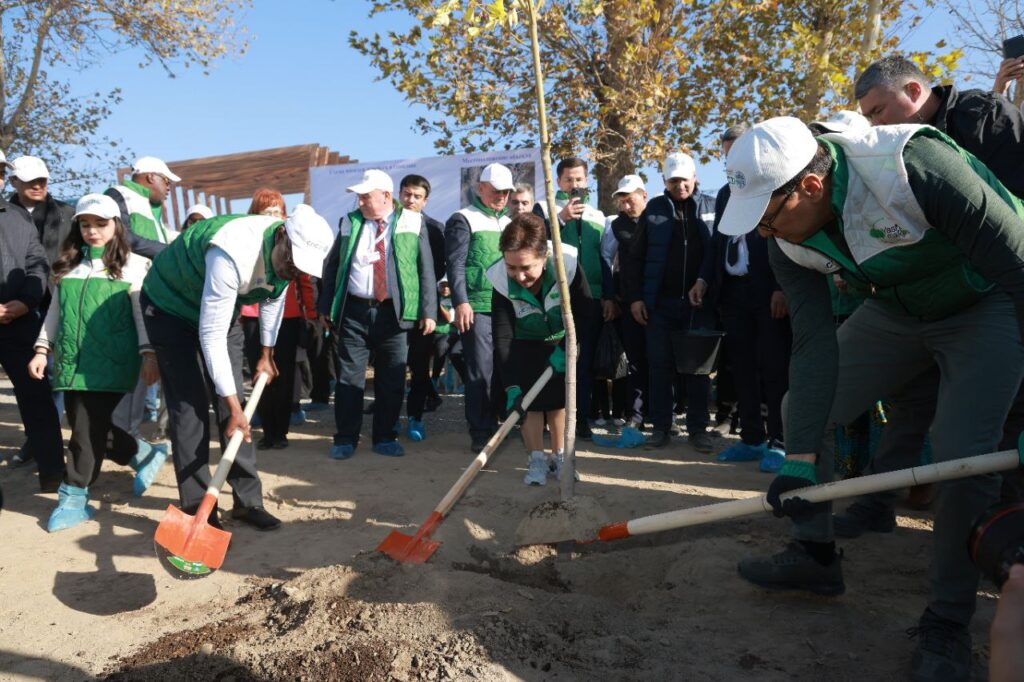
In a bid to counter the alarming rate of illegal tree-felling, the president of Uzbekistan, Shavkat Mirziyoyev, has given the green light to an innovative ecological program. Launched by the Ministry of Ecology, Environmental Protection and Climate Change on January 29th, the initiative involves planting 100 saplings for every tree unlawfully cut down. This move comes as air pollution in Tashkent has reached alarming levels, with PM2.5 pollution recently surpassing the World Health Organization's recommended limit by 23.2 times. Tashkent regularly features as one of the worst cities globally for air pollution due to factors like increasing emissions from coal-burning heat, power plants and motor vehicles, unauthorized construction, and illegal tree-felling.[/vc_column_text][vc_single_image image="14150" img_size="full" el_class="scond-image" parallax_scroll="no" woodmart_inline="no"][vc_column_text woodmart_inline="no" text_larger="no"]Approximately 2,427 instances of illegal tree-felling were recorded in the first nine months of 2023 alone - including 714 bushels of precious trees - contributing to the shrinking of wildlife reproduction areas and natural reserves. The situation is particularly dire in the country's “Red Book” areas, which are home to endangered flora and fauna. One significant casualty has been the Tajik kavragi, a naturally occurring medicinal plant. Between July and September, 11,550 bushes were illegally harvested in the Surkhandarya Region’s Bobotog State Forestry, resulting in environmental damage totaling 5.7 billion som ($462,000). At the January 29th meeting it was announced that 22,000 new industrial enterprises have been launched in the country since 2020, and industry and transport together now emit more than two million tons of pollutants into the atmosphere a year. In many cases, construction projects are implemented without environmental assessment. To reverse this trend, the government is planning substantial green efforts over the next five years. These include creating at least 3,000 hectares of green belt and 200 hectares of “green parks” encircling the city of Tashkent and its surrounding districts. Additionally, "green gardens" will be established on former garbage landfills, covering 23 hectares in Ohangaron and 37 hectares in Yangiyol in the Tashkent region.[/vc_column_text][vc_single_image image="14168" img_size="full" el_class="scond-image" parallax_scroll="no" woodmart_inline="no"][vc_column_text woodmart_inline="no" text_larger="no"]As part of this ambitious project, the Ministry of Ecology, Environmental Protection and Climate Change has created a digital map, pinpointing the coordinates of more than 254 million trees. Each tree in the city of Tashkent will be registered and given a 'passport' on the Green Space electronic platform. This will reflect crucial information, such as the tree's type, age, height, condition, and location. Trees older than five years covering all regions and districts of Uzbekistan were accounted for during the survey. This comprehensive registration process was made possible through the use of satellite imagery, remote sensing, geo-information systems, and artificial intelligence technologies. The initiative also drew on the experiences of several countries, including the U.S., Canada, China, India, Australia, Russia, and Germany. Uzbekistan's "Plant 100 Saplings" initiative marks a significant step towards environmental conservation. By leveraging technology and international experiences, the country is taking steps to protect its flora and fauna, demonstrating a commitment to sustainable development and environmental stewardship.[/vc_column_text][vc_single_image image="14148" img_size="full" el_class="scond-image" parallax_scroll="no" woodmart_inline="no"][vc_column_text woodmart_inline="no" text_larger="no"]Other measures currently...

Kazakhstan Creates Caspian Sea Research Institute

The Kazakhstan government has approved the establishment of the Caspian Sea Research Institute, its Ministry of Water Resources and Irrigation said on January 26th.  The new institute will study the environmental problems of the Caspian Sea, the problem of its decreasing water levels, the causes of mass deaths of seals and fish, and issues of preserving the population of the Caspian seal. The institute will closely interact with similar institutes in other Caspian states. The institute will provide objective and independent information about the ecosystem of the Caspian Sea, the ministry said, adding that its research data will serve as the basis for decision-making by state and local executive bodies concerning Caspian issues.