
• KGS/USD = 0.01144 0%
  • KZT/USD = 0.00214 0%
  • TJS/USD = 0.10456 0%
  • UZS/USD = 0.00008 0%
  • TMT/USD = 0.28490 0%
  • KGS/USD = 0.01144 0%
  • KZT/USD = 0.00214 0%
  • TJS/USD = 0.10456 0%
  • UZS/USD = 0.00008 0%
  • TMT/USD = 0.28490 0%
  • KGS/USD = 0.01144 0%
  • KZT/USD = 0.00214 0%
  • TJS/USD = 0.10456 0%
  • UZS/USD = 0.00008 0%
  • TMT/USD = 0.28490 0%
  • KGS/USD = 0.01144 0%
  • KZT/USD = 0.00214 0%
  • TJS/USD = 0.10456 0%
  • UZS/USD = 0.00008 0%
  • TMT/USD = 0.28490 0%
  • KGS/USD = 0.01144 0%
  • KZT/USD = 0.00214 0%
  • TJS/USD = 0.10456 0%
  • UZS/USD = 0.00008 0%
  • TMT/USD = 0.28490 0%
  • KGS/USD = 0.01144 0%
  • KZT/USD = 0.00214 0%
  • TJS/USD = 0.10456 0%
  • UZS/USD = 0.00008 0%
  • TMT/USD = 0.28490 0%
  • KGS/USD = 0.01144 0%
  • KZT/USD = 0.00214 0%
  • TJS/USD = 0.10456 0%
  • UZS/USD = 0.00008 0%
  • TMT/USD = 0.28490 0%
  • KGS/USD = 0.01144 0%
  • KZT/USD = 0.00214 0%
  • TJS/USD = 0.10456 0%
  • UZS/USD = 0.00008 0%
  • TMT/USD = 0.28490 0%

Viewing results 979 - 984 of 3334

U.S. Deports Over 100 Central Asian Migrants on Uzbek Charter Flight

More than 100 people from Uzbekistan, Kazakhstan, and Kyrgyzstan who were illegally in the United States have been deported on a charter flight organized by the Uzbek government, the U.S. Embassy in Tashkent said on Thursday. The operation, which happened on Wednesday, was “the first in which a U.S. partner proactively provided a dedicated flight to repatriate its citizens” and underscores collaboration on issues such as counterterrorism and law enforcement, according to the embassy. “By organizing and funding the removal of its citizens present illegally in the United States and allowing the removal of nationals from other countries on Uzbek flights, Uzbekistan demonstrated its role as a trusted and proactive partner in the realm of international security,” it said. The embassy statement did not provide details on the people who were deported. U.S. President Donald Trump had campaigned on the promise of the mass deportation of migrants that he said were in the country without permission, and Immigration and Customs Enforcement has carried out deportations in line with that pledge since he took office for a second term in January. The speed and severity of the crackdown have alarmed advocates who have argued in court that the U.S. administration is denying due process to some migrants. U.S. relations with some of its traditional allies, including Canada and European countries, have frayed since Trump took office. But Uzbekistan and several other Central Asian countries appear to have maintained a relatively harmonious dialogue with the Trump administration while also collaborating with regional powers Russia and China. On April 9, U.S. Secretary of State Marco Rubio and Uzbek Foreign Minister Bakhtiyor Saidov met in Washington to discuss investment, critical minerals and security matters. Rubio “thanked Uzbekistan for their efforts to facilitate the return of their deportees from the United States,” the U.S. State Department said. U.S. plans for mass deportations have been a source of concern for Central Asian communities in the United States. This month, Kazakhstan urged any of its citizens who are subject to a U.S. deportation order but remain in the United States to voluntarily return home by using a U.S. Department of Homeland Security mobile app. The Kazakh Embassy in Washington urged those nationals to do so in order “to prevent possible negative consequences” such as fines, a ban on re-entry to the United States and other penalties. In January, Kyrgyzstan warned its citizens to follow U.S. immigration law and always carry relevant documents with them.
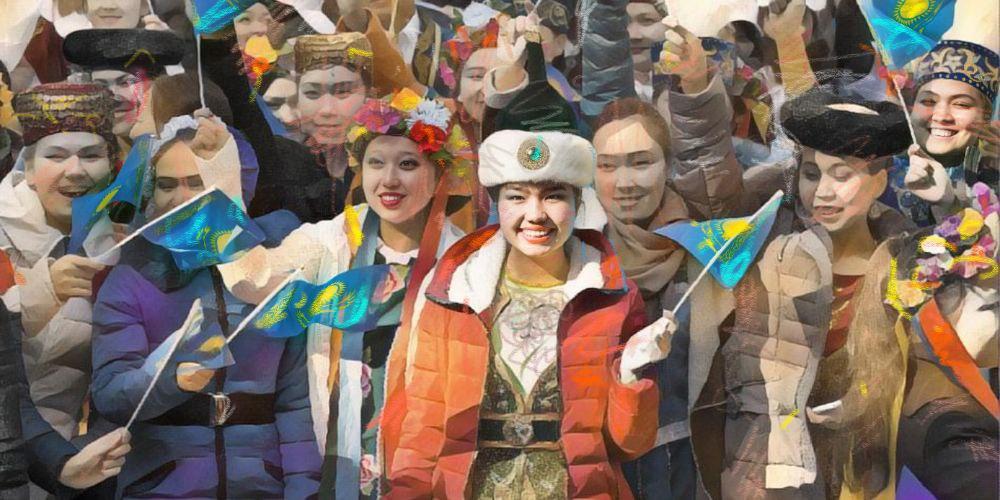
May Day in Central Asia: From Soviet Parades to a Celebration of Unity

In Soviet times, May 1 and 2 were public holidays. May 1 was International Workers' Day, marked by large-scale parades celebrating the proletariat, while May 2 served as a day to recuperate before returning to work. Today, three of the five Central Asian republics have preserved the tradition of celebrating May Day, effectively marking the arrival of spring twice, once through Central Asian customs – Nauryz - and again through European ones. Workers of the world, unite! Coined by Karl Marx and Friedrich Engels in The Communist Manifesto, this famous communist slogan once appeared on the coats of arms of the Soviet Union and its republics. International Workers' Day became the living embodiment of this phrase. Celebrated on 1 May, May Day began as a European festival of spring but gained global significance through the labor movement. The Second International, formed at the 1889 International Workers Congress in Paris, called for an annual demonstration advocating an eight-hour workday. The date honors the U.S. general strike that started on 1 May 1886 and led to the tragic Haymarket massacre on 4 May. The date became a powerful symbol of working-class solidarity and a yearly tradition across large swathes of the globe. [caption id="attachment_31352" align="aligncenter" width="1174"] Soviet-era poster for International Workers' Day[/caption] Before the Bolsheviks came to power, political agitators in the Russian Empire used May 1 to call for change with slogans such as “Down with the Tsar” and “Give us freedom.” After the October Revolution, May 1 and 2 became official state holidays, with May Day becoming synonymous with International Workers' Day and mandatory parades. Unlike the more formal and solemn celebrations honoring the October Revolution, however, May Day events were often met with genuine enthusiasm. After the collapse The fall of the USSR brought about a widespread reevaluation of Soviet holidays. The celebration of the October Revolution on November 7 was widely discarded, but many post-Soviet republics retained May 1 as a public holiday, albeit with new interpretations and meanings. In Central Asia, Turkmenistan and Uzbekistan do not officially celebrate May 1. Turkmenistan has developed a distinct holiday calendar, while in Uzbekistan, May 1 is observed symbolically as the Day of Fountains. [caption id="attachment_31353" align="aligncenter" width="2560"] Day of Fountains, Tashkent; image: TCA, Stephen M. Bland[/caption] Though celebrations are more modest and it is no longer officially a day off, Tajikistan has retained the holiday’s Soviet-era name, International Workers’ Day. Some traditions, such as honoring outstanding workers, persist. Kyrgyzstan calls the holiday Labor Day, in line with its American equivalent. It is marked by festive events and activities organized by trade unions. Kazakhstan has taken a different approach, reimagining May Day as the Day of Unity of the People of Kazakhstan. The name reflects the country’s emphasis on stability and interethnic harmony, a model promoted by the Assembly of the People of Kazakhstan, an institution established on March 1, 1995, at the initiative of the country’s first president, Nursultan Nazarbayev. Since 2016, March 1 has also been celebrated as Thanksgiving...

Kazakhstan to Import Electricity from Tajikistan to Address Energy Shortages

Kazakhstan and Tajikistan have signed an agreement on long-term cooperation in the energy sector. The agreement will remain in effect for 20 years, with the possibility of a 10-year extension. The document aims to strengthen energy security, promote environmentally friendly technologies, and reduce greenhouse gas emissions. Monitoring and telemetry Under the agreement, Kazakhstan will receive scheduled electricity supplies from Tajikistan, particularly from the Rogun Hydroelectric Power Plant (HPP). These imports are intended to cover planned shortages in the North-South zone of Kazakhstan’s unified power system. The price is set at $0.034 per kilowatt-hour (kWh), including VAT at a zero rate. The agreement also includes the introduction of hourly electricity metering at connection points between Kazakhstan's and Central Asia’s power grids, as well as along the Tajik border. Kazakhstan's system operator, KEGOC JSC, will receive real-time telemetry data from Tajikistan via interstate transmission lines to ensure accurate metering and efficient coordination. Electricity deliveries will follow the routes specified in the purchase agreements. The primary source will be the Rogun HPP, with supplies timed to match Kazakhstan's peak shortage periods. A long-awaited step Energy cooperation between the two countries has been under discussion for some time. In August 2024, former Kazakh Energy Minister Almasadam Satkaliev held talks on importing electricity from Tajikistan. These discussions also addressed the issue of unscheduled electricity flows between their power grids. By December 2024, plans were already in place to finalize a 20-year agreement. In February 2025, the deal was confirmed during talks between Kazakhstan’s Foreign Minister Murat Nurtleu and his Tajik counterpart, Sirojiddin Mukhriddin. “We agree that Tajik-Kazakh energy cooperation has broad prospects. We have agreed that an intergovernmental agreement on electricity will be signed in the very near future,” the Tajik foreign minister said at the time. The potential of the Rogun HPP and prospects for Kazakhstan A key element of the agreement will be the Rogun hydroelectric power plant on the Vakhsh River. Once completed, its dam will reach a height of 335 meters, making it the tallest in the world. The power plant will have a capacity of 3,600 MW, making it the largest power plant in Central Asia. This makes the project strategically important not only for Tajikistan but for the entire region. The official website of the Rogun HPP states that the facility will be the upper stage of the Vakhsh cascade and will play a key role in ensuring sustainable energy supplies. The agreement is expected to not only enable Kazakhstan to stabilize its energy balance during peak loads, but also open up new opportunities for cross-border cooperation. With the growing demand for green energy, the strategic alliance with Tajikistan could become an important element of the country's energy transition. The resolution enters into force on the day of its signing and effectively launches an intergovernmental mechanism capable of strengthening Kazakhstan's energy security for decades to come.

Video: From Hardship to Accomplishment – Meet the Kazakh Woman Supporting Female STEM Students

Kalmakhanova Marzhan Seitkyzy is a young professor in Kazakhstan supporting female students in the fields of science, technology, engineering, and mathematics (STEM), offering guidance and helping them navigate the realities of research work. Watch her story: [video width="3840" height="2160" mp4="https://timesca.com/wp-content/uploads/2025/04/Конкурс-2.mp4"][/video]

Turkmenistan Denies Torture Allegations in Case of Activist Mansur Mingelov

At the 82nd session of the UN Committee Against Torture, held on April 23-24 in Geneva, Turkmenistan’s Permanent Representative to the UN, Vepa Hajiyev, rejected allegations that human rights activist Mansur Mingelov was tortured while in detention. Speaking in Geneva, Hajiyev stated that a domestic investigation found “no facts confirming such violations during criminal proceedings and during Mansur Mingelov's stay in places of detention.” He also provided an official medical diagnosis for Mingelov, tuberculous arthritis in both knees, and denied claims that Mingelov was not informed of his medical status. Background: Arrest and Allegations of Abuse Mansur Mingelov, a member of the Baluchi minority, was first detained in June 2012 by officers of the now-defunct Turkmenistan Drug Control Service. According to human rights groups, he was beaten and sustained a broken leg during his arrest. Although initially released without charge, Mingelov later submitted formal complaints to the Prosecutor General’s Office and the Presidential Administration, alleging torture against himself and other Baluchi community members. He compiled testimonies from at least 11 individuals who described being subjected to electric shocks, beatings with plastic bottles and chairs, and having bones broken with chisels. After attempting to deliver this evidence, including video and audio recordings, to the U.S. Embassy in Ashgabat, Mingelov was rearrested. Authorities subsequently charged him with drug smuggling, distribution of pornography, and involving minors in anti-social activities. He was sentenced to 22 years in prison. Health Condition and Calls for Release In 2018, Mingelov was diagnosed with tuberculosis, later complicated by osteomyelitis. Prison doctors recommended amputation of his leg, which he refused. In 2024, a commission led by Interior Ministry-affiliated physician Professor Elena Geldieva concluded that amputation was unnecessary and that his condition could be treated abroad. A 2017 presidential decree in Turkmenistan permits the release of seriously ill prisoners. Despite Mingelov’s confirmed diagnosis, he has not received the requisite documentation for release, nor has any court ruled in favor of it. The UN Human Rights Committee, several international organizations, and U.S. senators have all urged Turkmenistan to release Mingelov. However, activists claim the matter is stalled at the Ministry of National Security. At the Geneva meeting, Hajiyev asserted that a release requires a court decision based on a multi-agency commission’s findings, but did not clarify whether Mingelov's illness qualifies under the existing criteria. Mansur Mingelov remains incarcerated, as international watchdogs once again spotlight Turkmenistan’s human rights record.

Opinion – Central Asia’s Looming Water Crisis: A Ticking Time Bomb

When people think of Central Asia, they often picture vast deserts, ancient Silk Road cities, and oil pipelines stretching to distant markets. Yet the region’s most urgent and combustible resource is not buried underground — it flows above it. Water, or more precisely the lack of it, is rapidly becoming the defining fault line of Central Asia’s future. For decades, the five Central Asian republics have tiptoed around a growing water crisis. The two major rivers that sustain life in this arid region, the Amu Darya and the Syr Darya, are now so contested and depleted that what was once a technical issue has metastasized into a geopolitical threat. The region's major rivers, the Amu Darya and the Syr Darya are under immense pressure, threatening agriculture, livelihoods, and regional stability. At the heart of the crisis is a tragic irony. The upstream countries, Kyrgyzstan and Tajikistan, are rich in water but poor in energy and cash. They need to release water in winter to generate hydropower. Downstream nations, particularly Uzbekistan and Turkmenistan, want water stored until the summer to irrigate vast cotton and wheat fields. The result? Mutual distrust, occasional diplomatic spats, and an accelerating race to dam, divert, and hoard water in a region already gasping under the weight of climate change. A Region Parched Central Asia annually utilizes over 60 billion cubic meters of water for irrigation from the Amu Darya and Syr Darya basins. However, recent years have seen a decline in river flows, with the actual flow of the Syr Darya being 20–23% less than the norm. Further, the ghost of the Aral Sea — a once-thriving inland lake that has now shrunk by over 90% in its volume and 74 % in surface area — serves as a haunting reminder of the cost of mismanagement. The Soviet legacy of excessive irrigation has morphed into a post-Soviet scramble for control, where water is not just a tool of survival but a lever of power. This desiccation has transformed the region, leading to the emergence of the Aralkum Desert and causing severe ecological and health issues. Climate Change Intensifies the Crisis Climate change is exacerbating water scarcity in Central Asia. A recent study revealed that an extreme heatwave in March 2025, with temperatures soaring 5 to 10°C above pre-industrial levels, was significantly amplified by global warming. Such temperature surges accelerate glacier melt and increase evaporation rates, further reducing water availability. By some estimates, Central Asia could lose over 30% of its freshwater resources by 2050. Yet, rather than galvanize cooperation, this existential threat has sparked more competition. International efforts have largely fallen flat. The International Fund for Saving the Aral Sea (IFAS), the region’s main water cooperation body, is riddled with inefficiencies and lacks enforcement power. External actors like China and Russia have their own interests, often deepening the regional divide rather than healing it. Inefficient Water Management Inefficient agricultural practices remain one of the most profound and persistent contributors to water mismanagement across Central Asia. In...