• KGS/USD = 0.01144 0%
  • KZT/USD = 0.00211 0%
  • TJS/USD = 0.10515 0.48%
  • UZS/USD = 0.00008 0%
  • TMT/USD = 0.28530 0%
  • KGS/USD = 0.01144 0%
  • KZT/USD = 0.00211 0%
  • TJS/USD = 0.10515 0.48%
  • UZS/USD = 0.00008 0%
  • TMT/USD = 0.28530 0%
  • KGS/USD = 0.01144 0%
  • KZT/USD = 0.00211 0%
  • TJS/USD = 0.10515 0.48%
  • UZS/USD = 0.00008 0%
  • TMT/USD = 0.28530 0%
  • KGS/USD = 0.01144 0%
  • KZT/USD = 0.00211 0%
  • TJS/USD = 0.10515 0.48%
  • UZS/USD = 0.00008 0%
  • TMT/USD = 0.28530 0%
  • KGS/USD = 0.01144 0%
  • KZT/USD = 0.00211 0%
  • TJS/USD = 0.10515 0.48%
  • UZS/USD = 0.00008 0%
  • TMT/USD = 0.28530 0%
  • KGS/USD = 0.01144 0%
  • KZT/USD = 0.00211 0%
  • TJS/USD = 0.10515 0.48%
  • UZS/USD = 0.00008 0%
  • TMT/USD = 0.28530 0%
  • KGS/USD = 0.01144 0%
  • KZT/USD = 0.00211 0%
  • TJS/USD = 0.10515 0.48%
  • UZS/USD = 0.00008 0%
  • TMT/USD = 0.28530 0%
  • KGS/USD = 0.01144 0%
  • KZT/USD = 0.00211 0%
  • TJS/USD = 0.10515 0.48%
  • UZS/USD = 0.00008 0%
  • TMT/USD = 0.28530 0%

Viewing results 1471 - 1476 of 3388

Kumys, Beshbarmak, and Other Wonders of the Kazakh Feast

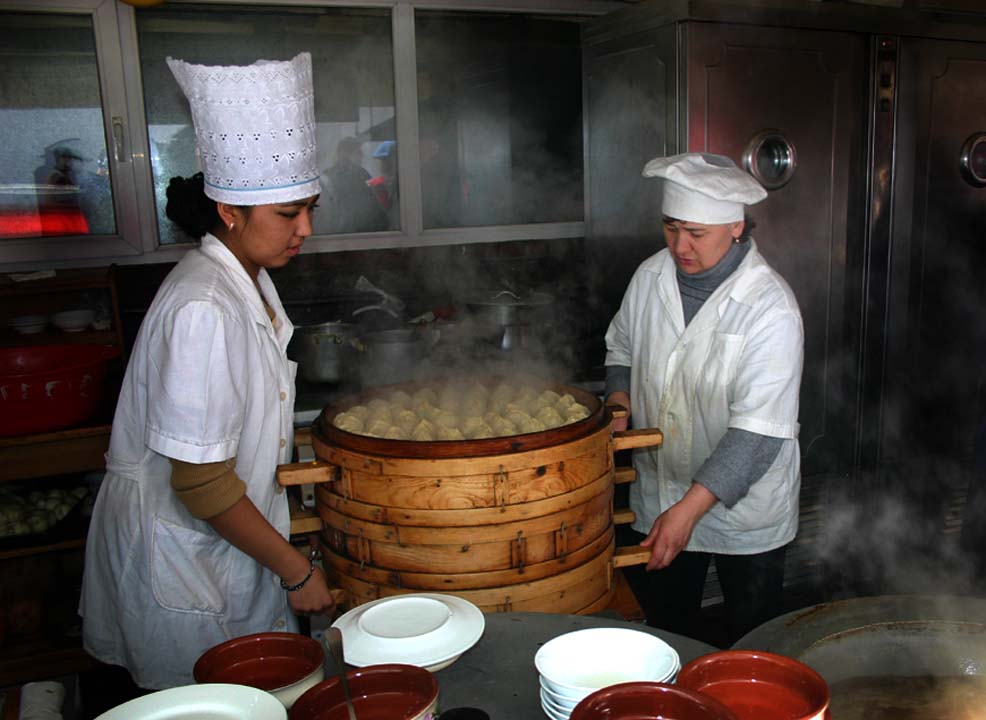
Autumn in Kazakhstan is traditionally a time of abundant treats. Today, local chefs and experts are trying to break the stereotype of Kazakhstan having a bland and unhealthy national cuisine, and are actively marketing it to foreign guests. The modern cuisine of Kazakhstan has absorbed a variety of Asian dishes, but also includes dishes from Soviet cuisine. Almost every Kazakhstani family is familiar with borscht and dumplings borrowed from Russians and Ukrainians, pilaf and samsa brought by Uzbeks, shashlik taken from the Caucasian peoples, and funchoza (Asian salad with noodles) and kuksi (cold noodle soup) adopted from Koreans. Of course, as in many parts of the former Soviet Union, Olivier salad is traditionally prepared on New Year's Eve in Kazakhstan. Turkish dishes have also become part of the daily diet in the years since independence. For example, it is impossible to imagine today's fast food without the doner kebab. International fast food, such as pizza, hamburgers, and sushi, have also become popular in big cities. Nevertheless, traditional Kazakh dishes form the basis of the country's eclectic cuisine. Beshbarmak is truly a Khan's dish. Any festive occasion is unthinkable without it, and restaurants specializing in traditional cuisine must include it in their menus. In its original version, beshbarmak is prepared from salted horse meat, including kazy, shujuk, and karta (horse intestines). Unleavened dough, potatoes, onions, and spices are also added. However, today, a variant using beef is also widespread. [caption id="attachment_25083" align="aligncenter" width="1254"] Kazakh national dish, beshbarmak; image: iStock[/caption]   Beshbarmak, like many Turkic dishes, is the subject of constant dispute between Kazakhs and Kyrgyz. The neighboring peoples will always espouse different views on the question of whom created the dish. The differences in the recipe are not very significant; in Kazakhstan, the dough is usually cut into large rhombuses, and in Kyrgyzstan, into small oblong pieces. Tatarstan and Bashkiria also lay claim to the Khan's dish. There, mutton rather than beef is most often added to horse meat. Another pillar of Kazakh cuisine is kuirdak. Each family cherishes its version of the recipe, and kuirdak must be served in any restaurant claiming to serve the national cuisine. The dish starts with cuts of mutton and organ meat, such as heart, liver, and kidneys. These cuts are fried in sheep fat alongside potatoes, onions, parsley, and spices. [caption id="attachment_25084" align="aligncenter" width="1254"] Traditional dish kuirdak; image: iStock[/caption]   Unfortunately, the most traditional Kazakh dishes are not always available to foreigners, as some can now be tasted only in villages. For example, in honor of the arrival of guests, before the main meal, guests are offered a boiled sheep's head. It is cut right at the table, and each part (ears, eyes, tongue, etc.) is served according to the status of the guests. Another dish rarely served in restaurants is baked mutton brains. Ethnographers continue to search for and re-popularize national dishes that were common before the Russian Revolution but have now virtually disappeared in cities. For example, the ritual dish Ylpershek was...
U.S. Sanctions Uzbek Companies Supplying Russia with Equipment

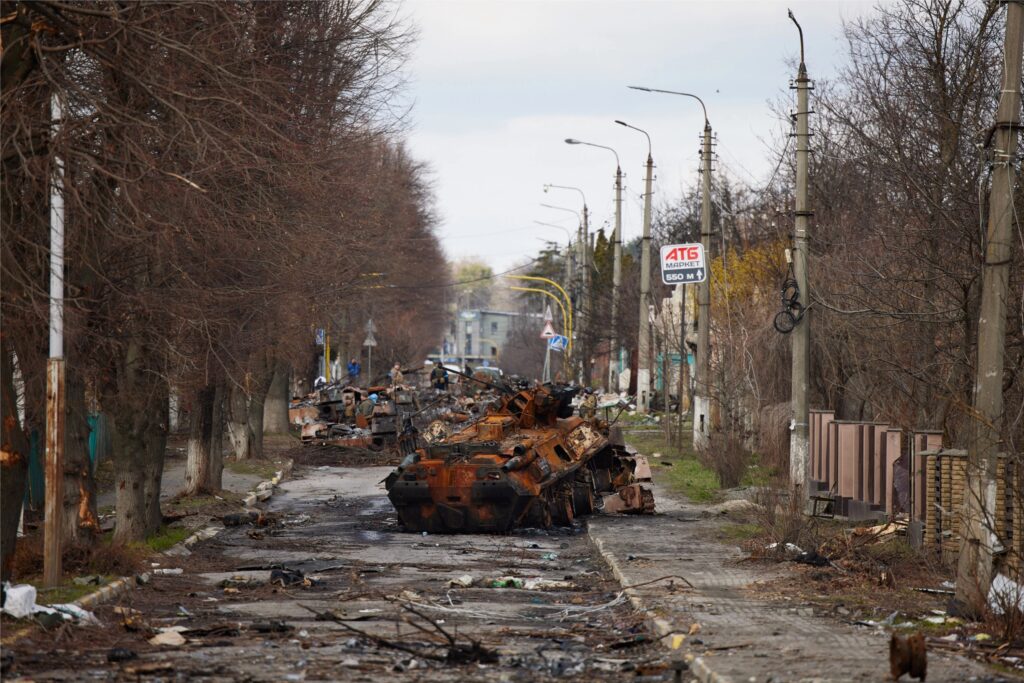
The U.S. Department of the Treasury has sanctioned 275 individuals and entities involved in supplying Russia with advanced technology and equipment that it desperately needs to support its war machine. The Uzbek companies Uzstanex and The Elite Investment Group are among the sanctioned entities. Deputy Secretary of the Treasury Wally Adeyemo emphasized that the U.S. and its allies are committed to halting the flow of essential tools and technologies that enable Russia to pursue its unlawful war against Ukraine. “As demonstrated by today’s actions, we are unwavering in our resolve to weaken Russia’s military capabilities and to penalize those attempting to circumvent or evade our sanctions and export controls,” Adeyemo stated. Uzstanex is part of the StanexGroup holding. The company sells and adjusts machine tools in Uzbekistan, Kazakhstan, Kyrgyzstan, Tajikistan, and Turkmenistan. According to the U.S. Treasury Department, the machine tools purchased by Uzstanex were delivered to Russia through the Chinese company Shanghai Winsun Imp and Exp Co Ltd (Shanghai Winsun), which is why sanctions were imposed against it. The Elite Investment Group is a non-specialized wholesaler. It is noted that from mid-March to May 2024, using GUCLU GLOBAL as a carrier agent, the company delivered approximately $190,000 worth of high-priority goods, including electrical transformers, to companies in Russia, including the GS Group.

How Can Central Asian Countries Advance Democratization Efforts Amid Geopolitical Uncertainty?

On October 27, Uzbekistan held parliamentary elections, which, along with the referendum in Kazakhstan and upcoming local council elections in Kyrgyzstan, contributed to a global election year. In the elections in Uzbekistan, the ruling Liberal Democratic Party emerged victorious, participating for the first time in elections held under a mixed majoritarian-proportional system. As a result of the vote, the Liberal Democratic Party received 42,7% of the votes, securing 64 out of 150 seats in parliament. Voter turnout was 74.72%, and observers noted the organization and conduct of the elections. Leaders in Central Asia frequently cite the region’s volatile geopolitical landscape as a basis for more cautious internal reforms. This reflects a need to maintain stability in the face of external pressures. Historically and currently, Central Asian countries do not represent homogeneous societies. Additionally, increasing political divisions within society and among political elites are observed in almost all five countries of the region. Against this backdrop, escalating geopolitical conflicts on the global stage may further hinder the realization of major political reforms.   Political Reforms and an Unstable World Order It's challenging to definitively assess political reforms in Kazakhstan and Uzbekistan as either negative or positive, as both perspectives exist. European and American leaders often note the countries' aspirations for reforms and express readiness to support them. Therefore, Kazakhstan and Uzbekistan effectively act as locomotives of political reforms in Central Asia at this stage. Under the leadership of President Kassym-Jomart Tokayev, Kazakhstan has undertaken political reforms aimed at modernizing the political system and strengthening democratic institutions. A significant step was limiting presidential powers by introducing a single seven-year presidential term without the right to re-election, which should promote regular changes in political leadership. Kazakh authorities argue that the role of parliament has also been strengthened to increase its influence and accountability to the government, providing a more balanced system of checks and balances. Liberalization of the party system included simplifying the registration of political parties and introducing elections based on single-member districts, which should foster political pluralism. Steps were taken to increase citizen participation in governance, including the introduction of direct elections for village and district mayors and creating mechanisms for open citizen feedback. Additionally, a 30% quota for women, youth, and people with disabilities was introduced in party lists, contributing to strengthening gender equality. Under President Shavkat Mirziyoyev, Uzbekistan is also conducting significant reforms aimed at democratizing the political system. These elections were noteworthy for the introduction of a mixed electoral system, representing a significant departure from past practices. Under this system, 150 seats in the Legislative Chamber of the Oliy Majlis should be filled by two methods: 75 seats were elected through single-member districts (majoritarian system), and the remaining 75 were allocated proportionally based on party results (proportional system). This approach aims to enhance political pluralism by allowing both individual candidates and political parties to gain representation. The majoritarian component allows voters to directly elect representatives from their constituencies, fostering a closer connection between elected officials and their constituents....

American Chamber of Commerce in Kyrgyzstan: Future Development and Investment Climate

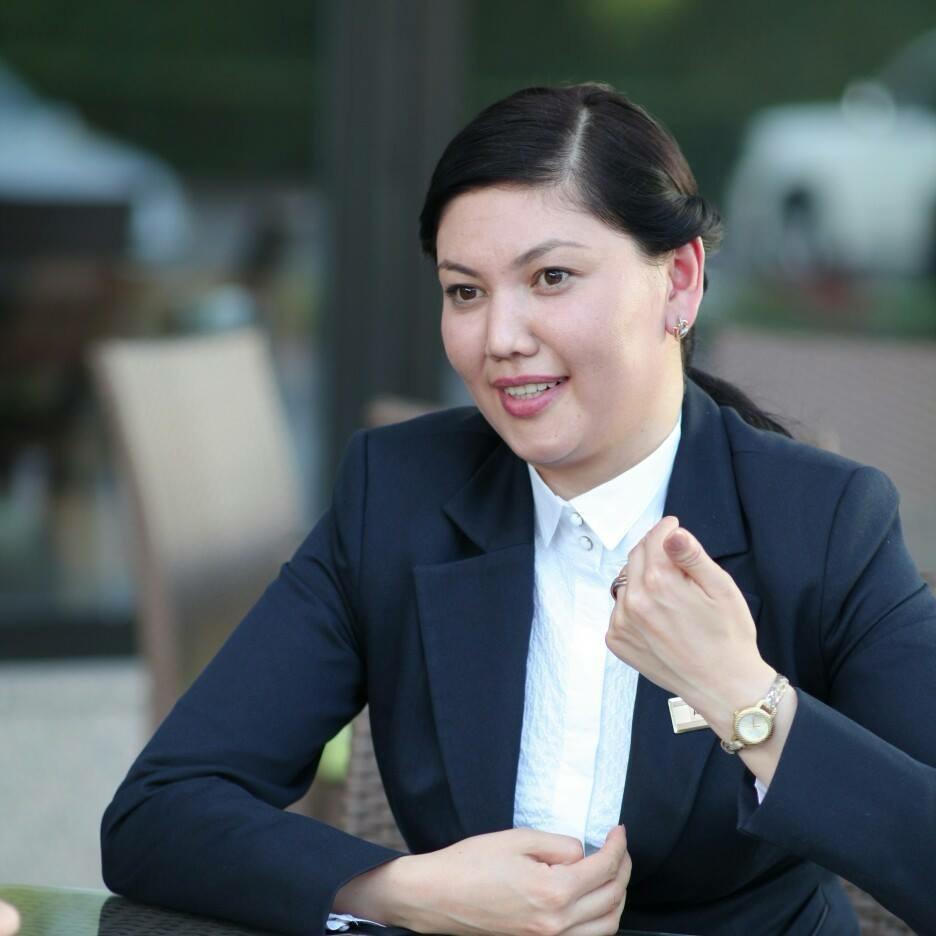
As Central Asia continues to become a regional hub for trade and innovation, The Times of Central Asia spoke with Altynai Asanova, the Executive Director of the American Chamber of Commerce in the Kyrgyz Republic, to discuss the investment climate in Kyrgyzstan, economic trends, and future development. TCA: I see that your background is primarily in hotel management and sales; how did you transition from this role to your current position? “My background includes 18 years in the hotel business. Ten years at Hyatt, starting in food and beverage and ending in the hotel sales department; then, I worked at the Orion Hotel for the pre-opening and opening stage for about three years. After this, I was hired by Sheraton, one of the Marriott chain hotels, to work on the pre-opening and opening stage for two years. I was still involved with the business audience and wanted to continue working with the stakeholders and companies who know me.” TCA: How would you describe the hospitality industry in Kyrgyzstan? Is it mainly in Bishkek or other regions? “It is developing; before, it was only the Hyatt. Now, there are three or four chain hotels in Bishkek. It is good that there are more players in the market. It is developing day by day. The development is mainly in Bishkek, but we have good perspectives for Issyk Kul as long as the roads and infrastructure are completed. The chain hotels are also becoming interested in Issyk Kul. The good thing is that enough businessmen understand and accept the market challenges in Issyk Kul. They know it will not be financially stable at launch since the busy season is only about 50 days. But if the hotels provide full service and comfort, people will travel there for the full season.” TCA: Stepping away from hospitality, what did American investment in Kyrgyzstan look like ten years ago?” “Before, there was an American base in Kyrgyzstan. During that time, the hospitality business was amazing. The rates were high considering the charter flights and pilots who needed a place to stay. Now, these rooms are listed at the lowest rates. At that time, the Hyatt was the only five-star hotel in Bishkek, so all the American guests were staying at the Hyatt. The investment climate dropped after the U.S.-Kyrgyzstan agreement ended. There is opportunity, but it goes slowly.” TCA: Since then, what has changed in the business climate? “Business-wise, if we look from the angle of the association, we do not have any purely American business; we have franchise members: KFC, Hyatt, Sheraton, and some banks. It would be nice to have purely American [businesses] here.” TCA: Who are the current major investors in the Kyrgyz market? And is competition relevant to win contracts with local companies? “China, Russia, Kazakhstan, the Netherlands, and Turkey are the main investors. Before making any contracts or tenders, we need to understand the possibilities of our market, ‘Is our country ready to accept this level of business?’ The first question...

Report Addresses Air Pollution in Almaty

On October 30, the United Nations Development Programme (UNDP) in Kazakhstan, together with the Urban Center of Almaty Management University, presented the results of their joint efforts within the Green and Safe Streets Initiative, which aims to address air pollution in Kazakhstan’s largest city, Almaty. This initiative is part of the regional City Experiment Fund program funded by the Ministry of Finance of Slovakia. The Green and Safe Streets Initiative included three interrelated clusters of activities: a social impact campaign, tactical urban actions on Berezovsky, Turgut Ozal, and Kazybek bi streets in Almaty, and the installation of air pollution measuring devices, which resulted in the development of methodological recommendations. These actions helped identify further steps to address the complex challenge of improving air quality in Almaty. The actions and approaches implemented within the City Experiment Fund framework are expected to help reduce air pollution by increasing green spaces, introducing energy-efficient technologies in the housing sector, improving infrastructure for pedestrians and cyclists, and prioritizing public transport. According to IQAir, Almaty, along with the industrial city of Karaganda, has the highest level of air pollution in Kazakhstan and is among the 25 most polluted cities in the world. The primary sources of air pollution in Almaty are motor vehicles and private-sector and municipal heating that burns coal. During the winter, Almaty is covered by a deep smog that causes severe health problems and a high prevalence of respiratory diseases in the local population. According to an Asian Development Bank report, the decline in Almaty’s air quality is attributable to the city’s population growth, rapid urbanization, inefficient public transportation, and heavy reliance on coal for power generation and residential heating. The city’s valley setting exacerbates these factors, creating ideal conditions for solid temperature inversions during the late fall and winter that trap pollutants in the lower atmosphere. Additionally, the ADB report concludes that the city’s low wind speeds cause pollutants to accumulate and recirculate at the city's surface level.

Halloween in Kazakhstan: A Creative Celebration of Global Culture

Halloween is an ancient pagan festival firmly rooted in the West, but despite being alien to the country's indigenous culture, it is becoming ever more popular in Kazakhstan, especially among young people. Although embraced by young Kazakhs, Halloween is not celebrated in the classical sense. On the streets you are unlikely to meet crowds of children dressed as witches, ghouls and vampires, collecting candy from houses. Instead, it has become a symbol of fun, freedom of self-expression, and an opportunity to create and experience something new and unusual. In Almaty, Astana, and in other major cities in the country, many clubs, cafes and bars host Halloween-themed parties attended by people in fancy dress. Every year the costumes become more and more creative, for, after all, Halloween is not just an opportunity to dress up, but also a great chance for participants to demonstrate their design and artistic skills. Many of the staged events include contests for the most creative and frightening costumes, as well as themed music, dancing and cocktails, and as student Serzhan from Almaty told TCA, provide “an opportunity to have fun with friends and to reincarnate our favorite characters from movies and TV series.” [caption id="attachment_25000" align="aligncenter" width="900"] Photo: TCA, Tamila Olzhbaekova[/caption]   In addition to parties, Halloween movie nights are likewise, growing in popularity. Students and groups of friends gather to watch classic horror movies or novelties of the genre, often at home, but sometimes in student dormitories or cafes. For many, like Camilla, a university student in Astana, it has become an annual tradition: “We get together with friends every year on Halloween, watch horror movies until the early hours and argue whose costume is the creepiest.” Some movie theaters have now begun to support the trend by offering special repertoires for Halloween week, including screenings of films such as “Scream” and “Spellbound”. As is to be expected, social media also plays a key role in popularizing Halloween in Kazakhstan. On platforms such as Instagram and TikTok, local youth use Halloween as an occasion to post creative content: makeup, makeup videos, photo and video shoots with themed costumes. In this context, Halloween has become a kind of cultural phenomenon for self-expression. Companies also use social media to create a festive mood and offer seasonal discounts. Despite its growing popularity, the overall response to Halloween in Kazakhstan remains divided. For some people, it is associated with Western influences that contradict local cultural and religious traditions. For many young people, however, it is simply a fun holiday that has no deep meaning, but rather an excuse to immerse oneself in an atmosphere of mysticism and creativity. “For me, Halloween is not a religious holiday, just an opportunity to have fun with friends,” shared Altair, a student from Almaty. She, like many others, sees nothing contradictory to her culture in the celebration of Halloween, and simply enjoys participating in themed events.