• KGS/USD = 0.01144 0%
  • KZT/USD = 0.00213 0%
  • TJS/USD = 0.10607 0.57%
  • UZS/USD = 0.00008 0%
  • TMT/USD = 0.28530 0%
  • KGS/USD = 0.01144 0%
  • KZT/USD = 0.00213 0%
  • TJS/USD = 0.10607 0.57%
  • UZS/USD = 0.00008 0%
  • TMT/USD = 0.28530 0%
  • KGS/USD = 0.01144 0%
  • KZT/USD = 0.00213 0%
  • TJS/USD = 0.10607 0.57%
  • UZS/USD = 0.00008 0%
  • TMT/USD = 0.28530 0%
  • KGS/USD = 0.01144 0%
  • KZT/USD = 0.00213 0%
  • TJS/USD = 0.10607 0.57%
  • UZS/USD = 0.00008 0%
  • TMT/USD = 0.28530 0%
  • KGS/USD = 0.01144 0%
  • KZT/USD = 0.00213 0%
  • TJS/USD = 0.10607 0.57%
  • UZS/USD = 0.00008 0%
  • TMT/USD = 0.28530 0%
  • KGS/USD = 0.01144 0%
  • KZT/USD = 0.00213 0%
  • TJS/USD = 0.10607 0.57%
  • UZS/USD = 0.00008 0%
  • TMT/USD = 0.28530 0%
  • KGS/USD = 0.01144 0%
  • KZT/USD = 0.00213 0%
  • TJS/USD = 0.10607 0.57%
  • UZS/USD = 0.00008 0%
  • TMT/USD = 0.28530 0%
  • KGS/USD = 0.01144 0%
  • KZT/USD = 0.00213 0%
  • TJS/USD = 0.10607 0.57%
  • UZS/USD = 0.00008 0%
  • TMT/USD = 0.28530 0%

Viewing results 1849 - 1854 of 3457

UN Special Rapporteurs Denounce Repressions of Independent Media in Kyrgyzstan

A number of UN Special Rapporteurs have denounced the repression of independent media in Kyrgyzstan and sent a letter to the authorities of the country. In the letter, they mentioned recent events related to the publications Kloop, 24.kg and Temirov Live, Vesti.kg  reports. The UN Special Rapporteurs called on the Kyrgyz authorities to fully respect international norms and standards regarding freedom of expression. "We are concerned that attacks on independent journalists and news outlets appear to be a direct result of their independent journalistic investigations. We are concerned that independent media and human rights defenders are worried that they will not be able to exercise their rights to freedom of expression and peaceful assembly, and associations to do their legitimate work without intimidation or reprisal," the letter states. The authors of the letter also ask the Kyrgyz authorities to provide detailed information on the charges against Kloop, 24.kg and Temirov Live. Earlier TCA reported that evidence regarding the case of 11 current and former journalists of Temirov Live, arrested on charges of calling for mass riots, were transferred to the court and will soon be handed over to the judge.

“I Hope Saltanat’s Family Can Find Peace” – Women of Kazakhstan Speak Out on Bishimbayev’s Sentence

On November 9, 2023, former Kazakh Minister of the National Economy, Kuandyk Bishimbayev was caught on surveillance cameras arguing with and then brutally beating his common-law wife, 31-year-old Saltanat Nukenova, for around eight hours outside a restaurant he owned in Astana. A forensic examination showed that she had been strangled, but the cause of death was recorded as traumatic injury to the brain. The high-profile case which was live-streamed garnered international attention. Despite pleading not guilty to premeditated murder, Bishimbayev was sentenced to 24 years’ imprisonment for torturing and murdering Nukenova, and his cousin Bakytzhan Baizhanov to four years for his part in covering up the crime. Prosecutor Aizhan Aimaganova, who became widely-known during the trial, said in an interview with Tengrinews.kz that she believes the verdict will change the country forever. "Family and domestic violence is a pressing problem... I hope that after this trial, women will realize that going to law enforcement is not useless. It is necessary to talk about problems. I think now any domestic tyrant will think twice before raising his hand," she said. [caption id="attachment_18029" align="aligncenter" width="872"] Prosecutor Aizhan Aimaganova; image: Press service of the Astana Court[/caption] While the length of the sentence is a victory for advocates against gender-based violence, both within Kazakhstan and in the many parts of Europe where the trial was also followed closely, many Kazakhs feel it is still too early to say that justice has been done. In an open discussion that is rare in Central Asia, many citizens are posting their concerns on social media that the Nazarbayev-era official will find a way to get out of prison early: there is already speculation that Bishimbayev, a former member of the country’s elite, will leverage his political connections to secure an early release – or be recognized as terminally ill. Following the verdict, TCA took to the streets of Kazakhstan to ask women their opinion. "I finally feel relieved,” Sara, an SMM manager from Astana told TCA. “Twenty-four years is a justified sentence in my opinion. Although tragic, this case drew public attention to a great many issues, such as the need for both a new law against domestic abuse and charities to support victims of domestic violence, which is very prominent in Kazakhstan. The whole country watched the case unfold, and that attention was put to good use since many other domestic violence cases got the attention they deserved. I hope that our justice system will make sure that Bishimbayev doesn't get a chance to get out early and serve his full sentence. The same applies to Baizhanov." "Considering various aspects, including the status of his family and the presence of his children, this sentence is probably objective, especially given the jury's involvement,” 21-year-old journalist, Kamila told TCA. “The main issue now is to prevent his release on parole once the unrest subsides, though I know this is only possible if the victim’s family give their consent.” "From an objective point of view, 24-years for a brutal...

Uzbek Politician Decries Dominance of Russian Language in Country

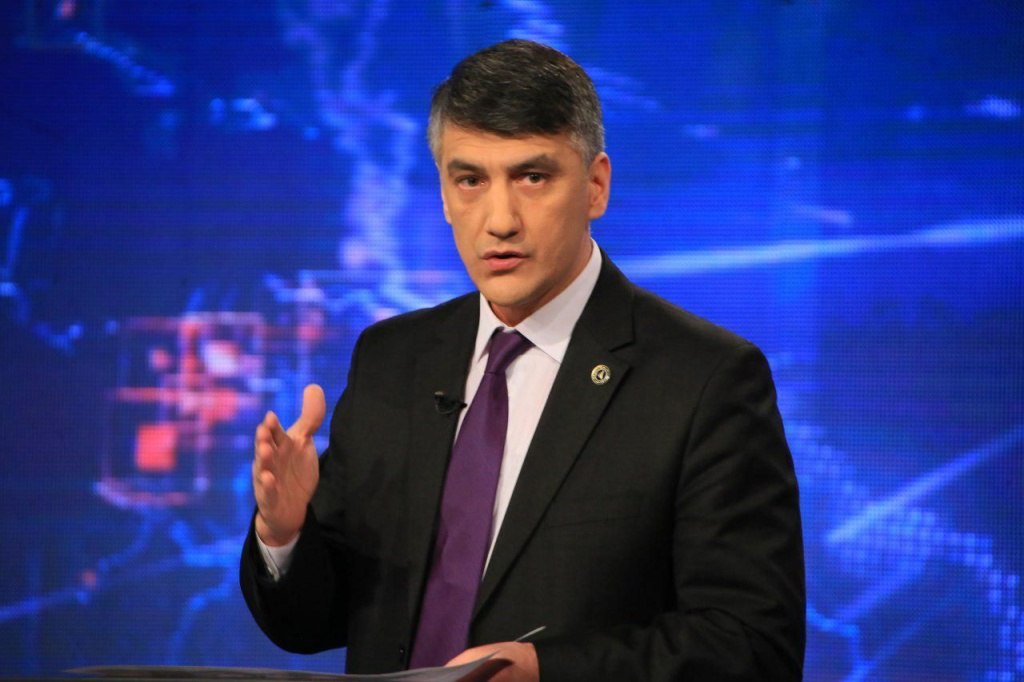
Alisher Qodirov, leader of the Milliy Tiklanish Party and Vice-Speaker of the Legislative Chamber of the Oliy Majlis of Uzbekistan, has proposed a ban on the provision of public services to persons who don't speak the Uzbek language. He expressed this opinion in response to a statement by the chairman of the Russian State Duma, Vyacheslav Volodin. Qodirov said that the Uzbek language should be defined in legislation as a mandatory language. "In our laws, in addition to creating conditions for citizens of other nationalities to study their native language and values in kindergarten and at school, the Uzbek language should be defined as compulsory," he wrote in his Telegram channel. The politician stated that he believes it should be impossible for a person who doesn't know Uzbek to be employed in the civil service or use state services. Earlier, Qodirov suggested limiting the use of Russian on Uzbek television and in education. The party leader stated that a norm on teaching primary education in Uzbek should be introduced into legislation. "We have not been able to teach Russian compatriots the Uzbek language for 100 years. On the contrary, it has become customary that Uzbeks send their children to be educated in Russian. In Tashkent, the number of schools where education is not in Uzbek has grown. Unfortunately, more than 90% of pupils at such schools are Uzbeks," the Vice-Speaker wrote. Qodirov's statements run counter to Article 19 of the Uzbek Constitution, which states that "all citizens have the same rights and freedoms and are equal before the law regardless of sex, race, nationality, language, religion, beliefs, social origin, or social status."

Liberalizing Kazakhstan’s Economy Must Not Become Uncontrolled Privatization, Expert Warns

Last week, President Kassym-Jomart Tokayev signed a decree on reducing the state’s participation in the economy, aiming to help develop competition and private business. This could be a significant boost to the economy, financial analyst Rassul Rysmambetov, an Almaty-based expert in distressed assets and Director of the Financial Freedom Public Foundation, told The Times of Central Asia, though everything will depend on how the decree is implemented. Firstly, the decree envisages creating a National Office for Privatization under the Agency for the Protection and Promotion of Competition. This office is to develop criteria for state assets subject to privatization and create a list of them. In addition, measures are provided to increase the autonomy, quality, and independence of corporate governance at Samruk-Kazyna, the National Welfare Fund, and its subsidiaries. “The government must establish a specific list of large entities that will offer major stakes in the next two years in IPOs,” President Tokayev explained. According to Tokayev, the quasi-public sector – bloated and often ridden with debt – needs serious reform. “We need to put an end to the question of where state participation should continue and where competition can be developed. The largest share of the state in the economy is represented by the group of companies held by the Samruk-Kazyna fund, so that is where this work must start. New, systemic measures are required to fundamentally rehabilitate the fund,” the president stated. A separate section of the decree presents measures aimed at protecting the rights and legitimate interests of business, including decriminalizing offenses related to economic activity and coordinating with prosecutors on prohibitive and restrictive measures initiated by government agencies. This is not the first time Kazakhstan has tried to liberalize its economy – it has even privatized social institutions, such as hospitals, schools, and creative centers for children before – but previous attempts yielded no tangible successes. “We need to continue to work to improve the quality of services, consistently reduce state participation and eliminate excessive regulation and restrictions. This applies to all sectors of the economy,” Tokayev stressed. “Uncontrolled monopolies, unequal access to resources and unfair trade practices must be eliminated at the root. A pillar of economic liberalization will be effective privatization. There have been so many privatization plans, but every time we make the same mistakes.” Rysmambetov believes that professionals should take the lead. “Liberalizing the economy is a process. By no means can it be limited to a single decree – it is a strategic course. I see here dozens, if not hundreds of by-laws, industry reference documents and possibly new laws and codes. I'm afraid that parliament will prove unable to keep up with the pace at which these reforms should be carried out,” he stated. According to Rysmambetov, Samruk-Kazyna could be dissolved tomorrow, but the holding has taken on a lot of debt for its subsidiaries, meaning that in the near term its assets can only be partially privatized. In general, each Samruk-Kazyna company has a related supervising ministry, so, to...

Nationwide Survey on Domestic Violence in Kazakhstan Publishes Results

A large-scale statistical analysis on domestic violence in Kazakhstan was conducted by three professors from Karaganda Medical University: Saule Musabekova, Ksenia Mkhitaryan and Hamida Abdukadirova. The study, conducted between 2019 and 2022, covered 14,342 women between the ages of 18 and 75 from 14 regions of Kazakhstan. The questionnaire included questions about health, children, partners, violence and its consequences, financial independence, and cases of sexual abuse in childhood. The study showed that the main victims of domestic violence in Kazakhstan are women (more than 77.9%). Next on the list are children (17.52%), elderly people (3.5%) and men (less than 1.1%). It is important to note that not all victims seek help from the police or hospitals. Therefore, there may be many more victims. According to the results of the study, the most vulnerable age group is women from 40 to 49 years (41.46%) and from 30 to 39 years (37.80%). Victims of domestic violence were most often unemployed women or those with low levels of education, with two or more children, and economically dependent on their husbands. Most of the victims of violence were from urban areas (63%). It was also found that violence against women is committed by strangers in only 12.2% of cases. In 87.8% it is committed by men with whom the victims are in a close relationship. Almost all of them are intimate partners of the victims (in 95-98% of cases). Half of the women interviewed stated that their intimate partners had attacked them while they were pregnant or raising young children. The forms of systematic violence varied. The most common were physical violence, experienced by 78% of respondents; psychological violence, experienced by 21% of respondents; sexual and physical violence, 16%; economic violence, 7%; and regular sexual violence, 6% of respondents. More than half of the respondents (57%) also stated that over the past year they have faced one of the above forms of abusive behavior more than once (from 2 to 8 times). Almost all cases of violence against women (98.2%) occurred when the abuser was intoxicated. Other factors cited by female researchers were economic problems and male unemployment. Incidents of violence most often occurred at home in the evening and at night (91%). Two-thirds of women (66%) said they had suffered at least one injury after partner violence. The study also took into account physical and sexual abuse of women by men with whom they were not in an intimate relationship. In 92%, the abusers were family members, friends and coworkers, and only 8% were unknown men. The researchers noted that Kazakhstan only formally supports the main international commitments to gender equality. Domestic violence and general tolerance to it persist in the country. "Gender roles and cultural norms are clearly expressed in some regions of Kazakhstan: in the south of the country, educated women often do not look for work outside the home because of the priority of domestic duties, and attempts to restrict women in their choice of occupation are quite common. Thus,...

Kyrgyz Writer Oljobai Shakir Sentenced to Five Years in Prison

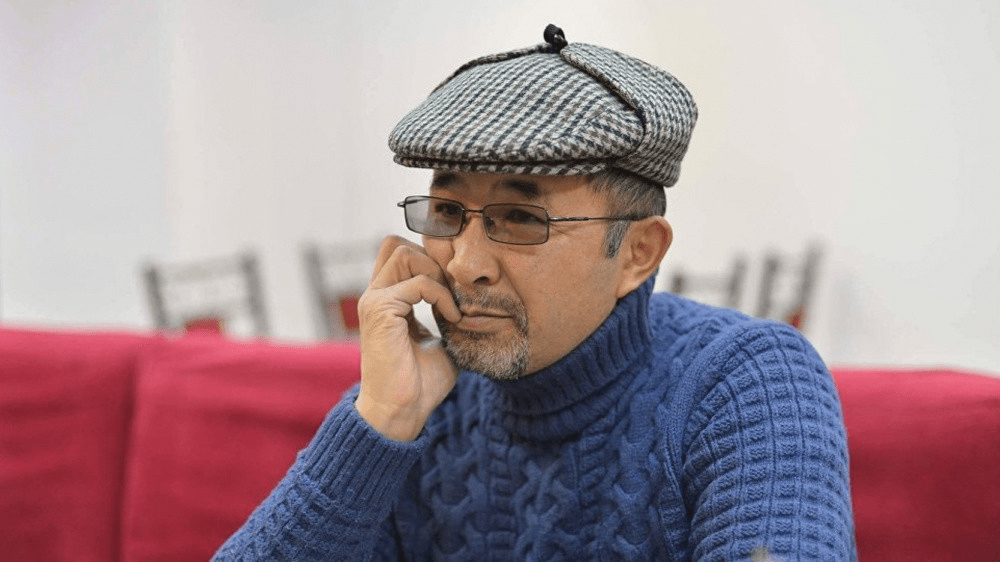
On 14 May, the Alameda District Court of the Chui Oblast in Kyrgyzstan sentenced 52-year-old activist and writer Oljobai Shakir to five years imprisonment for inciting mass riots on social media against the government. At the previous hearing, Shakir a frequent and popular blogger, pleaded not guilty to the charges of slander and argued that the aim of his posts was to encourage open dialogue  between the country's leadership and its people on how the government is run. During the trial, the writer's lawyer, Akmat Alagushev, demanded the acquittal of his client and announced his intention to appeal. Olzhobai Shakir has been held in the pre-trial detention center of the SCNS since August 2023 on account of the “provocative nature” of material he posted on Facebook, TikTok and YouTube. Throughout his incarceration, the writer has denied the validity of the criminal charges against him. Renowned for his critical statements against the authorities, Shakir was arrested shortly after he had publicly scrutinized the government’s controversial transfer of four hotels on the shores of Lake Issyk-Kul to Uzbekistan. In a period when the government is increasingly clamping down on political opposition through social media, neither President Sadyr Japarov nor GKNB head Kamchybek Tashiev accepted Shakir’s invitation to be interviewed on the issue. Shakir is a well-established author and supporter of contemporary Kyrgyz literature, but like his activities on social media, his own work at times has proved highly controversial. Published in 2021 in a country where open discussion of LGBT+ rights is still taboo, his novel “Adam+” caused public outcry by relating the emotional challenges he faced during his daughter’s transgender transition.