• KGS/USD = 0.01144 0%
  • KZT/USD = 0.00215 0%
  • TJS/USD = 0.10641 0%
  • UZS/USD = 0.00008 0%
  • TMT/USD = 0.28530 0%
  • KGS/USD = 0.01144 0%
  • KZT/USD = 0.00215 0%
  • TJS/USD = 0.10641 0%
  • UZS/USD = 0.00008 0%
  • TMT/USD = 0.28530 0%
  • KGS/USD = 0.01144 0%
  • KZT/USD = 0.00215 0%
  • TJS/USD = 0.10641 0%
  • UZS/USD = 0.00008 0%
  • TMT/USD = 0.28530 0%
  • KGS/USD = 0.01144 0%
  • KZT/USD = 0.00215 0%
  • TJS/USD = 0.10641 0%
  • UZS/USD = 0.00008 0%
  • TMT/USD = 0.28530 0%
  • KGS/USD = 0.01144 0%
  • KZT/USD = 0.00215 0%
  • TJS/USD = 0.10641 0%
  • UZS/USD = 0.00008 0%
  • TMT/USD = 0.28530 0%
  • KGS/USD = 0.01144 0%
  • KZT/USD = 0.00215 0%
  • TJS/USD = 0.10641 0%
  • UZS/USD = 0.00008 0%
  • TMT/USD = 0.28530 0%
  • KGS/USD = 0.01144 0%
  • KZT/USD = 0.00215 0%
  • TJS/USD = 0.10641 0%
  • UZS/USD = 0.00008 0%
  • TMT/USD = 0.28530 0%
  • KGS/USD = 0.01144 0%
  • KZT/USD = 0.00215 0%
  • TJS/USD = 0.10641 0%
  • UZS/USD = 0.00008 0%
  • TMT/USD = 0.28530 0%

Viewing results 1855 - 1860 of 3521

One Dead and Six Missing in Turkmenistan Mudslides

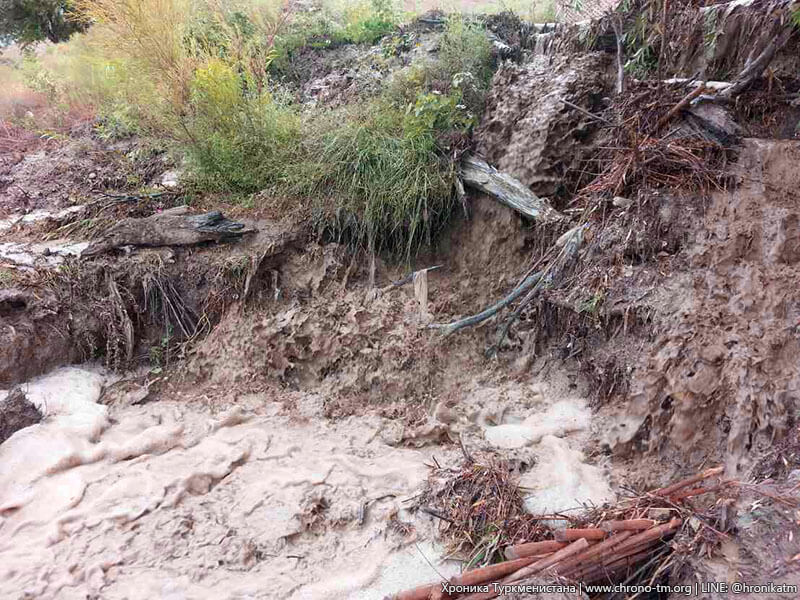
One soldier has been killed and six are missing during mudslides caused by recent heavy rains in Turkmenistan. It is being reported that the man died at the Serakhs border outpost in Akhal province. "On May 17, around 17:00 hours, seven soldiers from the 16-border outpost of the Border Troops connection in Serakhs [on the border with Iran] went missing. The body of one of them was found May 18. The searches for the other six soldiers continue," an anonymous source commented. "The search work is being carried out by the border troops' forces of the adjacent territories," the source said. Special means, such as drones or helicopters, are not involved in the search operations. The source adds that on the day of the incident, the soldiers were sent to repair the automobile roads next to the military unit, which were washed away by mud-flows. The Turkmen government is trying to stop information about the incident from being published, and "it is dangerous to ask and inquire about the details". But in conversations among themselves, servicemen are discussing that "sending soldiers in such weather to this area was a wrong decision and the cause of the accident was the negligence of the commanders and management of the border guard unit." "It was not possible to get comments on the disappearance of several soldiers and the death of at least one of them from the Turkmen authorities, including the aforementioned military unit," the source notes. For almost ten days, Turkmenistan’s capital Ashgabat has been flooded with rain, in what local meteorologists think have been the worst downpours since the 1970s. The rain has caused significant damage to the city’s infrastructure. The Akhal province has also been badly affected, with agricultural land flooded. Mud-flows hit the cities of Anev and Kahka, and in many areas electricity and part of the rail network were shut down. However, there have been no reports in Turkmen media about the rains and the damage they are causing.

Arrest Made in Connection with Bishkek Unrest

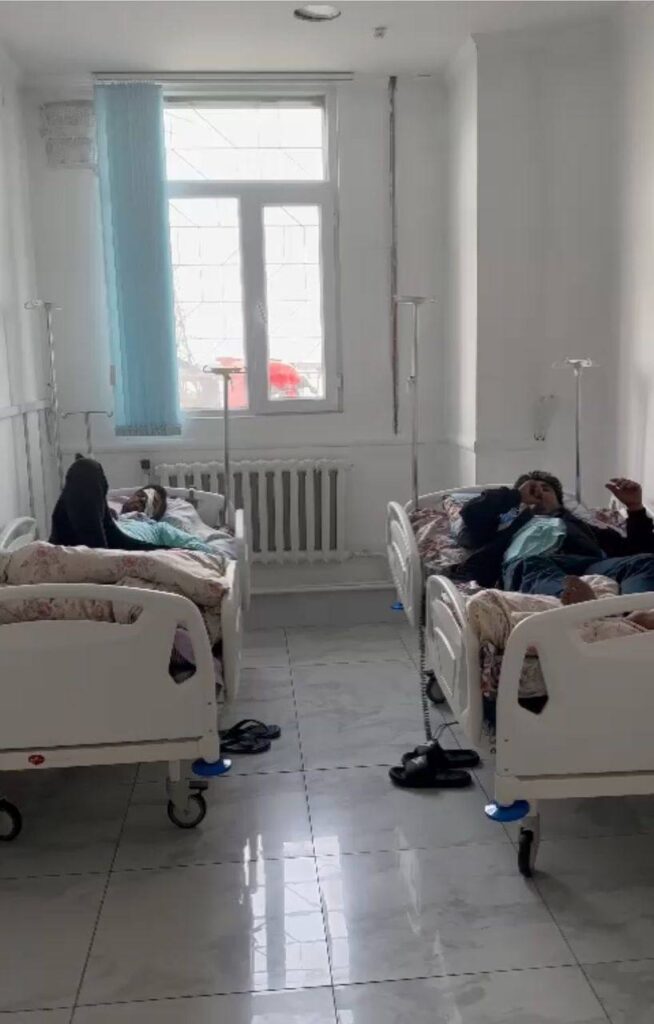
The Ministry of Internal Affairs of Kyrgyzstan has announced the detention and opening of a criminal case against a man suspected of beating foreigners during unrest which occurred on the night of May 18, leaving 41 people hospitalized. The suspect also allegedly transported people to places where foreigners lived during the events which transpired in the Kyrgyz capital. On May 18, 2024, a video showing the beating of foreign citizens began circulating on social media. The footage revealed an unidentified man of Asian descent, approximately 20-25 years old, wearing a beige hooded sweater, striking victims with his hands and feet on their faces and other body parts. The incident took place after four individuals broke into a house near the Dordoi Market. The accused assailant was identified on surveillance cameras located in the vicinity. “Four attackers arrived in a dark-colored Mercedes-Benz Sprinter on May 18 at 04:00 am.,” the Ministry’s statement reads. Investigations revealed that it is “registered to a resident of the Issyk-Kul region. The driver of the said car was Zhekshenbekov Azat, born in 1999, a native of the Issyk-Kul region, living in Bishkek, and an employee of a furniture workshop. The detainee was placed in the temporary detention center of the Bishkek City Internal Affairs Directorate.” The investigation is ongoing, with the authorities seeking to identify and apprehend the others involved. On Monday, President Japarov promised swift action should the events be repeated, stating that “Anyone, whether he is our citizen or a foreign citizen, who threatens the integrity of our state, organizes chaos, will be punished mercilessly.”

Kyrgyzstan’s President Warns of Swift Crackdown If Unrest Flares Again

President Sadyr Japarov of Kyrgyzstan on Monday has addressed the nation about recent unrest and anti-foreigner sentiment, saying “our hot-blooded youth” were led astray by inflammatory internet posts and warning of a crackdown if it happens again. Japarov spoke after a week of tension in Bishkek that began with a fight between local and foreign people at a hostel on May 13 and culminated with large crowds of angry Kyrgyz youths roaming intersections on the night of May 17-18. There were scattered attacks on foreigners, whose population includes students and workers from Egypt, Pakistan and other countries. Some people were hospitalized. Riot police were on standby as officials negotiated with the crowds and persuaded them to disperse peacefully. “Now, if such an event happens again, then the law enforcement agencies will switch to the method of dispersal by force from the first minutes. Thank God, now the power structures are not as weak as they used to be,” Japarov said. “Anyone, whether he is our citizen or a foreign citizen, who threatens the integrity of our state, organizes chaos, will be punished mercilessly.” Japarov said the demands of Kyrgyz youth for tough action against illegal migration were “certainly correct” and that the government had taken steps to address the problem. But he chastised those who were “led by the temptations of provocateurs” seeking to spread chaos. The president referred to “bloggers” trying to foment a “large-scale uprising in the crowd,” though he did not offer more details on the alleged agitators. Kyrgyzstan has experienced periodic unrest on a much bigger scale over the years, and three presidents have been ousted by uprisings since 2005. Japarov, who had been in exile and in prison, came to power in 2021 after being freed by supporters whose protests against a disputed election toppled the previous government. The Central Asian country had been known for a lively media scene and other relative freedoms in a region with authoritarian traditions. Japarov has rolled back some of those rights, tightening control over foreign funded non-governmental organizations despite international concerns and increasing pressure on some media critical of the government. Japarov said law enforcement officials arrested “the perpetrators” of the May 13 brawl and appealed to the country to consider the damage that the unrest of the last week can do to tourism and the economy, as well as the nation’s interaction with the world. He noted that more than one million Kyrgyz citizens live abroad (the total population is about seven million), and that the number of working migrants in Kyrgyzstan is 5,322 people and foreign students number 42,620. “We should be happy about that,” he said.

Turkmenistan Bans People From Talking About the Weather

For almost ten days Turkmenistan's capital Ashgabat has been flooded with rain, in what local meteorologists think have been the worst downpours since the 1970s. The rain has caused significant damage to the city's infrastructure. The Akhal province has also been badly affected, with agricultural land flooded. Mudflows hit the cities of Anev and Kahka, and in many areas electricity and part of the rail network were shut down. However, there have been no reports in Turkmen media about the rains and the damage they are causing. Turkmenistan's law enforcement agencies have taken unprecedented measures to prevent photos and videos of the downpours from appearing on social networks. According to Radio Azatlyk, internet speed has slowed down, working VPNs are blocked, and IMO messenger has almost stopped working. A Turkmenabad police officer, who spoke on condition of anonymity, said of the order from above: "We have been ordered to prevent the leakage of defamatory photos and videos abroad. It was explained to us that if defamatory information gets into the hands of the West or the U.S. State Department, this information can be used to destabilize the domestic situation." The situation is the same in Ashgabat. Security services are identifying and taking to police stations citizens who have shared photos and videos on social media of the rains, and the damage caused by the rains in Ashgabat and the provinces. "In Ashgabat, cars could not move along the streets, people were swept away by the water pressure, and some of them were badly hurt. In the suburbs, houses and farms were flooded, farmers may be left without any income. There are many casualties, but there are no fatalities among the residents. Now the situation is gradually normalizing, and the authorities are eliminating the consequences of the flooding," one Ashgabat resident told The Times of Central Asia.

A Demographic Phenomenon in Kazakhstan — the Population is Rapidly Getting Younger

Kazakhstan stands out sharply on the demographic map of the world, according to Alexei Raksha, a Russian demographer. The republic's government supports high birth rates, which not only bring significant benefits but can also be a source of risk. Independent demographer Raksha has repeatedly said that Kazakhstan does not fit into global fertility trends. By all parameters (relatively high GDP, rising living standards, urbanization, etc.), the republic belongs to countries that should have already completed the first demographic transition. This term means a decline in mortality and fertility due to improved nutrition and medicine, resulting in simple generational replacement. That is, women no longer give birth to 10-15 children, hoping that two or three of them will survive. The first demographic transition has ended almost everywhere except in Africa, scientists believe. Nevertheless, according to Raksha, Kazakhstan -- along with Israel -- shows other indicators. In both countries, both religion and the desire for some kind of historical justice play a role. However, the demographer emphasizes that Kazakhstan's fertility figures are unevenly distributed regionally and ethnically. The fertile southern and western regions contrast sharply with the north, where the population is aging. Raksha recently commented on Kazakhstan's birth rate by women's ethnicity in 2022-2024. "If Kazakhs, Uzbeks and Uyghur women have birth rates at 2.9 to 4.2 children per woman, then representatives of European nations have an average of 1.3-1.5 children (average European level). It is obvious that there is a deep difference in cultural attitudes, both in the degree of social conservatism and in the level of religiosity," he wrote online. According to his data, in recent years, Kazakhstan has been steadily overtaking Uzbekistan, formerly considered the regional leader in population "production". This is confirmed by the data of the study of the leading medical journal The Lancet "Institute for Health Metrics and Evaluation" (IHME) on fertility in 204 countries and territories in the period from 1950 to 2021 with forecasts up to 2100. According to the report, Kazakhstan has surpassed all its neighbors in Central Asia and all countries in the Northern Hemisphere in terms of fertility over 70 years. For contrast, Raksha constantly cites data on prolonged depopulation in Europe, North America, China, Korea, and Japan. Countries whose population is inexorably aging and whose birth rate is below the level of simple reproduction (less than two children per woman) are doomed to attract labor migrants, the expert believes. In addition, the SWO plays a destructive role in the post-Soviet space. Russia has faced precisely unrecorded but obvious demographic losses, while Ukraine is on the verge of social catastrophe. Kazakhstan will not face the fate of an endangered country in the coming generations. In late April, the Bureau of National Statistics of Kazakhstan reported that the total fertility rate in 2023 amounted to 19.52 per 1000 people. In 2022 it was at the level of 20.57 births per 1000 people. The highest birth rates are noted in Mangistau region (26.74 people per 1000 people), Turkestan region (26.18) and Shymkent...

Central Asian Views on Pro-Palestinian Protests in the West

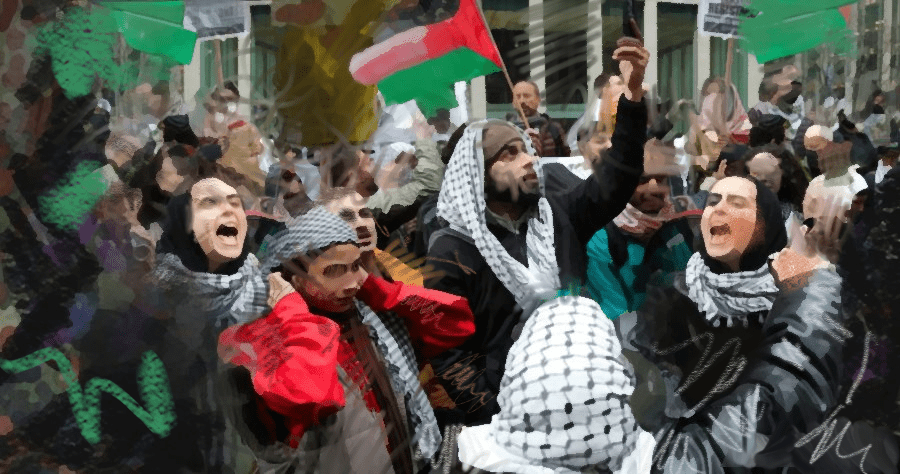
Pro-Palestinian protests erupted in university campuses and other locations worldwide in response to the ongoing conflict involving the Israeli Defense Forces and Palestinians in Gaza. European cities, including in the United Kingdom, the Netherlands, Switzerland, Germany, and Belgium, have been major flashpoints where, in some cases, the police resorted to using batons, shields and tear gas on protestors. In the U.S., The New York Times has reported on May 13 that since April 18, over 2,500 individuals had been arrested or detained at 54 college campuses nationwide. The increasingly violent nature of the protests causes alarm. A poll conducted by USA Today and Suffolk University, published on May 8, has revealed that almost 32% of Americans express "very concerned" sentiments about the potential for the protests to lead to violence, while slightly over 35% say they are "somewhat concerned". Some of the messaging coming out of the protests has also been characterized as antisemitic, leading to a congressional bill in the U.S. known as the Antisemitism Awareness Act, which aims to expand the legal definition of antisemitism to curb any speech that provokes violence. Free speech advocates, including some international human rights organizations, have challenged these measures.   Remembering their own turbulent times, Central Asians generally support state measures to maintain order Central Asians' perspectives on the pro-Palestinian protests sweeping through Western cities, and the way various governments respond to them, are naturally influenced by their own historical and political contexts, shaped by decades of political transition and international rivalry. Emerging as new democracies just three decades ago, these nations have witnessed a tumultuous mix of violent power struggles among oligarchs, and intense competition from foreign actors vying for control over the region's abundant natural resources and strategic geopolitical position. At the same time, the region hosts a large Muslim population who may sympathize with the Palestinians, even though many do not know the history of the conflict in the Middle East, according to Daniyar Kumpekov, a 46-year-old economist in Kazakhstan. “The Arab-Israeli conflict is beyond the attention of most citizens,” says 21-year-old Kazakhstani student, Anar Zhakupova, adding that they are more concerned about the confrontation between Ukraine and Russia. In Kyrgyzstan, 29-year-old merchant, Dmitry Povolotsky, says that there were only small rallies in support of the Palestinians. There also seems to be a sense of skepticism towards the protests. Kumpekov, for instance, draws attention to a trend of “Islamization” in Kazakhstan’s society”.  Mahmut Orozbayev, a Kyrgyz civil servant in his 50s, cautions about terrorist cells in the country, which, he says, “should be feared” from a security perspective. “We have a majority of Muslim citizens. They can gather and condemn Israel's actions. But all this [should be done] within the limits of what is permissible, so that there is no unrest,” he adds. According to Donokhon Ruziboyeva, an Uzbekistan resident in her 20s, pro-Palestinian protests raise awareness, but “they don’t stop the conflict in Palestine”. While the devastation in the Gaza Strip seen on social networks deeply moves Ruzboyeva,...