• KGS/USD = 0.01144 0%
  • KZT/USD = 0.00216 0%
  • TJS/USD = 0.10659 0%
  • UZS/USD = 0.00008 0%
  • TMT/USD = 0.28530 0%
  • KGS/USD = 0.01144 0%
  • KZT/USD = 0.00216 0%
  • TJS/USD = 0.10659 0%
  • UZS/USD = 0.00008 0%
  • TMT/USD = 0.28530 0%
  • KGS/USD = 0.01144 0%
  • KZT/USD = 0.00216 0%
  • TJS/USD = 0.10659 0%
  • UZS/USD = 0.00008 0%
  • TMT/USD = 0.28530 0%
  • KGS/USD = 0.01144 0%
  • KZT/USD = 0.00216 0%
  • TJS/USD = 0.10659 0%
  • UZS/USD = 0.00008 0%
  • TMT/USD = 0.28530 0%
  • KGS/USD = 0.01144 0%
  • KZT/USD = 0.00216 0%
  • TJS/USD = 0.10659 0%
  • UZS/USD = 0.00008 0%
  • TMT/USD = 0.28530 0%
  • KGS/USD = 0.01144 0%
  • KZT/USD = 0.00216 0%
  • TJS/USD = 0.10659 0%
  • UZS/USD = 0.00008 0%
  • TMT/USD = 0.28530 0%
  • KGS/USD = 0.01144 0%
  • KZT/USD = 0.00216 0%
  • TJS/USD = 0.10659 0%
  • UZS/USD = 0.00008 0%
  • TMT/USD = 0.28530 0%
  • KGS/USD = 0.01144 0%
  • KZT/USD = 0.00216 0%
  • TJS/USD = 0.10659 0%
  • UZS/USD = 0.00008 0%
  • TMT/USD = 0.28530 0%

Viewing results 1861 - 1866 of 3582

Gasoline Smuggling a Growing Business in Kyrgyzstan

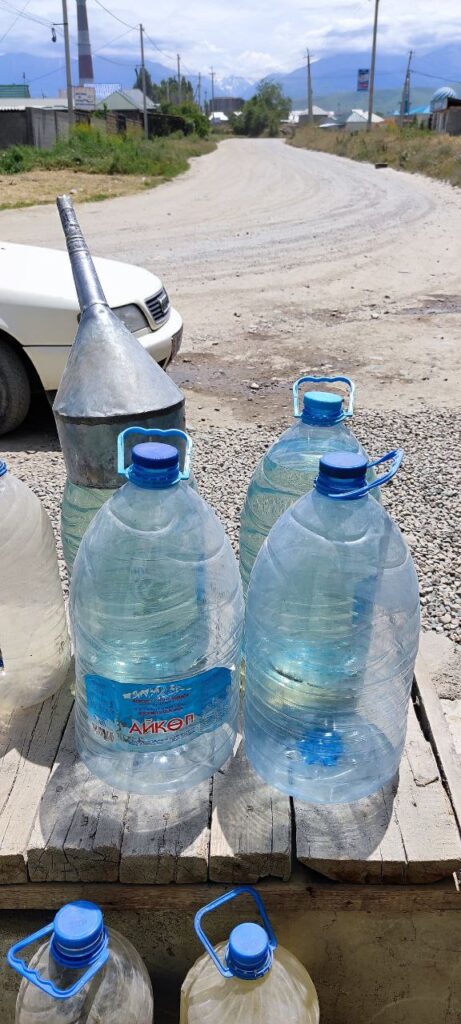
Smuggled gasoline is being sold from plastic bottles on the outskirts of Bishkek. This fuel is cheaper than at official gas stations, but motorists say the quality is no worse. Kyrgyzstan's State Tax Service of Kyrgyzstan seized almost 100,000 liters of gasoline from illegal fuel and lubricant traders in the first four months of 2024 alone. The sellers were fined one million som ($11,500). Fines are doing little to stop illegal gasoline sellers. One trader explained to The Times of Central Asia that selling smuggled gasoline is very profitable, earning them about $40 a day. The fine is only $35, and since a violator must be caught to be punished, most go about their business unaffected. As of 2023, the official average salary in Kyrgyzstan stood at $376 a month. A liter of gasoline at such illegal points costs, on average, 10% less than at official gas stations: the trade is thriving and gaining momentum yearly. The State Tax Service explained to The Times of Central Asia that their competence includes checking electronic invoices and the presence of cash registers or patents to pay taxes to the state. As a rule, illegal sellers have neither, so they are fined, and their products are confiscated. However, the tax authorities cannot completely stop the activities of traders. Two other government agencies can check fuel sellers: the traffic police and the ministry of natural resources. But Kyrgyzstan has a moratorium on business inspections, so officials' hands are tied. Illegal sellers sell both Russian and Kazakhstani gasoline. The supply chain is well organized -- tanker truck owners take the fuel from the bases of official gas stations to special storage sites. Then gasoline is poured into plastic containers and sold on highways. The average capacity of a gasoline tanker is about 15 tons, and one tanker can transport up to 100 tons per day. Despite the ban on exporting fuels and lubricants from Kazakhstan, gasoline and diesel from there are still smuggled into Kyrgyzstan. Points of sale for such fuel are concentrated along the border with Kazakhstan, on the northern outskirts of Bishkek. Kazakh gasoline is cheaper than Kyrgyz, which contributes to its popularity. Fuel from the neighboring country is delivered in hidden containers in ordinary cars and heavy trucks, and there are even secret underground gasoline pipelines in border communities. The business of selling smuggled gasoline also thrives thanks to corruption. For example, last year, officers of the State Committee for National Security detained several employees of the State Tax Service, who, for a fee, made false transportation documents within the country and false consignment notes and seals.

Police Officers in Bishkek Fired Over Mob Conflict with Foreign Students

The Kyrgyz Interior Minister and various heads of district police departments, whose duties include ensuring law and order in Bishkek, attended a meeting to discuss the recent mob conflict with foreign-students, wherein the Interior Ministry board of directors and staff members received disciplinary citations. The head of the Interior Ministry's Internal Investigation Service, Zholboldu Kochkonov, briefed law enforcers on the results of an internal investigation which was conducted following the events of May 13th and 17th, when foreign students and workers were beaten, and violent scenes erupted on the streets and in several Bishkek hostels. "A total of 20 employees have been brought to disciplinary responsibility. Of them, 10 employees of the Bishkek Sverdlovsk District Department of Internal Affairs, including the head of the unit, have been relieved of their posts," Kochkonov stated following the meeting. According to the head of the Internal Investigation Service, an additional 10 employees of the Bishkek City Main Department and the Sverdlovsk District Department of Internal Affairs were given various types of disciplinary penalties. Kochkonov said that an investigation was launched into the officers' failure after the May 13th fight, and it was due to their inaction that the conflict escalated into the large-scale riots seen on May 17th. As TCA reported, on May 13th, a fight between local youths and foreign students took place in a hostel in Bishkek. Four days later, a rally and riots occurred in the center of the city in which around a thousand people participated. More than 40 people were hospitalized. Following the unrest, President Japarov promised swift action should the events be repeated, stating that, “Anyone, whether he is our citizen or a foreign citizen, who threatens the integrity of our state, organizes chaos, will be punished mercilessly.”

Middle Powers Converge: Kazakhstan and Singapore Strengthen Bilateral Ties

During his country’s first presidential-level visit to Singapore in two decades, Kazakhstan’s President Kassym-Jomart Tokayev met with Singapore’s Prime Minister Lawrence Wong on May 23. The meeting represents an alignment of interests and resources between the two middle powers and serves to create a more balanced and cooperative global environment.   Identifying middle powers When global powers become embroiled in their domestic issues or engage in rivalries that prevent effective international cooperation, middle powers step in to fill the leadership void. For instance, Canada has historically taken a lead in peacekeeping missions under the United Nations, advocating for human rights and mediating conflicts where larger powers are either unwilling or unable to engage. Middle powers, also referred to as “swing states”, are defined as influential players in international politics who resist taking sides in major conflicts and possess a specific combination of characteristics such as geostrategic location, demography, economic performance, natural resource wealth, military power and/or political influence. In a January 2024 study, the German Institute of Security and International Affairs (SWS) listed Kazakhstan among twelve notable “middle powers” in the world, who were of great importance to Germany and the EU for either shaping policies or minimizing geoeconomic risks by diversifying foreign policy relations. Kazakhstan possesses immense energy resources and critical materials for the green transition. Bordering Russia, China, and the Caspian Sea, it also offers a land bridge linking East-West and North-South corridors. Singapore is also considered a middle power with its notable regional and international influence, particularly in the Indo-Pacific region. A highly developed country with one of the highest per capita GDPs in the world, Singapore is the only nation in Asia with a “AAA” sovereign credit rating from all major rating agencies. Additionally, it has one of the highest per capita defense expenditures globally and is among the largest arms manufacturers.   A partnership between Kazakhstan and Singapore strengthens their middle power status What distinguishes middle powers from smaller powers is their ability to be more independent and active, particularly in the realm of diplomacy. The collaboration between these two leaders, therefore, helps solidify their middle power status. On a diplomatic level, President Tokayev emphasized Singapore's role as Kazakhstan’s strategic partner in Southeast Asia and expressed confidence that his state visit would strengthen bilateral relations. For his part, Prime Minister Wong highlighted that Singapore could serve as a gateway for Kazakhstan to engage with Association of Southeast Nations (ASEAN) while Kazakhstan could help Singapore build ties with Central Asia. Economically speaking, collaboration offers great potential gains for both sides. Currently, over 140 Singaporean entities and joint ventures operate in Kazakhstan, with total investment exceeding $1.7 billion. These numbers are expected to rise through further integration of their economies. During their recent meeting, the leaders focused on key sectors where Kazakhstan brings high strategic value. For instance, Wong expressed the importation of more agri-food products from Kazakhstan. Singapore’s Indorama Corporation is already in discussions about the production of phosphate fertilizers in Kazakhstan. Logistics is another key...

Kazakhstani Movies No Longer Playing Just a Supporting Role

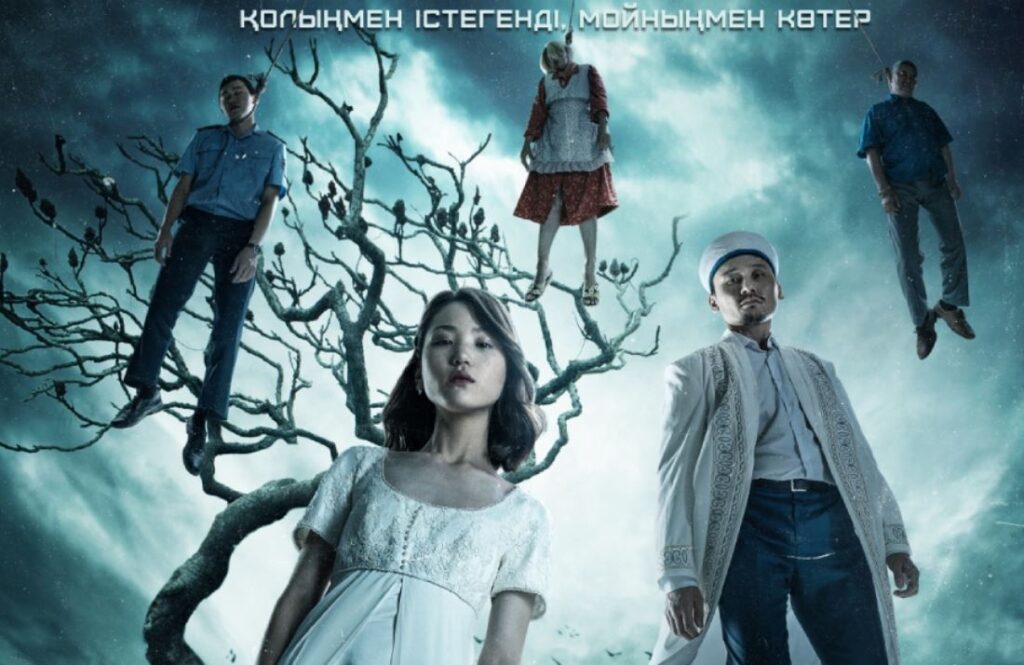
Until recently, the idea of Kazakhstani movies grossing a billion tenge ($2.5m) was a pipe dream. But in the last two years several films have earned this amount. The number of films being co-produced with world-leading studios is growing. However, domestic cinema still struggles to overcome funding and content quality problems. At the end of last year, the romantic comedy Taptym au seni (I Found You) earned more than a billion tenge in just 10 days of screenings. But the real shock came later, when the box office receipts of the suspense film Dastur (Tradition) exceeded a billion tenge after only a week of distribution. In one weekend alone it significantly outperformed Hollywood's Aquaman. In just the second half of last year, Kazakhstani films at the domestic box office earned over $14 million. One of the highest-grossing films was Kazakhstani Business in India, directed by Nurlan Koyanbayev. The film grossed over 1.25 billion tenge, and it was followed by Maghan Nazar Audar (Look at Me). The top ten includes Zhaidarman (Cordial), Zhynim Sol (My Gene) and Azhyrasam (Divorced). Domestic films now account for 30% of total box office receipts in Kazakhstan. Domestic analysts are confident that in the near future Kazakhstani cinema will overtake Uzbekistan to become the leader in Central Asia. In addition to the national Kazakhfilm studio and private studios, production is being driven forward by the State Center for Support of National Cinema. The Center allocates grants to industry figures on a competitive basis, and although there are heated discussions around the terms of the competition and the awardees, state support has a significant impact on the release of films. As for the subject matter, comedies are usually the leaders at the box office. They are often devoted to crime, drug trafficking, fraud, dishonest business, and corruption. Romance and historical figure movies remain popular as well. There is also a growing trend of condemning violence against women in the industry. Dastur, for example, tells the story of a rape victim who violently avenges not only the offender but also his neighbors, with whose tacit consent her life and dignity were devalued. Some sources are speculating that there will soon be a film adaptation of the story of the murder of Saltanat Nukenova by former minister Kuandyk Bishimbayev, which has attracted worldwide attention. A decline in the popularity of western and Russian films, which have led the box office in past decades, is also helping the growth of domestic movies. The share of international projects in the Kazakhstani film industry is growing. In March, the series Assassins Beginning, produced in Egypt, showed spectacular locations across Kazakhstan, including Charyn Canyon and Kolsai Lakes. In January Kazakhstan and Nigeria's 'Nollywood' joined forces for the first time to create a movie called Adam Bol. The film will be shown in both countries, with Nigeria steadily taking over movie markets in Africa and Asia. Joint production helps to not only create jobs in the film industry, but to support businesses as well....

The Middle Corridor is Being Funded Faster than Expected

According to Samuel Doveri Vesterbye, director of the independent think-tank, European Neighbourhood Council (ENC), a small group of high-ranking cabinet officials, ambassadors and other diplomats met in a closed-door round-table on May 15, representing the EU, Türkiye and countries in the South Caucasus and Central Asia. The meeting, organized by Turkish organizations International Transporters Association (UND) and the Turkish Industry and Business Association (TUSIAD), focused on the synergy between the EU's Global Gateway initiative and the projects of the Trans-Caspian International Trade Route (TITR). The fact of the meeting taking place has been confirmed by Türkiye’s Permanent Delegate to the EU. Doveri Vesterbye writes that the meeting "consisted of less than 30 individuals mostly linked to diplomacy, transport, logistics, business, critical infrastructure security, policy-making and supply chains" and "brought together four different Directorate Generals (DGs) and more than 10 nationalities of Director-and-Ambassador level." Significantly, also according to Doveri Vesterbye, the development of high-level coordination committees is under way. The meeting’s assessment that the TITR is being funded faster than expected is an extremely positive development. Dr. S. Frederick Starr, a well-known American expert and a Distinguished Fellow for Eurasia at the American Foreign Policy Council, told The Times of Central Asia that "the activation and coordination of both European and Turkish institutions is essential not only for the financing and construction of this mega-project, but also for its successful management thereafter." This is a very stabilizing development for international commerce. As other corridors are increasingly volatile, it would help to insulate trade between China and Europe from supply-chain shocks. It will also benefit the participating states themselves. Starr explained that the continuing European and Turkish involvement in building out the TITR "will help the transit states of Central Asia and the [South] Caucasus to balance their relations with China and Europe and will thereby undergird their sovereignties. Such balance creates what is literally a 'win-win-win' situation." According to a mid-2023 report, prepared jointly by the EBRD and the EU Commission, an estimated €18.5 billion is required in infrastructure investments in order to improve Central Asia's transport connectivity. Potential growth in transit container traffic by 2040 could be over 40-fold, with significant spill-over effects on education, tech hubs, business and middle-class development. At the same time, the TITR has been reconceptualized as a driver of regional trade and economic growth along the entire Europe–Türkiye–South Caucasus–Central Asia trajectory, with special attention given to the latter two regions. The EU Commission and the EBRD have already funded €10.5 billion in Central Asia via loans and grant investments promised only a few months ago, in January this year, at the Global Gateway Investment Forum in Brussels. This pace suggests significant commitment by such large bureaucratic organizations, and it augurs well for the unlocking of funds from the European Investment Bank (EIB) for investment in Turkey. Doveri Vesterbye writes that the heads of EU member-state missions in Brussels (COREPER) will work to synchronize EIB investments, with special attention on reforming the Customs Union, in order...

Why Have Women’s Carriages Become So Popular in Kazakhstan?

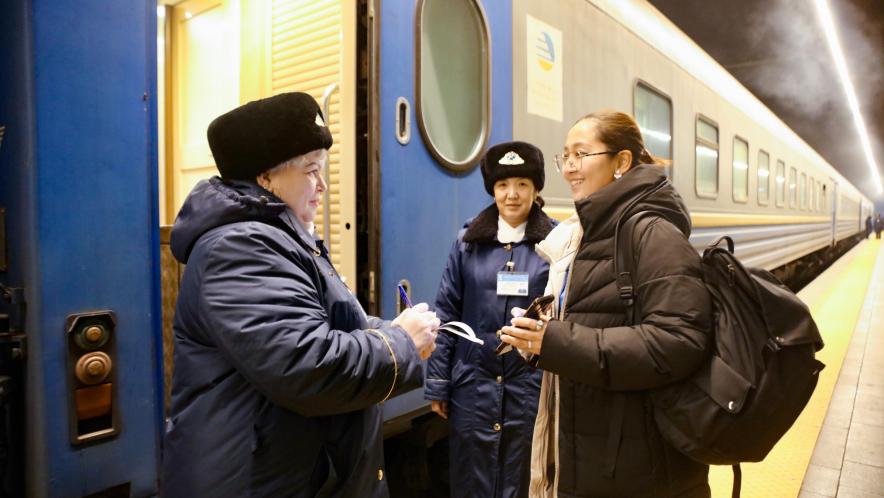
Kazakhstani women have already had time to appreciate women-only cars in trains - an innovation that seemed unthinkable in the secular country a few years ago. However, the special carriages did not appear as an indulgence to traditionalist views. Kazakhstani women now have a choice: they can ride in a regular carriage, or they can ride in a carriage that is practically closed to men - and demand for the latter service is increasing year by year. In May, the statistics of Kazakhstan Temir Zholy (KTZ), a railroad monopoly, were published, which revealed that women twice as often choose women's cars. Since 2021, more than 359,000 women have chosen this option, and since the beginning of 2024 alone, the service has been used by about 70,000 women, whereas in 2023, only 34,000 did so. Today, women's cars run in eight long-distance passenger trains, with only female conductors working in them. Male children up to seven-years-old are allowed, whilst men can go enter for a short period of time, but overnight stays are strictly prohibited. The need to ensure the safety of women in trains began to be discussed after the scandal that broke out in the fall of 2018, when two conductors raped a female passenger on the high-speed train "Talgo" on the Astana-Aktobe route. This crime resonated widely, and led to loud demands for the authorities to take action. Conductors Zhetes Umbetaliev and Kolkanat Kurmaniyazov were found guilty of rape in July 2019 and were sentenced to just 2.3 and 2.5 years, respectively, whilst Kanat Almagambetov, first deputy chairman of KTZ, apologized on behalf of the company. The first women-only cars were launched in October 2021. "This is being done primarily for the safety of women... If demand for the service increases, our company is ready to expand the geography of these routes. Apart from the female conductors, these carriages are no different from the others. They have the same pricing policy," KTZ explained at the time. The current routes were chosen because of their length, company representatives said. Kazakhstan is a large country and a trip from Almaty to Mangistau, for example, takes several days. Ainagul Kasenova, a resident of Mangistau Oblast, travels to see relatives in Almaty several times a year, and for her, women's cars have become a solution. "Now I try to buy tickets only in a separate car. You travel for a long time, so it's much more comfortable if there are only women and children around. I used to encounter men talking to me, paying me unnecessary attention; it was unpleasant. When the news about the rape of a female passenger by conductors broke, my parents didn't even want to let me go to Almaty. Now they let me go without any problem," Kasenova told TCA. According to her, both students and pensioners are comfortable in women's carriages, especially those who have to travel often, which increases the risk. "The women's carriage is always quiet, friendly atmosphere, without drinking and noise," she added....