• KGS/USD = 0.01144 0%
  • KZT/USD = 0.00216 0%
  • TJS/USD = 0.10659 0%
  • UZS/USD = 0.00008 0%
  • TMT/USD = 0.28530 0%
  • KGS/USD = 0.01144 0%
  • KZT/USD = 0.00216 0%
  • TJS/USD = 0.10659 0%
  • UZS/USD = 0.00008 0%
  • TMT/USD = 0.28530 0%
  • KGS/USD = 0.01144 0%
  • KZT/USD = 0.00216 0%
  • TJS/USD = 0.10659 0%
  • UZS/USD = 0.00008 0%
  • TMT/USD = 0.28530 0%
  • KGS/USD = 0.01144 0%
  • KZT/USD = 0.00216 0%
  • TJS/USD = 0.10659 0%
  • UZS/USD = 0.00008 0%
  • TMT/USD = 0.28530 0%
  • KGS/USD = 0.01144 0%
  • KZT/USD = 0.00216 0%
  • TJS/USD = 0.10659 0%
  • UZS/USD = 0.00008 0%
  • TMT/USD = 0.28530 0%
  • KGS/USD = 0.01144 0%
  • KZT/USD = 0.00216 0%
  • TJS/USD = 0.10659 0%
  • UZS/USD = 0.00008 0%
  • TMT/USD = 0.28530 0%
  • KGS/USD = 0.01144 0%
  • KZT/USD = 0.00216 0%
  • TJS/USD = 0.10659 0%
  • UZS/USD = 0.00008 0%
  • TMT/USD = 0.28530 0%
  • KGS/USD = 0.01144 0%
  • KZT/USD = 0.00216 0%
  • TJS/USD = 0.10659 0%
  • UZS/USD = 0.00008 0%
  • TMT/USD = 0.28530 0%

Viewing results 1879 - 1884 of 3582

Turkmenistan Bans People From Talking About the Weather

For almost ten days Turkmenistan's capital Ashgabat has been flooded with rain, in what local meteorologists think have been the worst downpours since the 1970s. The rain has caused significant damage to the city's infrastructure. The Akhal province has also been badly affected, with agricultural land flooded. Mudflows hit the cities of Anev and Kahka, and in many areas electricity and part of the rail network were shut down. However, there have been no reports in Turkmen media about the rains and the damage they are causing. Turkmenistan's law enforcement agencies have taken unprecedented measures to prevent photos and videos of the downpours from appearing on social networks. According to Radio Azatlyk, internet speed has slowed down, working VPNs are blocked, and IMO messenger has almost stopped working. A Turkmenabad police officer, who spoke on condition of anonymity, said of the order from above: "We have been ordered to prevent the leakage of defamatory photos and videos abroad. It was explained to us that if defamatory information gets into the hands of the West or the U.S. State Department, this information can be used to destabilize the domestic situation." The situation is the same in Ashgabat. Security services are identifying and taking to police stations citizens who have shared photos and videos on social media of the rains, and the damage caused by the rains in Ashgabat and the provinces. "In Ashgabat, cars could not move along the streets, people were swept away by the water pressure, and some of them were badly hurt. In the suburbs, houses and farms were flooded, farmers may be left without any income. There are many casualties, but there are no fatalities among the residents. Now the situation is gradually normalizing, and the authorities are eliminating the consequences of the flooding," one Ashgabat resident told The Times of Central Asia.

A Demographic Phenomenon in Kazakhstan — the Population is Rapidly Getting Younger

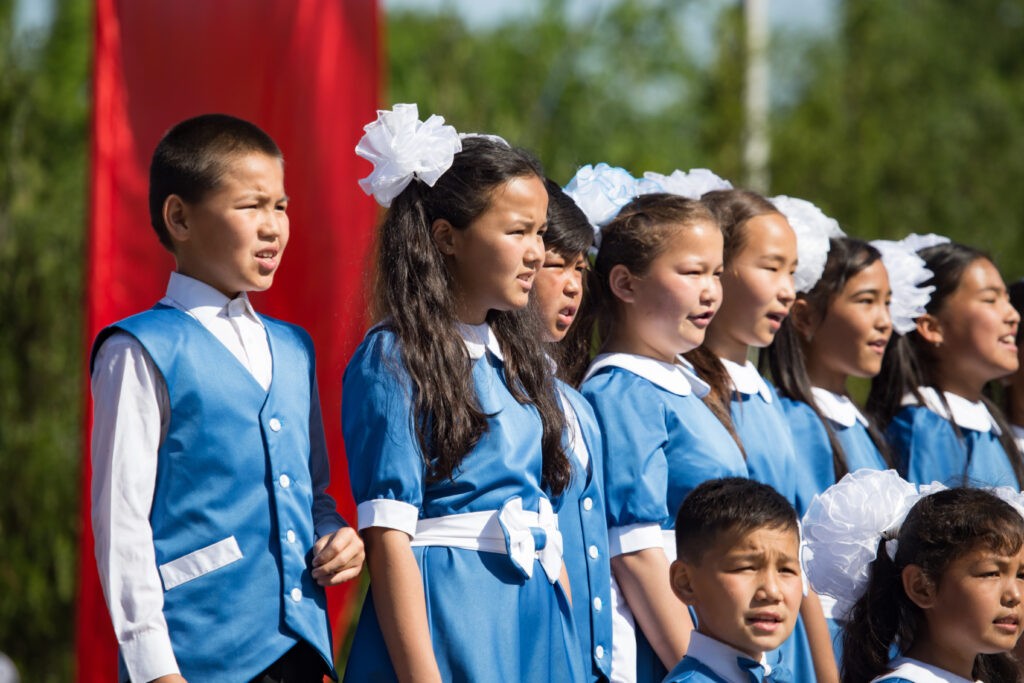
Kazakhstan stands out sharply on the demographic map of the world, according to Alexei Raksha, a Russian demographer. The republic's government supports high birth rates, which not only bring significant benefits but can also be a source of risk. Independent demographer Raksha has repeatedly said that Kazakhstan does not fit into global fertility trends. By all parameters (relatively high GDP, rising living standards, urbanization, etc.), the republic belongs to countries that should have already completed the first demographic transition. This term means a decline in mortality and fertility due to improved nutrition and medicine, resulting in simple generational replacement. That is, women no longer give birth to 10-15 children, hoping that two or three of them will survive. The first demographic transition has ended almost everywhere except in Africa, scientists believe. Nevertheless, according to Raksha, Kazakhstan -- along with Israel -- shows other indicators. In both countries, both religion and the desire for some kind of historical justice play a role. However, the demographer emphasizes that Kazakhstan's fertility figures are unevenly distributed regionally and ethnically. The fertile southern and western regions contrast sharply with the north, where the population is aging. Raksha recently commented on Kazakhstan's birth rate by women's ethnicity in 2022-2024. "If Kazakhs, Uzbeks and Uyghur women have birth rates at 2.9 to 4.2 children per woman, then representatives of European nations have an average of 1.3-1.5 children (average European level). It is obvious that there is a deep difference in cultural attitudes, both in the degree of social conservatism and in the level of religiosity," he wrote online. According to his data, in recent years, Kazakhstan has been steadily overtaking Uzbekistan, formerly considered the regional leader in population "production". This is confirmed by the data of the study of the leading medical journal The Lancet "Institute for Health Metrics and Evaluation" (IHME) on fertility in 204 countries and territories in the period from 1950 to 2021 with forecasts up to 2100. According to the report, Kazakhstan has surpassed all its neighbors in Central Asia and all countries in the Northern Hemisphere in terms of fertility over 70 years. For contrast, Raksha constantly cites data on prolonged depopulation in Europe, North America, China, Korea, and Japan. Countries whose population is inexorably aging and whose birth rate is below the level of simple reproduction (less than two children per woman) are doomed to attract labor migrants, the expert believes. In addition, the SWO plays a destructive role in the post-Soviet space. Russia has faced precisely unrecorded but obvious demographic losses, while Ukraine is on the verge of social catastrophe. Kazakhstan will not face the fate of an endangered country in the coming generations. In late April, the Bureau of National Statistics of Kazakhstan reported that the total fertility rate in 2023 amounted to 19.52 per 1000 people. In 2022 it was at the level of 20.57 births per 1000 people. The highest birth rates are noted in Mangistau region (26.74 people per 1000 people), Turkestan region (26.18) and Shymkent...

Central Asian Views on Pro-Palestinian Protests in the West

Pro-Palestinian protests erupted in university campuses and other locations worldwide in response to the ongoing conflict involving the Israeli Defense Forces and Palestinians in Gaza. European cities, including in the United Kingdom, the Netherlands, Switzerland, Germany, and Belgium, have been major flashpoints where, in some cases, the police resorted to using batons, shields and tear gas on protestors. In the U.S., The New York Times has reported on May 13 that since April 18, over 2,500 individuals had been arrested or detained at 54 college campuses nationwide. The increasingly violent nature of the protests causes alarm. A poll conducted by USA Today and Suffolk University, published on May 8, has revealed that almost 32% of Americans express "very concerned" sentiments about the potential for the protests to lead to violence, while slightly over 35% say they are "somewhat concerned". Some of the messaging coming out of the protests has also been characterized as antisemitic, leading to a congressional bill in the U.S. known as the Antisemitism Awareness Act, which aims to expand the legal definition of antisemitism to curb any speech that provokes violence. Free speech advocates, including some international human rights organizations, have challenged these measures.   Remembering their own turbulent times, Central Asians generally support state measures to maintain order Central Asians' perspectives on the pro-Palestinian protests sweeping through Western cities, and the way various governments respond to them, are naturally influenced by their own historical and political contexts, shaped by decades of political transition and international rivalry. Emerging as new democracies just three decades ago, these nations have witnessed a tumultuous mix of violent power struggles among oligarchs, and intense competition from foreign actors vying for control over the region's abundant natural resources and strategic geopolitical position. At the same time, the region hosts a large Muslim population who may sympathize with the Palestinians, even though many do not know the history of the conflict in the Middle East, according to Daniyar Kumpekov, a 46-year-old economist in Kazakhstan. “The Arab-Israeli conflict is beyond the attention of most citizens,” says 21-year-old Kazakhstani student, Anar Zhakupova, adding that they are more concerned about the confrontation between Ukraine and Russia. In Kyrgyzstan, 29-year-old merchant, Dmitry Povolotsky, says that there were only small rallies in support of the Palestinians. There also seems to be a sense of skepticism towards the protests. Kumpekov, for instance, draws attention to a trend of “Islamization” in Kazakhstan’s society”.  Mahmut Orozbayev, a Kyrgyz civil servant in his 50s, cautions about terrorist cells in the country, which, he says, “should be feared” from a security perspective. “We have a majority of Muslim citizens. They can gather and condemn Israel's actions. But all this [should be done] within the limits of what is permissible, so that there is no unrest,” he adds. According to Donokhon Ruziboyeva, an Uzbekistan resident in her 20s, pro-Palestinian protests raise awareness, but “they don’t stop the conflict in Palestine”. While the devastation in the Gaza Strip seen on social networks deeply moves Ruzboyeva,...

Lost Identities: Tackling Statelessness in Central Asia

The collapse of the Soviet Union and the subsequent emergence of 15 new countries transformed what was once considered internal migration, leaving an extraordinary number of people marooned across newly established borders. Many found themselves holding obsolete Soviet passports or lacking any documentation with which to verify their birthplace. Such was the scale of the problem that in its 2014 Special Report: Ending Statelessness Within 10 Years, the UN Refugee Agency (UNHCR) estimated that “more than two decades after the disintegration of the Soviet Union, over 600,000 people remain stateless.” This was the case for Vladi, a forty-year-old man with a learning disability, bright blue eyes and a shock of blonde hair, who The Times of Central Asia spoke with at a truck stop in the hamlet of Darvaza in Turkmenistan’s Karakum Desert. When the Soviet Union dissolved in 1991, Vladi was with his father in Ashgabat. With non-ethnic Turkmen not feeling particularly welcome in the chaotic early days of independence, most Russians went home, but during their passage back to Kazan in Tatarstan, Vladi and his father became separated. With no passport, Vladi had become landless, an illegal alien unable to return home. Having drifted from village to village ever since, he’d been in Darvaza for eleven years, now, serving as little more than a whipping boy. Whilst the number of those with expired or invalid papers is difficult to gauge, particularly badly affected are so-called “border brides” who’ve married across national frontiers and found themselves legal in neither country. For years now, though, Central Asia has sought to tackle the issue of statelessness head-on. Thus, for example, in 2020 Tajikistan adopted an amnesty law which granted official status to some 20,000 people. In the same year, a new provision in the law allowed 50,000 stateless people in Uzbekistan to acquire citizenship. TCA spoke with Azizbek Ashurov, the Executive Director of Ferghana Valley Lawyers Without Borders, who in 2019 received the Nansen Refugee Award for his work, which saw the Kyrgyz Republic declared by the UNHCR and UNICEF to be the first country in the world to have eradicated the issue of statelessness.   TCA: How did you first become involved in the question of statelessness, and what brought the issue to your attention? Ashurov: I was born during the days of the Soviet Union, when we all had a unified citizenship; the population was very mobile at that time. There were just administrative borders; there was no need to obtain any authorization documents in order to cross these. When the collapse of the USSR occurred in 1991, a lot of people were caught in another state, studying, working, temporarily residing, etc. So, when the 15 new states were formed, along with many other things, each state faced the question: out of the population on the territory at that moment, who should be recognized as our citizens? All these things had to be linked to the legislation emerging in the states. Many adopted their constitutions two or three years...

Why Have Cases of Abduction of Women for Marriage Not Decreased in Kazakhstan?

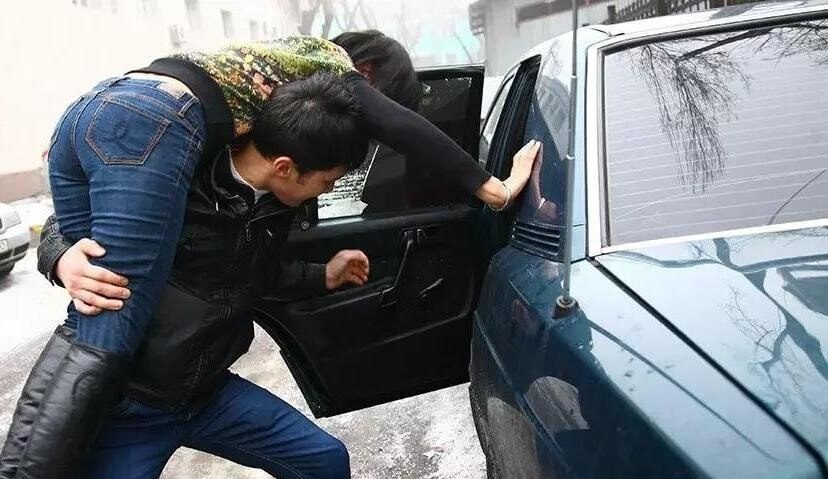
In Kazakhstan, the statistics related to criminal cases regarding the abduction of women as brides does not show material change, a study conducted by analysts at Ranking.kz shows. Referring to the data of the Committee on Legal Statistics and Special Records of the General Prosecutor's Office of Kazakhstan, the authors of the study report that last year, 18 such criminal cases were recorded. Of these, two-thirds (12 cases) were registered in the southern regions, and two cases each in the eastern, western and central parts of the country. The report notes that the problem is characteristic not only of remote rural settlements, but also of large metropolitan areas. Thus, 6 out of 12 ‘southern’ criminal cases of abduction of women were in Almaty, and a single case was registered in Astana. But the number of registered criminal cases on another related criminal offense, namely illegal deprivation of liberty that occurs when a woman is forcibly kept in the house of her fiancé, has noticeably decreased since 2018 from 71 to 13 cases nationwide. It is worth noting that these statistics only partially reflect the situation on the ground as some Kazakhs continue to disguise this criminal offense as the ancient custom of "qyz alyp qashu" (bride kidnapping). According to Artur Lastaev, the Commissioner for Human Rights in Kazakhstan, at least two factors affect the situation. Firstly, Kazakhstan does not have a separate article for abducting women for the purposes of marriage, and therefore all abductions of women are registered under one crime, i.e. Article 125 of the Criminal Code of the Republic of Kazakhstan. Secondly, most of the abductions of women for marriage are not even included in statistical reports as they are often covered up. In his report last year, Lastaev wrote: "We can only guess about the real figures of bride theft. Stereotypes persist in society that do not allow women to report the use of this type of coercion. In most cases, perpetrators and victims are not even aware of the criminal nature of such acts and criminal responsibility for them." According to the data published by the Ombudsman within the framework of the International Scientific and Practical Conference, "Countering domestic violence: problems and solutions", 214 criminal cases have been initiated in Kazakhstan since 2019 for the abduction of women. Of these, 94.3% were terminated due to lack of corpus delicti. Only 10 cases were sent to the courts, and 27 people were brought to bear responsibility for their actions. The Commissioner for Human Rights believes that a separate article for abduction of women for forced marriage should be introduced into the Criminal Code of the Republic of Kazakhstan. According to Lastaev, this should have a preventative effect and reduce the level of crime against women. The General Prosecutor's Office, where the proposal has been sent, supported the initiative, but amendments to the laws have not yet been adopted. More than a year ago, experts from Kazakhstan’s Institute for Social Development conducted a sociological study on gender...

Central Asia’s “C5” Security Bloc Can Become a Reality

Central Asia is an emerging economic region that offers the world immense natural resources, a viable trade corridor, and a young, educated workforce. On a diplomatic level, major global powers have sometimes chosen to engage with the five Central Asian nations (Kazakhstan, Kyrgyzstan, Tajikistan, Turkmenistan, and Uzbekistan) as a bloc rather than individually, thus giving rise to the term C5+1. The United States, Germany, Japan, and the European Union have C5+1 initiatives grouping the five countries as a block. The C5+1 is not entirely a Western construct as, in addition to Japan, China also has its own C5+1 launched in 2023 that mirrors the U.S. version. Russia’s economic and security cooperation platforms are not all-inclusive when comes to Central Asia and include other CIS countries, such as Armenia, Azerbaijan, Belarus, and Moldova.   Cooperation vis-à-vis Afghanistan shows a united front on regional security On May 18, 2024, the heads of the Security Councils of Central Asian countries gathered in Astana, Kazakhstan, for a meeting aimed at enhancing regional security and cooperation. This high-level assembly brought together senior officials from the five states to discuss pressing security challenges and explore collaborative solutions. Kazakhstan’s President Kassym-Jomart Tokayev, who chaired the meeting, impressed that Afghanistan should be the focus of the region’s common attention as Central Asia’s most dire security challenges relate to this southern neighbor. Afghanistan has been a focal point for the spread of violent extremism and oppressive ideologies, impacting global peace and security. The country's history of conflict and provision of safe havens to extremist groups to train fighters and spread their ideologies have long posed threats to neighboring countries and beyond. In Central Asia, this has led to increased terrorism, with groups like the Islamic Movement of Uzbekistan (IMU) and ISIS-Khorasan exploiting Afghanistan's instability to establish bases and train fighters. They have carried out cross-border attacks, spreading violence into countries such as Uzbekistan, Tajikistan, and Kyrgyzstan. Additionally, the dissemination of radical ideologies from Afghanistan has recruited and radicalized individuals in Central Asia, contributing to other local insurgencies and destabilizing the region. An attack on a Russian concert hall in March 2024 by ISIS resulted in 144 deaths.  This event led President Tokayev to note that “there remains high risks associated with the activity of international terrorist organizations”. Narcotics trafficking funds terrorist operations in Afghanistan, fuels region-wide organized crime and increases addiction rates. Effective border control is essential to prevent the movements of militants and drug traffickers from Afghanistan into Central Asia, and thus enhance regional security and stability. In addition to combative and preventive measures, the UN wants Afghanistan to be brought into the international fold to manage these threats. Central Asian countries can facilitate this transition and have already made their own individual bilateral efforts to integrate the “Islamic Republic” into the international arena. Kazakhstan’s President Tokayev, for instance, proposed the creation of a UN Regional Center for Sustainable Development Goals for Central Asia and Afghanistan, to be based in Kazakhstan.   Regional unity helps withstand unwanted external...